REVIEW · ROSTOCK
Rostock: City Walking Tour
Book on GetYourGuide →Operated by ROSTOCK GUIDE Anne Kirchmann · Bookable on GetYourGuide
Rostock feels like a story you can walk through. This 2-hour small-group tour gives you an organized feel for the old town, harbor area, and major sights without turning into a history lecture. I especially liked the way Anne Kirchmann keeps things moving and explains the bigger picture around the town hall and the gothic church area, plus the relaxed pacing that still packs useful detail. One thing to consider: it is not suitable for mobility impairments, so plan carefully if you need step-free routes.
You’ll get an expert-led orientation—medieval architecture in the center, a historic harbor walk, and even the contrast of later periods—so you leave with bearings you can actually use. The big win is the guide’s focus: you’re encouraged to ask questions, and the tour stays a true walking route rather than drifting into overly deep theory. If you want only a quick photo stop tour with zero talking, this one may feel like it has more story than you expect.
In This Review
- Key Highlights You’ll Notice
- Rostock in Two Hours: What This Walking Tour Really Gives You
- Meeting at the Rathaus Under the Greif Griffin
- Old Town Stops: Town Hall, Gothic Churches, and the City Wall Stories
- Strolling Through Alleys and Riverside Boulevards With Real Context
- The Historic Harbor Area: From Medieval Roots to Later Periods
- University Square and the Art of a Good Orientation Walk
- Why Anne Kirchmann’s Style Works So Well
- Price and Value: Is $147 for Up to 6 Worth It?
- Who This Tour Fits Best (and Who Should Skip It)
- Should You Book This Rostock City Walking Tour?
- FAQ
- How long is the Rostock City Walking Tour?
- Where is the meeting point?
- What language is the tour guide?
- Is this tour private?
- What is the group size?
- What is the tour price?
- Is it suitable for people with mobility impairments?
- Final Note
Key Highlights You’ll Notice
- Old town focus, tight time window: a practical 2-hour overview of the city center and harbor area
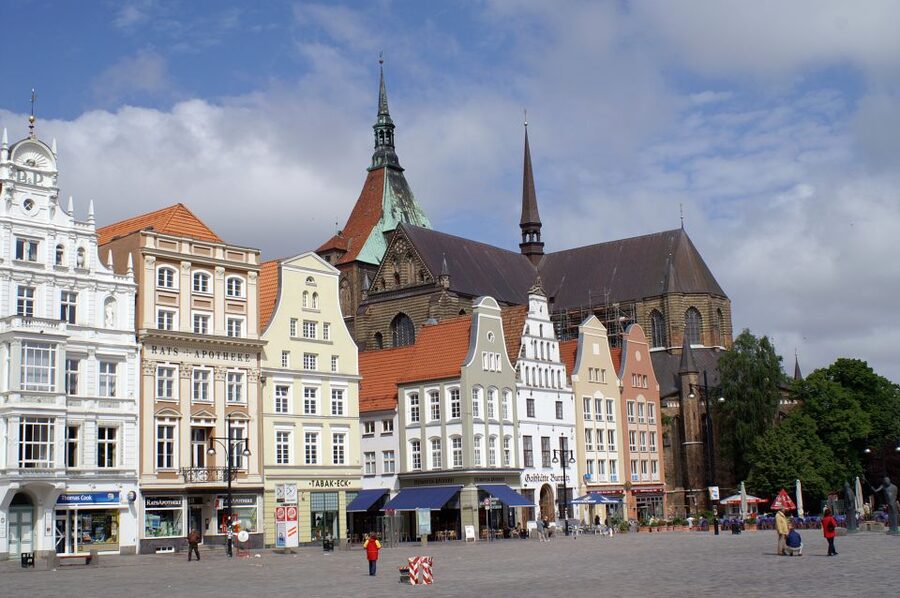
- Major landmarks covered: town hall, gothic churches, and the medieval city wall
- Harbor-to-modern contrast: you see how Rostock’s medieval core leads toward later periods
- Local guide with insider context: Anne Kirchmann’s explanations connect places to how the city grew
- Question-friendly pacing: you can ask things and get clear answers without the tour dragging
Rostock in Two Hours: What This Walking Tour Really Gives You
This is the kind of tour you book when you want your first day in Rostock to feel easy. In just 2 hours, you get a guided circuit through the old town and the historic harbor area, with the right mix of landmarks and everyday lanes. You’re not stuck guessing what you’re looking at or why it matters.
I like that the tour aims for an overview. You learn the big themes—how the Hanseatic city developed and what you’re seeing around the center—without making you sit through a marathon of dates. That matters in northern Germany where walking can be the best way to get oriented, and you’ll probably want the rest of your day free to explore on your own.
There’s also a smart balance in what’s included: medieval architecture in the core, then a shift toward the harbor and later periods. That contrast helps you read Rostock more clearly. Instead of treating it like one frozen medieval set, you start to see the city as something that kept changing.
Meeting at the Rathaus Under the Greif Griffin
You start right in the heart of town. Meet your guide in front of the Rathaus (town hall) at the main entrance, under the symbol of the Greif (griffin). That’s a great setup for two reasons.
First, it’s simple. If you’re already using the town hall area as your anchor point, the meeting spot makes sense. Second, it cues the whole tour. The Rathaus area is where civic Rostock energy is obvious, and it sets the tone for why the city center matters.
A small practical note: since this is a walking experience and lasts 2 hours, wear comfortable shoes. Rostock’s center is meant for strolling, but you’ll still want to feel good after the first hour. If you’re hoping to move slowly, chat a lot, or take time for photos, it’s worth planning for a steady walking pace with stops along the way.
Old Town Stops: Town Hall, Gothic Churches, and the City Wall Stories
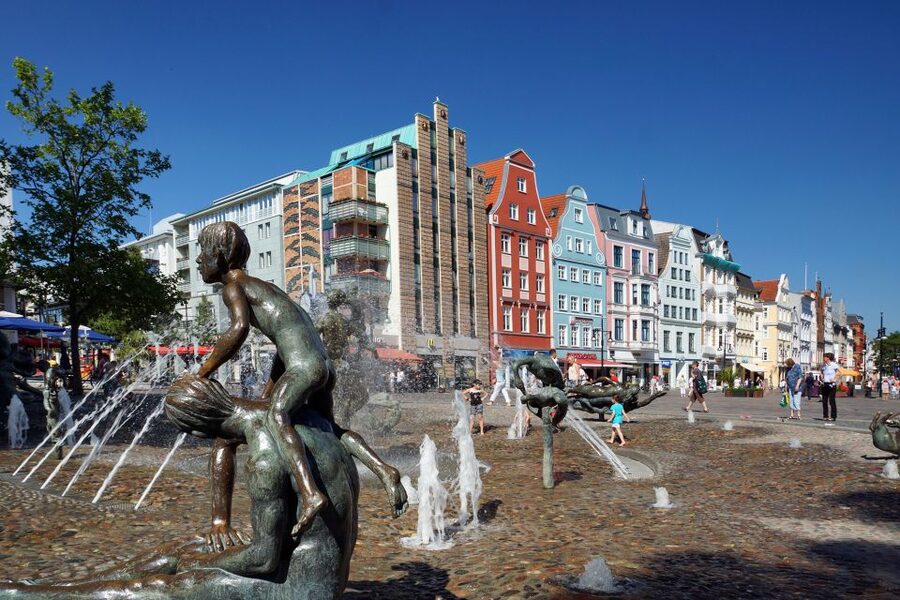
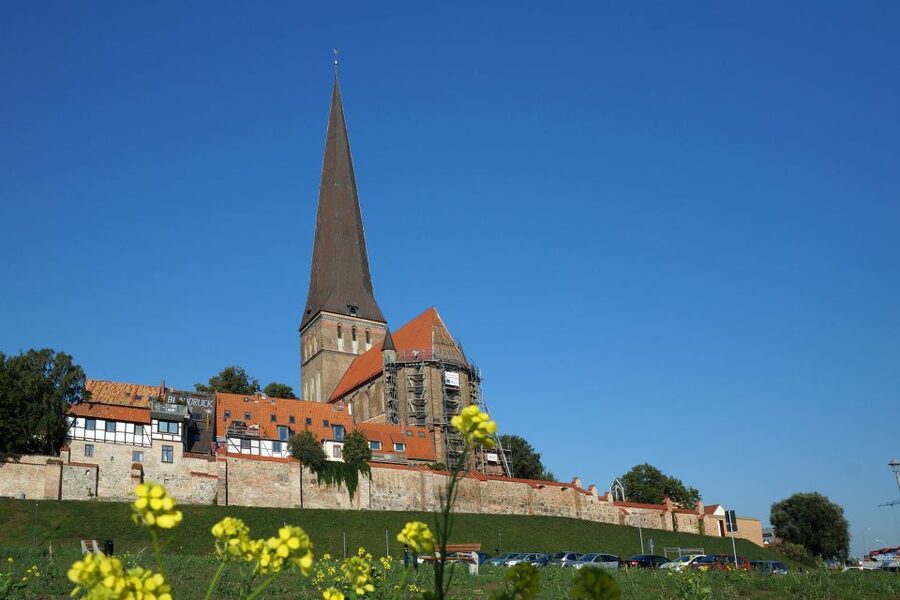
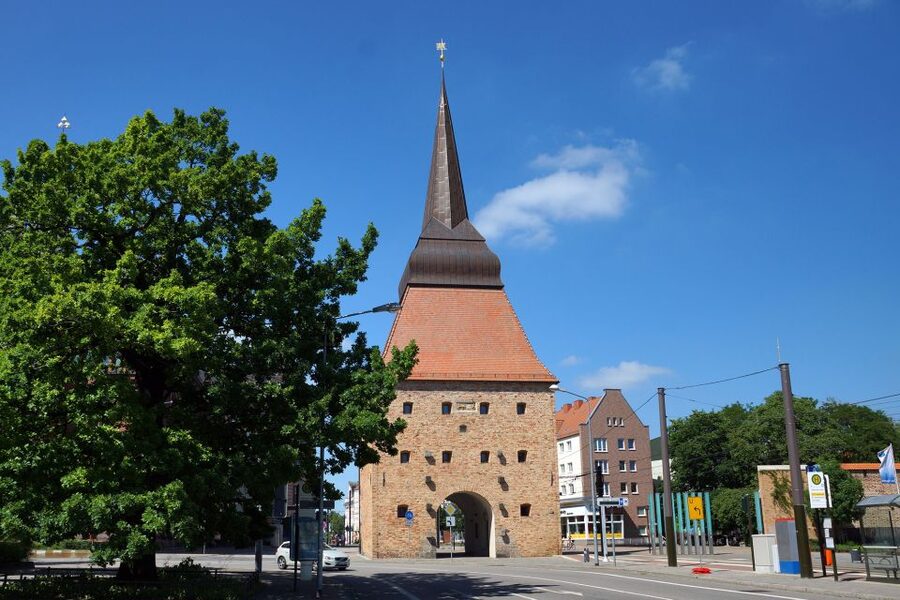
The tour’s backbone is the old town route. You’ll spend time around the major center landmarks, including the town hall, the gothic churches, and the medieval city wall. Even if you know none of the background going in, you’ll get enough context to make those buildings feel less random.
Here’s what I think works well about covering these types of sites together:
- Town hall first gives you the civic lens. It’s easier to understand the city when you start with how people organized themselves and governed from the center.
- Gothic churches add a second lens: religion and community life. The architecture isn’t just pretty; it signals how long the city cared about these buildings and what style mattered there.
- The medieval city wall gives you a sense of boundaries. Walls are a shortcut to understanding how cities thought about security, growth, and where life was meant to happen.
The best part is not only that you see these places, but that you connect them. The tour is designed to help you build a mental map: center → church-focused community space → fortification/edge → the next area of the city.
From what I’ve seen in the feedback style of guides like Anne Kirchmann, the explanations are tuned to keep you interested and moving. One review pointed out that the focus stayed on a real walking route rather than an all-out history lecture, which is exactly the right approach for a 2-hour orientation.
Strolling Through Alleys and Riverside Boulevards With Real Context
Between landmarks, you’ll also walk the in-between parts: old-town alleys and areas like riverside boulevards. This is where the tour stops feeling like a checklist and starts feeling like a walk through how Rostock actually feels.
Alleys and side streets matter because they teach you the city’s rhythm. When you’re guided through these spaces, you stop seeing them as gaps between sights. Instead, you start to understand how people moved around the medieval core—where you’d naturally cut through, where the city funnels you, and how the layout shapes what you notice.
The riverside boulevards add a different kind of context. Even without getting overly technical, the waterfront areas help you understand why Rostock could matter commercially. That leads nicely into the harbor segment later, where the city’s trading identity comes into sharper focus.
This is also where the guide’s “insider knowledge” shows up in a useful way. You’re not just hearing facts. You’re getting explanations that help you look at what’s right in front of you with more confidence.
The Historic Harbor Area: From Medieval Roots to Later Periods
One of the most compelling parts of this tour is the way it spans time. You move from medieval architecture through the historic harbor area, with a sense of the transition toward the 20th century.
That time-spanning approach matters because Rostock isn’t only about medieval postcards. The harbor story explains why the city’s shape and buildings evolved. You’ll get a guided overview that helps you understand the logic behind what you see: the center is one chapter, the water and trade are another, and later periods leave their fingerprints on the city too.
In a short tour, you won’t get an academic timeline—and that’s a good thing. What you want is comprehension, not homework. The tour’s pacing seems built to deliver that. Even feedback that praises the guide’s explanations also notes the tour avoids drowning you in too many numbers and dates, which keeps it comfortable.
If you like learning while walking—without feeling dragged into a lecture hall—this harbor-to-modern contrast is a strong reason to book.
University Square and the Art of a Good Orientation Walk
You’ll also stroll through areas like university square. This might feel less dramatic than a wall or a church, but it’s important for orientation. After you’ve seen the heavy historical anchors, the university square gives you a “today” layer.
Why does that help? Because it makes you remember Rostock as a living city. You start to picture not just what the city looked like centuries ago, but where people spend time now and how the center functions in daily life.
Think of it as mental balance. A pure medieval tour can make you feel like you’re visiting a museum set. Adding university square and the more modern rhythms of the city makes the past feel connected to the present, even in a 2-hour window.
Why Anne Kirchmann’s Style Works So Well
This tour is led by ROSTOCK GUIDE Anne Kirchmann, and that name matters because the guide’s approach is a big part of why the experience earns a 4.9 rating from a large set of reviews.
Here’s what stands out from the feedback patterns you can count on in your planning:
- The guide leads you clearly. You’re not left wandering or trying to figure out the route yourself.
- The explanations are interesting but not stuffed. That keeps the walk pleasant.
- Questions are welcome. You can ask on the spot and get what you’re actually curious about.
- The tour sticks to its purpose: a rounded walking tour, not a deep history seminar.
One review specifically praised the guide for focusing on the walk and keeping history at an enjoyable level. Another said the tour was informative without dumping too many history statistics, and that asking questions was easy. That combination—clarity, pace, and permission to ask—makes a difference when you only have limited time.
Also, note the language. The live tour guide is German, so if you’re comfortable following basic conversation, you’ll get the most out of it. If not, the visual guidance and the structure still help, but your understanding of the finer points may depend on your German level.
Price and Value: Is $147 for Up to 6 Worth It?
The price is $147 per group up to 6, for a duration of 2 hours. The value depends on how many people you bring.
- If you fill all six spots, that works out to about $24.50 per person.
- If you’re traveling as a pair, your per-person cost rises, but you still get the benefits of a small group and a guide who can manage questions.
What you’re really paying for is not just access—it’s time. In two hours, you get a guided overview of the town hall area, gothic church zone, the medieval city wall, old alleys, riverside boulevards, harbor area, and stops like university square. That’s a lot of “figure it out yourself” saved, especially on a first visit.
The other value piece is the private group format. Private or small-group setups often mean less waiting around and more direct attention. If your group likes to ask questions, this structure supports that.
So yes, it’s not a budget tour, but it can be a very efficient one—particularly if you can book as a full group.
Who This Tour Fits Best (and Who Should Skip It)
This works best if you want:
- A guided orientation to Rostock’s old town and harbor in a short time
- A walking tour with clear stops and practical context
- A guide who explains without overwhelming you with dates
- Time to ask questions and keep the pace friendly
It’s less ideal if:
- You need mobility support, since it is not suitable for mobility impairments
- You prefer tours in English only, since the guide language is German
- You want extremely long, museum-style deep history (this one is designed to be a walkthrough, not a long lecture)
If you’re the type who likes to return later on your own and notice details, this tour gives you the names and themes to do that.
Should You Book This Rostock City Walking Tour?
I’d book it if you’re planning a first visit to Rostock and you want to understand the city fast. The meeting point at the Rathaus under the Greif griffin is easy to find, the route covers the key anchors you’d otherwise hunt down yourself, and the guide’s style seems built for comfort: learn enough to make the sights click, keep walking, and ask questions along the way.
Hold off if accessibility is a concern for your group or if you strongly need an English-speaking guide. Also, if your ideal tour is pure silence and photos only, you may find the narrative part of this experience to be more talk than you want.
FAQ
How long is the Rostock City Walking Tour?
It lasts 2 hours.
Where is the meeting point?
Meet your guide in front of the Rathaus (town hall) at the main entrance under the symbol of the Greif (griffin).
What language is the tour guide?
The live tour guide speaks German.
Is this tour private?
Yes, it is a private group experience.
What is the group size?
The price is for a group up to 6 people.
What is the tour price?
It costs $147 per group (up to 6).
Is it suitable for people with mobility impairments?
No, it is not suitable for people with mobility impairments.
Final Note
If you want an efficient, friendly way to understand Rostock—old town center, harbor area, and the stories connecting them—this is a solid choice. You’ll finish with a clearer sense of where everything is and why it matters, and you’ll still have energy left to explore on your own.