REVIEW · NAPLES
Naples Walking Tour: Old Town and Spaccanapoli
Book on Viator →Operated by Napoli Official Tour · Bookable on Viator
Naples feels old the second you step into it. This 2-hour walk through Old Town and Spaccanapoli connects Greek and Roman clues to the everyday streets locals actually use.
I especially like how the route follows the city’s old grid lines, so landmarks make sense instead of feeling random. I also love the practical touch of headsets (when the group gets to 6+) plus a food tasting that gives you a quick taste of Naples without turning the day into a long food tour.
One thing to consider: guiding styles can vary. One negative review pointed out a guide who was less open to questions, so if you want lots of back-and-forth, just go in with a flexible mindset and use your questions at the best moments.
In This Review
- Key highlights I think you’ll care about
- Following Neapolis on foot: why this route works
- Piazza Dante and Port’Alba: your first jump back to Neapolis
- Piazza Bellini: the Greek walls lesson you can actually see
- Via dei Tribunali: the main spine where shops and legends meet
- Via San Gregorio Armeno: nativity scenes in a real working street
- Spaccanapoli: the street that shows you real Naples
- Piazza del Gesù Nuovo: where the tour ends and what to do after
- Price and what you truly get for $30.25
- Best fit: who will love this tour
- About the guides: what the reviews suggest about the experience
- Should you book this Naples Old Town and Spaccanapoli walk?
- FAQ
- What is the duration of the Naples Walking Tour: Old Town and Spaccanapoli?
- How much does the tour cost?
- What time does the tour start?
- Where does the tour begin and end?
- Is the tour in English?
- Is food included in the tour?
- Do I need to bring a ticket?
- How big is the group?
- Does the tour use a headset?
- What happens if the weather is bad?
Key highlights I think you’ll care about
- Small-group pace with a max of 20 people, which helps you actually hear the guide and keep moving.
- Headsets included (from 6 participants), so you can focus on street-level details instead of straining to listen.
- Spaccanapoli as the core experience, a long spine of streets that really shows how people live around the historic center.
- Greek Neapolis stops like Porta and the old walls at Piazza Bellini, not just church-and-square sightseeing.
- Included sweet or salty tasting, so the tour has a win beyond photos.
- Clear ending point at Piazza del Gesù Nuovo, handy for continuing your evening.
Following Neapolis on foot: why this route works
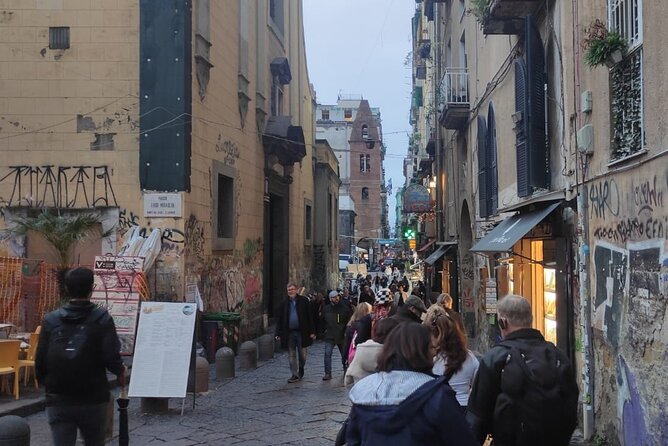
This tour starts at Piazza Dante and ends at Piazza del Gesù Nuovo, covering a tight slice of the historic center in about 2 hours. The timing matters: a late-afternoon start at 4:00 pm is often a good way to see the streets without feeling like you’re walking in full sun the whole time.
What I like about this kind of route is that it doesn’t treat Naples as a list of monuments. It treats the city like an old machine: ancient roads run through the modern streets, and once you notice that, everything clicks—gates, squares, side alleys, and churches all feel connected.
The group size stays small (up to 20), which helps the guide manage the flow through narrow streets. You also get a mobile ticket, so you’re not stuck hunting for paper in your bag.
You can also read our reviews of more walking tours in Naples



Piazza Dante and Port’Alba: your first jump back to Neapolis
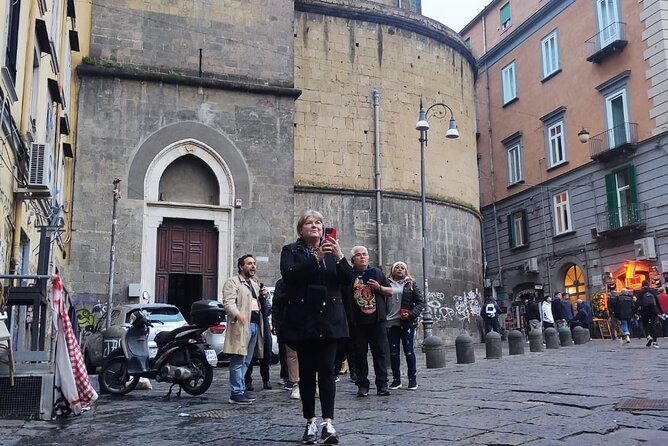
You begin on Piazza Dante, and from there you’re guided into the ancient part of Naples through streets that feel like they were built for walking. The tour’s first stops focus on the layers underneath the city—Greek and Roman times—so the streets feel less like a random maze and more like a place with a timeline.
Port’Alba is one of the oldest city gates, placed on the left side of Piazza Dante. It’s described as a historic passage into the historic center and the Decumanus Major, which is the big east-west road axis used in Roman city planning. Even if you don’t know the term, you’ll feel what it means: you’re standing near a gateway that links older city structure to what you’ll see next.
This is also a good moment to check your footing. Old Town sidewalks can be uneven, and the route is designed to keep moving.
Piazza Bellini: the Greek walls lesson you can actually see
At Piazza Bellini, the tour turns from street-level flow to a specific history detail: the remains of the Greek Neapolis walls. You’re not just told that something old exists—you’re shown what’s left and what it’s made from.
These fortification walls are dated to roughly the second half of the 4th century BC, built with compact tufa blocks. Tufa is a local stone, and the fact that you’re looking at building material tied to the era makes the explanation feel grounded. It’s the kind of stop that helps you understand why Naples looks the way it does: geology, building, and defense all shaped the city.
Drawback? This stop is brief—about 15 minutes—so if you love long museum-style reading, treat it like a focused snapshot. Then put your attention on what you’ll see around it: the square, the streets bending outward, and the way the neighborhood still works today.
Via dei Tribunali: the main spine where shops and legends meet
Next comes Via dei Tribunali, also called Decumano Maggiore, described as the heart of Naples’ historic center. This is the kind of street where you can see why people keep coming back: historic businesses, major monuments, and famous Neapolitan pizzerias line the route.
But the real value here is how the guide connects the main artery to the side streets. From Via dei Tribunali, other alleys branch off, including Via San Gregorio Armeno, the famous street of nativity scenes. In practical terms, it means you don’t just walk one straight line and stop. You’re learning how Naples’ street network gives you shortcuts into different vibes—religious, craft-focused, residential, and commercial all side-by-side.
Expect this segment to be around 30 minutes, which gives enough time to absorb the street rhythm without feeling rushed into the next stop.
Via San Gregorio Armeno: nativity scenes in a real working street
Then you hit Via San Gregorio Armeno, known for nativity scenes. This is one of those Naples traditions where the theme is instantly recognizable, but the street context makes it more interesting. You’re not seeing nativity crafts in a sealed-off exhibit. You’re seeing how a tradition lives in a neighborhood street.
Because the time here is about 15 minutes, I’d use it strategically. Look for the details your eye naturally goes to—faces, textures, little touches—then ask your guide what makes these displays part of local identity rather than just seasonal decoration.
If you’re the type who likes to linger in shops, this stop is short enough that you might want a follow-up walk after the tour ends, on your own.





Spaccanapoli: the street that shows you real Naples
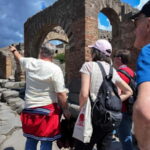
For many people, the emotional center of the walk is Spaccanapoli. The tour describes it as the long street that runs from the Quartieri Spagnoli area to Forcella, bisecting Naples as the Decumano Inferiore. That detail matters because it explains why the street feels like a dividing line through the city rather than just another road.
This portion is about 30 minutes, and it’s framed as a journey inside the real everyday Naples. You pass churches, apartments where locals live, old buildings, and small bars—so you’re seeing history without the city turning into a theme park.
One practical note: Spaccanapoli is pretty close to the areas where crowds can thicken, especially near landmarks. You’ll likely slow down naturally as the guide points things out and you take photos, but the small group helps you keep a manageable pace.
Also, if you’re sensitive to noise, this is where you’ll feel it most. Naples street life is lively and close-range.
Piazza del Gesù Nuovo: where the tour ends and what to do after
The walk finishes at Piazza del Gesù Nuovo, described as one of the most important squares in the historic center. The square sits around the church of the same name and near Basilica of Santa Chiara, plus characteristic restaurants.
This is a strong ending point because it’s a natural place to reset. After two hours, your legs probably want a pause, and this square gives you a clear, central location to do that without needing extra navigation.
If you’re hungry, this is a good time to switch from sightseeing mode to food-and-people-watching mode. You’ll still be in the historic core, so you won’t feel like you’ve moved to the outskirts where the character disappears fast.
Price and what you truly get for $30.25
At $30.25 per person for about 2 hours, this isn’t a bargain in the way a free self-guided walk is. But it’s also not priced like a full-day private tour. The value comes from the mix: a local guide, headsets for clearer audio, and an included food tasting (sweet or salty).
I especially like that the tour is set up to be easy to follow. You get a guided path through key ancient-to-modern connections, and the group limit (20) plus the headset plan means you’re less likely to end up craning your neck to hear.
There’s also a weather reality here. The experience requires good weather, so if rain rolls in, you may need a different date. That’s normal for walking tours, but it’s worth keeping in mind when you plan other parts of your day.
One more small planning detail: it’s commonly booked around 33 days in advance, so if you’re traveling in a busy season, booking earlier can help you get the start time you want.
Best fit: who will love this tour
This tour is a strong pick if you want Naples in a way that’s not just museum stops. You’ll like it if you enjoy street-level history: gates like Port’Alba, visible stonework like the tufa walls at Piazza Bellini, and the long lived-in feeling of Spaccanapoli.
It’s also a good choice for mixed traveler styles. If you love architecture, the ancient wall detail gives you something concrete. If you care about culture and daily life, Spaccanapoli and the nativity tradition add personality beyond stone.
Most travelers can participate, and service animals are allowed. It’s near public transportation too, so you’re not locked into one neighborhood.
About the guides: what the reviews suggest about the experience
The quality can rise or fall with the guide, and that’s normal for walking tours in tight spaces. Still, the strongest praise tends to point to guides like Rosa, who is repeatedly described as passionate and highly informative, and Ines, Georgia, and Giorgia, praised for mixing history with local traditions and communicating clearly.
If you want the experience at its best, show up ready to listen. Headsets help, but Naples walking tours work best when you give the guide a chance to set the tone early, especially right after meeting at Piazza Dante.
Should you book this Naples Old Town and Spaccanapoli walk?
Book it if you want a 2-hour, structured route through the historic center that explains why the streets matter, not just what to photograph. The included tasting and headset setup make it feel smoother than doing the same sights on your own, and the route ending at Piazza del Gesù Nuovo keeps your evening plan simple.
Skip or rethink it if you need very long stops for questions and reading, or if you know you’ll get frustrated by an opinionated guiding style. Also, if weather is unpredictable for your dates, keep your expectations flexible since the tour requires good conditions.
FAQ
What is the duration of the Naples Walking Tour: Old Town and Spaccanapoli?
The tour runs for about 2 hours.
How much does the tour cost?
The price is $30.25 per person.
What time does the tour start?
The start time is 4:00 pm.
Where does the tour begin and end?
It starts at Piazza Dante (P.za Dante, 80135 Napoli NA, Italy) and ends at Piazza del Gesù Nuovo (80134 Napoli NA, Italy).
Is the tour in English?
Yes, the tour is offered in English.
Is food included in the tour?
Yes. There is a food tasting included (sweet or salty).
Do I need to bring a ticket?
You’ll receive a mobile ticket.
How big is the group?
The tour has a maximum of 20 travelers.
Does the tour use a headset?
Headsets are provided to help you hear clearly when there are 6 participants and on.
What happens if the weather is bad?
The experience requires good weather. If it’s canceled due to poor weather, you’ll be offered a different date or a full refund.