REVIEW · MANAMA
Muharraq Cultural Walking Tour
Book on Viator →Operated by KA Tours · Bookable on Viator
Muharraq isn’t big, but it tells a big story in a few streets. This small-group walk is built around restored old houses, the Pearling Path idea, and hands-on cultural stops with tastings along the way. I especially liked the way the guide turns architecture into real stories, and how the food breaks up the walk. The one thing to keep in mind is that it’s a walking tour that runs about 2–3 hours, so plan your evening around that pace.
You start in Muharraq, Bahrain’s older heart, and you spend the late afternoon moving through a pocket of places that feel calmer than Manama. I liked that many stops feel practical, not staged: you’re not just looking at walls, you’re seeing how majlis culture, household design, and trade history connect. If you’re traveling with someone who likes details (or you are that person), you’ll get a lot out of the stories.
Value matters here, because you’re paying $54 per person and still getting more than sightseeing. You’ll try Arabic tea and coffee, plus dates, Bahraini samboosa, and sweets at a few points. Also, the tour ends back where it starts, so you don’t lose your evening to logistics. At the same time, this isn’t a rush-everywhere-at-once hop. If you want long time inside just one museum, this may feel a bit jumpy.
In This Review
- Key things to know before you go
- Getting your bearings: Muharraq’s route and late-afternoon timing
- Pearling Path and the Muharraq pearl story in plain language
- Music and learning stops: Sout sound and the Shaikh Ebrahim Center vibe
- Tastings that feel like part of the culture, not a gimmick
- Old houses, art, and the poetry of Muharraq
- Kurar embroidery and crafts: what Kurar House protects
- Guest-house design, press heritage, and merchant homes
- How much is $54 really? Value check for a 2–3 hour tour
- Should you book the Muharraq Cultural Walking Tour?
- FAQ
- Where does the tour start and end?
- What time does the Muharraq Cultural Walking Tour begin?
- How long is the tour?
- What is the price per person?
- What foods and drinks are included?
- Is this a small group tour?
- Is the tour affected by weather, and what about cancellation?
Key things to know before you go
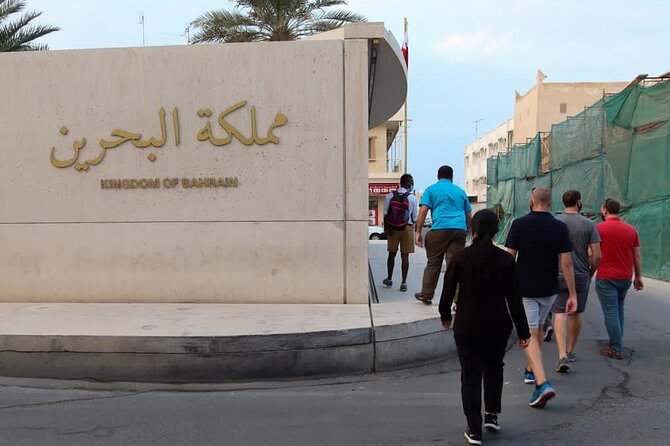
- Guide-led stories: expect narrative stops tied to Muharraq’s pearl-trade past and household culture, with guide Khaled highlighted in past tours.
- Food is part of the route: Arabic tea, coffee, dates, samboosa, and sweets show up naturally as you walk.
- World Heritage themes show up twice: the Pearling Path idea ties together multiple nearby sites.
- Old-house variety: from music culture and children’s learning spaces to press heritage and merchant homes.
- About 2–3 hours total: the walk fits neatly before you do your own dinner plans.
- Mobile ticket: makes check-in simple, and the group is capped at 50.
Getting your bearings: Muharraq’s route and late-afternoon timing
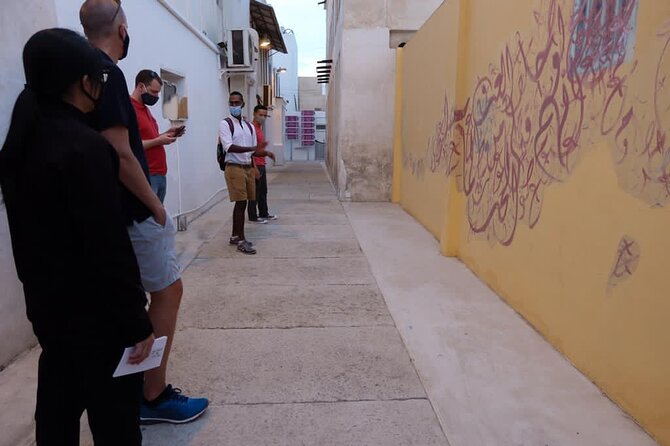
The tour starts at 4:00 pm from AL SEDRA Café shop 40, 53 bldg 355, المحرق، Bahrain, and it loops back to the same place. That matters more than it sounds. When you finish where you began, you can pivot quickly—grab dinner nearby, meet friends, or head back without figuring out a new end point.
It’s also designed for a manageable group size (maximum 50), which helps you actually hear the guide. Muharraq’s lanes are meant for walking and lingering, not for large bus crowds. You’re moving at a human pace, with short stops that keep you from burning out too early in the evening.
Wear for comfort is the only real “prep” I’d call out. You’re on your feet for a couple hours. Bring water if you know Bahrain afternoons can run warm, and keep your phone battery topped up since this is a mobile ticket tour.
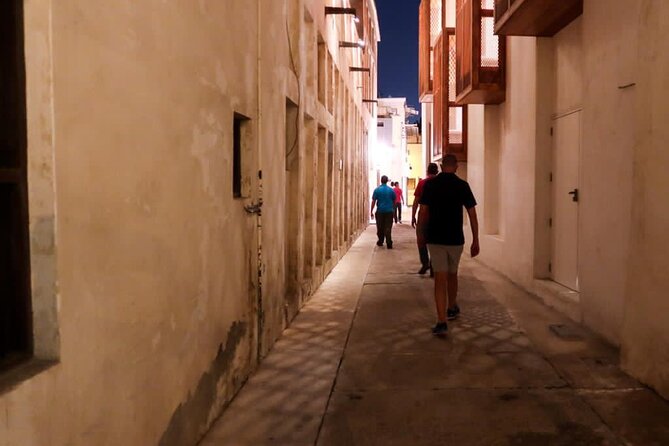
The tone is cultural, but it isn’t stiff. You’ll get tastings, and you’ll step into spaces that were built for everyday life—majlis rooms, guest-house settings, and house-museum layouts. If you like places where the details matter (doors, carvings, rooms, and the reasons behind them), this timing works well because the light often makes old walls look even better than midday.
Pearling Path and the Muharraq pearl story in plain language
The big anchor is Pearling Path, tied to Bahrain’s World Heritage Site concept for pearling: Pearling, Testimony of an Island Economy. This isn’t just “pearls were important.” You’ll hear how the tradition connects to Bahrain’s island economy and the social system it produced.
What’s useful is how the World Heritage nomination is explained in components. It includes multiple parts: oyster beds in the northern territorial waters, a seashore site at Muharraq’s southern tip, and then clusters of historic buildings woven into the city fabric. That gives you a framework for understanding what you see later in the route—why certain houses, courtyards, and design choices matter in a trade-based society.
One practical advantage of having this theme come up more than once is that you start to notice patterns. You’re not just collecting random stops. You’re linking them. If you’ve ever visited a place and thought, I wish I understood the big picture first, this tour aims to build that picture while you walk.
There are also admission elements woven in here. The pearling-related stop(s) include admission ticket time, so you’re not just viewing from the street. You get access to the kind of indoor framing that helps the outdoor setting make sense.
If you’re the type who likes facts, you’ll appreciate the structure: 15 property components, multiple locations, and the idea that Muharraq’s urban fabric is part of the evidence. If you’re not a “numbers” person, don’t worry—you’ll still come away with a clearer sense of how pearl collecting shaped daily life.
Music and learning stops: Sout sound and the Shaikh Ebrahim Center vibe
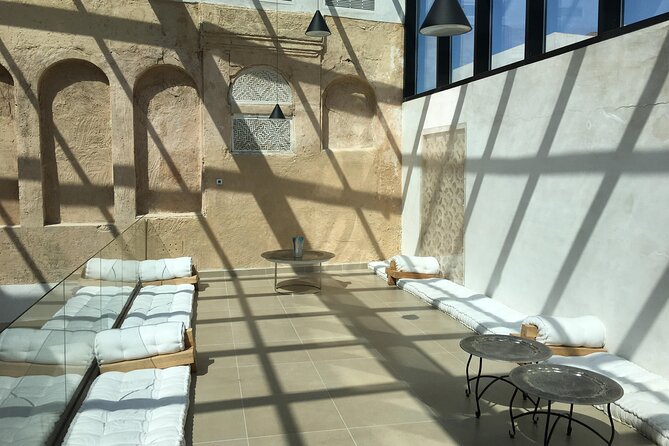
After the pearling framing, the route leans into culture you can’t get from postcards. You’ll visit the area near Mohamed bin Faris House of Sout Music, a place tied to the Gulf’s Khaleeji sound and folklore. The way the stop is described matters: it’s connected to reviving art forms and hosting musical evenings. You’ll also hear about traditional Khaleeji music every Thursday at no cost, which gives you an idea of how living culture can sit next to historic spaces.
Then you shift into the Shaikh Ebrahim Center, built on land that originally held a majlis for Shaikh Ebrahim bin Mohammed Al Khalifa. This is a modern reconstruction, but the function is what counts. Since 2002, the center has welcomed artists, speakers, philosophers, and poets—so it’s not just a building. It’s a place designed for open exchange of ideas.
I liked that the center is presented as an ongoing community venue, not a one-time show. It even mentions a new auditorium opening in December 2008 with around 300 seats, which helps you understand it as a real platform.
Two quick cultural stops sharpen the picture. Iqra is a children’s library—small, focused, and a clue that Bahrain has long invested in kids’ learning. And nearby, you’ll keep circling back to house-based culture: the idea that private spaces, public gatherings, and education could all live in the same old-city network.
Possible drawback: because the stops are short and frequent, you may not get long sit-down time everywhere. If you want to spend extra time reading every placard, you’ll need to make peace with short bursts and keep an eye out for the parts that hook you most.
Tastings that feel like part of the culture, not a gimmick
Food stops are often the weak link on walking tours. This one treats tastings like a natural part of Muharraq life.
You start with a quick bite at آلو بشير (Alo Busher), described as a traditional restaurant around 60 years old. The focus is on local favorites, especially samboosa with potato. This is the kind of stop that works even if you don’t love savory snacks—because it anchors the culture in something everyday.
Then there are the coffee moments. House of Coffee (رازجي) brings together three old traditional Bahraini houses, keeping the traditional façade while renovating the interior into a café space. You’re getting a taste of how restoration can preserve the street identity while changing how the space is used. If you like taking a break with a drink while you regroup, this stop is designed for that.
Later, Bu Khalaf Coffee Shop adds the classic “sweet and sip” combo: Bahraini tea, coffee, sweets, and dates. It also notes lunch or dinner packages on special request, but the core idea is clear—you’re refreshed for the next stretch of walking.
And there are additional snack settings tied to the house-converted theme, including Luqmatina Cafe, described as a snack restaurant inside an old house. Even if you don’t order extra, the point is that these places exist for locals and visitors to slow down.
One practical tip: if you’re sensitive to dairy or have specific dietary needs, you’ll want to ask what’s inside any pastry or sweets. The tour mentions the foods you’ll try, but it doesn’t list ingredients.
Old houses, art, and the poetry of Muharraq
Some of the most memorable stops are the ones that explain atmosphere. House of Art is one of them. Instead of being only a room of objects, it focuses on visual memory—photographic works that capture the intimate look of Muharraq. It also layers in poetry, mentioning the voice of poet Mahmoud Darwish as a kind of compensating presence.
That may sound “literary” on paper, but on the ground it gives the house a point. You’re not just looking at items; you’re being invited to connect the city to language and the sea. The description even nods to maritime details—preparatory work (qourqour) and the way threads tie into netting, plus the diver’s float concept. It’s cultural stitching, not just decoration.
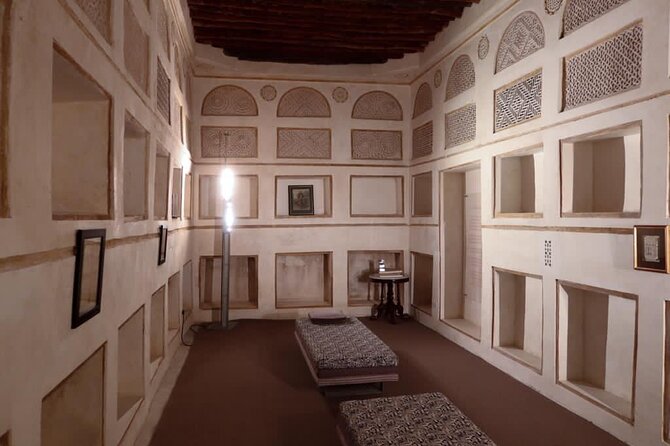
Then comes Memory of the House, which is built around a single-family historic arc: Shaikh Ebrahim’s big house once held a council and library, plus correspondence and intellectual meetings. Today, what remains is “memory” in the form of rooms, furnishings, carvings, and personal details. It’s the kind of stop that helps you picture life inside a household when public meetings and private learning overlapped.
In a tour like this, I find that art-and-memory stops do two jobs. First, they give your brain a break from the facts. Second, they help you read the architecture you’ve already seen, like now I get why this layout matters.
Possible drawback: if you’re short on patience for exhibits or prefer only hands-on experiences, these two stops might feel more interpretive than interactive. But if you enjoy atmosphere, they’re worth pacing yourself through.
Kurar embroidery and crafts: what Kurar House protects
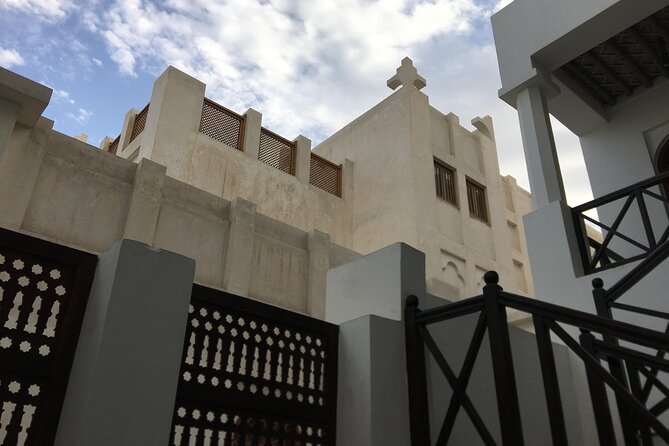
You’ll then meet Kurar House, built as a way to preserve an art that’s described as dying and unique: Kurar embroidery. The tour frames this as a living handoff. The building provides a venue for elderly Bahraini women to pass the art to younger generations.
That’s a big deal for value, because it changes what you think you’re buying. You’re not paying for a photo op. You’re supporting a continuity system for craft knowledge. The Shaikh Ebrahim Center’s role is also spelled out: promoting the art and supporting artisans in production and marketing of Kurar-embroidered clothes.
In practical terms, this stop is one of those rare moments where “cultural heritage” is visible as real work, not just a label. It also helps you understand why the tour route keeps hitting houses and centers. In Muharraq, preservation isn’t only museum glass. It includes craft rooms and training spaces.
If you’re hoping for lots of textile detail in every room, be prepared for a brief visit. The tour runs about 2–3 hours total, so each stop is a snapshot. Still, the purpose is clear enough to make the time feel justified.
Guest-house design, press heritage, and merchant homes
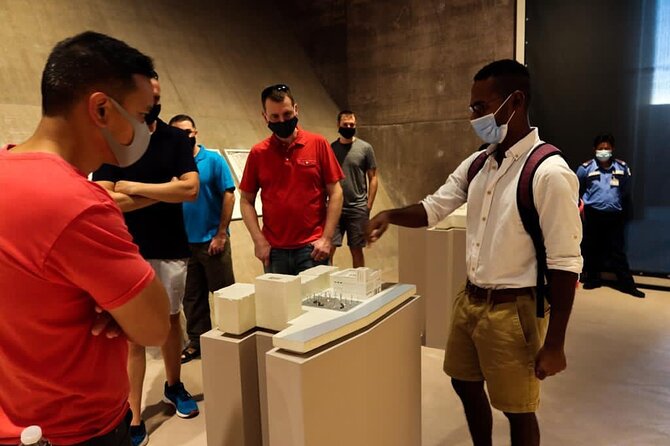
Muharraq isn’t only about one type of story. The route includes guest-house culture and trade-era architecture.
Al Nuzul House is presented as a traditional Bahraini guest house. The stop is time-boxed, so you’re not moving at leisure, but it gives you a sense of how hospitality was structured in older homes.
Then comes Abdullah Al Zayed House for Bahraini Press Heritage. It’s described as the first restoration project by the Shaikh Ebrahim Center with private sponsors. The building is about 100 years old, restored and opened in November 2003. The big connection: it was the house of the founder of the first weekly newspaper in Bahrain and the Gulf, and now it’s dedicated to preserving press heritage and architectural traditions.
I like this stop because it adds a modern cultural thread. Pearling built the economy. Newspapers built the public conversation. Put together, you get more of a society than either theme alone.
Finally, Seyadi House (also known as Bayt Siyadi) links you to merchant power. It’s part of a larger complex tied to a pearl merchant, Abdullah bin Isa Siyadi, and includes a mosque and a majlis. That means the stop isn’t only about “a house.” It’s about how merchant wealth, religious space, and gathering culture were integrated.
These are the places where you start to see how Muharraq’s old urban fabric acted like a system. Trade shaped resources. Resources shaped houses. Houses shaped where information and community happened.
How much is $54 really? Value check for a 2–3 hour tour
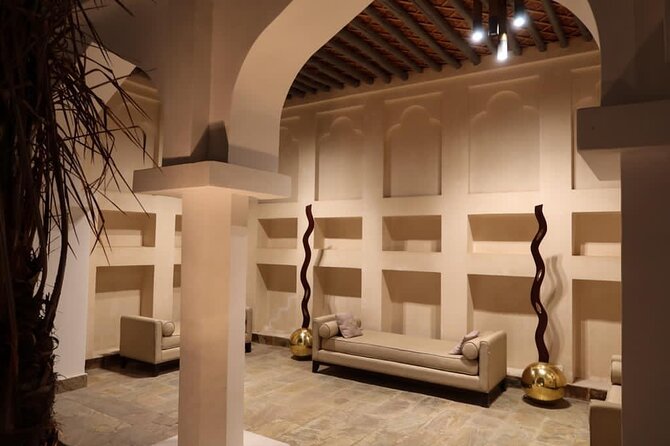
At $54 per person, you’re not buying a long sightseeing day. You’re buying focused access: a guided walk through multiple cultural interiors plus tastings.
Here’s the value logic I’d use when deciding:
- Admissions are built into several stops (some listed as admission included; others listed as free). That’s important because it turns the tour from “street viewing” into actual entry.
- Food is included as you go: Arabic tea and coffee, samboosa, sweets, and dates. That alone can soften the cost compared with paying separately for snacks in a small town area.
- Time is controlled: around 2–3 hours, then the rest of your evening is yours. It’s a smart fit if you want culture without losing your entire night.
- Group size cap: max 50. Even with that cap, a walking format keeps it manageable compared with larger bus tours.
The one “price caution” is mental, not financial: because it’s concentrated, you’ll get the most value if you’re engaged and willing to listen. If you tend to zone out during guided stops, you may feel like the route is too quick.
Should you book the Muharraq Cultural Walking Tour?
Book it if you want a Bahrain evening that feels local and specific. I’d especially recommend it if you like old-city architecture, world heritage themes tied to real buildings, and cultural stops that include food and short interior visits. This is also a strong pick for couples and curious solo travelers who want a clear plan and an end time that leaves room for dinner.
Skip it (or consider another option) if you’re chasing long museum hours or you prefer doing things at your own pace with no structured route. The walk is designed to cover many cultural stops in a limited time window.
If you do book, I’d go in with two goals: listen closely to how the guide connects the pearling story to household life, and savor the tastings as part of the route, not as an afterthought.
If you want, tell me what day you’re going and whether you’re based near Manama or inside Muharraq. I can suggest a simple evening plan around the 4:00 pm start.
FAQ
Where does the tour start and end?
The tour starts at AL SEDRA Café shop 40, 53 bldg 355, المحرق، Bahrain, and it ends back at the same meeting point.
What time does the Muharraq Cultural Walking Tour begin?
The start time is 4:00 pm.
How long is the tour?
The tour duration is about 2 to 3 hours.
What is the price per person?
The price is $54.00 per person.
What foods and drinks are included?
You’ll have Arabic tea and coffee to try, plus dates, Bahraini samboosa, and sweets.
Is this a small group tour?
Yes. The tour has a maximum of 50 travelers.
Is the tour affected by weather, and what about cancellation?
The experience requires good weather. If it’s canceled due to poor weather, you’ll be offered a different date or a full refund. You can cancel for a full refund up to 24 hours in advance; cancellations within 24 hours aren’t refundable.