REVIEW · KAMAKURA
Kamakura Private Tour: Temples, Nature, and the Great Buddha
Book on Viator →Operated by Trip Designer Inc. · Bookable on Viator
One sentence hooks first: A half-day in Kamakura that feels far away. You’ll get temples, hiking trails, and seaside views in one smooth route, and the big admissions are covered for Jochiji, Kotoku-in (Great Buddha), and Hasedera. The only real catch is that you’ll walk at least 5 km with a mountain pass, so good shoes matter.
I also like that it’s truly private, so guides such as Teiko or Yu can slow down, answer questions, and shape the day to your pace. If rain or heat hits, the plan may shift a bit, but you still end up seeing the main spiritual highlights without stress.
In This Review
- Key Points You’ll Actually Care About
- A Kamakura Day That Mixes Temples and Trails (Not Just Photos)
- Start at Kita-Kamakura, End at Hase: A Route With Momentum
- Jochiji Temple: Quiet Zen Under the Trees
- Hiking Trails and the Mountain Pass: Your Legs Do the Work
- Zeniarai Benten Ugafuku Shrine: The Money-Washing Moment
- Sasuke Inari Shrine: The White Fox Dream Legend
- Kotoku-in and the Great Buddha: When Size Hits Your Brain
- Hasedera Temple: Views Over Yuigahama and the Ocean South
- Yuigahama Beach Break: A South-Facing Finish
- Guide Matters: How People Like Teiko, Yu, and Yumi Shape the Day
- Price and Value at $98.44 Per Person
- What to Wear and Bring for a Real Kamakura Walk
- Who This Tour Fits Best (and Who Might Want a Softer Option)
- Should You Book This Kamakura Private Tour?
- FAQ
- How long is the Kamakura private tour?
- What’s included in the tour price of $98.44 per person?
- Is food or drinks included?
- Where do we meet and where does the tour end?
- Do I need to be able to walk uphill?
- Which temple entrance fees are included?
- Are the other shrines included?
- Is hotel pickup available?
- What happens if the weather is bad?
Key Points You’ll Actually Care About
- Forest Zen at Jochiji: calm, green, and built to honor a shogunate-era family story
- A mountain-pass section: not a flat stroll, and it’s the reason the views feel earned
- Iconic Kamakura sights with included entry: Jochiji, Kotoku-in, and Hasedera are on the ticket
- Two shrine stops that add personality: Zeniarai Benten and Sasuke Inari bring legend into the walk
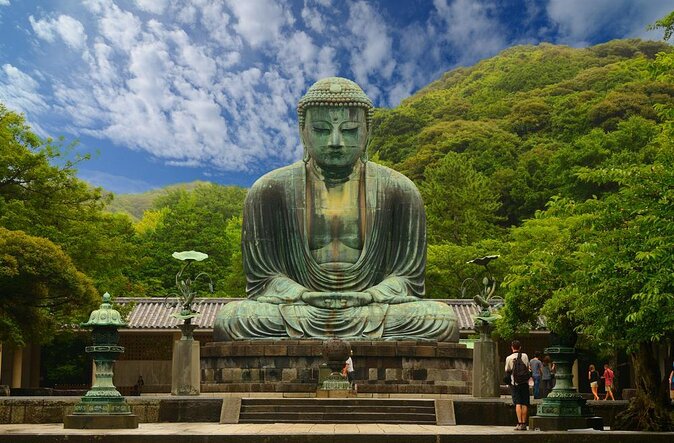
- Great Buddha scale that lands fast: 13.35 m tall and hugely heavy, in bronze
- Finish at Hase Station, with ocean payoff: you get temples above the coast and a beach break
A Kamakura Day That Mixes Temples and Trails (Not Just Photos)
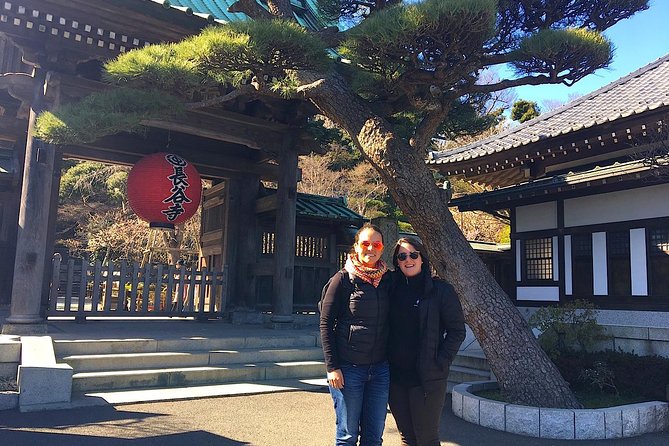
Kamakura is famous for the Great Buddha, yes. But what I like about this tour is how it builds the day like a story: start with quiet temple energy, move into the hills on a real path, then return to the coast with views that feel different from Tokyo.
You’re not just hopping between famous spots. The route includes scenic stretches like the Kamakura hiking trails and the Daibutsu hiking course approach, where the mountains put you in a calmer mindset. The temples land harder when you arrive on foot, slightly winded, and ready to pay attention.
You can also read our reviews of more tours and experiences in Kamakura.
Start at Kita-Kamakura, End at Hase: A Route With Momentum
The tour begins at Kita-Kamakura Station and ends at Hase Station. That matters because it turns the day into one direction of travel, not backtracking. You also don’t spend your time figuring out what bus goes where, since the guide keeps the walking flow going and helps you avoid getting lost at the end.
If you’re coming from Tokyo, the reviews show this is a common day trip. The easiest part is that you meet at a major train area. The last step is equally important: guides tend to walk you to the correct station path so you can get home without that end-of-day scramble.
Jochiji Temple: Quiet Zen Under the Trees
Stop one is Jochiji Temple, a Zen site in a forest setting. It was built in 1281 by Hojo Tokoyori, a key leader of the Kamakura shogunate, to honor his son who died young. That family reason for building the temple gives the visit more meaning than a generic sightseeing stop.
You’ll spend about 25 minutes here, which is enough time to slow down. What you’ll notice is the atmosphere: cooler air under the trees, a calm pace, and a sense that this place was meant for reflection. It’s the kind of first stop that helps you transition from station noise into temple focus.
Hiking Trails and the Mountain Pass: Your Legs Do the Work

The middle of the tour is where the value really shows. After Jochiji, you head to Kamakura hiking trails around the pass for about 40 minutes. Admission there is free, but the real “ticket” is the scenery and the feeling of getting off the main roads.
This section is the main consideration of the whole experience. You’re walking at least 5 km total, including a mountain pass, and the tour is best for people with moderate physical fitness. In hot weather, it can feel intense. One review noted a very hot day and that they needed more breaks, which is exactly what I’d plan for too.
The upside is big: once you’ve done a stretch on foot, the shrines and temples stop feeling like a checklist. You start paying attention to details like placement, views, and why this route likely became the natural connection between places over centuries.
Zeniarai Benten Ugafuku Shrine: The Money-Washing Moment
Next up is Zeniarai Benten Ugafuku Shrine. You’ll walk along the Daibutsu hiking course through the mountains to a hillside opening framed by a torii gate. Passing through that hole is part of the experience, and then you reach the shrine.
You’ll get about 25 minutes here, and the visit feels more mysterious than the usual “stand and pose” stop. The shrine’s story is tied to legend and ritual, and your guide’s job is to connect the dots—how the landscape and the practice work together, and why this kind of site is memorable in person.
From a practical angle, this is also a moment where you can catch your breath. It’s not a long stop, but it’s positioned after the hiking stretch so you get that rhythm: walk, pause, learn, move on.
Sasuke Inari Shrine: The White Fox Dream Legend
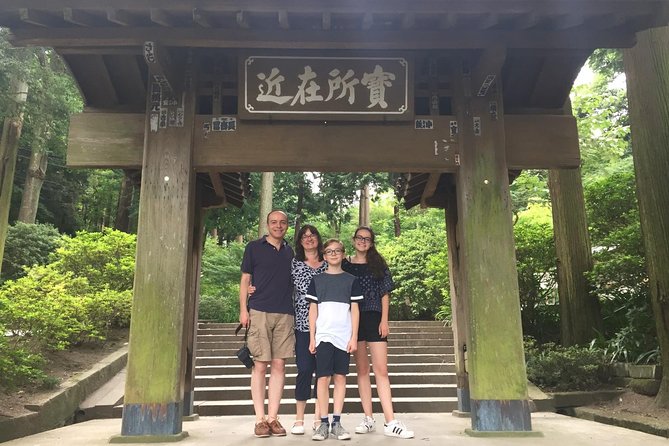
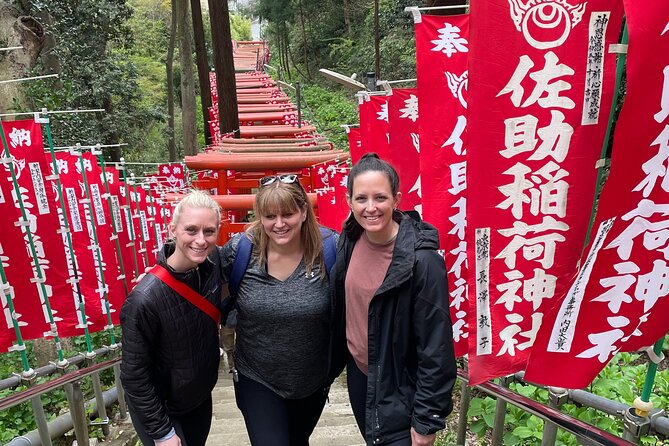
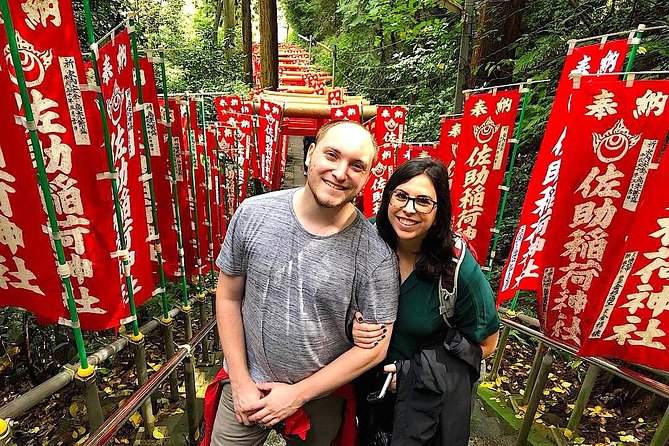
After Zeniarai Benten, you’ll visit Sasuke Inari Shrine for about 20 minutes. This one comes with a legend about Minamoto Yoritomo, the first shogun of Kamakura. The story says he was visited in a dream by a white fox (Inari) who advised him how to win a battle against his enemies.
I like this stop because it’s short but vivid. You get a story-driven shrine experience without losing time to overlong transitions. Your guide can also help explain how Inari beliefs show up in everyday Japanese shrine culture, which makes the small details you might otherwise miss feel obvious.
Kotoku-in and the Great Buddha: When Size Hits Your Brain
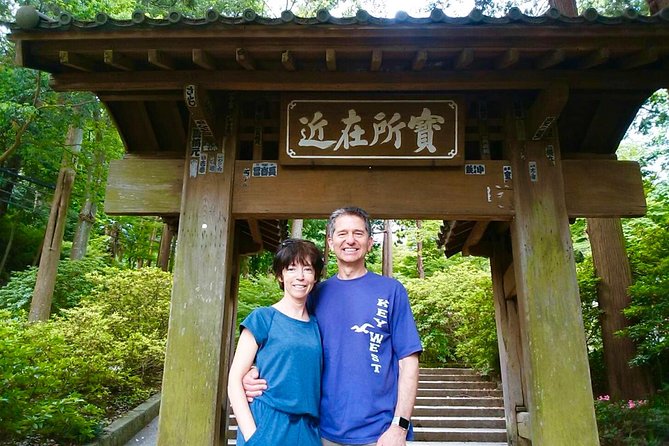
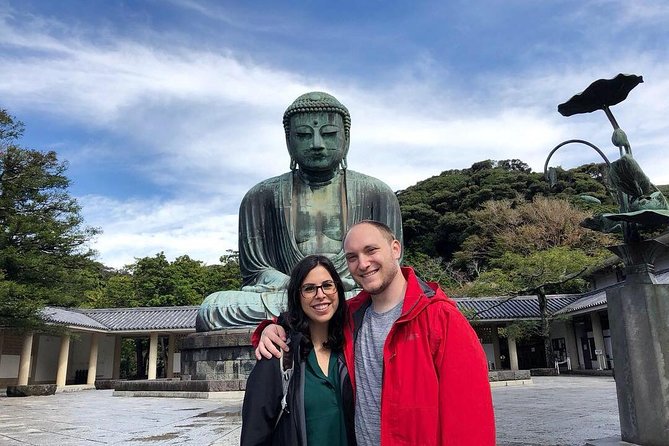
Then comes the star: Kotoku-in and the Great Buddha of Kamakura. You’ll have around 20 minutes here, including time to see the statue area and get your bearings.
This Great Buddha is 13.35 m tall and the bronze statue dates to the 1252 construction of how it appears today. It’s one of the biggest Buddha statues in Japan, and that scale is not subtle. Standing near it changes your sense of distance.
Two practical notes I think you’ll appreciate:
- Give yourself a minute to take it in from different angles, because the sightlines work differently as you move.
- If you’re traveling with kids or anyone who gets tired, this is one of the few stops where you’ll still feel the wow factor even if you keep the pace gentle.
Hasedera Temple: Views Over Yuigahama and the Ocean South
Next is Hasedera Temple, about 30 minutes. The temple sits about halfway up Mount Kamakura, which is why it has such a strong view over the ocean and Yuigahama Beach.
This is the stop where the tour’s “nature + culture” promise clicks. You’re moving from hills and shrine legends into a viewpoint that looks out toward the coastline. Reviews also mention seasonal detail like hydrangeas, so if you’re visiting in early summer you may catch additional beauty at the right time.
The practical payoff is that the views give you a mental reset. After walking in the hills, you can look far away, relax your legs for a moment, and enjoy the light on the water.
Yuigahama Beach Break: A South-Facing Finish
The tour ends with Yuigahama Beach for about 15 minutes. The beach faces south, which is why you’re likely to see the sun over the ocean from this area.
This isn’t a long stay, but it’s a smart design choice. You’ve spent the morning and early afternoon in religious spaces. Ending with the ocean puts a soft landing on the day, especially if you’re trying to keep the whole trip from feeling intense.
Guide Matters: How People Like Teiko, Yu, and Yumi Shape the Day
What makes this tour consistently rate high is the guides. Names you’ll see in the experience include Teiko, Yu, Yumi, Noriko, Takami, Yoko, Naho, and others. The through-line is how they explain what you’re seeing and how they manage the pace.
A few ways guides improve the day (and make it feel worth paying for):
- They explain the meaning of stops, not just the dates and names.
- They can give etiquette tips for temple visits, so you don’t feel awkward standing in the wrong place.
- They help you handle small real-world problems like rain, slick paths, or pacing needs.
One review even described the coordinator noticing older group members and suggesting an adjusted itinerary to minimize walking on the mountain road. That’s exactly what you want: a plan that adapts, not stubbornly pushing everyone to suffer in the same way.
Price and Value at $98.44 Per Person
At $98.44 per person, the price looks reasonable when you see what’s included. The big value is admissions: entry fees are included for Jochiji, Kotoku-in (Great Buddha), and Hasedera. Those are the three costs that most people would have to pay anyway.
On top of that, you’re paying for:
- an English-speaking guide
- all fees and taxes
- photos of tour participants
- a private format where only your group participates
- and a mobile ticket for the experience
Food is not included, so you’ll still want a lunch plan. Some guides help find a good lunch spot that fits the pace of the day, but you should treat meals as on your own budget.
Also note: you might pay small extra amounts for bus or train fares depending on how the day gets adjusted, especially if weather changes the walking plan. That doesn’t make the tour expensive—it just means you shouldn’t go in thinking everything is 100% “no additional spending.”
What to Wear and Bring for a Real Kamakura Walk
This is not a shoes-off stroll. You’re walking at least 5 km with a mountain pass, so start with the obvious: wear easy walking shoes.
If rain shows up, plan like a grown-up:
- bring a rain layer
- consider extra grip if your shoes get slick
- expect that guides may shift the route to stay safe
One review mentioned they were fine even with constant rain, but it changed the walking experience. That’s why I’d rather plan for flexibility. If you come dressed for walking first, you’ll enjoy the day no matter the weather.
Who This Tour Fits Best (and Who Might Want a Softer Option)
This tour fits you if:
- you want a private, guided day with actual walking
- you care about temple context, not just landmarks
- you want nature views without renting a car
- you like the idea of ending at the beach after a few spiritual stops
It’s less ideal if:
- you hate uphill walking and mountain paths
- anyone in your group has knee issues or mobility limits
- you want a mostly flat route with minimal effort
A small group helps, because the guide can adjust pacing. But the core is still a half-day hike-shaped plan.
Should You Book This Kamakura Private Tour?
If your priority is a Kamakura day that feels more like a real local walk than a sightseeing sprint, I’d book this. The combination of temples with included entry, shrine stories, a mountain pass walking section, and the finish with Hasedera views and Yuigahama Beach is a strong use of time.
I’d only hesitate if your group can’t handle hills or if you’re hoping for a totally flat “easy pace” experience. In that case, look for something that cuts the mountain trail portion. But if you can walk 5 km and you like learning as you go, this tour is a smart value.
FAQ
How long is the Kamakura private tour?
It runs about 5 hours (approx.).
What’s included in the tour price of $98.44 per person?
The tour includes an English-speaking guide, all fees and taxes, photos of tour participants, and entrance fees for Hasedera, Kotoku-in (Great Buddha), and Jochiji. Group discounts and a mobile ticket are also part of the experience.
Is food or drinks included?
No. Food and drink are not included.
Where do we meet and where does the tour end?
You start at Kita-Kamakura Station and the tour ends at Hase Station.
Do I need to be able to walk uphill?
Yes. You should have moderate physical fitness and be ready to walk at least 5 km, including a mountain pass.
Which temple entrance fees are included?
Entrance fees are included for Jochiji, Kotoku-in (Great Buddha of Kamakura), and Hasedera Temple.
Are the other shrines included?
Admission is listed as free for stops like Kamakura hiking trails, Zeniarai Benten Ugafuku Shrine, Sasuke Inari Shrine, and Yuigahama Beach.
Is hotel pickup available?
Hotel pickup and drop-off are available for an extra fee of 8,000 yen per person.
What happens if the weather is bad?
The experience requires good weather. If it’s canceled due to poor weather, you’ll be offered a different date or a full refund.