REVIEW · GHENT
Historical Walking Tour: Legends of Gent
Book on Viator →Operated by Gent Free Walking Tour · Bookable on Viator
Ghent’s stories are written on every corner. This Legends of Gent walking tour links key sights like St. Michael’s Bridge and the Belfry into one clear timeline you can actually follow. I love that you walk the historic centre at a smart pace while a guide adds street-level context and practical ideas for what to do next. The one thing to watch is that a few of the stop highlights are inside buildings, so you may need separate tickets if you want to go in.
You’ll also feel the value fast because you’re not just ticking off landmarks. This is a mobile-ticket tour in English, and it ends at the Belfry area, so you finish where many people want to be anyway. I also like the pay-what-you-think approach, which makes it feel less like a product and more like a local intro you can shape with your tip. A possible drawback: if you prefer wandering in complete silence or you hate walking past crowds, this isn’t the calmest option—expect a steady city stroll for around two hours.
In This Review
- Key things to know before you go
- A two-hour walk that connects the dots in central Ghent
- Price and the pay-what-you-think model: is it worth $3.62?
- The stop-by-stop route: what you’ll see and why it matters
- 1) St Michael’s Bridge: the medieval trading gateway
- 2) Graslei and Korenlei: the port that powered Ghent
- 3) Design Museum Gent: rebellion in brick form
- 4) Het Groot Vleeshuis: the butchers’ hall and the darker side
- 5) Gravensteen: a castle inside the city
- 6) St. Veerleplein: the square of death and life
- 7) Huis van Alijn: the only remaining god house
- 8) Vrijdagmarkt: the square and the statue story
- 9) Werregarenstraat: street art without the graffiti wars
- 10) Ghent Town Hall (Stadhuis): why the façade looks confused
- 11) St. Bavo’s Cathedral: the Ghent Altarpiece spotlight
- 12) Het Belfort van Gent: the people’s tower and its legend
- 13) Esglesia de Sant Nicolau: ending with St Nicholas
- What you’ll learn that you can use immediately
- Guide quality and pacing: why the two hours feel faster
- Who this tour fits best (and who should skip it)
- Should you book Legends of Gent?
- FAQ
- FAQ
- How long is the Legends of Gent walking tour?
- What does it cost?
- Is the tour offered in English?
- Where do I meet the guide, and where does the tour end?
- Is there a mobile ticket?
- Are admissions included for every stop?
- Is there a limit on group size?
- Does the tour require good weather?
- Can I cancel for a refund?
Key things to know before you go
- Two-hour orientation of Ghent’s biggest power and trading landmarks, tied together with stories
- English guide with mobile ticket entry and a small-group feel (up to 35 people)
- Pay what you think at the end, so your experience level matters for value
- Some indoor stops need separate admission (Design Museum, Gravensteen, Town Hall, Belfry)
- You’ll get local tips on where to eat, drink, and explore beyond the monuments
A two-hour walk that connects the dots in central Ghent
If your goal is to understand Ghent quickly, this tour hits a useful sweet spot. Two hours is long enough to cover the major medieval and civic highlights, but short enough that you don’t end up exhausted or stuck in museum-only mode.
What makes it work is the order. You start with the skyline view, move through the former trading port area, then shift from dark-but-fascinating city buildings (like butcher halls and civic squares) to the places that signal pride and independence. By the end, you’re positioned near the Belfry, a perfect launchpad for the rest of your day.
Group size stays reasonable (max 35), and the walk length is built around frequent stops—so you can listen without constantly feeling rushed. Most participants can join, but keep in mind you’re on your feet for about two hours, with cobbles and tight historic streets typical of this part of the city.
You can also read our reviews of more walking tours in Ghent

Price and the pay-what-you-think model: is it worth $3.62?
On paper, the listed price is $3.62 per person, but the tour’s real value comes from how it works at the end: you pay what you want based on your experience. That means you should go into it expecting a tip-style model, not a fixed-fee guided service.
For me, that setup is smart in one way: it encourages guides to land the stories clearly and keep the group engaged. You’ll also notice that many guides lean into humor and storytelling rather than a dry lecture, and that matters when you’re paying mostly with your attention.
At the same time, it’s fair to treat this like any pay-what-you-think experience: if you love the guide’s pacing and you want more than surface-level facts, you’ll likely pay more than someone who’s only seeking the basics. If you arrive expecting a fully paid, fully included itinerary with no extra door fees, you might feel surprise later—because several stops have admissions that are not included.
One practical caution: bring your mobile ticket and make sure you’re using the correct booking flow for your platform. There has been at least one complaint about extra payment at the meeting point, so it’s worth double-checking instructions before you travel.
The stop-by-stop route: what you’ll see and why it matters
The tour runs roughly 2 hours and is structured into 13 stops, each around 10–15 minutes. I’d treat it like a guided map: even when you don’t go inside a building, the guide’s explanations help you recognize what you’re looking at.
1) St Michael’s Bridge: the medieval trading gateway
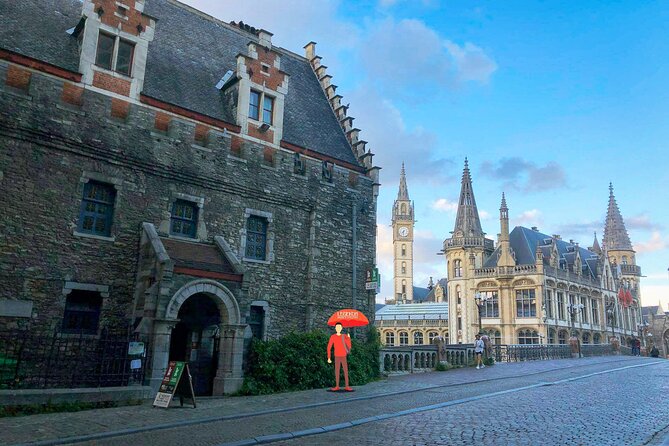
You start at St Michael’s Bridge, where the guide sets the stage for Ghent as a medieval trading hub. This is a good first stop because it’s where you can connect the city’s geography to its power.
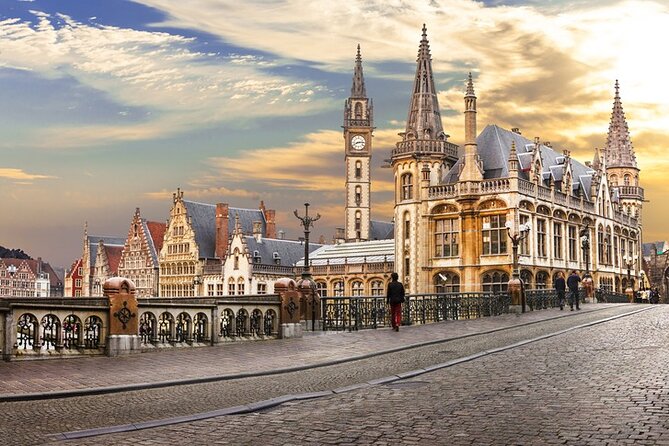
You’ll also be shown the three-tower skyline view that locals use to read the city. The value here is orientation: once you learn what to look for, the skyline stops feeling random and starts feeling like a diagram of history.
2) Graslei and Korenlei: the port that powered Ghent
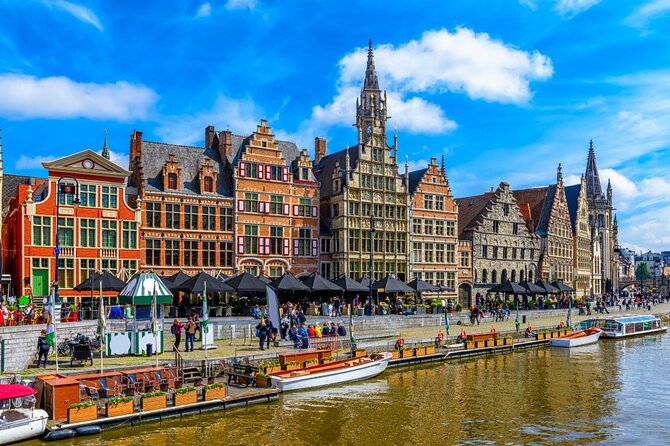
Next up is Graslei and Korenlei, the beating heart of the historic centre. The guide points out which buildings were tied to trading activities when this area functioned like the city port.
If you’re the type who likes to understand why buildings are placed where they are, you’ll appreciate this stop. It turns a pretty canal scene into a working-history lesson.
One small consideration: this area can be busy, so if you’re sensitive to crowds, plan to listen while you’re slightly off the busiest viewing spots.
3) Design Museum Gent: rebellion in brick form
At Design Museum Gent, you get a curious angle: the guide explains how a certain aspect of the museum symbolizes the stubborn, rebellious mindset of the Gentenaars.
This stop is short, and that’s okay. It’s not meant to be a full museum visit; it’s more like a thematic bridge to the rest of the tour’s message about civic independence.
4) Het Groot Vleeshuis: the butchers’ hall and the darker side
Then you cross into darker territory with Het Groot Vleeshuis, the Great Butchers’ Hall. You’ll get a view across the water at this majestic medieval building and hear some of the less cheerful facts linked to it.
I like this stop because it adds balance. Ghent isn’t only romance and pastel facades—it also had the systems that kept the city fed and the myths that grew around them.
5) Gravensteen: a castle inside the city
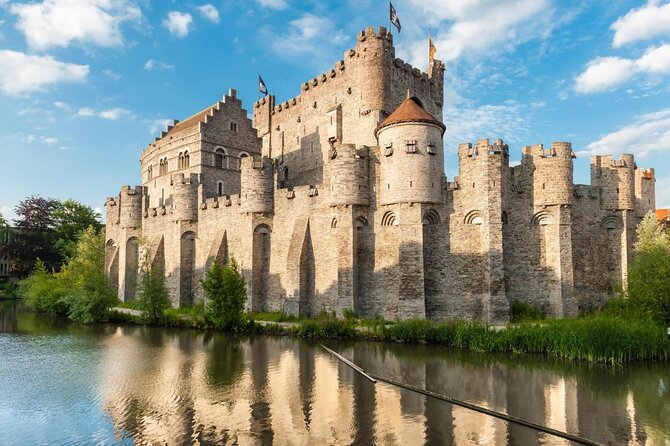
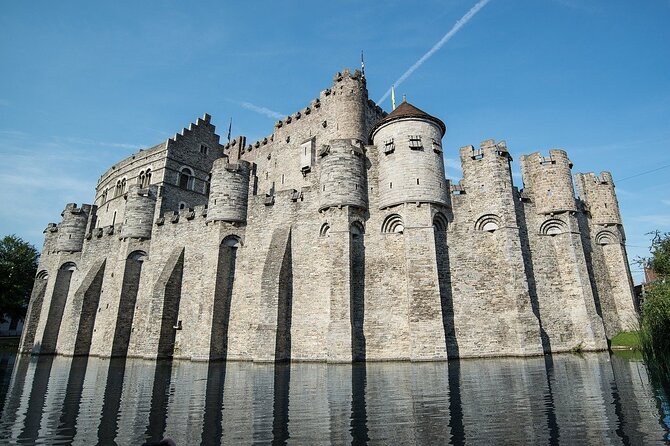
Gravensteen is different from many castles because it sits right in the middle of Ghent and is very well preserved. The guide explains why that matters and walks you through the castle’s past.
There’s also a practical catch: admission here is not included, so you’ll only be able to appreciate it from the outside unless you decide to pay separately. If you love castle architecture and want the full experience, plan to spend extra time later or consider entering if the tour timing allows.
6) St. Veerleplein: the square of death and life
At St. Veerleplein, the guide calls it both the square of death and the square of life, and explains why. It’s one of those Ghent details where the story changes how you see the same open space.
This is a great mid-walk pause. You’re back in an open area, so you can reset your legs and focus on listening.
7) Huis van Alijn: the only remaining god house
Huis van Alijn is a hospital story told through architecture. You’ll hear that it was once a hospital and that it’s the only remaining “god house” in Ghent.
This stop lands well after the castle and square because it shifts from military and civic themes to care and community. It also gives you a human angle on the city’s past, not just the big-power stuff.
8) Vrijdagmarkt: the square and the statue story
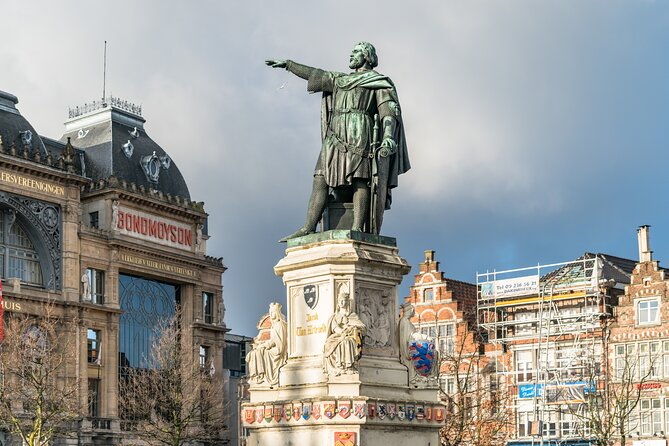
At Vrijdagmarkt, the guide brings in another layer: the square’s prominent role in Ghent’s history and the history of the statue in the middle.
This kind of stop is gold if you like context. Squares can look “just there” until someone explains what they meant socially—markets, gatherings, disputes, celebrations. You’ll feel that difference here.
9) Werregarenstraat: street art without the graffiti wars
Werregarenstraat is where the tour turns practical. You’ll walk through the designated area for street artists, created to protect monumental buildings from graffiti damage.
If you’re curious about contemporary culture mixed with old stone, this stop helps you see Ghent as a living city, not a theme park frozen in time.
10) Ghent Town Hall (Stadhuis): why the façade looks confused
At the Ghent Town Hall (Stadhuis), the guide explains why the building looks a little confused and ties that design to a significant conflict in Ghent’s history.
You might see this building later and assume it’s just a quirky mix. With the guide’s explanation, you’ll read it like political shorthand—architecture as evidence of change and power struggles.
Like a few other indoor-focused stops, admission here is not included.
11) St. Bavo’s Cathedral: the Ghent Altarpiece spotlight
Then comes St. Bavo’s Cathedral, one of Ghent’s biggest art anchors. The guide covers the cathedral’s history and points to its most famous treasure: the Ghent Altarpiece by the Van Eyck brothers.
Even if you don’t go deep inside on your own, this stop gives you a reason to care. Ghent isn’t only canals and medieval streets—it’s a place where major European art history sits in the open.
Admission is listed as free for this stop, so you’ll have an easier time fitting it into your day without extra planning.
12) Het Belfort van Gent: the people’s tower and its legend
Finally, you reach Het Belfort van Gent (the Belfry), described as the people’s tower. The guide connects it to stubbornness, power, and independence, and you’ll also hear about its former role as a prison.
There’s also a bizarre legend tied to the façade, and the guide uses it to keep the moment lively. Even if you’re not climbing or entering, the explanation makes the building feel less like a postcard and more like a story machine.
Admission here is not included, so you’ll likely just get the exterior and interpretive context unless you add separate entry.
13) Esglesia de Sant Nicolau: ending with St Nicholas
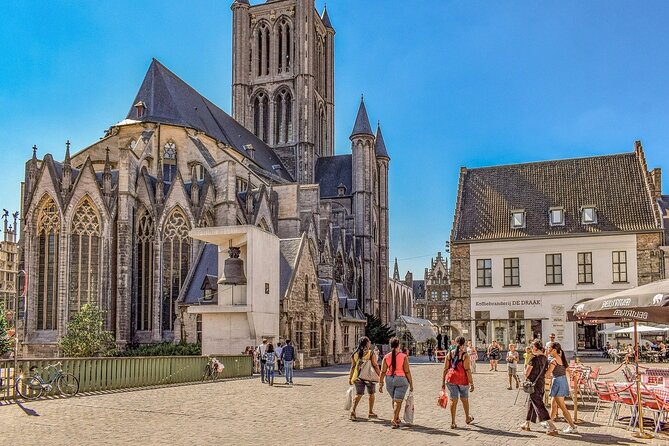
To close strong, the tour visits Esglesia de Sant Nicolau, an early 12th-century church that looks out over Korenmarkt. The guide tells you about St Nicholas, the protector of merchants and sailors, and connects that to the façade’s legend.
This is a satisfying way to end because it echoes the tour’s trading theme. You start with bridges and ports; you end with a patron saint tied to merchants and seafarers. The stories loop back in a satisfying way.
What you’ll learn that you can use immediately
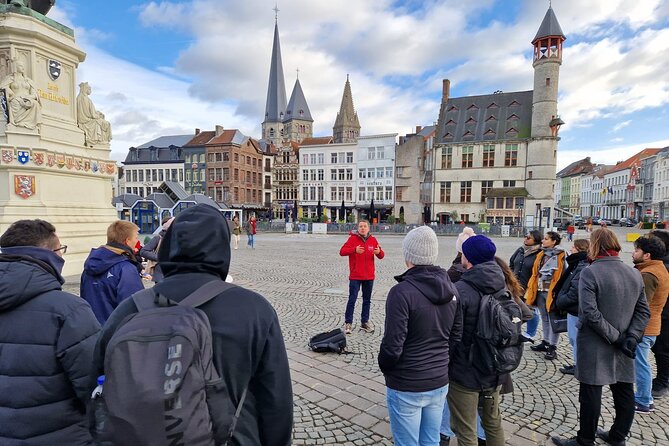
This tour is effective because it teaches you how to read the city. Here are the kinds of insights that actually help after the walk.
You’ll start noticing trade logic. You’ll be able to tell the difference between a “pretty canal spot” and a place that once ran shipments and money.
You’ll recognize civic independence in the buildings. Ghent’s pride shows up again and again, from the Belfry’s identity as the people’s tower to how the Town Hall’s façade is explained through conflict.
You’ll connect darker stories to everyday spaces. The square of death and life and the butchers’ hall moments make you look twice at places you might otherwise pass quickly.
You’ll get a practical cultural angle on today. Werregarenstraat is a rare example of how a city tries to balance street art with the protection of monuments. You’ll see how Ghent keeps changing without erasing itself.
Guide quality and pacing: why the two hours feel faster
A lot of walking tours fail because the group gets restless. This one tends to work because guides keep it moving and use humor to keep energy up. People have mentioned guides like Tatiana, Ksenia, Kasia, Robin, Liedewei, Kenny, and Florian for being engaging and story-driven, and that matches the tour’s design: short stops, strong themes, and clear transitions.
You’ll likely hear plenty of city tips too—where to eat, drink, and explore after you’re done walking. That turns the tour into a planning tool, not just a sightseeing loop.
In larger groups, some guides use a microphone so everyone can hear clearly. So if you’re a bit hard of hearing or you don’t want to strain, you’re likely covered better than on a whisper-into-the-wind style tour.
Who this tour fits best (and who should skip it)
This is ideal if you want a fast, structured intro to Ghent’s most important landmarks plus the stories behind them. It’s also a smart pick if you’re comparing Belgium cities and you want to spend your limited time in a way that feels meaningful.
You’ll especially like it if you:
- Want an easy way to get oriented fast and then roam on your own
- Enjoy architecture with context (not just photos)
- Like a guide who explains why places mattered, not only what they look like
You might want a different style if you:
- Prefer long museum time over outdoor storytelling
- Hate walking past crowds and want quiet solitude
- Are hoping for all entrances to be included (several stops list admission as not included)
Should you book Legends of Gent?
I’d book it if your main goal is to understand Ghent quickly and then explore with better instincts. The route hits St Michael’s Bridge, the Graslei/Korenlei trading core, the Gravensteen castle area, St Bavo’s Cathedral and the Belfry, and it stitches it all into one coherent message about commerce, civic power, and local identity.
If you’re comfortable paying attention for about two hours and you’re open to a pay-what-you-think ending, this tour can be a high-value way to kick off your visit. Just do one smart thing first: decide whether you want to enter the optional indoor stops like the castle, Town Hall, Belfry, and the Design Museum, because those are not included.
FAQ
FAQ
How long is the Legends of Gent walking tour?
It lasts about 2 hours.
What does it cost?
The listed price is $3.62 per person, and the tour is designed around paying what you want at the end based on your experience.
Is the tour offered in English?
Yes, it is offered in English.
Where do I meet the guide, and where does the tour end?
You start at Hostel Uppelink, Sint-Michielsplein 21, 9000 Gent, Belgium. The tour ends at the Belfry of Ghent area (Sint-Baafsplein, 9000 Gent, Belgium).
Is there a mobile ticket?
Yes, the tour uses a mobile ticket.
Are admissions included for every stop?
Not all admissions are included. Some stops list admission as not included, including the Design Museum Gent, Gravensteen, Ghent Town Hall (Stadhuis), and the Belfry.
Is there a limit on group size?
Yes, the maximum is 35 travelers.
Does the tour require good weather?
Yes. It requires good weather, and if it’s canceled due to poor weather you’ll be offered a different date or a full refund.
Can I cancel for a refund?
Yes. You can cancel up to 24 hours in advance for a full refund. If you cancel less than 24 hours before, the amount paid will not be refunded.