REVIEW · GHENT
Ghent: Guided Walking Tour and Canal Boat Trip
Book on GetYourGuide →Operated by buendía · Bookable on GetYourGuide
This tour turns Ghent’s three-tower skyline into a guided map, then adds a canal boat trip for real perspective. I like how it mixes landmark stops with the day-to-day life of old Ghent, so you’re not just posing in front of pretty buildings. I also like the way the guide explains big art and symbols in plain language, especially at St. Bavo Cathedral. One possible drawback: it’s a lot of sights in 150 minutes, and if rain hits, you’ll want to stay flexible.
Two things I really like: first, the Cathedral of St. Bavo visit gets you oriented to one of the most famous works in history, The Adoration of the Mystic Lamb, with help to interpret its symbols. Second, the walk pushes into the under-the-radar neighborhoods around Patershol and Gravensteen, where you start to understand why Ghent looked and worked the way it did. The setup is smart, but plan for wet weather at least once—there’s a decent chance you’ll be walking outside.
If you want a calm, slow morning, this isn’t that. The pace is steady, and the constant “listen and look” can feel like a firehose if you’re not used to guided tours. Still, with comfortable shoes and a willingness to take it in, it’s one of the better ways to get oriented fast.
In This Review
- Key points worth knowing before you go
- Meeting outside the Belfry: find the black umbrella
- Belfry of Ghent: the “look up” moment
- Saint Bavo Cathedral and the Mystic Lamb: symbols, not just statues
- Town Hall, St. Nicholas, and Graslei: reading the skyline trio
- From fish markets to Herb and Grain Quay: why Ghent traded like a machine
- Patershol and Gravensteen: weavers, legends, and a fortress mood
- The canal boat on the Leie and Lieve: calm views after the walking
- Radios, pacing, and what the 150 minutes really feel like
- Price and value: $32 for a tower-to-canal orientation
- Who should book this Ghent tour (and who should pass)
- Should you book: my honest decision guide
- FAQ
- How long is the Ghent walking tour and canal boat trip?
- Where do I meet my guide?
- Is the tour in English?
- What’s included in the price?
- Is food or drinks included?
- What should I bring?
- What is the cancellation policy?
Key points worth knowing before you go

- Three towers, one skyline: Belfry, St. Bavo Cathedral, and St. Nicholas shape how you read Ghent from street level.
- Mystic Lamb symbols made readable: You’ll get the “what am I looking at?” context without needing art-history homework.
- Markets with a purpose: The stop at the old fish market area connects food, trade, and why the city grew.
- Guild trades and quays: Herb and Grain Quay helps you picture 16th-century commerce, not just architecture.
- Boat time on the Leie and Lieve: The cruise gives a fresh view of both banks and the city’s working waterways.
- Short radios help you hear: The little listening devices tend to make the narration easy to follow on foot and at stops.
Meeting outside the Belfry: find the black umbrella
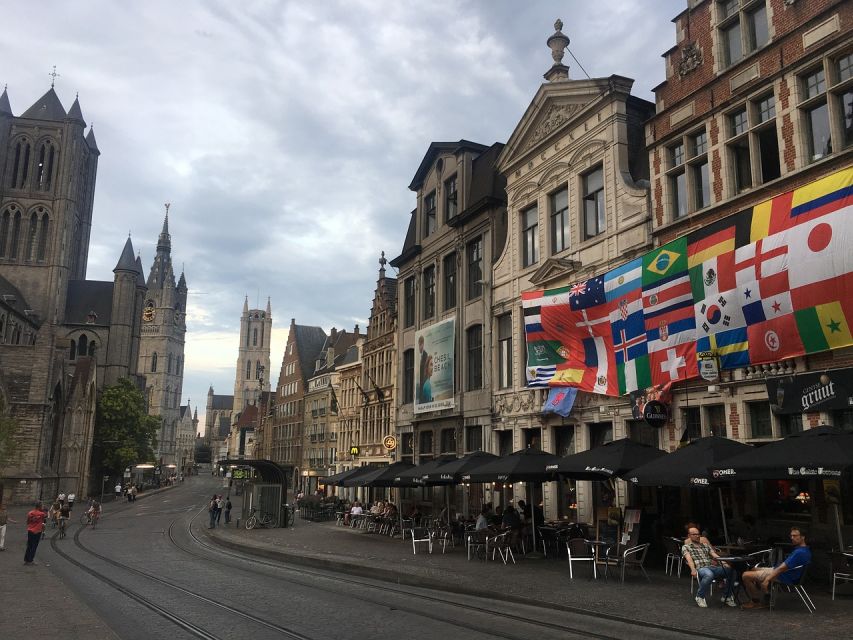
You start outside the Belfort Tower, meeting in the area of Sint-Baafsplein 12. Your guide holds a large black umbrella—an easy visual cue when you’re checking signage and wondering if you’re early or late. This matters because the tour works best when you’re not sprinting to catch the group.
Plan on arriving a few minutes ahead. Ghent’s old center is compact, but the meeting area can feel busy as people drift around photos, street cafés, and quick errands. Once you’re in the group, you’ll get a smooth handoff from walking to the guided stops, and later to the canal boat launch area.
If you’re coming in from somewhere nearby, good. If you’re arriving from Brussels or another city, I’d still build in extra time. Some groups have had late starts due to travel connections, and you don’t want to feel stressed before the tour even begins.
You can also read our reviews of more walking tours in Ghent

Belfry of Ghent: the “look up” moment
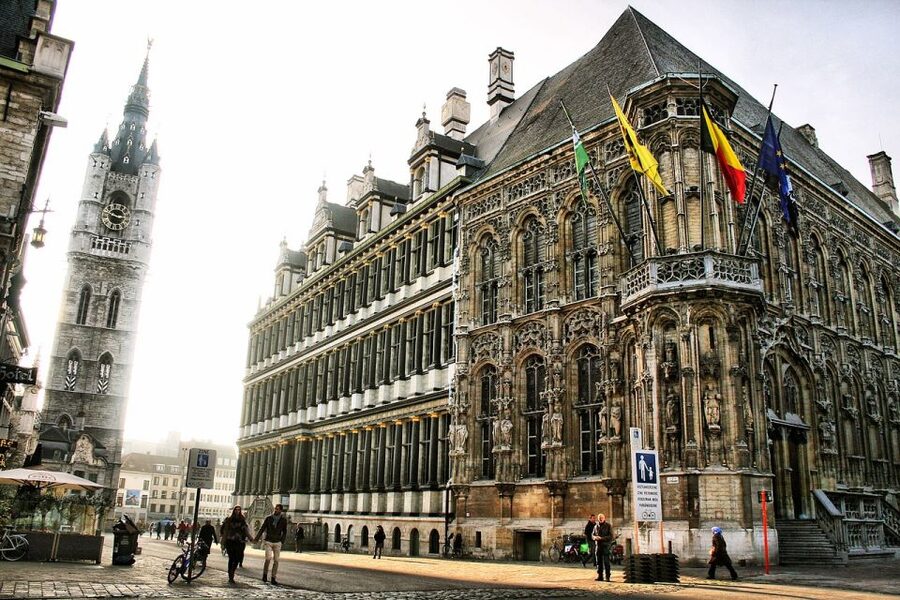
The tour begins with a brief stop at the Belfry of Ghent. Even if you don’t spend long time inside, the Belfry sets the tone. It’s part of why Ghent feels vertical in a way many Belgian cities don’t. Your guide helps you see how the tower functions as more than a pretty silhouette—it’s a lookout and a marker of civic power.
You’ll also start building a mental map quickly. Ghent’s central sights are close enough that you can later walk them again on your own, but only if you know what you’re looking at in the first place. This is where the guide starts giving you that “now I get it” pattern.
A useful tip: keep your phone charged, because once the guide points out the tower alignments, you’ll want to recreate the skyline views later as you wander.
Saint Bavo Cathedral and the Mystic Lamb: symbols, not just statues
Next up is the Cathedral of St. Bavo, where one of the biggest stars is The Adoration of the Mystic Lamb by the Van Eyck Brothers. This is the kind of painting people recognize by name, but it can feel like a locked puzzle if you simply stand there and look.
That’s why this stop is so valuable. The guide explains the artwork’s symbols in a way that makes interpretation feel almost straightforward. You’re not asked to memorize religious references; you’re shown what to notice and how the pieces connect. After that, the painting reads like a story rather than a wall of details.
You’ll likely leave with two benefits: (1) you understand why this cathedral is a must in Ghent, and (2) you have a framework for seeing other medieval art themes when you travel elsewhere in Europe.
Bring your patience here. Cathedral visits can be visually intense and emotionally quiet at the same time, and it’s easy to get “stuck in looking” if you’re not listening to the guide’s cues.
Town Hall, St. Nicholas, and Graslei: reading the skyline trio
After the cathedral, the tour works outward through the civic and sacred landmarks that define the center. You’ll pass the Ghent Town Hall and then head to Church of St. Nicholas. Together with the Belfry, these three towers are the skyline you’ll keep noticing long after the tour ends.
Then comes Graslei, the classic waterfront area. This is where the guide ties the buildings to water and trade. In places like Ghent, the river is not just scenery; it’s infrastructure—how goods moved, how people met, and how money (and rules) traveled.
This section is also great for photos, but don’t treat it like a photo sprint. If you listen for the “why this place mattered” explanations, you get more out of the same view. And that’s what makes the walk feel worth it, even when you’re repeating the basic sightseeing you could do on your own.
One consideration: church and waterfront areas can feel crowded, especially in good weather. If the group pauses often for interpretation (and it will), you might want to keep an eye on your footing and your space.
From fish markets to Herb and Grain Quay: why Ghent traded like a machine
The walk continues toward the old fish market area and then into 16th-century Ghent via the Herb and Grain Quay. These stops are where you stop seeing Ghent as only medieval “pretty” and start understanding it as a working economy.
The Herb and Grain Quay is a key trading post from the period the guide focuses on. You’ll learn about guild trades—how crafts and merchant work were organized, protected, and regulated. It’s the difference between seeing old brick and recognizing how people earned a living inside those walls.
Then the old Meat and Fish Markets area comes in with a helpful comparison: the guide frames it as a kind of supermarket of its time. That’s not just a fun metaphor. It explains why markets weren’t optional. They were central to feeding the city and keeping trade flowing.
If you like history that feels practical—who bought what, where it came from, how the city made decisions—this part is likely your favorite.
You can also read our reviews of more boat tours in Ghent

Patershol and Gravensteen: weavers, legends, and a fortress mood
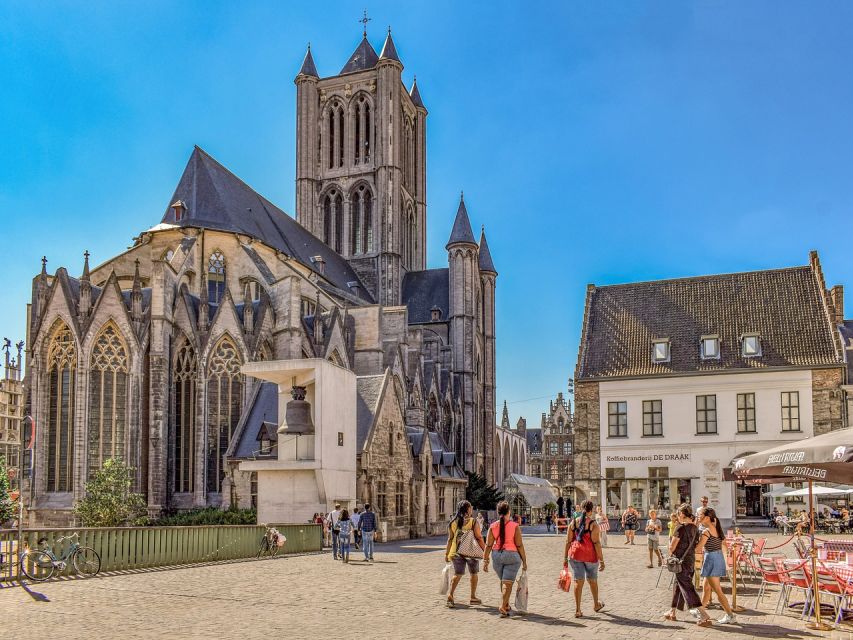
Next you head into Patershol, often called the weavers’ quarter. This is a good change of pace because it feels more like a lived-in neighborhood than a museum corridor. You’ll learn about the area’s background and why weaving mattered in Ghent’s story.
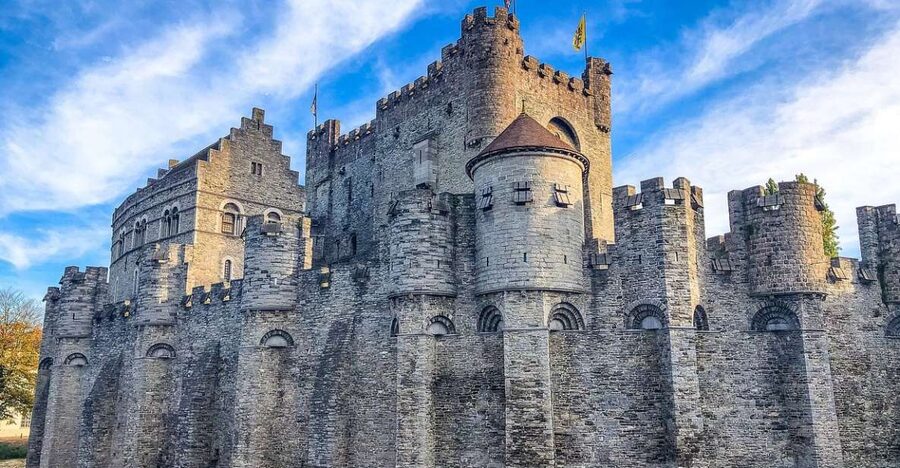
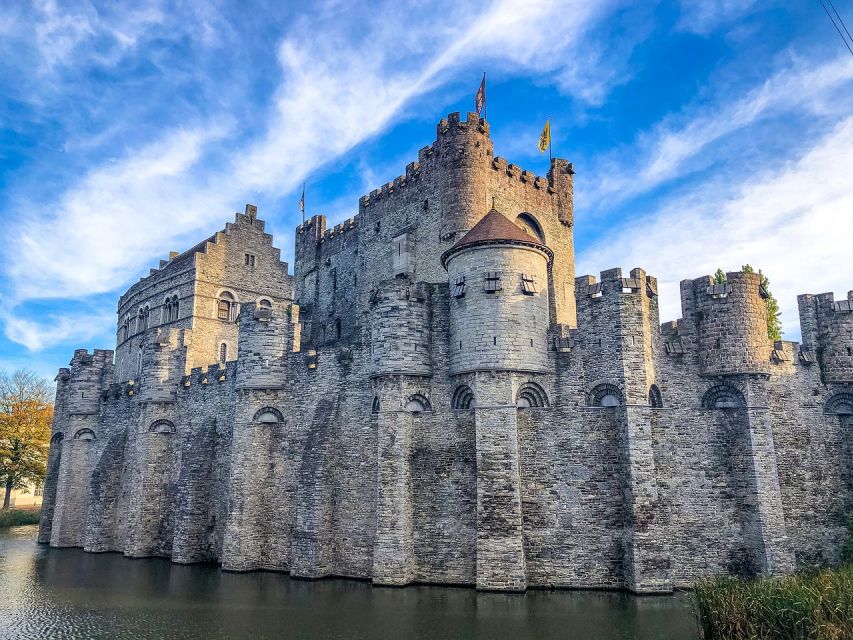
Then you move toward Gravensteen, the Castle of the Counts of Flanders. Even if you don’t go inside in the span of the tour, the location and presence do the work. The fortress makes the civic and economic themes from earlier stops feel real and physical—power isn’t abstract when it’s made into stone.
The guide also shares legends and curiosities tied to the castle and the area. These bits of storytelling help you remember details that would otherwise blur together. They’re also a big reason why the tour feels like more than just “walk, stop, photo.”
One practical note: castle-area streets can be uneven and a bit steeper than you expect. Your best friend here is still comfortable footwear.
The canal boat on the Leie and Lieve: calm views after the walking
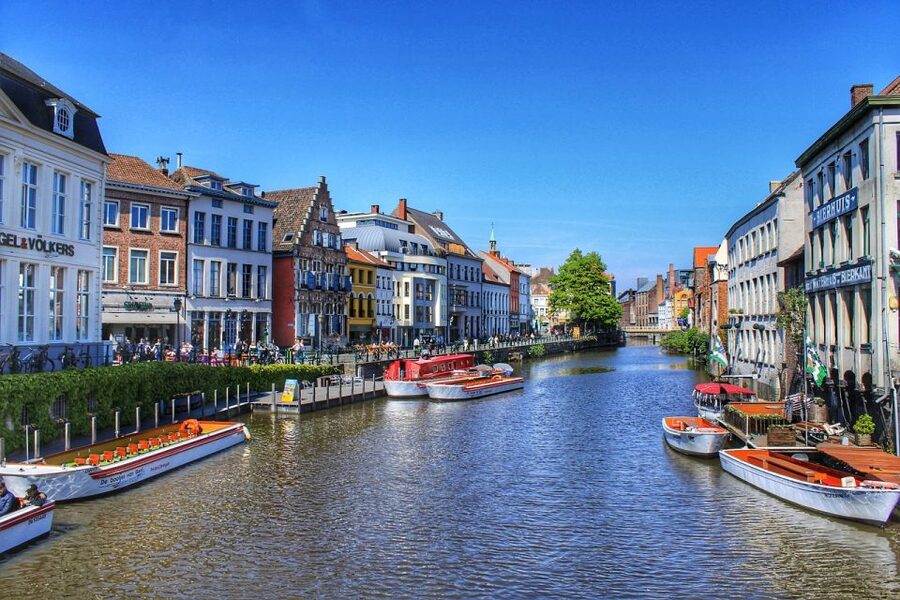
The second half is the boat trip, about 30 minutes on Ghent’s canals. You sail along the river Leie and the Lieve canal, taking in the two banks and the way daily life sits right beside the water.
This is where the tour earns its balance. All that cathedral and market talk stays in your head while you watch Ghent from a different angle. From the water, you can spot patterns—where the quays are, how buildings line up, and how the waterways connect the city’s parts.
A bonus feature: there’s an audio guide with illustrated translations. Even if you’re not at the right edge of the group, you can still follow along. Some boat guides also deliver narration in multiple languages, which can make the experience feel smoother even if your English isn’t perfect.
Want a small strategy? Once you’re onboard, pick a spot where you can see both banks without constantly leaning. If you’re with a group, agree on it early so people don’t shuffle mid-boat.
Radios, pacing, and what the 150 minutes really feel like
A lot of guided tours fail at one thing: hearing. Here, the use of small listening radios helps a lot. Multiple guides in the experience have done well with delivery, timing, and keeping the narration easy to follow. You can focus on the buildings and the story instead of craning your neck for every sentence.
The pacing is designed to keep momentum. You’ll hit a sequence of guided stops, then switch to the boat for a break. That structure helps if you’re sightseeing for a limited time in Ghent and want to walk away with a coherent picture.
Still, be ready for “information density.” One review note that the tour can be a lot to digest, and that’s fair: you’ll be learning about art, trade, guilds, and civic structures in a short window. If you’re the type who likes to absorb gradually, take a few quiet pauses on your own during the day afterward, and don’t try to immediately sprint to more museums.
Also, keep weather in mind. One group had rain for about an hour, so it’s smart to plan for a light layer or rain gear—even if the morning starts nice.
Price and value: $32 for a tower-to-canal orientation
At about $32 per person for roughly 150 minutes, you’re paying for three things you’d otherwise piece together yourself: a guided walking route through the center, professional narration, and the canal boat portion. The boat alone is a meaningful add-on because it’s the one part you can’t replicate just by wandering streets.
This pricing feels especially fair if you value explanation. The cathedral stop with the Mystic Lamb can be the difference between “I saw it” and “I understood why people care.” The tour also gives you a structured route, which saves decision fatigue.
You’ll still need to budget for food and drinks, since they’re not included. But that can be a good thing: you can choose a lunch that fits your taste and dietary needs instead of being stuck with whatever the group schedule allows.
Who does this represent best value for? People with limited time in Ghent who want maximum orientation. If you’re staying multiple days and enjoy independent wandering, you might still appreciate this first day setup so your self-guided walks make sense.
Who should book this Ghent tour (and who should pass)
This tour is a strong fit if you want a guided snapshot of central Ghent without losing the thread. It’s also a good match if you like history that ties directly to places: why the market areas mattered, how trade worked, and how power showed up in towers and fortresses.
It’s also ideal for first-timers. After a tour like this, Ghent becomes easier to navigate on your own because you’ll recognize the skyline cues and remember what each major stop was about.
If you prefer slow travel, deep museum time, or lots of free time to linger, then this might feel rushed. And if you hate group pacing or you’re sensitive to standing in crowds at popular monuments, plan to take a bit of control after the tour by choosing quieter streets for your own exploration.
One more note: the guide lineup varies, and that matters. In past sessions, guides like Ariel, Peter, Juliana, and Eros have been highlighted for wit, strong English, and making history feel alive. You can’t guarantee the exact guide, but the experience tends to be anchored by engaging delivery.
Should you book: my honest decision guide
Book it if you want to get oriented fast. The combination of towers + cathedral art explanation + market trading context + a canal cruise is a strong use of 150 minutes, and the $32 price feels reasonable for that package.
Skip it if you want a low-energy day or you plan to spend most of your time just wandering without listening. This tour rewards attention. When you give it that attention, Ghent starts to feel like it has a story you can follow.
If your schedule allows, aim for comfortable shoes, expect at least a few outdoor stops, and treat the boat as your “reset button.” Do that, and you’ll finish the day with a much sharper picture of Ghent than you started with.
FAQ
How long is the Ghent walking tour and canal boat trip?
The total duration is 150 minutes.
Where do I meet my guide?
Meet outside the Belfort Tower. Your guide will be holding a large black umbrella.
Is the tour in English?
Yes, the live tour guide is provided in English.
What’s included in the price?
It includes the walking tour, a professional guide, and the canal boat trip.
Is food or drinks included?
No. Food and drinks are not included.
What should I bring?
Wear comfortable shoes. It’s also smart to be ready for changes in weather since parts of the tour are outdoors.
What is the cancellation policy?
You can cancel up to 24 hours in advance for a full refund.