REVIEW · SAVANNAH
Historic Homes of Savannah Guided Walking Tour
Book on Viator →Operated by Savannah Walks · Bookable on Viator
Savannah’s homes tell stories you can walk into. This guided historic house walk links five famous stops, with time to learn how they were built, who lived there, and why they still matter.
I especially like the mix of architecture + people. The tour doesn’t treat houses like museum props; it connects style, materials, and the families behind them. I also like the pace: it’s built for strolling, not sprinting.
One thing to watch is that admission is not included at most stops. You’ll get the guided exterior and key context for several houses, but only the Davenport House Museum includes entry time within the tour, so plan for extra ticketing if you want to go inside everything.
In This Review
- Key highlights at a glance
- Why this walking tour feels practical (not just sightseeing)
- Where you start and how the route flows (Warren Square to the Olde Pink House)
- Stop 1: Owens-Thomas House and Slave Quarters, where preservation meets complexity
- Stop 2: Juliette Gordon Low Birthplace Museum on Bull and Oglethorpe
- Stop 3: Green-Meldrim House and the cost of style
- Stop 4: Davenport House Museum, your main included entry (and it’s worth it)
- Stop 5: Hamilton-Turner House, Second Empire, electric light, and Disney ties
- Guide style matters: what a great guide does on this route
- Timing, pacing, and getting the most out of short stops
- Who should book this tour (and who might want a different one)
- Should you book Historic Homes of Savannah Guided Walking Tour?
- FAQ
- How long is the Historic Homes of Savannah Guided Walking Tour?
- Where does the tour meet and where does it end?
- What time does the tour start?
- Is admission included for all the house stops?
- Does the tour include a guided visit at Davenport House Museum?
- Are there mobile tickets for this experience?
- Is the tour guided?
- How many people are in the group?
- Is the tour offered in English?
- Is the experience dependent on weather?
Key highlights at a glance
- Warren Square start: easy to find and a great base for orienting yourself on foot
- Small group feel (max 30): enough space to hear your guide and ask questions
- One included house admission at Davenport House Museum for a longer, payoff stop
- Real architectural variety across Federalist, Second Empire, Gothic Revival, and more
- Guides with big storytelling energy, including praise for William, Brad, and Zack
Why this walking tour feels practical (not just sightseeing)
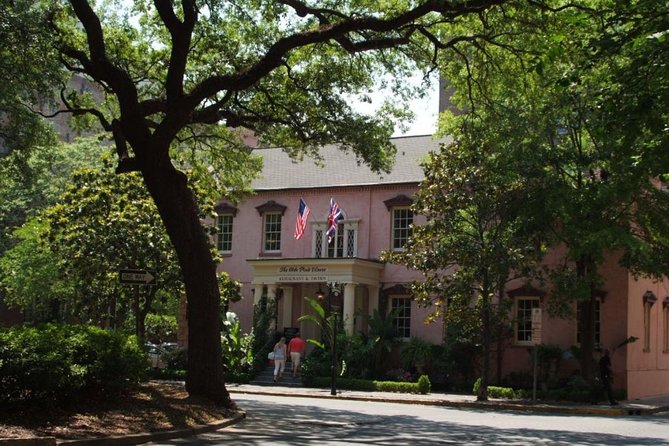
This is a good Savannah “starter course.” You get a guided route through a compact chunk of the Historic District that covers multiple time periods and styles in about two hours. That matters, because Savannah can feel like you’re looking at the same kind of pretty street over and over. Here, the guide keeps changing the angle: materials, money, design choices, and preservation decisions.
I also like that the stops are real places, not stand-ins. You’re not chasing a themed display. Instead, you’re learning what makes specific houses significant, then seeing the details in place: proportions, façades, and the way buildings sit along the street grid.
Finally, you’ll walk enough to feel like you’re getting your bearings, but the tour doesn’t bury you. Short stops early on help you build context fast, and then Davenport gives you a longer, museum-style payoff.
You can also read our reviews of more walking tours in Savannah



Where you start and how the route flows (Warren Square to the Olde Pink House)
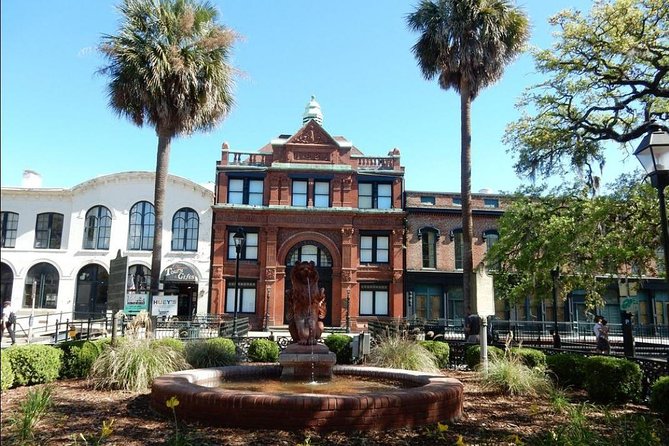
The tour meets at Warren Square, 22 Habersham St and finishes at The Olde Pink House, 23 Abercorn St. Starting at Warren Square is smart. It’s central and gives you a clean mental “anchor” point for the rest of your day.
The end at the Olde Pink House is also useful. It’s a natural place to keep exploring afterward, grab a snack, or pivot to another nearby stop on your own. You’re not stuck returning to the exact same point.
One practical tip: wear shoes that handle Savannah sidewalks. You’ll do several short walks between house fronts, and the tour is timed tightly enough that good footing keeps it fun instead of tiring.
Stop 1: Owens-Thomas House and Slave Quarters, where preservation meets complexity
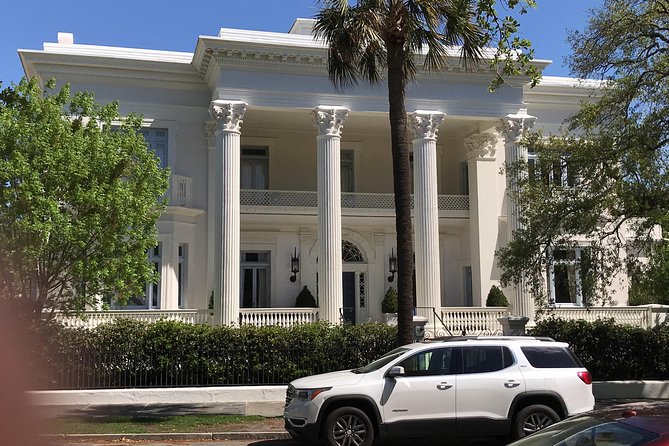
This first stop is Owens-Thomas House and Slave Quarters. The mansion is described as circa 1916, and you’ll get a guided overview of what built it, who lived there, and why it has lasted. You also learn about the slave quarters context tied to the property, which is one of those topics that adds weight to what you’re looking at outside.
It’s also one of the most interesting “quick” stops on the route because it connects three things people often keep separate when they travel:
- the grandeur of the main house
- the reality of labor and ownership in the background
- the preservation decisions that kept these structures visible for modern visitors
Time here is about 10 minutes, and it’s not positioned as a full museum visit. If you want to go deeper inside the home, the house offers tours every hour on the hour (though the tour you’re on does not include that house admission).
Best approach: treat this as your orientation moment. Pay attention to the exterior details your guide points out, then decide whether you want to add an inside tour based on your energy level and what themes you want to prioritize.
Stop 2: Juliette Gordon Low Birthplace Museum on Bull and Oglethorpe
Next you head to the Juliette Gordon Low Birthplace Museum, and the guide frames it around a specific reason it still stands: a famous life tied to a very physical corner. The house is described as built in 1818, and it’s on the corner of Bull and Oglethorpe.
This stop is the “story anchor” on the itinerary. Juliette Gordon Low is tied to the founding of the Girl Scouts, and this birthplace is where your guide helps connect the setting to the person. You’ll also hear about William Tecumseh Sherman being invited to dinner, and the context here is presented as part of the surprise behind why the place matters. Even if you think you already know the headline, this kind of stop works because it adds what you normally miss: the house as an artifact in its original neighborhood.
The time is about 15 minutes, and admission isn’t included in the tour package at this stop. That makes it a good moment for you to decide what you prefer:
- Want guided context only? Stay with the walk-by and move on.
- Want the museum depth? Plan on adding the ticket separately if it fits your schedule.
Stop 3: Green-Meldrim House and the cost of style
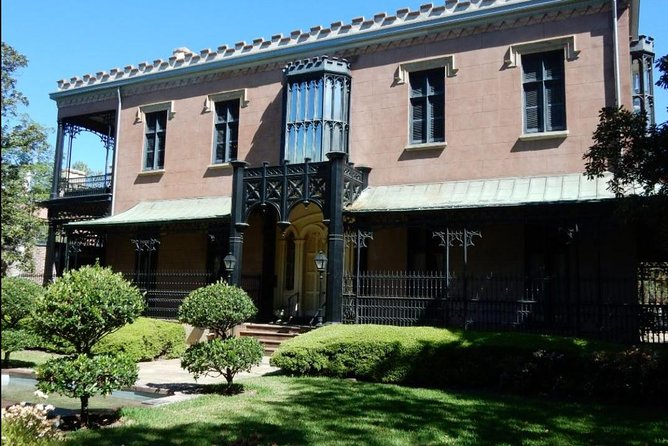
The Green-Meldrim House brings you into Gothic Revival territory, described as circa 1853. Your guide focuses on the family and the building itself, including that it was built at a cost of $93,000, which is highlighted as Savannah’s most expensive home at the time.
That cost detail matters because it gives you a lens for what you’re seeing. Gothic Revival often signals “we want a statement,” but the real-world question is whether that statement was affordable, fashionable, or strategic for the people paying for it. The guide helps you read the building as a social signal, not just an architectural type.
You’ll spend about 15 minutes here, again with admission not included. If you’re an architecture-focused traveler, this is a great stop to pay close attention to how style shows up on the exterior: shape, rhythm, and how the façade reads from the street.
A small drawback to keep in mind: because the time is short, you’ll get the essentials and key interpretations, not a full museum-length explanation. If you’re the type who wants every layer, you may want to plan a separate follow-up visit later.
You can also read our reviews of more guided tours in Savannah



Stop 4: Davenport House Museum, your main included entry (and it’s worth it)
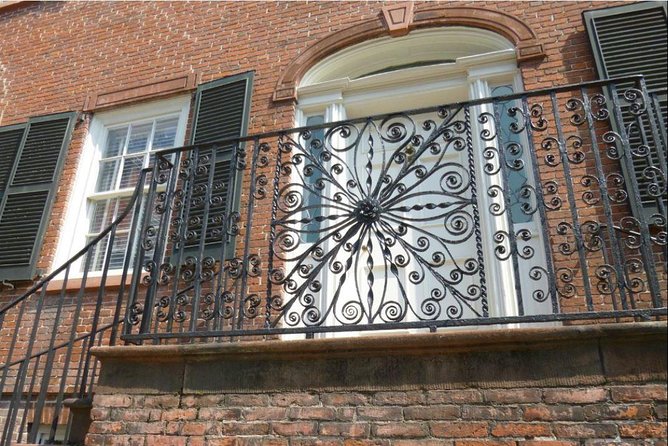
The tour’s biggest “sit and focus” moment is Davenport House Museum. The home is described as circa 1820 Federalist style, and the guide explains its unique role in history: it’s described as the place that started the restoration movement in Savannah in 1954.
This is where the tour delivers value in a very practical way. The itinerary gives you about 1 hour at Davenport, and this is one of the only stops where admission is included. That’s a big deal because it turns the tour from an exterior-and-context walk into an actual interior experience with enough time to absorb details.
After the Homes tour, you’ll also be given a tour voucher so you can tour the home at your leisure after the guided portion. In other words, Davenport is both part of your timeline and a second chance at a deeper look.
If you care about preservation, this stop gives you a story that connects directly to what makes Savannah recognizable today. You’re not just seeing old buildings; you’re learning how they were saved, and why that mattered.
Stop 5: Hamilton-Turner House, Second Empire, electric light, and Disney ties
The final stop is Hamilton-Turner House, now a bed and breakfast. It’s described as Second Empire style Victorian, and your guide ties it to a few standout points: it was the first home in Savannah illuminated with the electric light bulb, and it was used as the pattern for the Haunted Mansion at Disney World by Walt Disney.
Even if you’re not a Disney person, that comparison works because it shifts your attention from “old building” to “design that traveled.” It’s a reminder that Savannah’s architecture influenced how later entertainment creators imagined atmosphere, form, and silhouette.
This stop is about 15 minutes, with no admission included in the tour. Use it as a strong closing chapter: you’ll have learned earlier architectural context, and now you end with a building that connects technology, style, and cultural afterlife.
Guide style matters: what a great guide does on this route
On a tour like this, the guide is the difference between seeing pretty houses and actually understanding what you’re looking at. The route is short at several stops, so your guide has to do two jobs at once:
- translate architectural cues into plain language
- keep the pacing so the tour doesn’t feel rushed
In the tour experience, I’d keep an eye out for guides praised for being funny without turning it into a lecture, and for answering questions instead of moving on. Names that come up in guest feedback include William, Brad, and Zack, with praise tied to engaging storytelling, humor, and a smooth “ask me anything” attitude.
One caution: not every guide style lands with every group. There are accounts where a guide’s personal opinions created discomfort for some people. You can’t control who you get, but you can control your own approach: if a topic veers off the architecture and preservation focus, ask a direct question that pulls it back to what you came for.
Timing, pacing, and getting the most out of short stops
Here’s how the timing works in a way you can plan around:
- Stop 1: about 10 minutes
- Stop 2: about 15 minutes
- Stop 3: about 15 minutes
- Stop 4: about 1 hour (main included admission)
- Stop 5: about 15 minutes
That pattern is efficient. You build context quickly, then the tour gives you one longer museum-quality moment. To get the most value, I’d do this:
- Decide you want the Davenport interior experience, since admission is included.
- Treat the other stops as guided “meet the building” moments unless you’re willing to buy extra tickets.
Also, because the tour relies on good weather, bring a plan for rain. The tour can still work in light rain, but if you get downpours, you may be offered alternative dates or a refund instead. Pack accordingly.
Who should book this tour (and who might want a different one)
You should book if:
- you want an organized introduction to Savannah’s Historic District architecture
- you care about preservation and want a specific “how it was saved” story
- you like guides who can keep moving while still answering questions
You might want a different option if:
- you hate splitting your time between outside viewing and paid house entry
- you expect every stop to include interior access
- you prefer super long museum hours at multiple sites (this one is built for a fast route plus one big entry)
This tour is also a good match for first-time Savannah visits. The walk helps you place neighborhoods, understand why certain houses gained fame, and finish with energy to keep exploring on your own.
Should you book Historic Homes of Savannah Guided Walking Tour?
I’d book it if you want a well-paced, guide-led way to see multiple signature houses in a short window, with Davenport House Museum as your guaranteed major interior stop. The route works especially well when you treat it as a foundation trip: learn the themes on the walk, then add deeper visits where your curiosity is strongest.
Just go in with one mindset: most homes here are primarily explained from the outside unless you choose to buy additional admission for interior tours. If that fits your style, you’ll come away with sharper eyes and a clearer sense of how Savannah’s house styles and preservation stories connect.
FAQ
How long is the Historic Homes of Savannah Guided Walking Tour?
The tour lasts about 2 hours.
Where does the tour meet and where does it end?
It starts at Warren Square, 22 Habersham St, Savannah, GA 31401 and ends at The Olde Pink House, 23 Abercorn St, Savannah, GA 31401.
What time does the tour start?
The listed start time is 10:00 am.
Is admission included for all the house stops?
No. Admission is included for the Davenport House Museum, while admission for the other listed house stops is not included.
Does the tour include a guided visit at Davenport House Museum?
Yes. You’ll spend about 1 hour at the Davenport House Museum with admission included.
Are there mobile tickets for this experience?
Yes. The tour uses a mobile ticket.
Is the tour guided?
Yes. It includes a professional guide.
How many people are in the group?
The tour has a maximum of 30 travelers.
Is the tour offered in English?
Yes. The tour is offered in English.
Is the experience dependent on weather?
Yes. The experience requires good weather and may be offered a different date or a full refund if canceled due to poor weather.