REVIEW · HELSINKI
Helsinki Walking Tour – Small Group
Book on Viator →Operated by Rento Helsinki Tours · Bookable on Viator
Helsinki gets real fast on this walk. You’ll cover the postcard core and learn how Finns see religion, politics, and everyday life—without feeling like a textbook. It’s a small-group format, so questions actually get answered.
What I like most is the mix of top sights plus culture in plain language, especially the sauna-and-city-life angle. I also really enjoy that the guide (Jonna, from Rento Helsinki Tours) works with the group’s interests and adds personality—history with humor, not just dates.
The one consideration is simple: it’s about 2 hours 30 minutes of walking outdoors, so comfortable shoes and weather awareness matter.
In This Review
- Key highlights worth knowing before you go
- Why this 10:00 am Helsinki walk is a smart first-day move
- Senate Square and Helsinki’s “how it all started” story
- Helsinki Cathedral: architecture, religion, and local picnic behavior
- Bank of Finland and Saatytalo: national identity you can read in buildings
- The Orthodox cathedral stop that makes Lutheran Finland make sense
- Allas Pool and sauna etiquette: the city’s favorite hobby
- Kauppatori Market Square: Finnish gastronomy with real city landmarks
- Esplanadi Park to Central Railway Station: seagulls, Saarinen, and Finland’s web
- Oodi Central Library: the best ending point for a curious mind
- Price and value: what $59.28 buys you in Helsinki time
- What you’ll learn (and why it sticks)
- Who should book this tour (and who might prefer something else)
- Should you book this Helsinki walking tour?
- FAQ
- How long is the Helsinki Walking Tour – Small Group?
- Where does the tour start and where does it end?
- What time does the tour begin?
- Is the tour offered in English?
- How big is the group?
- What’s included, and are attraction entry fees required?
- Is there a cancellation option if plans change or the weather is bad?
Key highlights worth knowing before you go
- Max 8 travelers means a close-knit feel and lots of chances to ask questions
- Jonna’s approach: she starts by learning what you want to know, then follows that thread
- Sauna culture at Allas Pool includes etiquette, not just a fun fact
- Helsinki Cathedral to Bank of Finland links buildings to religion and national identity
- Oodi Central Library ends the tour with a look at a public space that feels more like a community hub
Why this 10:00 am Helsinki walk is a smart first-day move
This tour is designed for getting your bearings fast. You start at Senate Square and end at Oodi Central Library, so you finish near the city’s transit flow and can keep exploring afterward without backtracking.
With the schedule staying tight (about 2 hours 30 minutes), it’s a good fit if you have limited time in Helsinki. And because the group is capped at 8 people, the pace feels human. You’re not shouting over a big crowd, and you’re more likely to get clear answers when you ask something mid-walk.
You’ll also learn a lot of the stuff that usually sits between the guidebook lines: why certain buildings look the way they do, how religion and politics shaped public life, and what everyday Finnish habits mean in practice. If you like walking tours that explain culture, this one makes that easy.
You can also read our reviews of more walking tours in Helsinki



Senate Square and Helsinki’s “how it all started” story

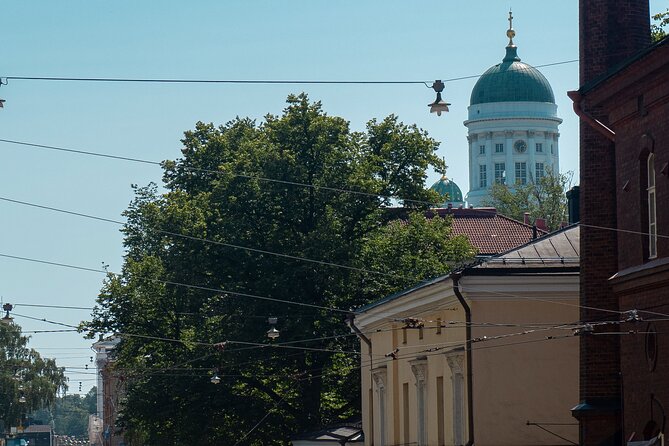
Senate Square is Helsinki’s big camera-ready moment. From here you get the Helsinki Cathedral, the old Senate, the University of Helsinki, the National Library, and the Alexander II statue—all in one view. More importantly, the guide uses this area to explain how Helsinki grew from a tiny fishing town into a capital.
It’s a useful way to begin because you start with the city’s center and then build outward with context. You’re not only learning what you’re seeing; you’re learning why Helsinki developed the way it did.
One small practical win: Senate Square is easy to find and a straightforward meeting point. That matters when you’re traveling and don’t want your morning to feel like an errand.
Helsinki Cathedral: architecture, religion, and local picnic behavior
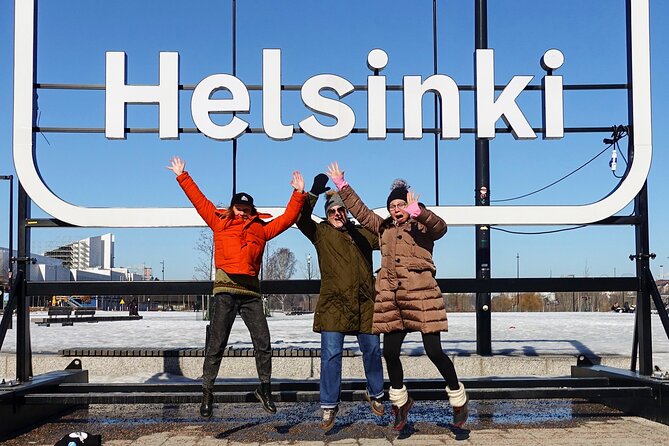
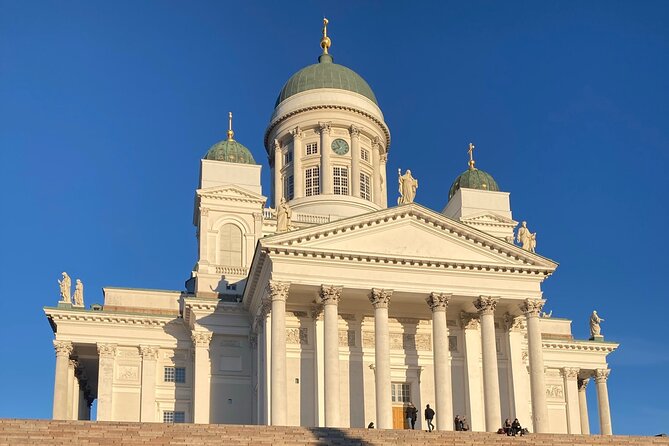
The Helsinki Cathedral is the main sight for a reason. It opened in 1852, and you’ll get stories about the building as you stand right near it—so the details make sense in the real setting, not just on a screen.
This stop also leans into religion and daily life. You’ll hear the question that guides love to ask because it changes how you look at Finland: what is the major religion there? And you’ll also get the everyday observation that people gather on the cathedral steps for picnics—very practical, very Helsinki.
There’s also a fun twist in the way the story is told: the architect is said to have hated Helsinki. That kind of contradiction makes the history feel alive, like you’re watching the city think out loud.
Bank of Finland and Saatytalo: national identity you can read in buildings
Right behind the cathedral, you’ll reach the Bank of Finland building from 1883. This is where your walk starts turning from sightseeing into identity. The stop includes the statue of J. V. Snellman, a 19th-century poet and philosopher linked to Finland’s pre-independence nationalistic movement.
And yes, you’ll hear the reason behind the bullet holes in Snellman’s statue. That’s the kind of detail that makes you slow down and look closer, because it’s not the usual “pretty statue” story.
Then it’s on to Saatytalo (The House of the Estate), a neo-Renaissance building where different estates of 19th-century Finland gathered to discuss politics. This is where the tour explains Finland’s political system in an approachable way—so you understand the backdrop for modern life without needing a political science degree.
The Orthodox cathedral stop that makes Lutheran Finland make sense
The route includes a stop for the largest Orthodox cathedral in North-Western Europe. Even if you already know Finland is Lutheran today, seeing such a major Orthodox presence right there raises a big question: why is it located in a Lutheran country?
That’s the point of this stop. It nudges you past stereotypes and into the reality that history is layered. Empires, trade, migration, and shifting borders left marks in places you might not expect.
If you’re the type of traveler who likes cities with visible contradictions, this is one of the moments where the walk feels especially rewarding.



Allas Pool and sauna etiquette: the city’s favorite hobby
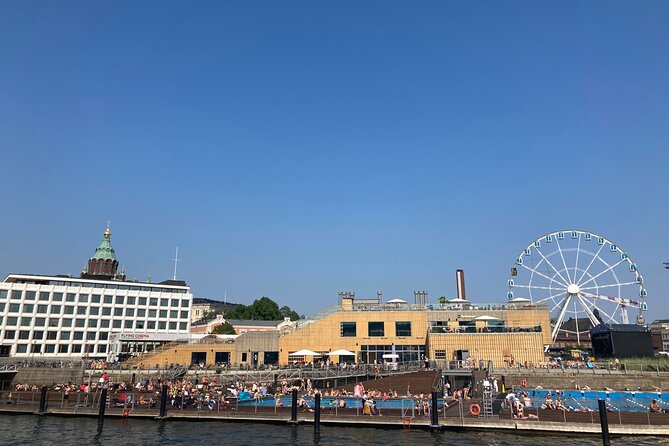
At Allas Pool, the tour shifts gears toward Finnish everyday culture—specifically sauna. Sauna isn’t treated like a side attraction here. It’s framed as something Finns share and return to again and again.
You’ll learn why sauna matters in daily life and, more practically, the etiquette. That’s valuable because the sauna is one of those experiences where rules can be more about respect than enforcement. Even if you never plan to go on your trip, understanding the etiquette explains a lot about how Finns think about privacy, comfort, and social boundaries.
This stop also breaks up the walking energy. Even though you’re not sitting in a lecture hall, the theme feels more human and less formal than the architecture stops.
Kauppatori Market Square: Finnish gastronomy with real city landmarks
Kauppatori is the famous market square, popular with locals and tourists. You’ll pass through and talk about Finnish gastronomy, which is a nice way to turn your sightseeing brain into “what should I try next” mode.
This stop also places you near major civic landmarks, including the President’s Palace and the Helsinki City Hall. That blend helps you see the market not as a random food stop, but as part of the city’s everyday rhythm.
If you’re planning meals later, pay attention here. The tour’s food talk gives you a shortlist of directions so you’re not guessing blindly when you’re hungry and the menus start to blur.
Esplanadi Park to Central Railway Station: seagulls, Saarinen, and Finland’s web
From Esplanadi Park you get a softer pause in the route. It’s described as a Parisian-style park in the heart of Helsinki, and you’ll even notice the statue that seagulls love. That kind of detail sounds silly until you realize it’s a local behavior story—how public spaces get used and re-used.
Then you move toward Helsinki Central Railway Station, built from 1919 and designed by Finnish architect Eliel Saarinen. This stop brings the transport story into the conversation: you’ll hear comments about the wide railway network of Finland, and how the station fits into that bigger system.
On the Railway Square you’ll also see the National Gallery pieces you might recognize—Ateneum—plus the National Theatre of Finland. The tour’s job here is to connect those buildings to the sense that Helsinki isn’t just a destination; it’s a hub.
If you’re a train person, this section gives you context that makes your later travel planning feel easier.
Oodi Central Library: the best ending point for a curious mind
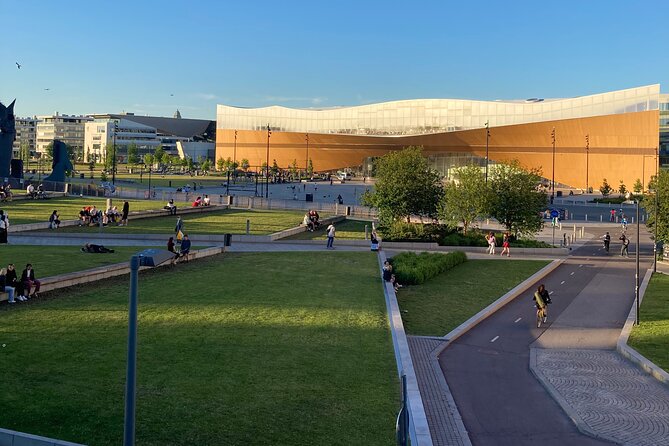
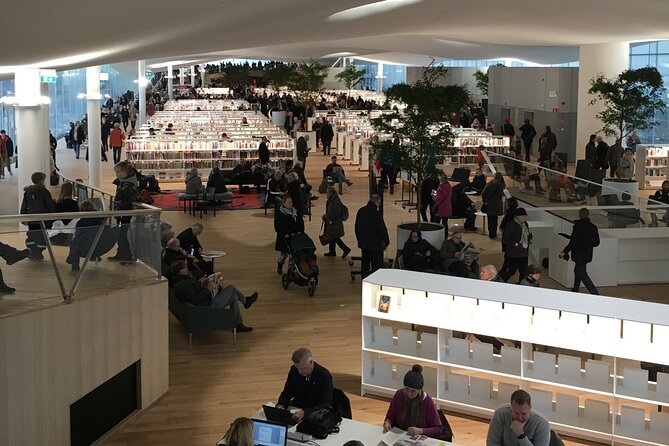
The tour finishes at Oodi Central Library, and it’s a strong way to end. Oodi is described as one of the best public libraries in the world, and the talk around it is that it feels like a second living room.
What makes this stop special is how the library is portrayed as a working community space. You’ll hear about recording studios, 3-D printers, a lunch restaurant, boardgames, and even sawing machines—plus the books, of course.
And the tour doesn’t just point at features. You get an extensive library walkthrough, so you understand how a public institution can serve many kinds of people. For a traveler, that’s gold because it shows you how Helsinki supports curiosity, learning, and community life in one place.
If you like finishing a walk with something you can actually imagine using, this ending is more than a photo op.
Price and value: what $59.28 buys you in Helsinki time
At $59.28 per person for about 2.5 hours, the value comes from structure and access, not from expensive admissions. The sights listed are marked as admission ticket free, so you’re not adding extra entry costs to the day.
The other value is the guide service and the group limit (max 8). In a city like Helsinki, that matters because the best stories depend on conversation. A smaller group makes it realistic to ask questions and get follow-ups instead of just collecting facts.
Also, you’re not stuck with snacks-only pacing. The stop lineup moves from major landmarks to cultural topics (sauna etiquette, politics, religion) to a lively modern place (Oodi). That variety is part of the price you’re paying for: the day feels connected rather than like random dot-to-dot sightseeing.
One practical note: snacks aren’t included. If you go right after breakfast, you’ll likely be fine, but if you’re sensitive to hunger, plan to grab something before you start.
What you’ll learn (and why it sticks)
This walk doesn’t treat Helsinki like a museum. It treats it like a place built from decisions—political, religious, and social—made over time.
You’ll pick up cultural context in small doses:
- how religion shows up in public spaces
- why political structures shaped public debate in earlier eras
- how sauna fits into the rhythm of everyday life
- how major civic sites relate to ordinary life at the market
- how modern Helsinki keeps learning and making open to everyone at Oodi
In the reviews you can feel a pattern: Jonna asks the group what they want to learn at the start and then returns to those themes as the walk continues. That makes the tour feel more tailored, and it helps the facts land where they matter to you.
Even small stories, like a focus on bomb shelter references or the kind of local details that most passes-by miss, help the city feel specific instead of generic.
Who should book this tour (and who might prefer something else)
This is a great pick if:
- you’re visiting Helsinki for the first time and want a clear overview
- you like history tied to daily culture, not just buildings
- you enjoy asking questions and getting straight answers
- you want a small group experience (max 8) without feeling rushed
It may be less ideal if:
- you don’t like walking for extended stretches outdoors
- you want a fully indoors route with minimal weather exposure
- you’re after deep museum time rather than a fast, smart street-level tour
If you’re traveling with family or friends and you want one shared activity that helps everyone understand the city quickly, this format is especially workable.
Should you book this Helsinki walking tour?
If your goal is to get oriented and understand Helsinki culture in a few hours, I’d book it. The route is practical (easy start at Senate Square, finish at Oodi), the group size is small, and the guide approach makes the stories feel personal.
One final planning tip: wear comfortable shoes and keep weather in mind, since this experience requires good weather and can be changed if conditions are poor. And since snacks aren’t included, think about a light meal before you go.
If that sounds like your style, this is a solid first-day walk.
FAQ
How long is the Helsinki Walking Tour – Small Group?
It lasts about 2 hours 30 minutes.
Where does the tour start and where does it end?
It starts at Senate Square, 00170 Helsinki, Finland, and ends in front of Helsinki Central Library Oodi at Töölönlahdenkatu 4, 00100 Helsinki, Finland.
What time does the tour begin?
The start time is 10:00 am.
Is the tour offered in English?
Yes, it’s offered in English.
How big is the group?
The tour has a maximum of 8 travelers.
What’s included, and are attraction entry fees required?
The native guide service is included. The listed stops are marked as admission ticket free.
Is there a cancellation option if plans change or the weather is bad?
There is free cancellation up to 24 hours in advance for a full refund, and if it’s canceled due to poor weather, you’ll be offered a different date or a full refund.