REVIEW · GLASGOW
Glasgow: The streets with a Glaswegian guide: Walking Tour
Book on GetYourGuide →Operated by scotlandtouring · Bookable on GetYourGuide
Glasgow has a way of talking back. This 2-hour street tour turns the city into a story, with a trained actor-guide who performs history in real time. I love starting in George Square and then moving fast into the Merchant City’s lanes, where the buildings and the people’s past feel connected. I also love the humor—this isn’t a dry lecture, it’s Glasgow with personality.
The main thing to consider is that the tour is short for how much it covers, so you’ll want to treat it as a strong orientation. If you’re chasing deep museum time or a long walk, this format may feel like a brisk sampler rather than an all-day deep dive.
In This Review
- Key Things I’d Watch For
- Strolling Through Glasgow’s Story, Not Just Its Sights
- George Square: Where the Tour Sets the Tone
- The Architecture-to-Backstreets Switch
- Medieval Centre and the Ideas That Shaped Glasgow
- Gallery of Modern Art: Art as a City Signal
- Merchant City Stops You’ll Actually Remember
- Glasgow Cross and Mercat Cross: The Finish With Teeth
- How Long It Is (And Why That Matters)
- What I’d Recommend This Tour For
- Price and Value: Why $20 Can Work
- Practical Stuff Before You Go
- Should You Book This Glasgow Walking Tour?
Key Things I’d Watch For
- Actor-guide energy: professionally trained performers like Gordon and Ian bring scenes to life, not just facts.
- George Square to the Merchant City: big architecture at the start, then narrower lanes where the city’s character shows up fast.
- Medieval roots, then modern politics: you’ll hear how early Glasgow connects to trade, capitalism, and socialism.
- Memorable stops: Glasgow Cathedral, the Gallery of Modern Art, and a strong finish at Glasgow Cross/Mercat Cross.
- Real local references: guides often add practical picks for what to do next and where to eat.
- Weather is part of the plan: rain or shine on flat terrain, so dress for the day.
Strolling Through Glasgow’s Story, Not Just Its Sights
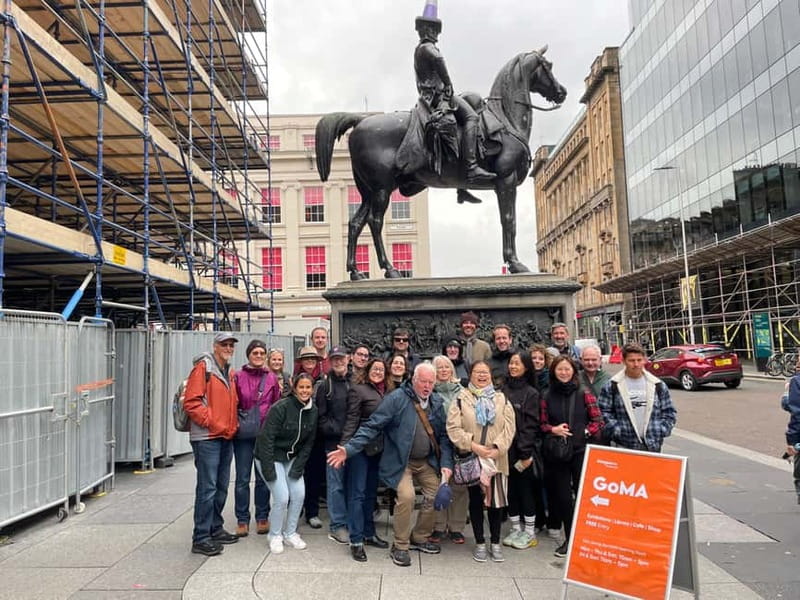
This is the kind of tour that helps you understand Glasgow quickly. You start with the bold, official-looking part of town, then you peel back layers—medieval streets, merchant power, immigrant influence, radical politics—and suddenly those “old buildings” make sense.
What makes it work is the guide. This isn’t just someone who knows dates. Guides are trained to perform, so the city becomes a sequence of scenes: what Glasgow wanted, what it built, what it feared, and what it fought about. Names you may get include Gordon, Martin, Luke, or Ian, and the common theme is delivery—clear, funny, and built for listening while walking.
For $20, you’re buying two things that are hard to get on your own: a guided route through the center and a voice that makes the city memorable. Add in the fact that many museums and galleries in Glasgow are free to visit, and this tour becomes a cheap way to point your next hours in the right direction—even if you won’t do museum time during the walk.
You can also read our reviews of more walking tours in Glasgow
George Square: Where the Tour Sets the Tone
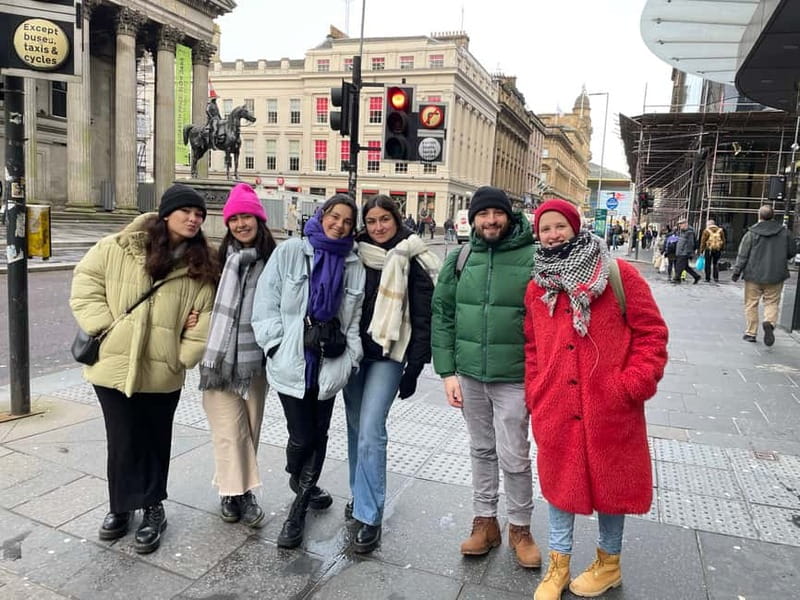
You meet in George Square (at the corner of Cochrane Street and George Square, until refurbishment is completed at least through August 2026). If there’s major disruption, the backup meeting spot is Piper Whisky Bar, also at Cochrane Street and George Square.
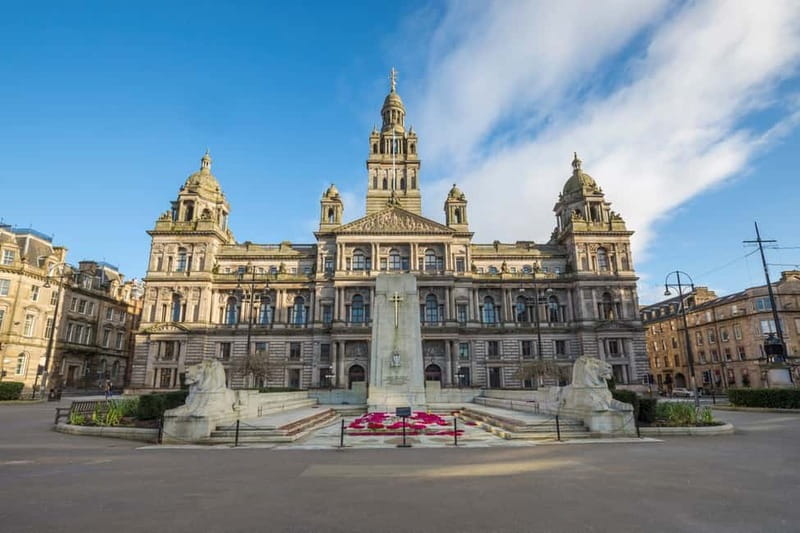
George Square is a smart first stop because it’s the “frame” for the story. The tour starts with sights like the City Chambers and Merchants’ House, and you get context for why this grand square matters. You’ll also hear how the square got tied to the name of an English king—a reminder that Glasgow’s story has always been shaped by forces beyond Scotland’s borders.
Early on, you’ll get a feel for the guide’s style. The best part is how performance training shows up in practical ways: volume control, pacing, and a knack for keeping the group together while still answering questions. Several people note that the guide’s voice carries well, and that questions don’t get brushed off at the end.
If I had one caution here, it’s the listening part. One review mentioned that the accent can be hard to follow at times. In my book, that just means you should stand close at the start if you’re sensitive to accents—then you’ll hear everything.
The Architecture-to-Backstreets Switch
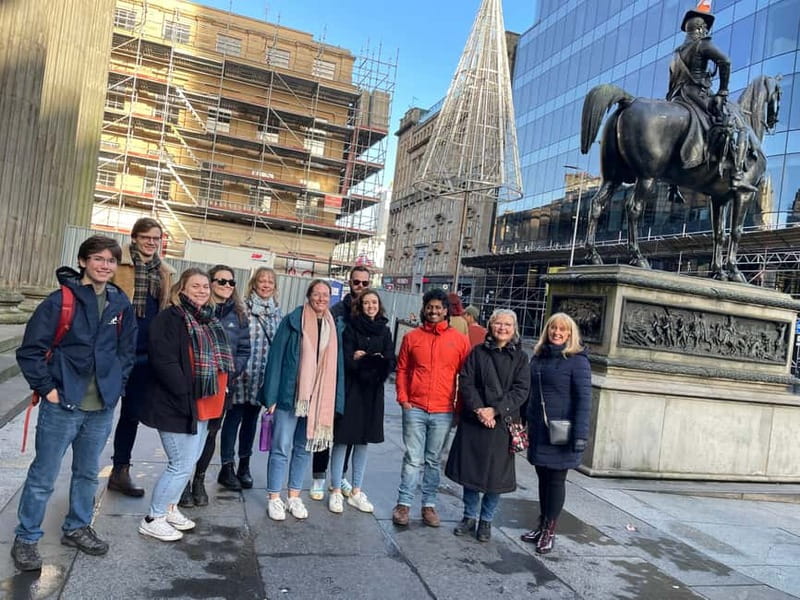
After the grand square, the tour does something valuable: it switches scales.
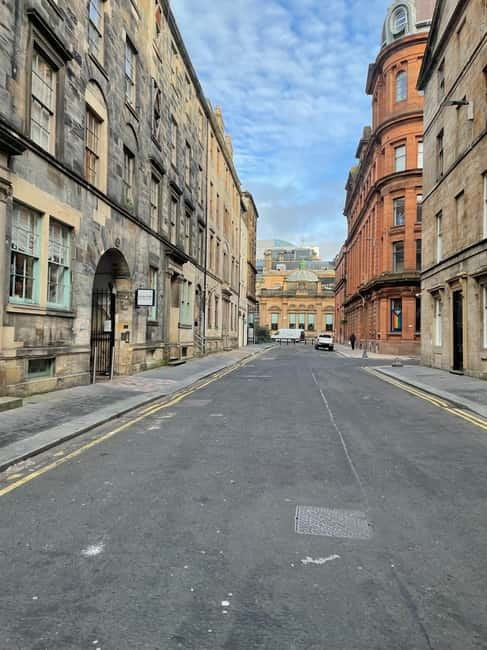
You move from stately streets into the hidden alleys and lanes of Glasgow’s Merchant City. This is where you start to “read” the city. Narrow lanes, older street patterns, and the feel of older commercial neighborhoods help you understand how Glasgow grew into a global trading hub. When the guide connects those physical lanes to people’s lives—tobacco wealth, ambition, rebellion—the streets become more than scenery.
This part of the tour also helps you orient quickly. On your own, it’s easy to miss the lanes and go straight from one major building to another. With a guide, you get the logic of where you are and why it mattered.
Medieval Centre and the Ideas That Shaped Glasgow
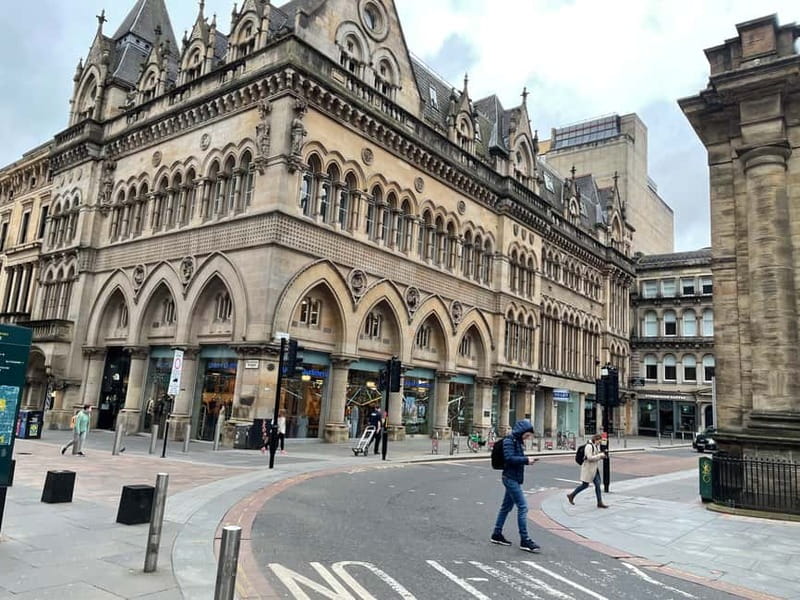
One of the most interesting through-lines is how far back the story goes. The tour covers Glasgow’s original medieval city centre, then carries you into later eras with a clear thread: Glasgow didn’t just build ships and warehouses. It built arguments about society.
You’ll hear about Glasgow’s early past, including the city’s early Christian and Roman links (as described on the walk), then a jump forward into global trade and the rise of capitalism. From there, the guide moves into political themes like the rise of socialism.
There’s also a story element that can spark your imagination: whispers that Glaswegians helped spark the American War of Independence. Even if you take that as folklore rather than textbook history, it signals something important—Glasgow’s merchants and money weren’t trapped in Scotland. They were plugged into world events.
You’ll likely get small detours, too. Some guides mention stops like the Police Museum as a deeper dive option. Whether you have time during the walk is another story, but the point is useful: the guide points out places you can choose to visit free later.
Gallery of Modern Art: Art as a City Signal
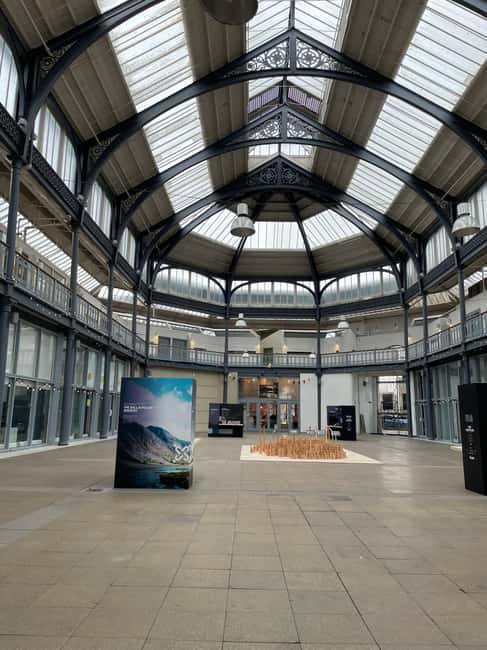
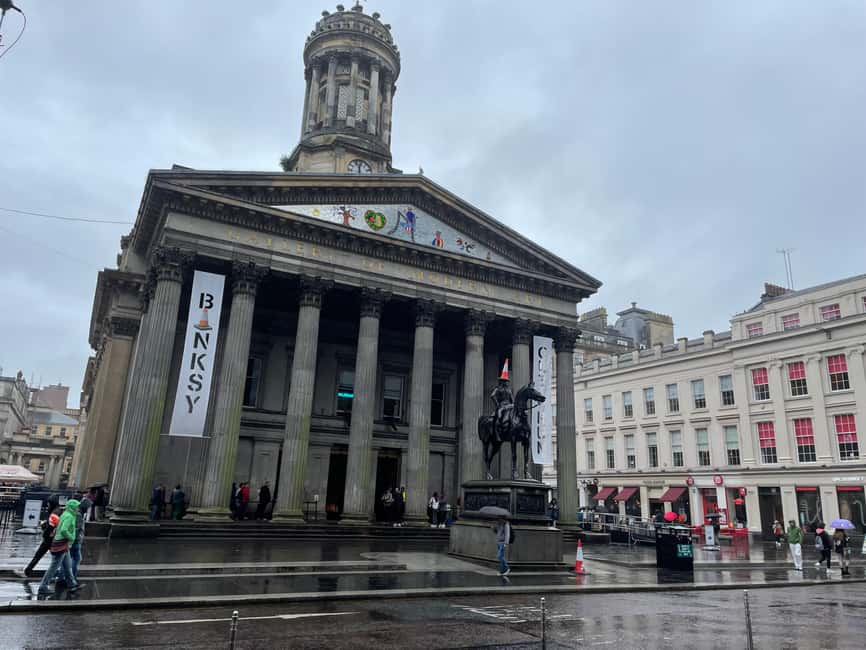
In the middle of the walk, you’ll pass by the Gallery of Modern Art and get a guided moment there. This is a clever balance. The tour isn’t only obsessed with the past; it shows that Glasgow keeps changing, and that art is part of the city’s identity now, not only in history books.
A guided stop also gives you time to reset your ears. You’ve been listening for a while, and then you get a new kind of explanation—how the city’s creative side fits into what came before.
If you’re the type who usually skips art stops when you’re short on time, this is worth keeping on your list. It’s brief enough to stay within a two-hour plan, but it adds variety so you don’t feel like you’re only marching past old stones.
You can also read our reviews of more guided tours in Glasgow


Merchant City Stops You’ll Actually Remember
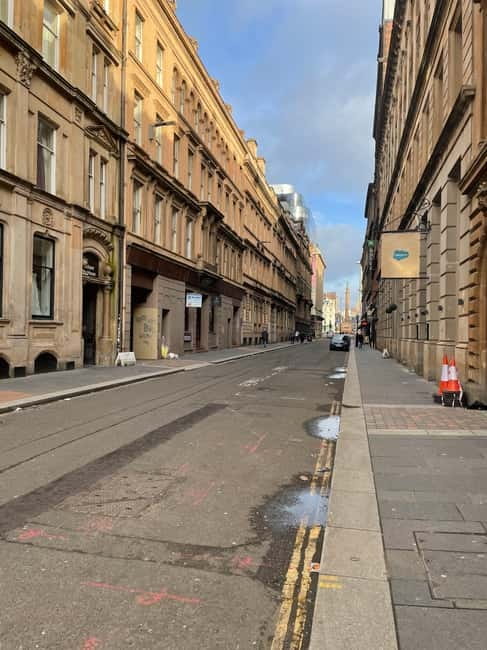
Some tours feel like a checklist. This one tries to make you feel the texture.
A photo stop comes at Candleriggs, and while it may look like a quick break, it matters because you’re learning how to spot the city’s character in small places: street corners, building lines, and the way public space changes when you move even a block or two.
Then you get the larger landmarks you can recognize later. You may visit or view the Glasgow Cathedral area on the route, and the route design does a good job of connecting sacred architecture to the city’s later commercial power.
What I like most is that the guide doesn’t treat these stops as separate worlds. They come with explanations about what Glasgow valued at different moments—and what that meant for ordinary people, including the role Irish immigrants played in the city’s growth.
Glasgow Cross and Mercat Cross: The Finish With Teeth
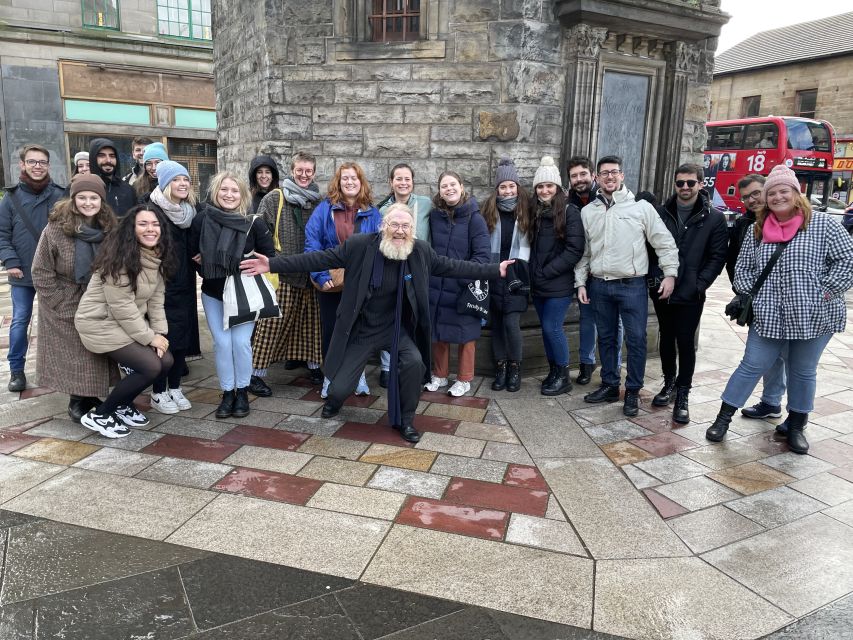
The walk ends at Mercat Cross, tied to the area of Glasgow Cross, once the site of public executions. This ending lands because the story doesn’t shy away from the harsher side of the city.
Finishing here changes how you think about the earlier stops. In George Square you feel civic pride. In the Merchant City lanes you feel ambition and conflict. At the end, you feel consequence—how law, power, and public spectacle shaped the city’s history.
It’s also a practical stop. Mercat Cross is a recognizable center point, so after the tour you’re positioned to continue on foot or hop into local plans without feeling lost.
How Long It Is (And Why That Matters)
The tour runs 2 hours total. That’s a sweet spot for most first-timers. You get enough time to move through the center and hear multiple eras, without exhausting your legs or your attention.
One possible drawback is that a few people noted it can feel short compared with longer walks. I agree with the strategy: treat it as your “get your bearings fast” experience. You’ll leave knowing where to go next—especially because your guide will point out free museums and galleries to check on your own after the tour.
If you want a slow, lingering day with museum doors open, you’ll need to plan extra time separately. But for value and orientation, two hours is efficient.
What I’d Recommend This Tour For
This is a great fit if you:
- want a fun, story-driven way to learn Glasgow fast
- enjoy walking tours that include humor, anecdotes, and performance
- like connecting politics, trade, and social change to real streets
- are okay with rain or shine and walking on flat terrain
- want free museum options highlighted for later
It’s also ideal if you’re traveling solo, a couple, or in a small group. Several reviews mention the guide engaging people even when groups are large, which tells me the delivery is designed for real listening—not just a one-person performance.
Price and Value: Why $20 Can Work
At $20 per person, the value is in the mix. You’re paying for:
- a curated route through major center landmarks and the Merchant City lanes
- a live actor-guide who performs (not just speaks)
- context that helps you make sense of what you’ll see after the tour
The extra value is “future use.” Because the guide points out free museums and galleries—so you can choose later—you’re not stuck with only what you saw in two hours. You leave with a mental map and a shortlist of places to investigate at your pace.
Practical Stuff Before You Go
This tour takes place rain or shine. Bring comfortable shoes and weather-appropriate clothes. A camera helps, especially with the planned photo moments like Candleriggs and any Cathedral views along the way.
The guide is English-speaking and the tour is wheelchair accessible. Since the terrain is flat, it should feel manageable for most mobility needs, as long as you can handle city sidewalks.
Should You Book This Glasgow Walking Tour?
Yes—if you want Glasgow with a voice, not just facts. Book it early in your visit so the streets start making sense right away. The strongest reason to go is the guide experience: actor-trained performance plus practical, local storytelling, often with humor and real context.
Skip it only if you’re expecting a long walk with lots of museum time. This is a smart two-hour story route. Then you follow it up on your own, using the free cultural places your guide points out.