REVIEW · FRANKFURT
Frankfurt: Private or Shared Walking Tour
Book on GetYourGuide →Operated by Show-me-Frankfurt.de · Bookable on GetYourGuide
Frankfurt can feel like two cities at once. This short walking tour makes that contrast snap into focus, with Old Town landmarks side-by-side with modern towers, plus a clear story of rebuilding after WWII. I especially like the stop at the Paulskirche, because it ties the city to the first German national assembly, and I also like the way the walk reaches the city’s newest project, the Neue Altstadt. One thing to consider: it’s only 1.5 hours, so if you want to linger at every photo spot, you’ll feel a little rushed.
You meet at the Justitia-Brunnen at Römerberg and start with the iron footbridge of Eiserner Steg (1868). From there, you’ll get a guided rhythm: history first, then modern Frankfurt, then the “new old” feeling of the Neue Altstadt. The guiding is live in German, so if you’re not comfortable in German, plan on relying on the visual highlights and your own notes.
In This Review
- Key highlights you’ll actually care about
- Starting at Römerberg: Justitia-Brunnen Gets You Oriented Fast
- Why this start matters for value
- Eiserner Steg (1868) to the 2008–9 Renovation Story
- What to watch while you cross
- A practical note
- Römer and Paulskirche: The Civic Heart and Germany’s First Assembly
- Why these stops work on a walking tour
- Neue Altstadt: Frankfurt’s New Project With Old-Town Feel
- How to read what you see
- Old Frankfurt Meets the Modern Skyline (Without the Rush)
- What I like about the pacing
- Private vs Shared: How Group Choice Changes the Experience
- Who should choose what
- What You Learn You Can Use Immediately After
- A practical tip for your photos and wandering
- Price and Value: About $17 for 1.5 Hours
- When the price makes extra sense
- Should You Book This Frankfurt Walking Tour?
- FAQ
- Where do I meet the guide for the Frankfurt walking tour?
- How long is the tour?
- Is the tour shared or private?
- What language is the live guide?
- What are the main places you’ll visit?
- What is the Paulskirche connection on this tour?
- What is the Neue Altstadt?
- How much does it cost?
- Can I cancel if my plans change?
Key highlights you’ll actually care about
- Justitia-Brunnen at Römerberg: a fast way to orient before you move into the Altstadt
- Eiserner Steg (1868) + 2008–9 renovation story: a hands-on lesson in how Frankfurt rebuilds
- Römer and Paulskirche: the civic heart plus the site of Germany’s first national assembly
- Neue Altstadt: see the city’s latest “old town” project in context, not as a random sight
- Old vs modern Frankfurt: you’ll walk the line between preserved layers and skyscraper-era change
- Flexible guide energy: a guide named Sanel has been praised for adapting timing and keeping the tour fun, even in rain
Starting at Römerberg: Justitia-Brunnen Gets You Oriented Fast
Most Frankfurt tours start with a landmark that’s easy to find. This one starts at the Justitia-Brunnen at Römerberg, which is a strong choice because it instantly anchors you in the historic center. Before you even walk, you can look around and get your bearings: this is where the “old” story of Frankfurt lives.
From that meeting point, the flow is simple. You follow your guide through the Altstadt streets and squares, and the tour steadily switches gears from medieval and early-modern Frankfurt toward the city’s modern identity. That matters because Frankfurt is famous for looking like a business hub, but the old streets are still the spine of the city.
You can also read our reviews of more walking tours in Frankfurt

Why this start matters for value
For 1.5 hours, you don’t want to burn time figuring out where to go next. Meeting at Römerberg means you’re positioned near multiple core sites. You’ll spend your walking time on meaningful contrasts rather than getting from one far-away neighborhood to another.
Eiserner Steg (1868) to the 2008–9 Renovation Story
The first big sight you hit is the Eiserner Steg, the iron footbridge built in 1868. It’s a great early stop because a bridge is more than a photo. It’s a practical piece of city engineering, and it becomes a useful storytelling tool for how Frankfurt changed over time.
As you walk, your guide explains how much of the city’s grand building stock was destroyed during WWII, and how later renovations shaped what you see today. A specific detail to listen for is the major renovation of 2008–9. That kind of “recent past” detail is gold on a short tour, because it connects history to what’s still changing around you.
What to watch while you cross
Even without getting technical, you can use the bridge like a viewpoint. You’ll see how the river and the city sit together, and you’ll get a natural transition from “old streets” energy toward the broader shape of Frankfurt. If you like architecture, it also gives you a structural reference point before you hit the town’s monument buildings.
A practical note
If the weather is wet, this route is still workable, but you’ll want to keep your pace steady. The tour is time-focused, and the bridge and central Altstadt streets can feel slick. A good guide will keep momentum—past groups have noted that guides can stay flexible even when the evening turns rainy.
Römer and Paulskirche: The Civic Heart and Germany’s First Assembly
After the river and the bridge, the walk lands you in the most meaningful cluster of historic Frankfurt: the Römer area and the Paulskirche. This is where the tour stops being just pretty and starts becoming historically specific.
The Paulskirche is the headline for national history on this route. Your guide points you to the location of the 1st German national assembly that took place there. That’s not a vague “German history” moment. It’s a clear political milestone tied to a real building, in a city you can actually walk around afterward.
Next to that, the Römer area provides the complementary story: how Frankfurt governed itself locally. Even if you don’t go inside every building, the outside setting helps you understand the city’s layers—civic power in one place, national significance in another.
Why these stops work on a walking tour
Buildings like the Paulskirche and the Römer feel grand from photos, but on foot you understand their placement. You notice sightlines, how squares frame them, and how crowds move through the area. In a 1.5-hour tour, you need that quick payoff—and these two stops deliver it.
Neue Altstadt: Frankfurt’s New Project With Old-Town Feel
One of the most interesting parts of this tour is that it doesn’t stop at “what survived.” It also shows you the new old town, the Neue Altstadt. In other words, you see how Frankfurt is choosing to rebuild its identity, not just recover from damage.
Your guide explains the Neue Altstadt as the latest project of the city of Frankfurt. That’s the key phrase: latest. It shifts your thinking from history as museum pieces to history as a living planning decision. Walking through this area helps you connect the dots between what was lost (including WWII destruction) and what the city decided to recreate or reinterpret.
How to read what you see
When you’re in the Neue Altstadt, don’t just look for “old-looking” architecture. Ask yourself what the city is trying to communicate: continuity, style, and a recognizable center that locals and visitors can share. This tour’s big value is that it gives you the context to interpret the streets instead of treating them as decorative.
Old Frankfurt Meets the Modern Skyline (Without the Rush)
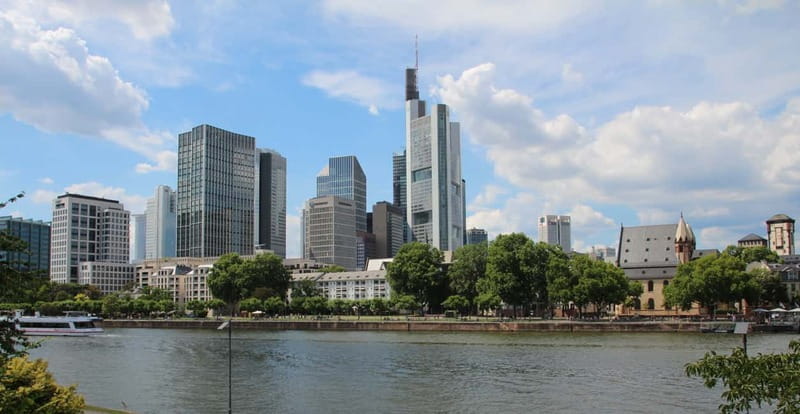
A smart promise here is the contrast: comparing historic monuments with some of the skyscrapers of modern Frankfurt. You get that in a walking format, which is harder to do well. Many tours either stay in the center or bolt you to the skyline and leave you with no story. This route keeps the contrast integrated.
As you move through the Altstadt, the guide helps you connect the themes: rebuilding, changing priorities, and how the city’s center grew into a global financial hub. You’ll also get practical, useful information along the way about each attraction—enough detail to make the monuments meaningful, without turning the walk into a lecture marathon.
What I like about the pacing
With only 1.5 hours, the pace has to be efficient. The upside is that you don’t get tired of “same-same” buildings. The downside is that you won’t have long, slow contemplation time. If you enjoy quick context and then free exploration afterward, this length is a sweet spot.
Private vs Shared: How Group Choice Changes the Experience
The tour runs as either shared or private, depending on what you pick. That choice matters more than it sounds, because the walk is short. If you want more back-and-forth questions, private time is usually your best bet.
Past groups have highlighted that private touring can come with flexibility. A guide named Sanel has been praised for being time-flexible on a private tour and still delivering strong insights, even when the time window got shorter due to weather. That kind of adaptability matters because it keeps the story intact rather than forcing a rushed checkbox tour.
Shared tours can still be great. They’re a good value if you’re comfortable following a group pace and you don’t need lots of individual attention. Either way, you’ll be walking together long enough to get continuity, and short enough to keep energy high.
Who should choose what
- Choose private if you want more tailored explanations, flexibility, or you’re traveling with multiple generations and need adjustments to pace.
- Choose shared if you like meeting other visitors, want structure, and you’d rather spend your money elsewhere after the tour.
What You Learn You Can Use Immediately After
The best walking tours do something subtle: they teach you how to look. This one is built around anchor points—bridge, civic buildings, political history, and the Neue Altstadt—so you can translate what you heard into your own observations.
A simple example: once you know the Paulskirche’s role in the first German national assembly, you’ll notice how the building reads as a symbol, not just a landmark. Once you understand Eiserner Steg’s timeline (built 1868, renovated 2008–9), you’ll see the bridge as part of a long maintenance story, not a static object.
And when you reach the Neue Altstadt, you’ll have a lens for why it exists and what Frankfurt chose to recreate. That’s the difference between walking through a pretty area and understanding it.
A practical tip for your photos and wandering
After the tour, you’ll likely want to return to a couple of stops on your own for a longer look. The route gives you a clear starting point list: Römerberg/Justitia-Brunnen, Eiserner Steg, Römer and Paulskirche, then Neue Altstadt. If you plan even 30–60 extra minutes afterward, you’ll multiply the tour’s value without adding much cost.
Price and Value: About $17 for 1.5 Hours
At around $17 per person for 1.5 hours, this tour is priced like a focused city-history sampler. It’s not a full-day “see everything” plan. But that can be exactly what you want in Frankfurt, where you can easily spend a half-day just getting oriented.
Here’s the value logic I’d use: you’re paying for a guided route that connects major historic points (and includes the bridge and the Paulskirche) plus the modern-day contrast. In a short time, that’s hard to stitch together alone without spending extra effort reading up and trying to map a coherent walk.
You also get a live guide in German, and the overall rating is strong (about 4.5 based on 158 reviews). High marks for this kind of tour usually mean the storytelling lands and the route stays interesting, not just informative.
When the price makes extra sense
- You’re visiting for the first time and want quick context.
- You prefer structure in the historic center.
- You want both the Altstadt and a hint of the modern skyline story without planning an itinerary from scratch.
Should You Book This Frankfurt Walking Tour?
Yes, if you want a compact route that gives you real historical anchors plus a visible look at how Frankfurt reinvents its center. This is especially worth it if you care about the Paulskirche’s national assembly connection and you like understanding how modern restoration decisions shape what you see today.
I would skip it or reconsider if you only speak English and you need deep explanations in English, because the live guide language listed here is German. Also, if you hate time limits and want to sit and linger for long periods, 1.5 hours may feel too short.
If you’re the type who likes a clear starting story and then freedom afterward, this tour is a smart use of a single afternoon.
FAQ
Where do I meet the guide for the Frankfurt walking tour?
You meet your guide at the Justitia-Brunnen at Römerberg.
How long is the tour?
The tour lasts 1.5 hours.
Is the tour shared or private?
It can be either shared or private, depending on the option you select.
What language is the live guide?
The live tour guide speaks German.
What are the main places you’ll visit?
You’ll walk through the Altstadt, see Römer and Paulskirche, cross the Eiserner Steg, and explore the Neue Altstadt.
What is the Paulskirche connection on this tour?
It includes the location of the 1st German national assembly.
What is the Neue Altstadt?
It’s the new old town area, described as the latest project of the city of Frankfurt.
How much does it cost?
The price is $17 per person.
Can I cancel if my plans change?
Yes, free cancellation is available up to 24 hours in advance for a full refund.