REVIEW · SETUBAL DISTRICT
Évora: Private walking tour with tickets to main monuments
Book on Viator →Operated by Évora Cultural Experience · Bookable on Viator
Évora’s secrets fit in 2.5 hours. This private walking tour strings together UNESCO-era squares, Roman remnants, Renaissance architecture, and the Chapel of Bones, all with a guide who links the dots across Portuguese history. Private means your group sets the rhythm, not a big schedule.
I love that tickets are included for two of Évora’s biggest must-sees: the Cathedral (Se Catedral de Evora) and the Chapel of Bones. I also love the pace and focus—about 2 hours 30 minutes of steady walking where you get explanations that make the buildings and symbols actually stick.
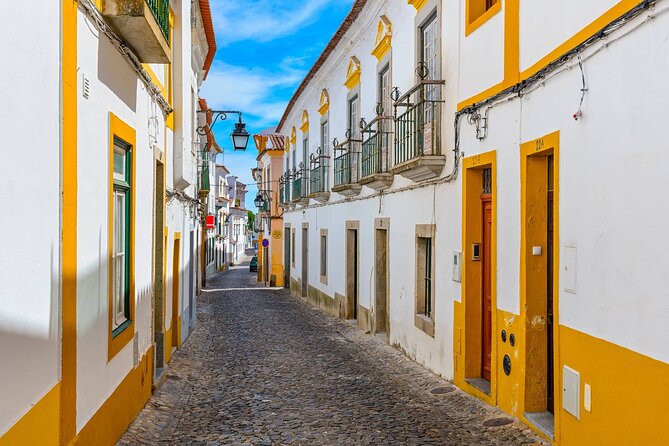
One consideration: you’ll cover a good amount of distance on old, sometimes uneven street surfaces. If your feet tire easily, plan to take it slow and wear shoes you trust.
In This Review
- Key highlights at a glance
- Why This Private Évora Walk Feels Worth the Time
- Praça do Giraldo: Évora’s Square Where History Started Circling
- Inquisition Memorial: Learning the Dark Side Without Making It Sensational
- The Traditional Commerce Street: A Real Reason to Pause for Alentejo Crafts
- Se Catedral de Evora: Gothic Grandeur Plus Real Viewpoints
- Templo Romano de Évora and the Pateo de São Miguel: Power in Two Time Zones
- Mannerism and Renaissance Portugal: Fountain of Power, Then Igreja da Graça
- Chapel of Bones: Macabre, Real, and Surprisingly Unforced
- Igreja de São Francisco and Palacio de Dom Manuel: The Golden Convent Era
- Ruinas Fingidas and the Defensive Walls: Romance, Then Protection
- Aqueduto da Água de Prata: Renaissance Ambition You Can Walk By
- Price and Practical Tips: Making the Most of 2 Hours 30 Minutes
- Should You Book This Évora Private Walking Tour?
- FAQ
- FAQ
- How long is the Évora private walking tour?
- Is this tour private?
- What monuments have entrance tickets included?
- Is the tour offered in English?
- What is the meeting point?
- Will the tour end at the same place it starts?
- Is a mobile ticket provided?
- Are meals included in the price?
- Is this walking tour suitable for people with moderate fitness?
- Can I get a full refund if I cancel?
Key highlights at a glance
- Se Catedral de Évora: Gothic cathedral plus cloisters and a roof panorama
- Chapel of Bones: real human bones, built in the 17th century
- Roman-to-Renaissance storyline: Templo Romano de Évora and the Renaissance Aqueduto da Água de Prata
- Hidden-feeling stops: Pateo de São Miguel, a sheltered spot tourists often miss
- Defensive wall timeline: Roman walls, medieval layers, and later reinforcements
- Art + symbolism woven together: from Mannerist details to Graça’s famous facade stories
Why This Private Évora Walk Feels Worth the Time
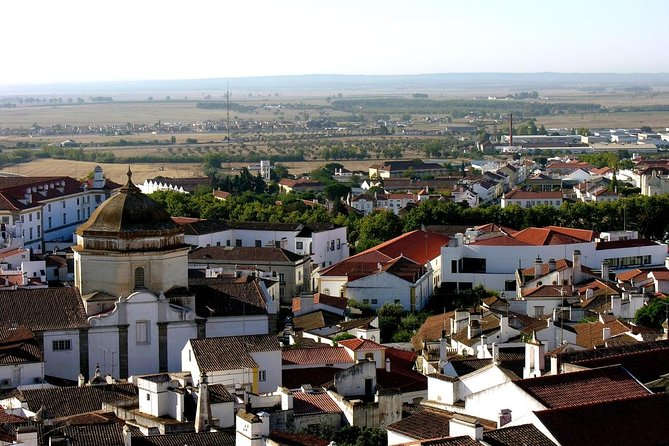
Évora is compact, but the past is not. This tour does a smart job of keeping you from getting lost in a list of monuments. You walk the key corridors of the city and get the story behind why each site matters—Roman power, medieval defense, Renaissance ambition, and the darker corners of religious history.
And because it is private, you’re not stuck listening for the one sentence that applies to you. You can ask questions, switch the emphasis if you care more about architecture or Portugal’s overseas era, and get recommendations for what to do next in town. In past experiences, guides like John, João, Elsa, and Paulo were praised for being clear, engaging, and for keeping an easy, relaxed pace.
Value matters here. The tour price includes entry for the Cathedral and the Chapel of Bones, two sites where you’d otherwise either pay separately or spend time figuring out timed access. You also get guided time on the outdoor highlights, where the explanation turns a quick glance into an actual memory.
Praça do Giraldo: Évora’s Square Where History Started Circling
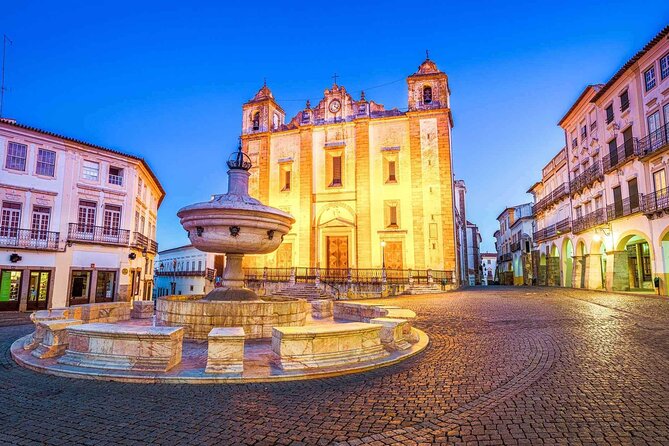
Your route begins at Praça do Giraldo, the social and civic heart of Évora. The square matters because it’s not just pretty. It’s where the city’s identity has been shaped—economic, political, and public life concentrated in one place. This is the point where the guide helps you “set your internal map” before you start moving.
You’ll also learn to spot how Évora’s layers overlap. The city’s UNESCO status is not only about individual buildings. It’s about how the urban space works as a whole. When you get the historical framework early, everything you see later makes more sense.
Then comes a tough but important stop close by. If you want a full picture of Portugal’s history, this tour does not skip it.
Inquisition Memorial: Learning the Dark Side Without Making It Sensational
A short stop near Homenagem as vítimas da Inquisição em Portugal brings you face-to-face with a period that shaped Portugal for centuries. The Inquisition in Portugal dates from 1536 and lasted nearly 300 years, with a devastating impact on people’s lives.
What makes this stop sobering is how locally grounded it is. It was in Praça do Giraldo that many victims were burned alive, and the Évora court is described as the deadliest of the four courts operating in Portugal at the time.
You won’t need an academic lecture to understand the weight of the place. You just need context—and the guide’s job here is exactly that: put the story into language that is direct, respectful, and easy to follow, then move you on when you’re ready to continue.
The Traditional Commerce Street: A Real Reason to Pause for Alentejo Crafts
As you continue through the old center, you’ll pass the city’s traditional commerce street—one of the best ways to see Évora beyond monuments. This is where Alentejo handicrafts show up in everyday form: cork items, pottery, painted furniture, chocalhos (rattles), and traditional capotes (Alentejo cloaks).
This part of the tour is useful even if you do not plan to buy anything. You’ll learn what to look for, and you’ll understand why these crafts connect to the region’s identity. It’s also a practical break in the walking rhythm. Old towns can blur together fast. A short stretch for browsing helps you reset your brain.
If you do want souvenirs, aim for smaller, lighter items first—cork goods, ceramics, and small crafts are easier to pack than textiles.
Se Catedral de Evora: Gothic Grandeur Plus Real Viewpoints
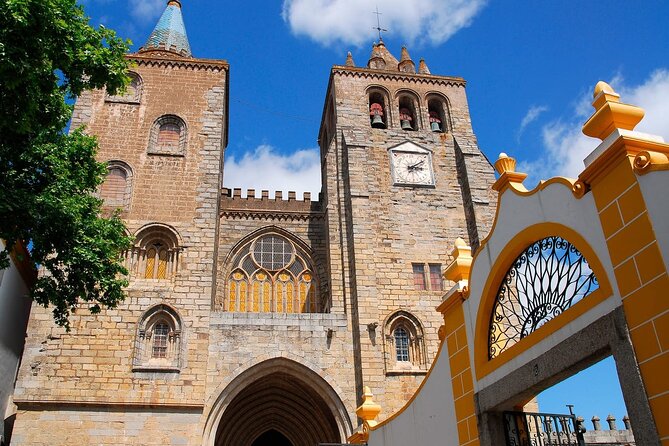
Se Catedral de Evora is the standout cathedral stop for a reason. You’re stepping into the largest Portuguese Gothic cathedral, built along lines people connect to great European Gothic models such as Notre Dame de Paris.
But the guide’s value is in the details. You’ll also learn that the cathedral contains references and symbols tied to older belief systems and layers that came before Catholic dominance. Even if you’re not a scholar, the explanations help you notice things you might otherwise miss.
Tickets included here are a big deal. Your time covers entry to:
- the cathedral itself
- the cloisters
- and the roof visit for a panoramic look over Évora
That roof time is where the tour really “pays off.” You see the city’s scale and how the monument cluster fits together inside the walls and streets. It’s also a mental shortcut: once you’ve seen the layout from above, the rest of your sightseeing day feels easier.
Templo Romano de Évora and the Pateo de São Miguel: Power in Two Time Zones
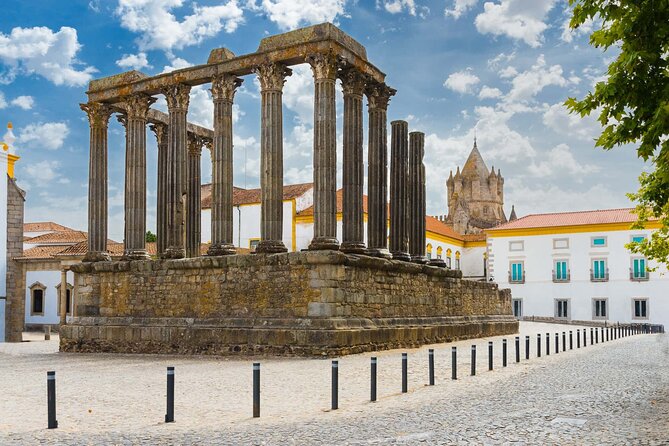
Next you’ll stop at the Templo Romano de Évora, commonly linked to the Temple of Diana. It’s described as a two-millennia-old monument and one of the best preserved and oldest temples of the ancient Roman world in the region. The message is clear: Roman Évora was not a “small outpost.” It carried real imperial weight.
The guide will connect the monument to stories of ancient Évora’s founding and status—especially the link to Júlio César mentioned in the tour framework—so you understand why this temple still feels like it dominates the city’s imagination.
Then you’ll head to Pateo de São Miguel, one of those places that feels tucked away. It’s a sheltered courtyard-like alcove, historically tied to defense and power. The guide explains it as a fortified spot tied to city leadership, where the governor and old kings could stay. You’ll also hear about it as a place connected to religious and military orders that later relate to the Order of Avis and the second dynasty of Portuguese kings.
If you care about art history and architecture, this is the kind of stop that turns you into a better observer. You’ll start noticing how buildings “signal” status—who had protection here, where influence lived, and how the city’s layout supported control.
Mannerism and Renaissance Portugal: Fountain of Power, Then Igreja da Graça
After the courtyard pause, the tour shifts into Renaissance territory. You’ll see a Mannerist fountain inaugurated in 1556, described as one of the earliest examples of Portuguese Mannerist art in the country. It’s also framed as a marker of power and progress in government linked to Cardinal D. Henrique, one of Évora’s major patrons.
This stop matters because it teaches you how art functioned as politics. It wasn’t decoration. It was messaging in stone and water.
Then comes Igreja da Graça, presented as a larger example of Portuguese Renaissance architecture with innovative elements influenced by Mannerism. The guide focuses on the facade stories—especially the famous “boys” associated with Graça—and explains their symbolic meaning.
You don’t need to be fluent in art history to get it. The tour helps you read the facade like a text. And once you’ve learned that habit, the rest of your day in Évora feels more rewarding.
Chapel of Bones: Macabre, Real, and Surprisingly Unforced
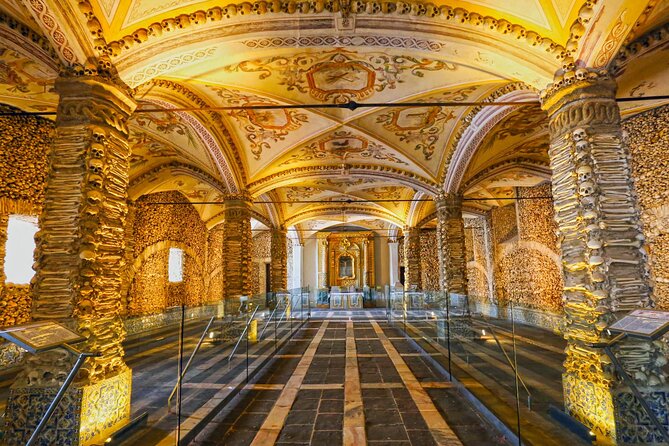
This is the monument many people remember after they leave Évora. Capela dos Ossos (Chapel of Bones) is unique in the world in the way it uses real human bones to cover the interior walls.
It was built in the 17th century, and the guide explains the origin story: the bones belonged to thousands of people who lived in Évora. That scale is part of what hits you. This is not a theatrical prop. It’s a stark reminder of mortality, placed inside an architectural container designed to make you reflect.
A good sign from past guests: it can feel fascinating rather than overly creepy when the guide places it in context. You’ll get the stories and legends connected to the chapel’s message, without turning it into shock value.
Tickets are included, so you avoid the hassle of figuring out entry basics on the day. Plan to spend your full guided time here, because the explanations do a lot of the emotional and intellectual work.
Igreja de São Francisco and Palacio de Dom Manuel: The Golden Convent Era
Next is Igreja de São Francisco, known in the 16th century as the golden convent. It sits on an older Franciscan convent foundation from the 14th century, but what you see reflects an architectural leap forward for its time.
This stop is loaded with stories tied to the Portuguese royal world. The church was the scene of royal weddings and baptisms connected to major events in Portugal and the wider world. Even if you’re more of a “show me the building” person, the guide’s narrative links the architecture to real historical moments.
From there, you’ll reach Palácio de Dom Manuel, specifically the part kept today: the Ladies’ Gallery. It’s described as one of the most beautiful and romantic sections of the 16th-century complex that included the golden convent.
For me, this is where the tour gets emotionally balanced. After bones and religious authority, you shift into spaces connected to ceremony, patronage, and human relationships. If you enjoy details in ornament and layout, this pairing is a strong one.
Ruinas Fingidas and the Defensive Walls: Romance, Then Protection
Then you’ll briefly visit Ruinas Fingidas, described as a romantic setting assembled with elements and ruins of an old 16th-century palace. It’s the kind of place that feels like a photo opportunity because it was shaped for visual mood—linked to romanticism at the end of the 19th century. The guide may encourage you to pose for a picture here, since the setting makes that easy.
Right after that softer visual beat, you’ll pivot to defense: Muralhas de Évora. The wall story is one of the most interesting timelines in the tour.
You’ll hear how Évora’s defensive walls run through multiple periods:
- Roman walls from the 3rd to 4th centuries
- later use by Visigoths and Muslims, with Muslim presence between the 8th and 12th centuries
- medieval walls from the 14th century
- bastioned structures from the 17th century
- reinforcements in the early 19th century to handle French troops during Napoleonic invasions
That is a lot of history for what looks, at street level, like stone walls. The guide helps you read them as a layered record of fear, strategy, and survival.
Aqueduto da Água de Prata: Renaissance Ambition You Can Walk By
The final major monument focus is the Aqueduto da Água de Prata—the Renaissance aqueduct nicknamed the Silver Waters aqueduct. The big facts matter here:
- it opened in 1537
- it extends about 18 km
- it’s described as the most iconic Portuguese civil work of the Renaissance
What makes it more than a “long water bridge” is how the tour explains the visual integration. Houses and structures sit between its arches, and the Renaissance attention to detail shows up in the arc design and the broader urban planning.
You’ll likely spend only a short moment here, but it’s the right kind of ending. You finish with a monument that connects city life to engineering, and it gives you a sense of how ambitious Évora’s leadership was—especially in a period tied to growth and maritime-era Portuguese energy.
Price and Practical Tips: Making the Most of 2 Hours 30 Minutes
At $105.26 per person, this tour is not a bargain-basement budget item. But it can make sense if you value guided context and you want entry included for the Cathedral and Chapel of Bones. Those are two key sites where self-guided visits often feel disconnected unless you bring your own background knowledge.
You’re also buying the skill of a guide who can keep the city from turning into background noise. The strongest praise you’ll see tied to this tour is about guides like João and Elsa being able to answer questions clearly, adjust the route to interests, and maintain an easy, relaxed rhythm.
A few practical notes so you enjoy it fully:
- Wear comfortable shoes. The old center can be uneven.
- Bring water, especially in warmer months.
- If you want extra time for photos at key stops like the rooftop view or Ruinas Fingidas, ask your guide to set expectations early.
- If you have a dinner you’re eager to try later, it helps to mention preferences to your guide during the walk. In past experiences, guides offered restaurant recommendations that matched visitors’ tastes.
This is also a good choice if you’re staying in the Setúbal District area and want a focused Évora hit. The walking format is well suited to first-time visitors who want the main monuments without spending the day sorting out ticketing and timing.
Should You Book This Évora Private Walking Tour?
Book it if you want a clear, story-driven way to experience Évora’s big monuments in a short window. The included tickets for Se Catedral de Evora and the Chapel of Bones make the schedule feel efficient, and the private format helps you ask questions and tailor what you care about.
Skip it only if you prefer very long, self-directed wandering with no structured explanations. Since this tour is about moving through specific stops with set entry points, it’s less ideal if you want to roam completely freely.
FAQ
FAQ
How long is the Évora private walking tour?
The duration is about 2 hours 30 minutes.
Is this tour private?
Yes. It is a private tour/activity, so only your group participates.
What monuments have entrance tickets included?
Tickets are included for the Chapel of Bones and the Cathedral (Se Catedral de Evora).
Is the tour offered in English?
Yes. The tour is offered in English.
What is the meeting point?
The start is at the Giraldo Square Fountain, Praça do Giraldo 7, 7000-508 Évora, Portugal.
Will the tour end at the same place it starts?
Yes. It ends back at the meeting point.
Is a mobile ticket provided?
Yes. The tour includes a mobile ticket.
Are meals included in the price?
No. Meals are not included.
Is this walking tour suitable for people with moderate fitness?
It’s listed for travelers with a moderate physical fitness level.
Can I get a full refund if I cancel?
Yes, free cancellation is available up to 24 hours in advance for a full refund.