REVIEW · CAGLIARI
Cagliari: Underground Cagliari Walking Tour
Book on GetYourGuide →Operated by Sardinia Magic Experience · Bookable on GetYourGuide
Cagliari gets cooler underground. This tour strings together WWII-era tunnels and ancient underground sites in a way that feels practical, not museum-stuffy. I especially love how the guide works in English and Italian without losing your place, and I also love the candle-lit atmosphere that makes the past feel physical.
Between stops, you get short walks through real neighborhoods like Stampace and Marina, so the underground doesn’t feel like a detour—it feels like a hidden layer of the city. One possible drawback: the tour is not for claustrophobia, and it isn’t suited to wheelchair users or people with mobility or visual impairments.
Think comfortable shoes and a flexible mindset. You’ll spend time underground in three main sites, but it’s not entirely underground, and the route can shift a bit depending on site opening times.
In This Review
- Key Things You’ll Love About Underground Cagliari
- Cagliari Underground: walking through WWII and Rome at street level
- Picking Your Route: the 2–4 hour core plus optional Old Town or wine
- Step Into the WWII Tunnel-Shelter Under the Salesian School
- Cripta di Santa Restituta: frescos, dripping water, and 5th-century layers
- Saint Eulalia Underground: Roman paving beneath the church
- The short walks: Stampace and Marina above ground
- The guide experience: dual-language pacing that keeps you on track
- What to wear, and how long to plan for
- Price and value: what $35 covers and when it’s worth upgrading
- Who should book this underground tour, and who should skip it
- Should you book the Cagliari Underground Walking Tour?
- FAQ
- How long is the Underground Cagliari walking tour?
- What underground sites does the tour include?
- Is the entire tour underground?
- What language is the tour delivered in?
- Is entry to the sites included in the price?
- What should I wear or bring?
- Does the tour include walking outside the caves and crypts?
- Are there options to extend the tour?
- Is it suitable for everyone, including wheelchair users?
- What if the sites are closed or timing changes?
Key Things You’ll Love About Underground Cagliari
- A private 120-meter WWII tunnel shelter under a school, with a candle-lit feel
- Dual-language guidance (English and Italian) that keeps the story clear and paced
- Cripta di Santa Restituta with frescos, dripping water, and 5th-century layers
- Roman ruins under Saint Eulalia, including a paved Roman road
- Neighborhood walking through Stampace and Marina between underground stops
- Optional add-ons: Old Town walk or a wine tasting with snacks
Cagliari Underground: walking through WWII and Rome at street level
Cagliari has a sunny surface, but under the sidewalks there’s a whole second city. What I like about this tour is the way it links time periods: you start with the more recent story of war protection, then shift into religious and Roman-era spaces that were built long before cars and buses. That time-switching keeps you awake—your brain is never bored, even when you’re standing still listening.
Also, the scale works. You’re not sprinting through a checklist of rooms. The tour is timed so you get a guided visit at each site, plus short walks above ground so you can shake out your legs and reset your eyes after dim tunnels.
One more practical point: although the names scream underground, the visit isn’t 100% underground. You’ll do a mix of underground walking and brief outdoor segments, which matters if you’re traveling in changeable coastal weather.
You can also read our reviews of more walking tours in Cagliari

Picking Your Route: the 2–4 hour core plus optional Old Town or wine
You can book the core underground experience on its own, or extend it in one of two directions depending on what you’d rather do with the extra time: keep walking in the historic center or add a food and wine stop.
The optional Old Town add-on is a guided stroll through Cagliari’s historic center with your guide before you wrap up. The optional food and wine add-on includes wine and snack items as part of that selection.
Here’s the key decision: if you want context, choose the Old Town walk. If you want a lower-effort closer, choose the wine option. The underground sites are the real reason to book, but these extensions change the overall feel—walking and history versus a relaxed tasting finish.
Step Into the WWII Tunnel-Shelter Under the Salesian School
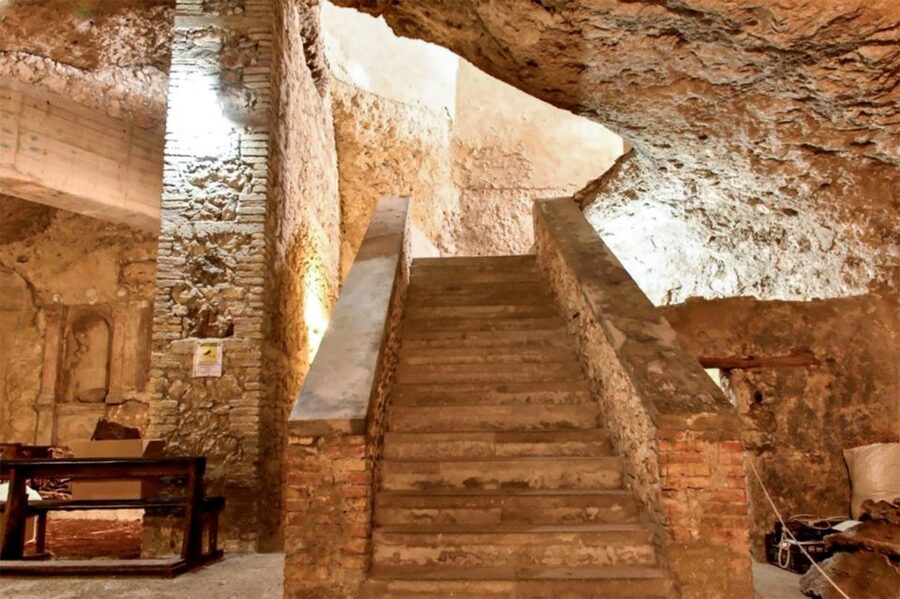
Your first big moment is the WWII tunnel-shelter under the Salesian school area. The highlight is a private 120 meters long tunnel used as a bomb shelter during World War II. That length matters. In many underground sites you only get a quick taste; here you actually get a sense of what movement and waiting might have felt like.
The tour keeps the mood cinematic in the best practical way: it’s described as a private candle-lit tunnel, which helps you understand the space instead of just seeing it as a dark corridor. In a quiet tunnel, the guide’s pace becomes part of the experience. You can hear the story, and you’re not fighting over sound.
This stop also anchors the whole tour. Once you’ve imagined people sheltered here during wartime, the later religious and Roman layers stop feeling random. It all starts to look like one long pattern: Cagliari reused and repurposed what was already built.
Cripta di Santa Restituta: frescos, dripping water, and 5th-century layers
Next comes Cripta di Santa Restituta, one of the most absorbing underground stops on the route. The setting is described as magnificent and richly layered, and what you’re actually going to notice as you go in are the small details: frescos that still stand, damp conditions, and the sound of water dripping as you study the space.
The guide focuses on what this place meant in earlier times. You’ll hear about the site as a location tied to pagan worship in the 5th century, which adds a twist to what you might expect from a church-related crypt. In other words, this isn’t just a stop for pretty artwork. It’s a place where you can feel religion changing over time, and where older practices and newer ones overlap in the same physical rooms.
If you’re the kind of traveler who likes explanations that connect art to human behavior, this is the stop. Frescos are visual, but it’s the guide’s storytelling that makes you look at them like evidence rather than decoration.
Practical note: because it’s underground and damp, you’ll probably feel the temperature drop. It’s not just atmospheric—it’s weather. Dress accordingly.
Saint Eulalia Underground: Roman paving beneath the church
The third underground site is the archaeological area under and around Saint Eulalia. This is where the tour shifts more clearly into the Roman world. You’ll admire Roman ruins such as a paved Roman road, which is the kind of specific object that makes the past feel measurable.
Roman paving tends to do two things for you:
First, it makes history tangible. You can picture feet and wheels on the same stones.
Second, it helps you understand how cities worked—roads, movement, and built infrastructure.
This stop also benefits from the tour format. After the WWII tunnel and the crypt, your eyes adjust to different kinds of underground spaces. The guide’s job here is to keep the thread, so you don’t just see ruins—you understand how they fit the story of Cagliari.
The short walks: Stampace and Marina above ground
Between underground stops, you walk through the old districts of Stampace and Marina. Don’t skip this part. Those brief outdoor stretches act like reset moments. After dim interiors, you’re back on real streets, seeing the city’s light and texture.
Stampace and Marina are useful too because they keep the tour from feeling like a closed loop. You get the sense that the underground sites are not sealed-off attractions; they’re embedded in living neighborhoods. Even if you only have a couple hours in Cagliari, this gives you a map in your head.
And since you’re doing a bit of walking outside, it’s a good idea to wear shoes you trust. You’re not hiking, but you are moving between sites.
The guide experience: dual-language pacing that keeps you on track
The biggest praise this tour gets is about the guide. The dual-language format matters because underground history can get confusing fast if you’re hearing only half the explanation. Here, English and Italian are both used during the tour, and the guide switches languages smoothly.
In past tours, guides such as Angela, Carlo, Francesca, and Valentina have been highlighted for clear delivery and strong command of the material. Even more useful is how guides are described as not rushing. That affects your photos, your questions, and your ability to actually absorb details like frescos, architecture, and how the spaces were used.
One small consideration: in at least one experience with a group of about 25 people, it was suggested that splitting English and Italian visitors into two separate guides could make pacing even easier. That doesn’t mean the tour is bad with larger groups—it just tells you what matters most to you. If you hate sharing attention in a big mixed-language group, consider booking a private group option if it’s available.
What to wear, and how long to plan for
The tour duration is listed as 2 to 4 hours, and the actual time depends on which add-on you select and what the sites allow on the day. You’ll want to plan a realistic afternoon or morning because you’ll be going between locations and spending real time underground.
What to bring is simple:
- Comfortable shoes
- An umbrella if rain is in the forecast
It’s also smart to arrive about 10 minutes early, since meeting points can vary depending on what start option you picked.
Because it’s not entirely underground, weather still matters. If you’re traveling in summer heat, you might be grateful for the cooler interiors. If you’re visiting during cooler months, think layers: tunnels can feel colder than you expect.
Price and value: what $35 covers and when it’s worth upgrading
At about $35 per person, this isn’t a budget attraction, but it also isn’t just someone telling you to look at three doors. The price includes:
- A guide in English and Italian
- Entry fees for the three underground sites
- The guided experience at each stop
So you’re paying for access plus interpretation. Underground sites usually have limited public entry and require staff coordination, which is exactly what you’re avoiding by booking a guided slot.
If you add the wine tasting option, you also get wine and snack items. One note from experience: the wine tasting was described as more like a glass of wine with Sardinian snacks rather than a multi-wine tasting flight. That still can be a pleasant way to end, but it’s good to calibrate expectations—treat it as a simple pairing, not a deep tasting seminar.
When is the upgrade worth it?
- Choose the Old Town add-on if you want a stronger first-day orientation in Cagliari’s historic center.
- Choose wine if you want something lighter after time underground.
- Choose a private group if you want quieter pacing or you’d prefer less mixed-group pressure during explanations.
Who should book this underground tour, and who should skip it
This is a great match if you like architecture, real artifacts, and stories that connect different time periods. It’s also good for couples and small groups because the format moves at a human pace: guided time in each site, then short transitions through neighborhoods.
It’s also a solid pick if you want a guided experience without needing deep background reading. The guide’s job is to make the sites intelligible, from WWII shelter use to the crypt’s layered worship context and the Roman ruins under Saint Eulalia.
Now the skip list is important. This tour is not suitable for:
- claustrophobia
- wheelchair users
- people with mobility impairments
- visually impaired people
If any of those apply to you, look for a different Cagliari activity that fits your comfort level.
Should you book the Cagliari Underground Walking Tour?
Book it if you want a high-value, guided look at Cagliari’s hidden layers in a short window of time. The best reasons are the combination of three underground sites, the dual-language storytelling, and the way the WWII tunnel and ancient crypt complement each other instead of feeling like separate stops.
If you’re sensitive to tight spaces, or if you can’t do uneven underground environments, skip this one. Also, if you prefer very quiet group settings, consider a private group option.
If your travel goal is to leave Cagliari feeling like you saw more than postcards, this tour is a strong way to do it—because you literally go under the city and come back with a fuller sense of how it layers over time.
FAQ
How long is the Underground Cagliari walking tour?
The duration is listed as 2 to 4 hours, depending on the option you choose and what happens during the site visits.
What underground sites does the tour include?
The tour includes three underground stops: the WWII Tunnel-Shelter of the Salesian School, the crypt of Saint Restituta (Cripta di Santa Restituta), and the archaeological area of Saint Eulalia (MUTSEU).
Is the entire tour underground?
No. It includes visits to three underground sites, plus some walking outside between locations.
What language is the tour delivered in?
The tour is described as dual language, with English and Italian guides.
Is entry to the sites included in the price?
Yes. Entry fees for the three underground sites are included.
What should I wear or bring?
Wear comfortable shoes. If it’s raining, the tour suggests bringing an umbrella.
Does the tour include walking outside the caves and crypts?
Yes. There are walking segments between sites, including through the old districts of Stampace and Marina.
Are there options to extend the tour?
Yes. You can add either a guided walking tour through the Old Town or a food and wine tasting, depending on the option selected.
Is it suitable for everyone, including wheelchair users?
No. It is listed as not suitable for people with mobility impairments, people with claustrophobia, wheelchair users, or visually impaired people.
What if the sites are closed or timing changes?
The tour notes that depending on opening times, alternative underground sites may be visited.