REVIEW · PUSHKAR
Spiritual City Walking Tour-THE Pushkar Route
Book on Viator →Operated by THE PUSHKAR ROUTE · Bookable on Viator
One walk, and suddenly Pushkar makes sense. This short spiritual city route links key places—gurdwara, temples, Pushkar Lake, and the ghats—into one easy storyline you can follow on foot. I love that it mixes faith, architecture, and practical local details instead of just pointing at buildings.
Two things I especially like: the guide’s clear explanations (shout-out to Manish) and the pace that lets you actually look closely at what matters. The temple and ghat route is focused, and you get built-in breaks like masala tea in a claypot and traditional malpua.
One possible drawback: some parts are religious in nature, so if you’re uncomfortable around ceremonies and active worship, you’ll want to keep your expectations flexible and respectful.
In This Review
- Key Highlights You’ll Feel on This Walk
- Why Pushkar Works Best by Foot
- Price and Value: Why This Walk Feels Like a Bargain
- What You Get Included (And What You Need to Plan For)
- Your Route Stop by Stop: From Gurudwara to Gau Ghat
- Stop 1: Gurudwara Sahib (Sikh history and Pushkar’s link)
- Stop 2: Varaha Temple (stone, height, and a statue with a date)
- Stop 3: Old Rangji Temple (Rama Vaikuntha and craftsmanship)
- Stop 4: Ati Prachin Shri Atamteshwar Mahadev Mandir (Shiva and family symbolism)
- Stop 5: Brahma Temple (why there’s only one)
- Stop 6: Pushkar Lake and Brahma Ghat (prayers, tribute, and photos)
- Stop 7: Lemon ginger honey break at Alka Rooftop Restaurant
- Stop 8: Gau Ghat (oldest of the 52 ghats)
- Brahma Ghat Isn’t Just a View Spot
- The Tea-and-Malpua Break Feels Like Part of the Day
- Logistics That Help You Enjoy the Walk
- Who This Tour Is Best For
- Should You Book The Pushkar Route’s Spiritual City Walk?
- FAQ
- Is pickup and drop-off included?
- Is there a mobile ticket?
- How long is the walking tour?
- How many people are in the group?
- What stops are included in the route?
- Is breakfast included?
- Is tea included?
- Are entrance fees included?
- Are holy rituals and ceremonies included?
- Does the tour require good weather?
Key Highlights You’ll Feel on This Walk
- Small-group experience (max 6) so questions stay easy and the route doesn’t feel rushed
- Manish-style storytelling that connects places to Sikh and Hindu life in Pushkar
- Three temples plus Pushkar Lake and multiple ghats, giving you a fuller picture than a single stop
- Masala tea in a claypot with cardamom and ginger plus Pushkar malpua as a real local sweet
- Brahma Temple + Brahma Ghat time for prayers and photography-friendly views
- Optional participation in blessing/holy rituals can add meaning, but charges may be separate
Why Pushkar Works Best by Foot
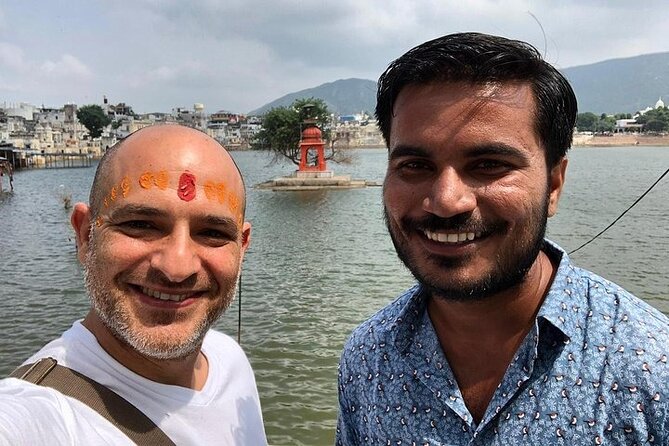
Pushkar is one of those places where the “main sights” aren’t really separate. Temples, ghats, and prayer corners braid together in a way that feels organic. Walking means you notice details you’d miss from a car window, like how pilgrims move, where families stop to pray, and how the town’s layout supports daily worship.
This tour leans into that best habit. You’re guided along a tight loop instead of hopping around. The time window is short—about 1 to 3 hours—so you get the big spiritual highlights without burning your day.
And yes, Pushkar can be loud, crowded, and hot. Having a guide who knows how to steer you through the flow is a real quality-of-life perk.
Price and Value: Why This Walk Feels Like a Bargain
At $6.76 per person, the standout value isn’t the price tag—it’s what gets bundled in. You’re paying for more than “a walk with a guide.” You’re getting a structured route with entrance fees, hotel pickup and drop-off, and the core cultural stops arranged in a sensible order.
Then there’s the food part, which often gets done poorly on cheap tours. Here, it includes traditional breakfast malpua and masala tea served in a claypot flavored with cardamom and ginger. That’s not just a snack. It’s your cue to slow down and take the town in the way locals do.
If you want a simple rule: if you were planning to visit a few temples and then hunt for tea and sweets on your own, you’d still spend time and money. This tour buys you organization—and a guide who can explain what you’re looking at while you’re looking at it.
What You Get Included (And What You Need to Plan For)
Included in the experience:
- Guiding fees and all taxes and fees
- Hotel pickup and drop-off
- Entrance fees
- A tour explorer who covers the background of the places you visit
- Masala tea in a claypot (with cardamom and ginger)
- Breakfast malpua
- Lockers for cameras and larger items
- Mobile ticket
- A maximum of 6 travelers
- Near public transportation (helpful if you’re not using pickup)
Not included:
- Charges for holy rituals and ceremonies you might choose to join
- Any other foods and drinks beyond what’s specified
The practical takeaway: come with a bit of cash for optional ritual participation if you want it. If you’d rather just watch and learn, you can keep it simple.
Your Route Stop by Stop: From Gurudwara to Gau Ghat
The tour starts with the kind of opening that helps you read Pushkar quickly. Instead of jumping straight into Hindu temples, you begin at a Gurudwara Sahib and get grounded in the Sikh presence here.
Stop 1: Gurudwara Sahib (Sikh history and Pushkar’s link)
At the Gurudwara Sahib, your guide explains Sikh religion and why Pushkar matters for the Sikh community. This is a smart start because it widens your lens. Pushkar isn’t only a Hindu pilgrimage magnet; it’s a broader religious meeting point for pilgrims from different backgrounds.
This stop is free admission and lasts about 30 minutes, which gives you time to ask questions and absorb the tone before moving into temple architecture.
Stop 2: Varaha Temple (stone, height, and a statue with a date)
Next comes the Varaha Temple. The structure is described as about 150 feet high, with the present statue set up in 1784. You’ll also hear about the materials and style—heavy stone and plaster with Rajasthani haveli-style character.
Expect a short, focused visit (around 25 minutes). The value here is context: you’re not just seeing a tower. You’re learning why it looks and feels the way it does.
One note: temple compounds can have their own rhythm. If you want to photograph, keep an eye on where worshippers are moving.
Stop 3: Old Rangji Temple (Rama Vaikuntha and craftsmanship)
You then visit the Old Rangji Temple, also known as the Rama Vaikuntha Temple. The emphasis is on workmanship and architecture, with the temple described as built from heavy stone in a beautiful Rajasthani style.
This stop is shorter (about 15 minutes), so it’s best for people who like being guided to the “why” behind what they see. If you enjoy slow museum-style attention, you’ll probably still get something out of it because the route overall is tight and informative.
Stop 4: Ati Prachin Shri Atamteshwar Mahadev Mandir (Shiva and family symbolism)
The tour continues to Atamteshwar Mahadev Mandir, representing Lord Shiva. You’ll be told it’s also known as the oldest Shiva temple in Pushkar. Here you may see a depiction of Shiva with his complete family, which adds a more personal, lived-in feel to what can otherwise become abstract.
Admission is free for this stop, and you’re there about 25 minutes. If you’re curious about how Hindu iconography communicates ideas, this is a good moment for it.
Stop 5: Brahma Temple (why there’s only one)
Then you reach Brahma Temple. This is where the guide connects a major mythic detail: you’ll learn why Lord Brahma has only one temple in the world. The temple is also praised for architecture and mythology, which matters because Brahma’s place in the Hindu story is often misunderstood by outsiders.
Admission is free here, and the visit runs about 30 minutes, which is perfect for both observation and explanation.
Stop 6: Pushkar Lake and Brahma Ghat (prayers, tribute, and photos)
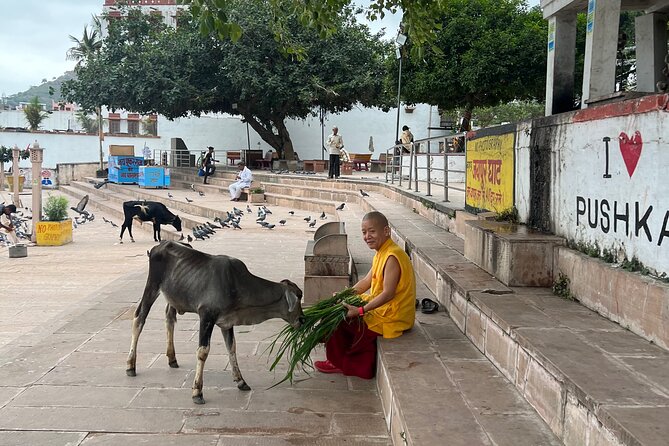
After Brahma Temple, the route heads toward Brahma Ghat and the Pushkar Lake area. Families offer prayers for happiness, and you’ll also hear about tributes to departed souls.
This segment is described as time for photography and views, and it lasts about 30 minutes.
In practical terms, this is one of your best “Pushkar feels like Pushkar” moments. Ghats are where you see everyday devotion at work, and they’re also visually rewarding if you like taking photos that tell a story, not just snapshots.
Stop 7: Lemon ginger honey break at Alka Rooftop Restaurant
You get a quick 10-minute refresh at Alka Rooftop Restaurant. The included drink is lemon ginger honey, served while you enjoy a view over the market area.
This stop is short, but it’s useful. You’ll appreciate the pause if you’ve been walking in sun and crowds.
Stop 8: Gau Ghat (oldest of the 52 ghats)
Finally, you visit Gau Ghat, described as the oldest ghat among the 52 ghats, also known as Gandhi Ghat. You’ll also hear about Halwai Gali nearby—famous for sweet bakers and confectioners.
Admission is included for this stop, and it lasts about 15 minutes.
This is a good finish because it pairs spiritual meaning with a food-culture street you can keep exploring afterward, on your own time.
Brahma Ghat Isn’t Just a View Spot
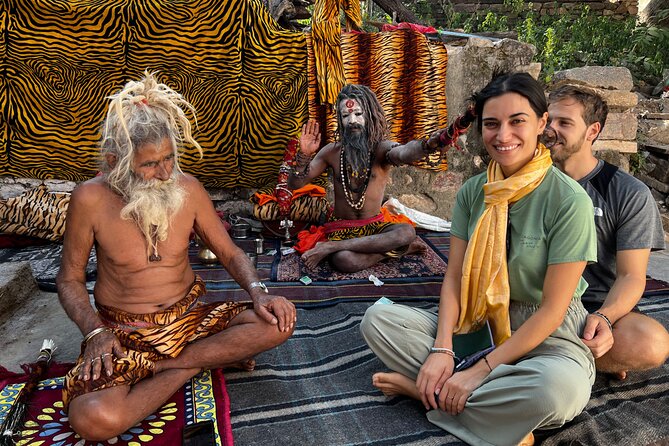
This is where the tour can become more than sightseeing.
At Brahma Ghat, you’re positioned around the daily structure of worship—families praying, and the guide framing the significance of what happens there. Depending on timing, you may also encounter a more ceremonial moment. Some visitors talk about a sunset-style atmosphere and a fire-ritual experience around the temple/ghat area, and the guide’s explanations help you understand what you’re watching.
If you feel moved to join an actual blessing ceremony, remember that ritual charges are not included in the base tour cost. The upside is that you’re not doing it blindly. You’ll understand why it’s being offered and what the moment represents before you decide.
The Tea-and-Malpua Break Feels Like Part of the Day
A lot of tours toss in food. This one builds it into the experience.
You get masala tea served in a claypot with cardamom and ginger. That choice matters because it’s local in both taste and presentation. It also gives you a natural reset point during a walking-heavy route.
Then comes malpua, a traditional Pushkar sweet described as sugar-syrup coated pancakes made with curd, spices, khoya, and dried milk solids, topped with nuts. It’s not a random dessert. It’s a specific sweet tied to the town.
Even if you’re not a sweets person, you’ll probably leave happy because the guide makes the moment feel intentional, not like a checkpoint.
Logistics That Help You Enjoy the Walk
This is a walking tour, so a few practical points make a difference.
- Group size: max 6 travelers. That usually means your pace stays comfortable and your questions get answered without chaos.
- Pickup and drop-off: included. If you’re staying in town, this can save time and reduce friction.
- Mobile ticket: helpful for keeping things simple.
- Lockers for cameras and larger items: nice if you don’t want to carry everything into temple areas.
- Good weather required: the experience requires decent weather, so plan for flexibility if Pushkar’s conditions change.
Dress smart: temples and crowded ghats can mean you’ll be outside longer than you think. Wear comfortable shoes and keep shoulders and knees in mind as a default for religious spaces.
Who This Tour Is Best For
I think this fits best if you want:
- A guided introduction to Pushkar’s spiritual layout without needing to research everything first
- A mix of Hindu and Sikh context
- A tour where the guide actually explains what you’re seeing while you walk
- A short outing that includes tea and a real local sweet
It also works well for people traveling with a parent or someone who doesn’t want a full day of wandering. The time window is manageable, and the route stays focused.
If you’re the type who hates group pacing or you’re looking for long free time at each stop, you might feel slightly “time-boxed.” This is a route. It’s not a slow temple day where you linger for hours.
Should You Book The Pushkar Route’s Spiritual City Walk?
Yes—if you want a smart, organized introduction to Pushkar’s sacred places, book it. The combination of a small group, pickup, entrance fees, and meaningful stops makes it excellent value for a few hours of your day.
Skip it (or adjust your expectations) only if you’re likely to be uncomfortable around active worship and ceremonial moments, or if you prefer completely self-guided time with minimal structure. Otherwise, this walk is one of the easiest ways to understand why Pushkar draws pilgrims year after year.
FAQ
Is pickup and drop-off included?
Yes. The experience includes hotel pickup and drop off.
Is there a mobile ticket?
Yes. A mobile ticket is provided.
How long is the walking tour?
It runs about 1 to 3 hours (approx.).
How many people are in the group?
The tour has a maximum of 6 travelers.
What stops are included in the route?
You’ll visit Gurudwara Sahib, Varaha Temple, Old Rangji Temple, Ati Prachin Shri Atamteshwar Mahadev Mandir, Brahma Temple, Pushkar Lake area/Brahma Ghat, Gau Ghat, plus a short refresh stop at a nearby restaurant.
Is breakfast included?
Yes. Traditional Pushkar malpua is included.
Is tea included?
Yes. A special masala tea is served in a claypot.
Are entrance fees included?
Yes. Entrance fees are included.
Are holy rituals and ceremonies included?
No. Charges for holy rituals and ceremonies are not included if you choose to participate.
Does the tour require good weather?
Yes. The experience requires good weather, and if it’s canceled due to poor weather you’ll be offered a different date or a full refund.