REVIEW · POMPEII
Pompeii 3 Hours Walking Tour Led by an Archaeologist
Book on Viator →Operated by Askos Tours · Bookable on Viator
Pompeii reads like a time capsule. This archaeologist-led private walk turns the ruins into something you can actually picture, from everyday Roman errands to public buildings and home life.
You get a focused route across key areas of Pompeii, explained with context and built around what you can realistically see in about three hours.
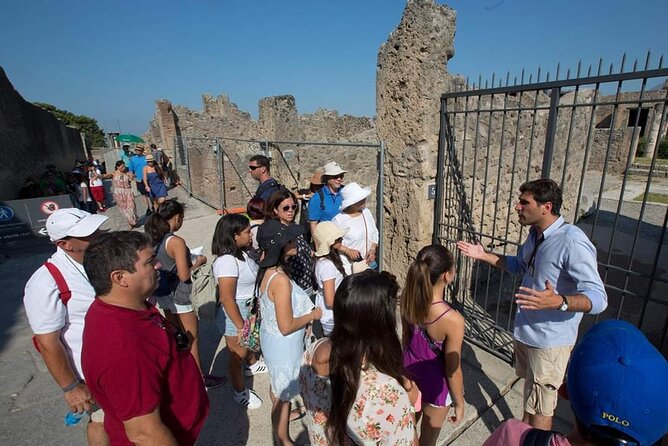
I love how private the experience feels. You’re not crammed into a big crush of people, so you can ask questions and keep moving at a comfortable pace.
I also like that admission tickets are included, so you spend your energy on the site instead of sorting out logistics at the gates.
One consideration: Pompeii is vast and exposed, with minimal shade. Plan for sun, heat, and lots of walking, even though the tour runs rain or shine, and you’ll want to bring the right stuff for the ground and the weather.
In This Review
- Key things that make this Pompeii tour worth your time
- Meeting at Porta Marina Superiore, then getting your bearings fast
- Why an archaeologist-led walk changes how you see Pompeii
- Basilica and the forum square: Pompeii’s public life, explained
- Forum granaries: marble, fountains, and the casts that stay with you
- House of Menander and House of the Faun: seeing home life through architecture
- Stabian Baths: oldest thermal complex and a feel for daily routines
- Lupanar and theaters: entertainment, boundaries, and city identity
- The 3-hour pacing: what to expect and how to survive the open sky
- Price and value: is $256.99 per person fair?
- Who should book this Pompeii walking tour
- Should you book this Pompeii archaeologist-led walk?
- FAQ
- How long is the Pompeii 3 Hours Walking Tour?
- Is the tour private or shared?
- Where do I meet the guide for the tour?
- Where does the tour end?
- Are admission tickets included?
- What kind of guide leads the tour?
- What stops are included during the tour?
- What should I bring for comfort at Pompeii?
- What is the cancellation policy?
Key things that make this Pompeii tour worth your time
- Private group format with only your party participating
- Professional archaeologist guide (and multiple high-level backgrounds among guides, including PhD-level archaeology and art history)
- Tickets included for the stops that require them, reducing friction on the day
- Roman daily life, not just famous sights: baths, market porticoes, forum spaces, theaters, and the Lupanar
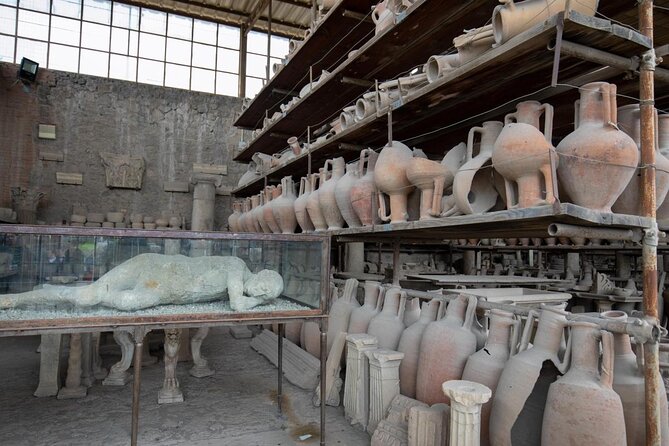
- Granaries of the Forum details like marble tables, fountain-related basins, and casts including a dog and a tree
- Practical Pompeii support: free luggage storage near the start and help getting back at the end
Meeting at Porta Marina Superiore, then getting your bearings fast
Most Pompeii tours start with confusion. This one starts with clarity. You meet at the main entrance area of the archaeological park at Porta Marina Superiore, where the guide holds a sign for Askos Tours. That small detail matters on a day when the site layout can feel like a maze.
The tour start point is listed at Via Villa dei Misteri, 1, 80045 Pompei NA, Italy, and the route ends right back at Via Villa dei Misteri, 1. The guide also leaves you at the ruins and will help you with practical directions on how to get back to your accommodation or the closest train station.
There’s also a free luggage store at the meeting place. That’s useful if you’re arriving in Pompeii with bags and want to tour with hands-free comfort. And since the tour runs rain or shine, it’s good to know you won’t be left scrambling if the weather does its usual Mediterranean thing.
If you’re someone who likes structure, this setup helps you spend your first 10 minutes getting oriented instead of wandering.
You can also read our reviews of more tours and experiences in Pompeii.

Why an archaeologist-led walk changes how you see Pompeii
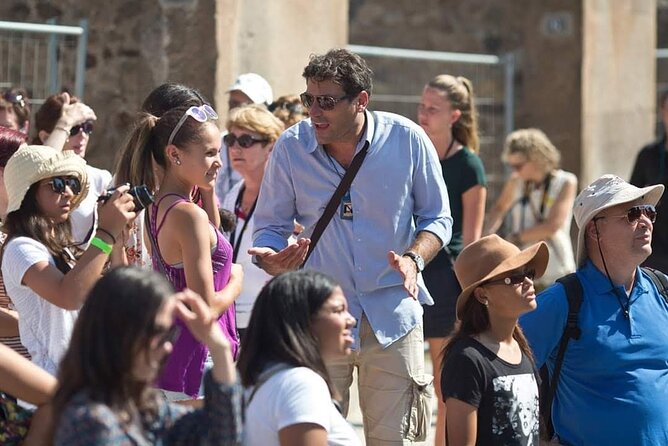
Pompeii can overwhelm you fast. One minute you’re staring at walls, the next you’re wondering what you’re supposed to notice. The big value here is the guide’s ability to connect structures to real life—how Romans organized work, water, meals, entertainment, and public business.
I love tours where you don’t just hear facts. You get small explanations that make the buildings behave like they did 2,000 years ago. With this kind of guide, you’re paying for interpretation, not just movement through stones.
You’ll also feel the difference between a standard overview and a more technical approach. The guides in this program include people with strong academic backgrounds—names that show up in past tours include Daniela Mantice, Monica (described as having a PhD in archaeology), and Antonella (an archaeologist). Other guides mentioned include Anna Sorrento, Lia, and Nicoletta, with expertise in art history and archaeology-related teaching.
That variety matters because Pompeii rewards multiple angles: architecture, daily routines, and what the eruption preserved.
Basilica and the forum square: Pompeii’s public life, explained
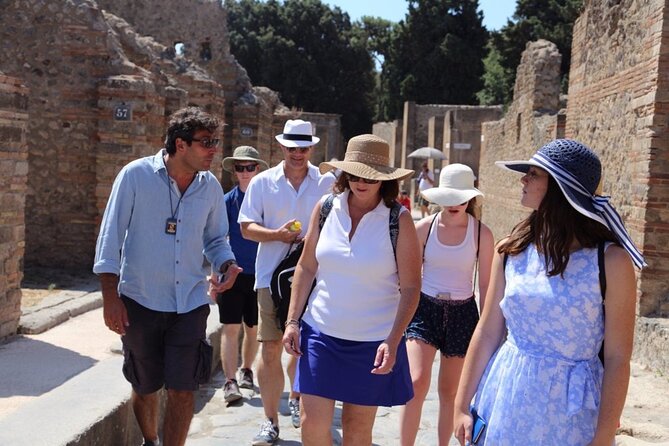
Your walk begins with one of the best places to understand Pompeii as a working city. You’ll visit the Basilica, which was an open portico space that sheltered merchants and other activities. Even if you’ve never studied Roman city design, this stop gives you the human scale: people meeting, selling, waiting out weather, and conducting daily business.
Then you step into the Foro de Pompeya, the main square area. This is where you learn how Pompeii organized public gatherings around space and movement. The square isn’t just a backdrop. It’s the idea of a city center—an anchor where people passed through and politics and commerce could overlap.
If you’re visiting with kids, this is also where you can make it easy for them to follow the story. Public buildings help children map the city without needing a lot of technical detail.
One practical note: these central zones are also the parts where the heat can hit hardest. If you’re sensitive to sun, pace your photos and use the guide’s explanations to slow down in the few shadier moments you find.
Forum granaries: marble, fountains, and the casts that stay with you
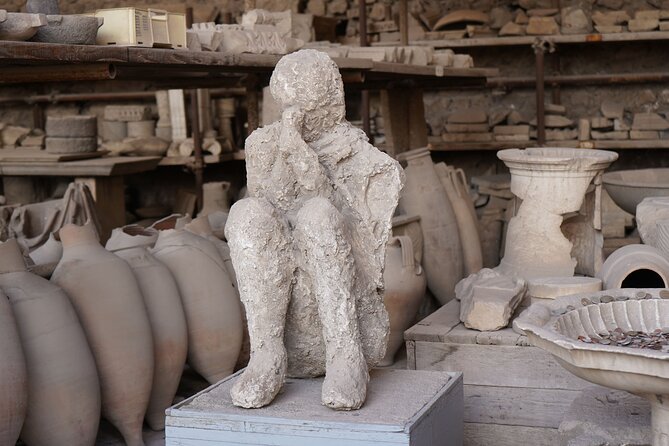
Next comes a stop that turns architecture into evidence. The Granaries of the Forum aren’t just storage. You’ll see marble tables, and you’ll spot details tied to fountain features—specifically marble elements and basins that adorned entrances of houses. That connection to domestic life is a clever reminder: what looked like city infrastructure often linked back into private routines.
You’ll also encounter cast material related to the eruption. The granary area includes casts of victims of the eruption, and it also includes casts described for a dog and a tree. That kind of detail hits harder than the broad headline. It makes the disaster feel specific, and it helps you understand why Pompeii is studied so intensely.
This is one of those stops where your guide’s ability to explain matters most. You don’t want just the name of the structure. You want to know why these objects, basins, and cast references exist in this location and what they add to the overall story.
Spend the full time here. It’s tempting to treat it like a quick photo stop, but this is where the tour tends to become memorable.
House of Menander and House of the Faun: seeing home life through architecture
Then you shift from public spaces to private ones with two major home stops: the House of Menander and the House of the Faun.
The House of Menander is described as one of Pompeii’s richest and most magnificent houses, with emphasis on architecture, decoration, and contents. That framing is important. You’re not just looking for pretty walls. You’re learning how wealth expressed itself in the built environment—how a home communicated status, taste, and identity.
The House of the Faun is another standout, described as one of the largest and most impressive private residences in Pompeii. This is the moment when you start to see scale. Pompeii’s houses weren’t tiny, cramped dwellings. They were complex spaces where people lived, hosted, and displayed their place in the city.
A good guide will help you notice the layout logic—what the house was built to do and how people would have moved through it. Even if you only get about 20 minutes here, those minutes can pay off if you keep your eyes open.
If you’re the type who likes architecture or art, these home stops will likely be your emotional peak of the tour. If you’re less into that side, ask your guide to connect the homes back to work and public life. The contrast makes Pompeii feel real.
Stabian Baths: oldest thermal complex and a feel for daily routines
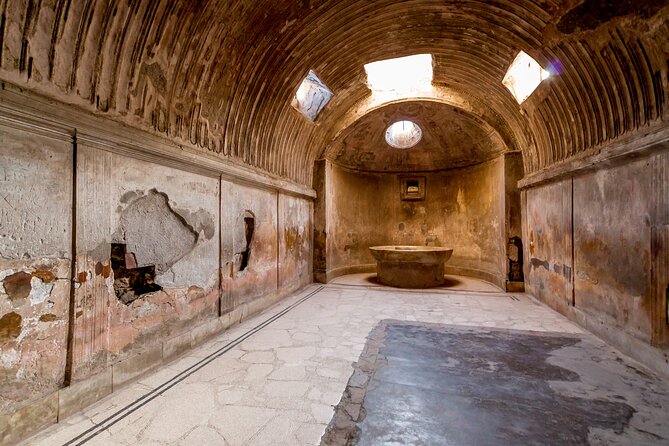
Now you get to one of Pompeii’s most human institutions: water and bathing. The Stabian Baths (Terme Stabiane) take up a vast area, positioned between the Brothel lane, the Holconius crossroads, and the Via Stabiana. They’re described as the oldest thermal complex in the city.
This matters because baths weren’t only about cleanliness. They were a social engine—where people arrived, met, talked, exercised, and passed time. A strong guide keeps that context in the foreground. You can look at walls and corridors all day, but the tour becomes meaningful when you understand what daily life revolved around.
Because the baths are spread out, the time you have helps you focus on the big picture. You’re not trying to see every corner; you’re learning how these spaces functioned as part of the city’s routine.
Wear shoes you trust. Floors inside Pompeii can be uneven, and you’re moving between multiple zones in a short timeframe.
Lupanar and theaters: entertainment, boundaries, and city identity
After baths, the tour takes you into more complicated territory: the Lupanar, described as Pompeii’s most famous brothel. This stop is only about 20 minutes, so the goal isn’t a long lecture. It’s a guided explanation of how Pompeii carried out social and economic life in different spaces, including spaces that served the city’s darker realities.
If you’re uncomfortable with adult-themed history, it’s worth knowing this is a planned stop. Still, I like handling it on a guided tour, because you can get straight context instead of guessing. Your guide can explain what you’re seeing without sensationalizing it.
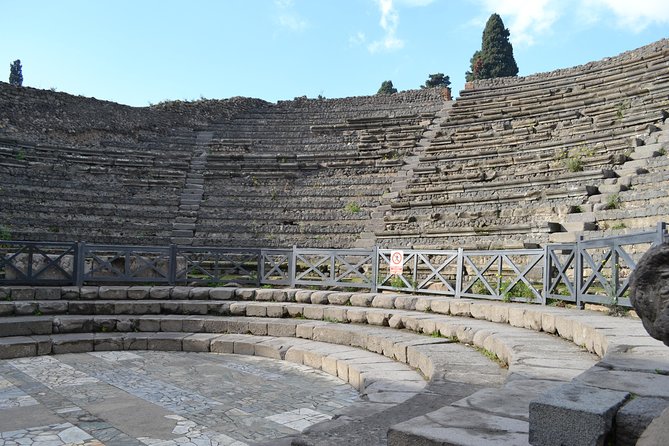
Then the walk shifts into performance and public gathering through Pompeii’s small-to-big theater sequence:
- You get a quick look at the Odeon – Teatro Piccolo, about 5 minutes.
- Then you visit Teatro Grande, the most important theater in Pompeii, about 20 minutes.
Theater areas help you understand how Romans treated leisure like a public institution. People didn’t just watch events in private; they shared the experience, and the city’s design supported that.
If you’re thinking about photography, this is another area where timing helps. Try to take photos during pauses in explanations, not while your guide is pointing out key architectural cues.
The 3-hour pacing: what to expect and how to survive the open sky
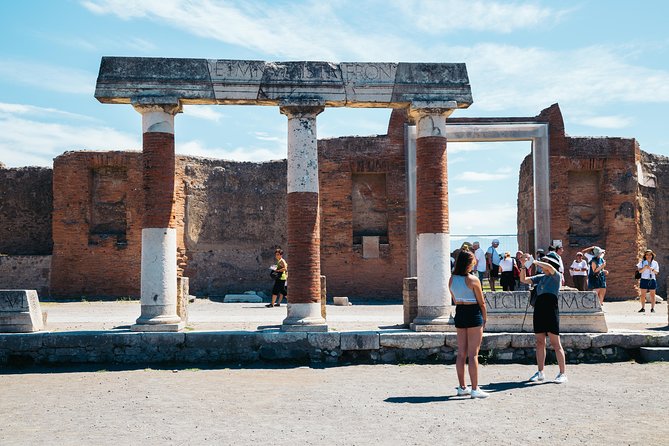
This tour is about three hours of walking. That length is the sweet spot for many visitors: you can hit major anchors without turning your day into a 6- or 8-hour slog.
But Pompeii does not play nice with comfort. The site is vast and exposed with minimal shade. Even if the tour is rain or shine, the sun can feel relentless in the open areas. Your best bet is simple:
- Bring sunscreen and a hat
- Wear breathable layers and solid walking shoes
- Have a water plan before you start, so you’re not hunting for it mid-route
Also remember that transportation to and from attractions isn’t included. The tour handles the guided portion and the on-site admissions, but you’re responsible for getting there and back. The good news: the start is near public transportation, and the guide will help you figure out your next step after the walk ends.
Because it’s private and customizable for your group, you should feel comfortable raising questions or adjusting pace if someone in your party moves slower.
Price and value: is $256.99 per person fair?
At $256.99 per person, this tour is not the cheapest way to see Pompeii. The value equation is all about what you’re buying: a private format, a professional archaeologist guide, and admission ticket fees for the stops that require them.
For me, private works best when you want more than a checklist. If you like asking why something is shaped the way it is, or you want a guided explanation of how public spaces connected to daily life, the price starts to make sense.
There are also group discounts, which can help if you’re traveling with friends or family. Since it’s only your group in the experience, the per-person cost can drop in practical ways when you’re not flying solo.
If you’re the type who enjoys self-guided wandering with a guidebook, you might decide the price is too high for your style. But if you want a tighter and more interpretive experience, this is a clear “pay for meaning” purchase, not a “pay for movement” one.
One more subtle point: Pompeii admissions and time at entrances can eat into your day. Having ticket fees included reduces that friction, especially if your schedule is tight.
Who should book this Pompeii walking tour
I think this tour fits best if you want:
- An archaeologist-led perspective rather than a casual walk-through
- A private experience where you can ask questions and keep the pace comfortable
- Key Roman life themes: baths, forum life, elite homes, theaters, and the Lupanar
- A format that works in about three hours, without trying to conquer the entire site
If you’re traveling with mobility limitations, this might be tougher because you’re in a large, exposed archaeological area with lots of walking. The tour is described as most travelers can participate, but Pompeii’s conditions are still Pompeii’s conditions.
If you’re visiting with children, it can work because the guide can translate big ideas into something they can grasp. Just remember children must be accompanied by an adult.
Should you book this Pompeii archaeologist-led walk?
If you want a Pompeii visit that feels organized, personal, and explained—not just seen—I’d book it. The biggest strength is the guide: multiple named specialists (including Monica with a PhD in archaeology and other academically grounded guides) help you connect buildings to Roman life.
I’d hesitate only if you know you hate sun-exposed walking or if adult-themed stops like the Lupanar would put you off. Otherwise, the time-on-site efficiency, ticket inclusion, and private format make this a strong choice.
Book it with one goal: pay attention. This tour works best when you treat it like a guided conversation while you walk through the city that survived long enough to teach us.
FAQ
How long is the Pompeii 3 Hours Walking Tour?
It’s approximately 3 hours.
Is the tour private or shared?
It’s a private tour/activity. Only your group will participate.
Where do I meet the guide for the tour?
You meet at the main entrance of the Pompeii Archaeological Park at Porta Marina Superiore. The guide holds a sign with Askos Tours.
Where does the tour end?
The tour ends at Via Villa dei Misteri, 1, 80045 Pompei NA, Italy. The guide leaves you at the ruins of Pompeii and can help you get back to your accommodation or the closest train station.
Are admission tickets included?
Yes. Admission ticket fees are included.
What kind of guide leads the tour?
A professional archaeologist guide leads the tour.
What stops are included during the tour?
Key stops include the Basilica, Foro de Pompeya, Granaries of the Forum, House of Menander, Stabian Baths, Lupanar, House of the Faun, Odeon (Teatro Piccolo), and Teatro Grande.
What should I bring for comfort at Pompeii?
The site is vast with minimal shade, so you’re advised to use sunscreen and wear a hat.
What is the cancellation policy?
Free cancellation is available up to 24 hours in advance for a full refund. If you cancel less than 24 hours before the experience starts, you won’t receive a refund.