REVIEW · MARRAKESH
Marrakech: Authentic Moroccan Food Walking Tour & Dinner
Book on GetYourGuide →Operated by One Life Trips · Bookable on GetYourGuide
This is how you start to get Marrakech by the stomach. On this guided food walk, you’ll wander the Old Medina with a local guide and eat your way through classic Moroccan bites, then finish with a proper dinner. I especially like the fact that the stops focus on places locals actually go instead of just the most obvious tourist food.
Two things I really loved: first, the variety is real, from hot soup like Harira to pan-fried treats like Msemmen; you’re not stuck with one kind of food all evening. Second, guides such as Mehdi, Mohammed, Ali, and Yaya (names you’ll see in real past groups) bring the stories behind what you’re eating, not just random facts.
The main drawback to plan for: this is a walking tour in the Medina, so you’ll want comfortable shoes and some patience with tight streets and food-line waiting. Also, depending on timing (especially during Ramadan), dinner can be handled differently than usual.
In This Review
- Key highlights you’ll care about
- Where the evening starts: Poste du Maroc to the Medina food streets
- The value math: why $52 for a dinner-and-tastings tour can make sense
- What you’ll taste: the Moroccan snack lineup that actually tells a story
- Route One: coconut macaroons, Harira, snails, and Tajine with Raïb
- Route Two: stuffed msemen, sfenj donuts, and open-air barbecue
- The herbalist/spice shop stop: more than a bathroom break
- Dinner planning: how to eat smart so you don’t miss the best bites
- Who should book (and who might want a different style of tour)
- Should you book Marrakech: Authentic Moroccan Food Walking Tour & Dinner?
- FAQ
- How long is the Marrakech food walking tour with dinner?
- What’s the price per person?
- Where do I meet the guide?
- Is dinner included?
- What kind of food will I try?
- Does the tour include a guide and language?
- What should I bring?
Key highlights you’ll care about
- Start point that’s easy to find: Meet in front of Poste du Maroc on Rue Beni Marine.
- Two different food routes: You may follow one set of tastings or another, both designed to feel local.
- Real Moroccan classics, not just samples: Think Harira, Chebakia, Msemmen, Tajine, and grilled meats.
- A dessert finish that’s actually Moroccan: Raïb yogurt often lands at the end of dinner.
- Optional herbalist/spice shop stop: A short break for mint tea, spices, and a restroom moment.
Where the evening starts: Poste du Maroc to the Medina food streets
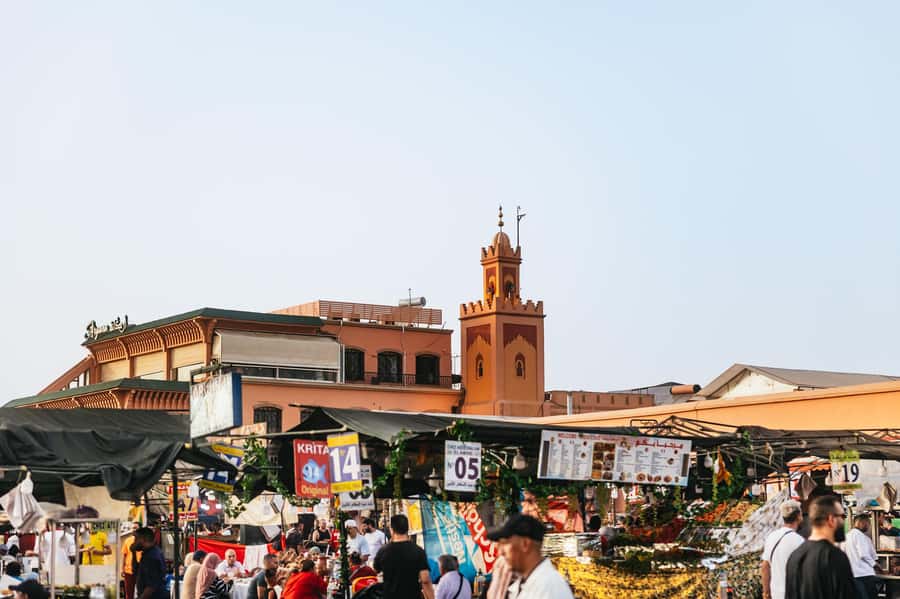
Meeting in front of Poste du Maroc (Rue Beni Marine) is a smart choice because it gives you an easy landmark before you slip into the Old Medina. You’re not trying to decode side streets right away—you meet your English-speaking guide, then set off on foot.
This tour is built for an evening pace: about 3 hours, with multiple stops and enough time to eat without feeling rushed. You’ll be walking through market lanes and neighborhood food spots, and that matters because Marrakech’s food culture lives on the street and in small eateries, not in one big showy venue.
Bring comfortable shoes. You’ll likely cover a decent amount of ground on uneven surfaces, and the Medina can be crowded around food stalls. If you’re prone to foot soreness, I’d choose cushioned walking shoes over stylish sandals—your future self will thank you.
You can also read our reviews of more walking tours in Marrakesh
The value math: why $52 for a dinner-and-tastings tour can make sense
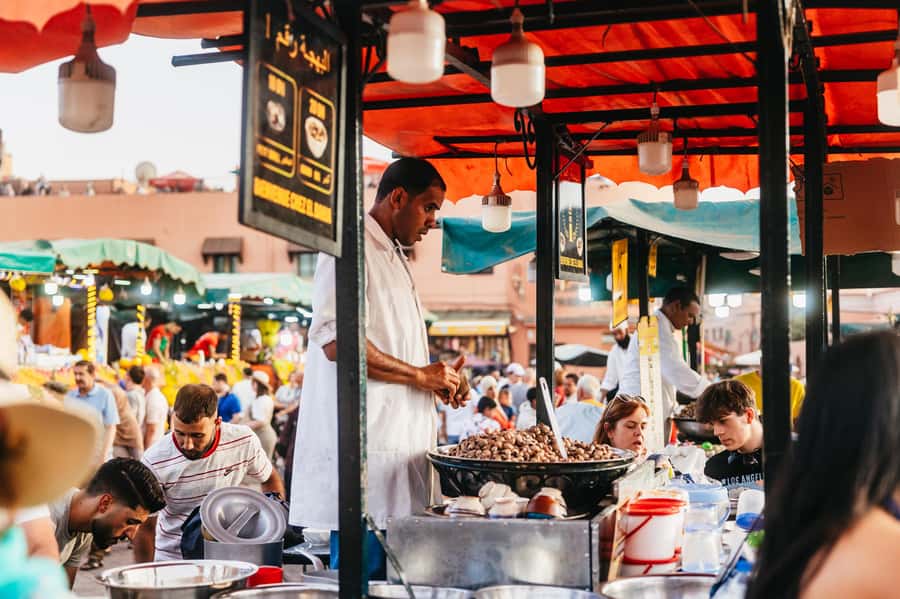
At $52 per person for roughly three hours, you’re paying for three things at once: a local guide, multiple food tastings across the Medina, and a substantial dinner at the end (on most days).
What makes it feel like value is the mix. This isn’t “one snack then a hard exit.” You’re typically getting:
- several distinct savory bites (soups, pastries, pancakes, and more)
- sweet treats and drinks (macaroons, donuts, smoothies, yogurt, and mint tea)
- and then a full dinner that can be Tajine with salad or open-air barbecue
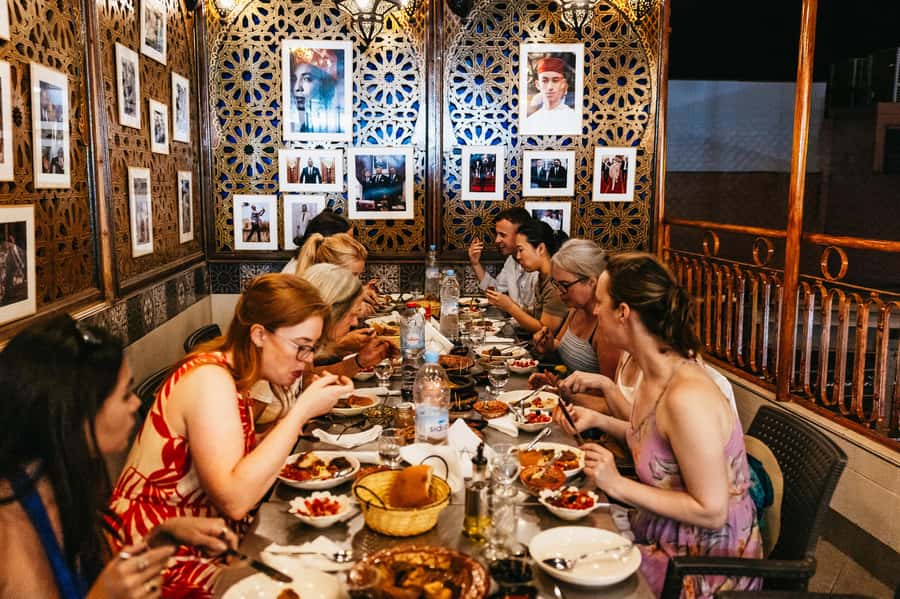
That dinner piece is a big deal. In Marrakech, you can spend a lot chasing dinner after you’ve already eaten street snacks. Here, you eat snacks with guidance, then you get a set meal at the end—so your evening stays organized without you needing to gamble on where to go next.
One note for budgeting your appetite: it’s very common to leave full. If you’re the type who normally skips lunch, keep it that way. If you ate a big meal earlier, you may still enjoy the tour, but you’ll eat slower—and possibly miss out on finishing everything.
What you’ll taste: the Moroccan snack lineup that actually tells a story
Even before you reach dinner, you’ll get a guided walk through flavors that show you how Moroccan eating works across the day—street bites, family treats, and “served when it counts” meals.
Here are some of the tastings you may run into (the exact order depends on which route you follow):
- Harira soup: warm, spiced, and usually served with dates and Chebakia. During Ramadan timing, it’s tied to the tradition of breaking the fast.
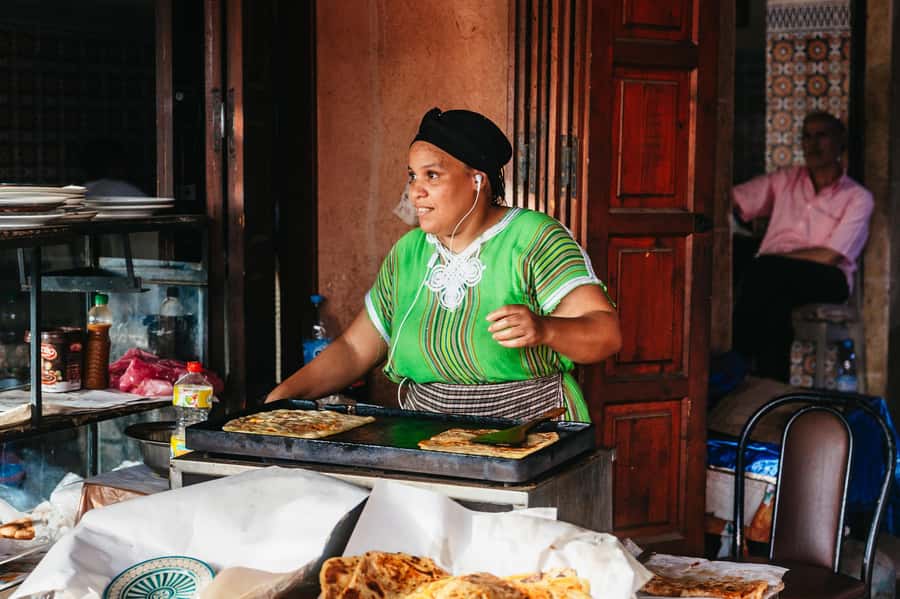
- Msemmen: pan-fried pancakes, often finished with honey and cheese. It’s comfort food with a crisp-on-the-outside texture.
- Mint tea: not just a drink break. It’s part of hospitality culture, and the tea stop usually comes with a moment to breathe and ask questions.
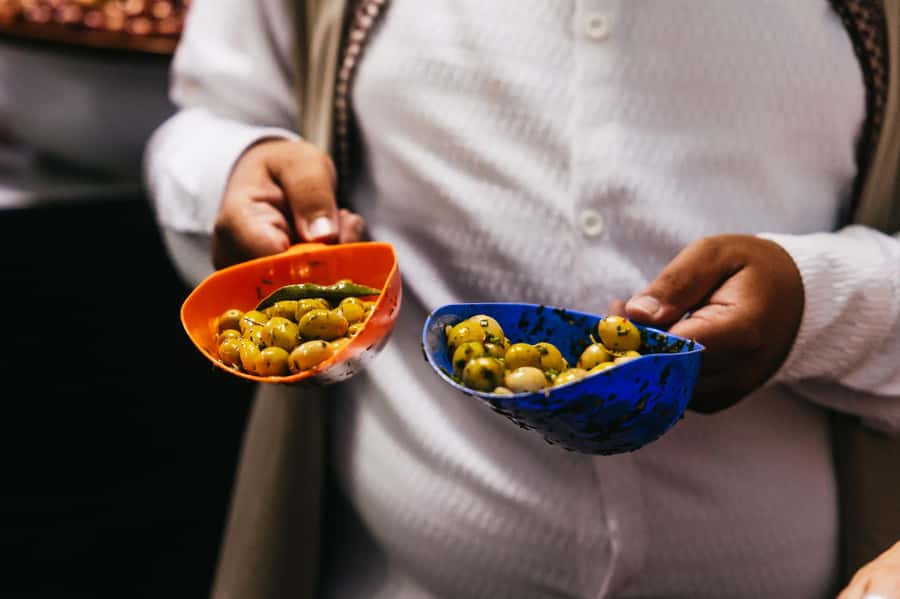
- Olives: you might taste both green and red styles, sometimes described as creamy and smooth, sometimes tossed with herbs like parsley and cilantro.
- Sweets and pastries: coconut macaroons, almond-orange blossom pastries like Kaab Ghzal, and other seasonal treats.
- Sweet drinks: Raïb (homemade yogurt with a creamy, tangy profile) or fruit-based options like Panaché and Lhindiya (cactus fruit).
The real win is that the guide helps you connect the dots. When you understand why a soup shows up around Ramadan, or why a pancake gets folded and fried for teatime, food stops being just food. It becomes part of local rhythm—who eats what, when, and why.
Route One: coconut macaroons, Harira, snails, and Tajine with Raïb
Your evening may follow a classic “snacks toward dinner” path. If you get Route One, expect a sequence that feels like progression: sweet first, then savory, then a final sit-down meal.
A common start is Moroccan coconut macaroons, described as a kids’ favorite. It’s a friendly intro bite—sweet, easy, and a good way to start tasting without feeling overwhelmed.
Next you may try Kaab Ghzal (gazelle ankles)—a pastry filled with almond paste scented with orange blossom water. This is one of those Moroccan flavors that’s hard to replicate outside the country, because the floral notes are subtle but unmistakable.
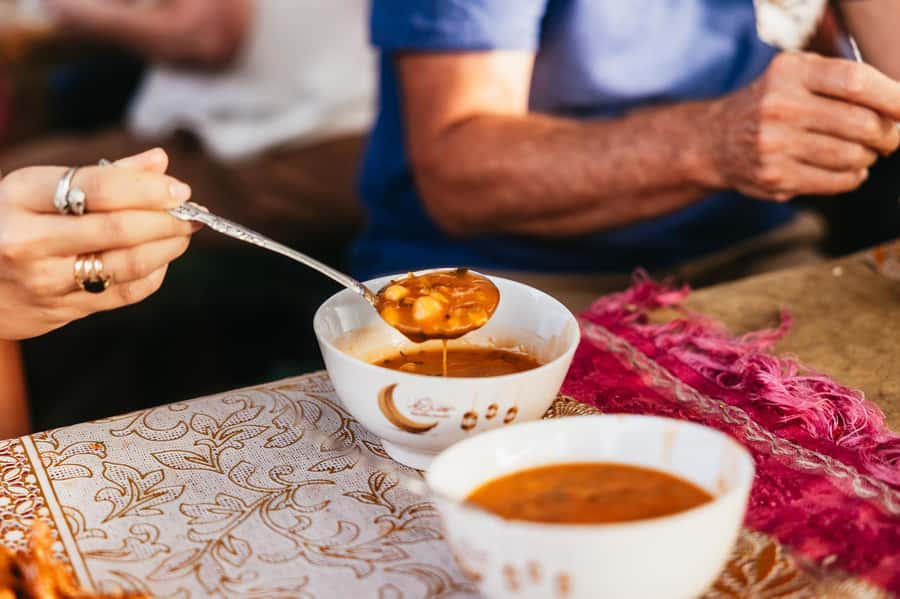
Then comes Harira, typically served with dates and Chebakia. If your timing overlaps with Ramadan, you may experience the ritual mood of people gathering around the fast-breaking moment. One traveler specifically noted the tour coinciding with sunset when fasting ended, which adds a powerful cultural context to what you’re eating.
After the soup, you may get into more adventurous territory:
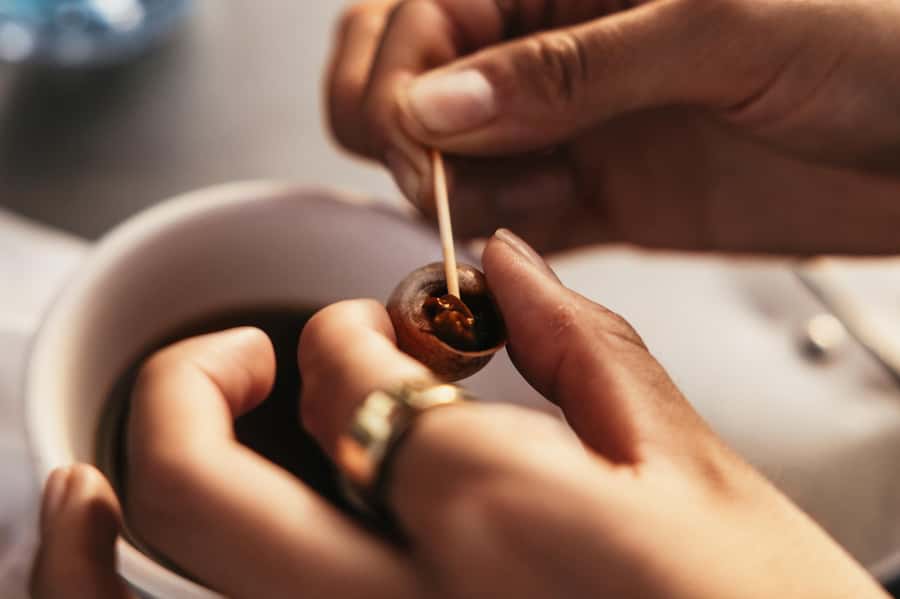
- Babbouche (Moroccan snails), slowly cooked in an aromatic herbal broth. This isn’t a “tiny gimmick bite.” If you’re curious, it’s an actual Moroccan comfort dish.
You’ll likely end up at mint tea and Msemmen—pan-fried pancakes drizzled with honey and cheese. It’s both snack and proof that Moroccan food loves sweet-salty balances.
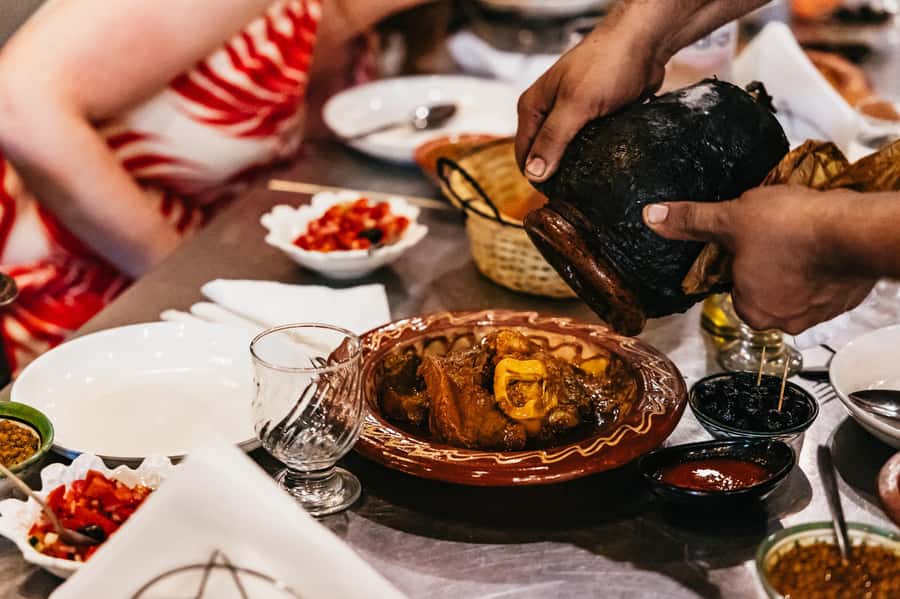
Later, you might try Fakya (dried fruits and nuts) and then move into the dinner portion, plus a spread of olives. Dinner is often served at a cozy local restaurant with fresh Moroccan salad and a hearty Tajine. Then dessert can be Raïb, a homemade yogurt that tastes like something you’d happily eat for breakfast.
Possible watch-out on this route: snails and sheep’s head show up more on the adventurous end of Moroccan menus. If you’re squeamish about offbeat ingredients, make sure you tell your guide what you’d rather skip.
Route Two: stuffed msemen, sfenj donuts, and open-air barbecue
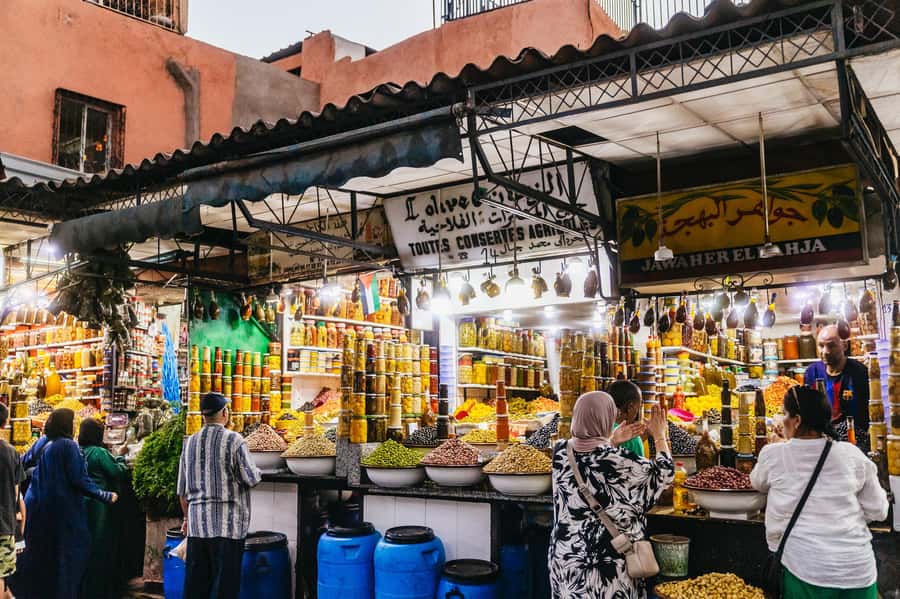
Another route is designed around more street-food energy and bigger “big bites” moments. If you get Route Two, it may feel like a greatest-hits sampler of Moroccan midday snacks.
You might start with Msemen Amer—savory stuffed Moroccan pancakes, often filled with spiced vegetables. This is the kind of food that makes sense on the street because it’s portable and satisfying.
Then you can hit the classic pairing: Harira & Chebakia again, because it’s such a foundational combination in Moroccan eating culture.
From there you may try Makkla bel Kefta, a Moroccan twist on Shakshouka. It’s another clue that Moroccan food loves spiced tomato bases and eggs, but the flavor signature is distinctly local.
Then comes Sfenj, traditional Moroccan donuts: golden and crispy outside, but chewy inside. If you want something clearly “street-snack Morocco,” this is it. It also helps you cool down between tastings because it’s warm and sweet in a comforting way.
You may also get Lhindiya (cactus fruit). It’s refreshing, and it’s a good reminder that Moroccan summers bring cooling drinks to the table.
Next, you might see Rass Mbekher—delicately steamed sheep’s head seasoned with cumin. Some people love it for the full cultural meal experience; others prefer to stick with chicken or vegetarian-friendly options. When this dish isn’t used, it can be replaced with chawarma (chicken) or crispy falafel, depending on the day.
You might also sample:
- Panaché, a colorful fruit smoothie made from seasonal fruits
- Khoudenjal, a hot herbal infusion made from galangal root, often described as good for digestion and served as a comforting drink in colder days
Then dinner becomes the showpiece: an open-air barbecue experience (often called chwa), with juicy grilled meats like beef, turkey, and liver. If you like finishing your food tour with something smoky and dramatic, this is the route that delivers.

The herbalist/spice shop stop: more than a bathroom break
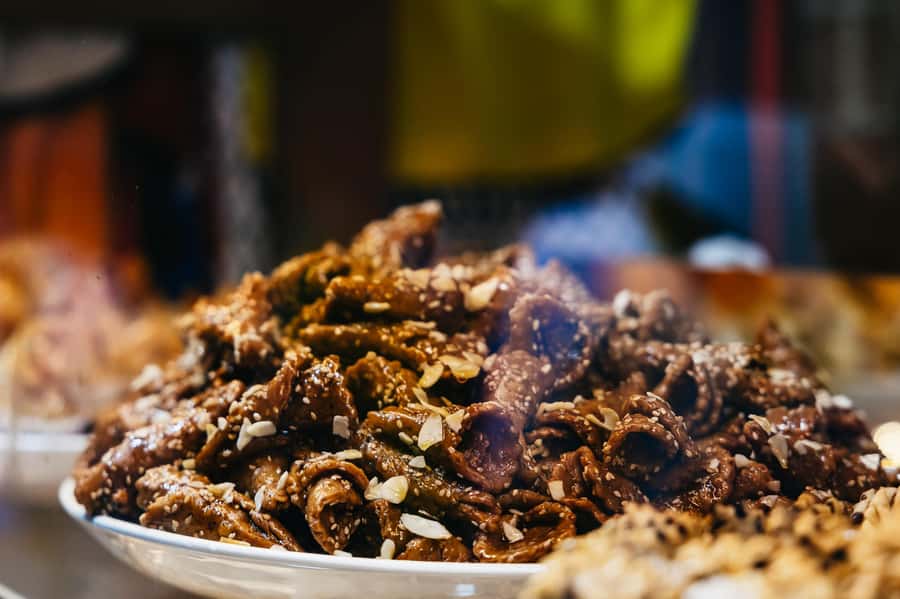
At some point, depending on the day’s flow and your guide, you may stop at a traditional herbalist’s shop. This matters because it connects food you’ve tasted to the spices that create it.
You might get a short break, sip mint tea, learn how spices are used, and reset before the final stretch. One practical benefit: it’s usually a restroom moment, which sounds basic until you’re deep in Medina lanes and your timing matters.
If you’re the type who likes to replicate flavors later, this shop stop is where you’ll get the most “useful to you” context—how Moroccan dishes get their warmth and depth, and why certain herbal blends show up with certain foods.
Dinner planning: how to eat smart so you don’t miss the best bites
Here’s my advice for having a great time instead of a food-math panic:
- Go into the tour with a light-to-moderate stomach. A big lunch can make the later tastings feel harder than they should.
- Pace yourself. The tour is designed as multiple tastings, so if you rush early, you’ll feel it at dinner.
- Ask your guide about what’s coming next. Guides often explain the food before you eat, so you can decide if you want to try everything or skip one item.
Dinner style depends on what route you take and the day’s schedule. If you’re on the restaurant dinner path, you’ll likely get salad plus Tajine, then Raïb. If you’re on the open-air barbecue path, you’ll finish with grilled meats in a chwa setting.
Either way, plan for a full meal. One group noted a very long tasting sequence (up to about 13 tastings plus dinner), and even without that exact number, you should assume you’ll leave very full.
Who should book (and who might want a different style of tour)
This tour is a great fit if you want:
- a structured way to eat around the Medina without guessing where to go
- Moroccan food culture explained in plain language, not foodie jargon
- a mix of street snacks and sit-down dinner
It’s also strong for first-timers. The Medina can feel intense at first, and having a guide who knows the route and the food stops can help you get oriented fast while eating.
You might choose something else if:
- you hate walking and don’t enjoy crowds
- you strongly avoid trying new ingredients (some routes can include snails, and one dish mentioned is sheep’s head)
- you’re traveling with very tight dietary needs and want guaranteed meal substitutions (the data here confirms vegetarian care happened for at least one group, but it’s not described as a universal guarantee)
Should you book Marrakech: Authentic Moroccan Food Walking Tour & Dinner?
I’d book it if you want an evening that does three things at once: you learn the food logic, you eat a real spread, and you finish with a dinner that feels Moroccan rather than generic.
The biggest reason to say yes is the combination of varied tastings plus a full dinner, all guided through the Medina with a local host. If you’re already planning to eat Moroccan food anyway, this gives you a shortcut: you don’t have to map the city’s best bites on your own.
Book this one when you’re in Marrakech for your first few days or when you have enough time to enjoy a long food evening. Go in hungry, wear good shoes, and be ready for both the sweet treats and the more adventurous dishes—because that’s where Marrakech food really shows its personality.
FAQ
How long is the Marrakech food walking tour with dinner?
It lasts about 3 hours.
What’s the price per person?
The price is $52 per person.
Where do I meet the guide?
Meet in front of Poste du Maroc, Rue Beni Marine.
Is dinner included?
Yes. You’ll get dinner either at a local restaurant or through an open-air barbecue experience. During Ramadan, dinner is not available in the usual restaurant/barbecue format.
What kind of food will I try?
You can expect Moroccan specialties such as Harira, Chebakia, Msemmen, mint tea, pastries (like Kaab Ghzal), sweets (like coconut macaroons), and dinner such as Tajine or Moroccan barbecue. Some tastings may vary by route and day.
Does the tour include a guide and language?
Yes, it includes a live tour guide speaking English.
What should I bring?
Wear comfortable shoes for walking in the Medina.