REVIEW · MDINA
Malta: Mdina and Rabat Walking Tour with Catacombs
Book on GetYourGuide →Operated by ColourMyTravel · Bookable on GetYourGuide
Mdina is Malta in miniature. This Mdina and Rabat walking tour turns the island’s big history into an easy, human-scale stroll, then adds a darker layer with WWII shelters and catacombs. I like that you’re not just looking at pretty buildings; your guide helps you read the streets and understand why they look the way they do.
Two things I especially like are the focus on iconic Mdina sights like the Mdina Cathedral and Greek Gate area, and the fact that the ticketed underground stops are built right into the price. If you’ve got limited time in Malta, this format lets you see medieval palazzos above ground and Malta’s story from the caves below.
One consideration: it’s still a walking tour with time spent standing and descending into underground spaces. If you have mobility limits or get uncomfortable in tight, airless areas, you’ll want to plan carefully and choose your comfort level.
In This Review
- Quick takeaways
- Mdina Gate to Bastion Views: Start With the Right Angle
- Palazzo Falzon, Greek Gate, and the Cathedral Stop That Anchors Everything
- The Mdina Streets Walk: What You Learn From Narrow Lanes
- Rabat Time: Switch From Fortified City to Living Neighbors
- Entering the WWII Shelters: A Hard Chapter Made Manageable
- Catacombs and St Paul’s Grotto: Underground Facts With Real Atmosphere
- Walking Tour Reality Check: Timing, Pace, and What to Bring
- Price and Value: Why $29 Works Here
- Who This Tour Fits Best (and Who Might Want to Skip It)
- Should You Book This Mdina and Rabat Walking Tour With Catacombs?
- FAQ
- What’s the duration of the Mdina and Rabat walking tour?
- Where do you meet the guide?
- What’s included in the ticket price?
- What isn’t included?
- Is the tour guided in English?
- Do I need comfortable shoes?
- Is the tour suitable for wheelchair users?
- Can I cancel for a refund?
Quick takeaways
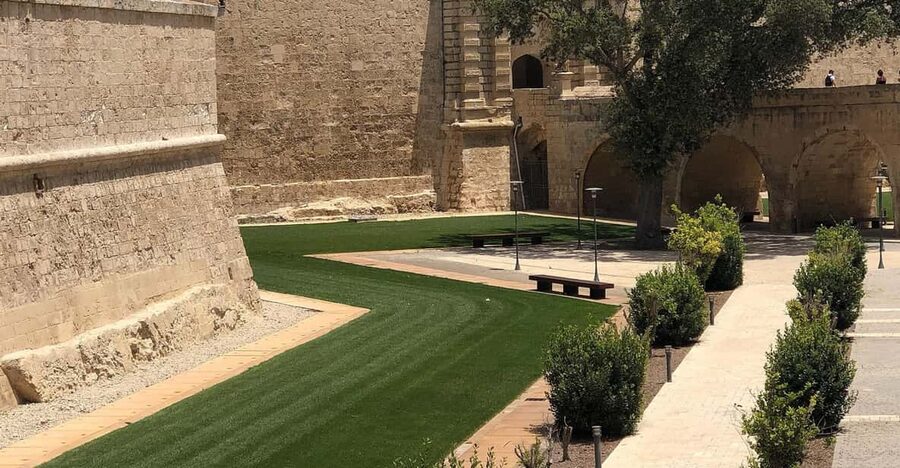
- Mdina’s bastion walls viewpoints help you understand the city’s defensive setup, not just its look.
- Mdina Cathedral and key streets give you a fast way to grasp why the city earned its noble-city nickname.
- Rabat’s Wignacourt Museum sets the stage before you head into the catacombs and shelters.
- WWII shelters + catacombs are included, so you get the full “above and below” Malta story without extra ticket hunting.
- Guides like Mario, Carmel, and Matthew often bring humor and clear explanations that keep the walk from feeling like a lecture.
- Expect a full 2.5 hours of action; some people report it runs closer to 3, especially if you’re asking questions.
Mdina Gate to Bastion Views: Start With the Right Angle
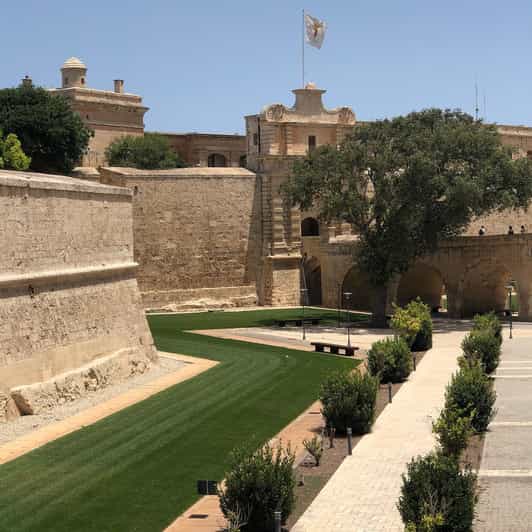
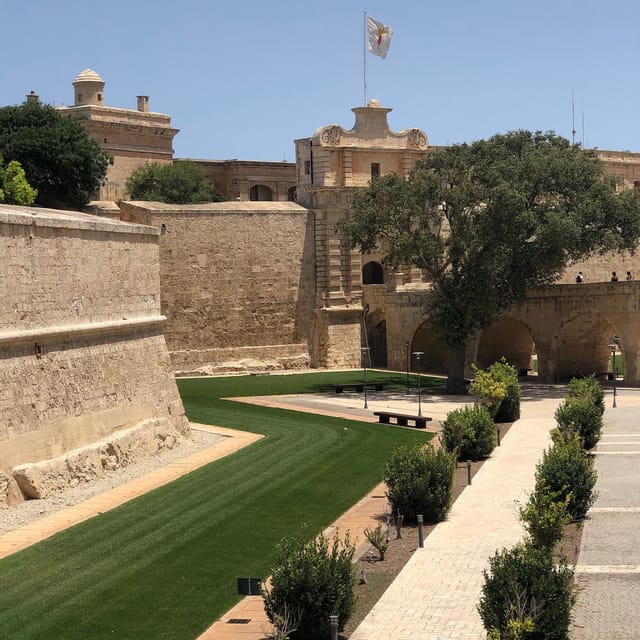
The tour meets outside Mdina Gate, next to the playing field. That spot matters because it puts you right where Mdina begins—on the threshold between the modern island and a walled city that still feels old even when you’re only halfway through the day.
Once you’re inside, Mdina’s charm isn’t just in the stones. It’s in the way the city sits on a plateau and dominates the skyline with its churches and fortifications. Your guide will point out how the mix of medieval bones and baroque rebuilding shapes what you see. Malta has layers, but Mdina makes those layers feel close-up: streets narrow, sightlines change fast, and you keep getting small “oh, that’s why it’s here” moments.
I also like how the tour uses the bastion walls viewpoints as a checkpoint. You get a breather with a perspective shot—then you walk back in and everything makes more sense. If you’ve ever visited a walled city and felt you were just chasing landmarks, this helps you get your bearings fast.
You can also read our reviews of more walking tours in Mdina
Palazzo Falzon, Greek Gate, and the Cathedral Stop That Anchors Everything

Mdina can look like a set of postcard corners. The difference here is that you’re guided to the landmarks that explain the city’s role over time.
You’ll stroll past major sights such as Vilhena Palace, St. Agatha’s Chapel, and the Banca Giuratale, plus the Palazzo Falzon and Greek Gate you’ll likely hear about on Malta itineraries. The goal isn’t to memorize names. It’s to notice the pattern: places of power and worship sit in the flow of daily life, and the city’s layout reflects that.
Then comes Mdina Cathedral, the kind of stop that makes Mdina feel like Malta’s heartbeat. The cathedral is hard to miss in the skyline, but the guide’s context turns it from a “pretty church” into something more useful: a marker for when Mdina mattered most and how it was reshaped after major events.
A lot of people visit Mdina and leave with great photos but no mental map. This tour helps you build one. You’ll walk away with a clearer sense of how Mdina transitioned through different rulers and eras, and why the post-1693 rebuilding phase left such a visible stamp on the city’s appearance.
The Mdina Streets Walk: What You Learn From Narrow Lanes
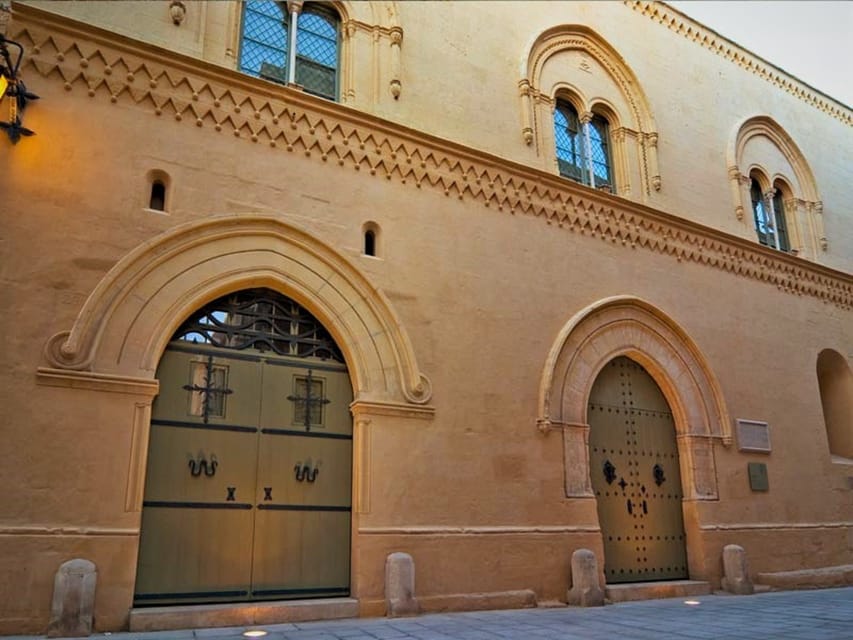
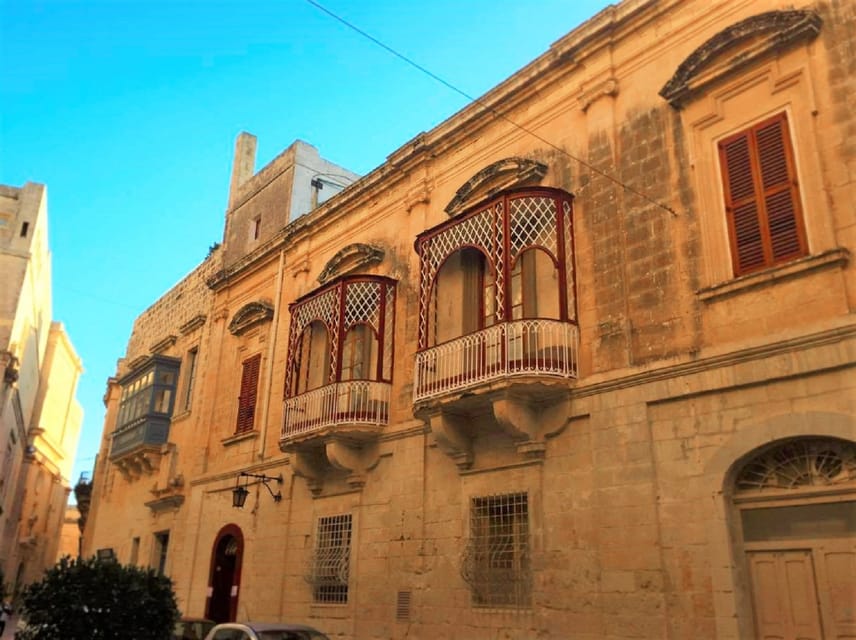
Mdina’s streets are famous for a reason, and the narrow lanes are part of the experience you can’t fully “get” from the gate alone. You’ll keep moving through a city that’s described as having changed very little in about a thousand years, and you’ll see that in the rhythm of the walk.
A good guide will connect the dots between old names, old settlements, and later rebuilding. You’ll hear how the area was inhabited as far back as the Bronze Age, then shaped further under Phoenicians and Romans, before Arabic rule influenced the city’s feel and layout. Later, the Normans established it firmly as Malta’s capital for a time—until Valletta took over in importance.
That context matters because it changes how you look at doors, chapels, and street turns. Instead of thinking, That’s just an old building, you start thinking, Someone decided this location, and they decided it for a reason.
Practical note: Mdina is easy to walk, but it’s not “sit-down sightseeing.” You’ll spend a fair amount of time on your feet, and you’ll likely do more standing near sights than you expect.
Rabat Time: Switch From Fortified City to Living Neighbors

After Mdina, you shift into Rabat, the nearby town that pairs naturally with Mdina. It’s the same island story, but with a different tone—less palace-and-walls, more everyday place.
During this portion, you enter Wignacourt Museum. That stop helps you understand what you’re about to see underground, and it keeps the day from feeling like a random grab-bag of caves. Even if you’re not a museum person, think of Wignacourt as a short warm-up.
Then you move into the tour’s signature underground sequence: WWII shelters, catacombs, and St. Paul’s Grotto. These stops are the reason this tour can feel more valuable than a plain surface walking tour, because your included entrances cover the hard-to-organize parts.
Entering the WWII Shelters: A Hard Chapter Made Manageable
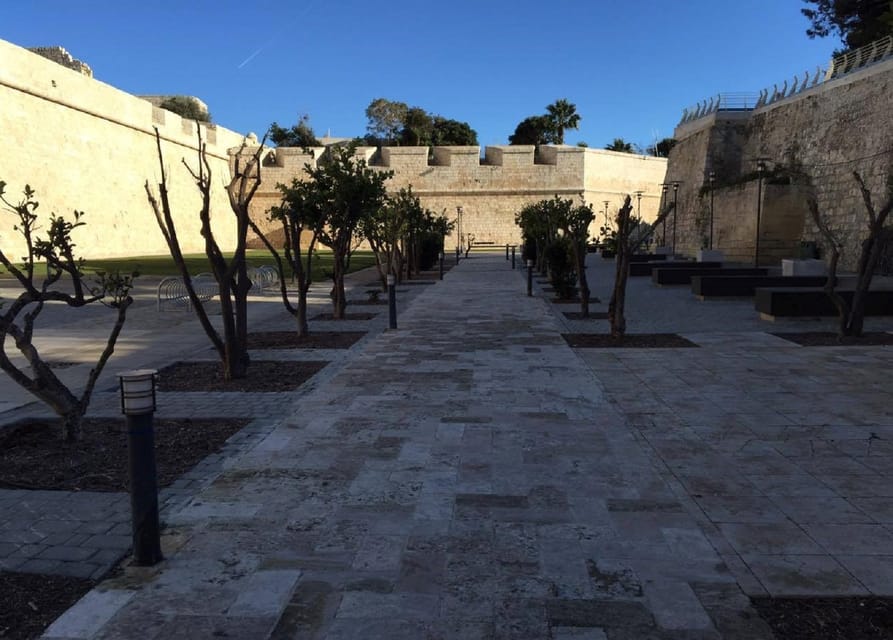
The WWII shelters are included with your entrance ticket, so you’re not adding extra costs at the door. What makes this stop worth your time is that it adds a twentieth-century layer to a day otherwise dominated by medieval and baroque sights.
This is also where pacing becomes important. Reviews highlight that the tour is generally well paced, with guides who keep things moving without rushing you. That matters because shelters and catacombs are not like an open-air church courtyard. You need time to listen, orient, and take in what you’re seeing.
If you’re sensitive to claustrophobic spaces, you’ll want to go in expecting tight areas. Some feedback notes the catacombs are not particularly creepy, and others point out the time down there could feel a bit long for some people. The best approach: go in with a calm mindset, wear breathable clothes, and don’t try to “power through” underground rooms. Let the guide’s explanations do the heavy lifting.
Catacombs and St Paul’s Grotto: Underground Facts With Real Atmosphere
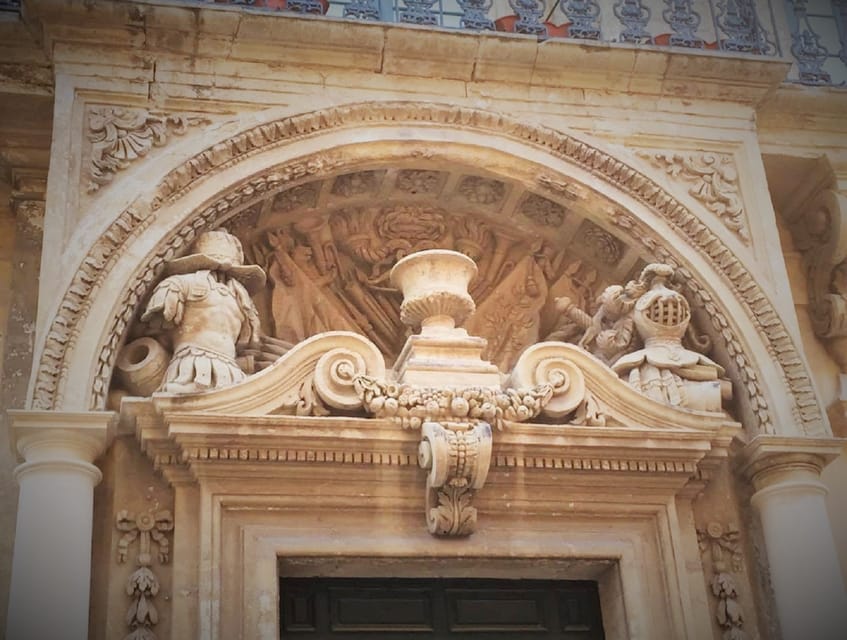
The catacombs portion is one of the tour’s big draws because it’s unusual in a way that feels genuinely Malta-specific. It’s also a contrast to the bright stone of Mdina above.
You’ll also visit St. Paul’s Grotto. Even if you’ve heard the name before, having it on the same day as Rabat’s museum stop and the shelters makes the story click. You’re not hopping between unrelated attractions—you’re moving through connected places that each represent a different kind of Malta history.
Practical reality: underground means different lighting, cooler air, and a chance you’ll feel more enclosed than you expected. The tour is wheelchair-informing in some descriptions, but it’s clearly a walking experience with underground elements, and separate guidance says it’s not suitable for wheelchair users. If mobility is a factor for you, treat the underground portion as the deciding point and check directly with the operator before booking.
Walking Tour Reality Check: Timing, Pace, and What to Bring
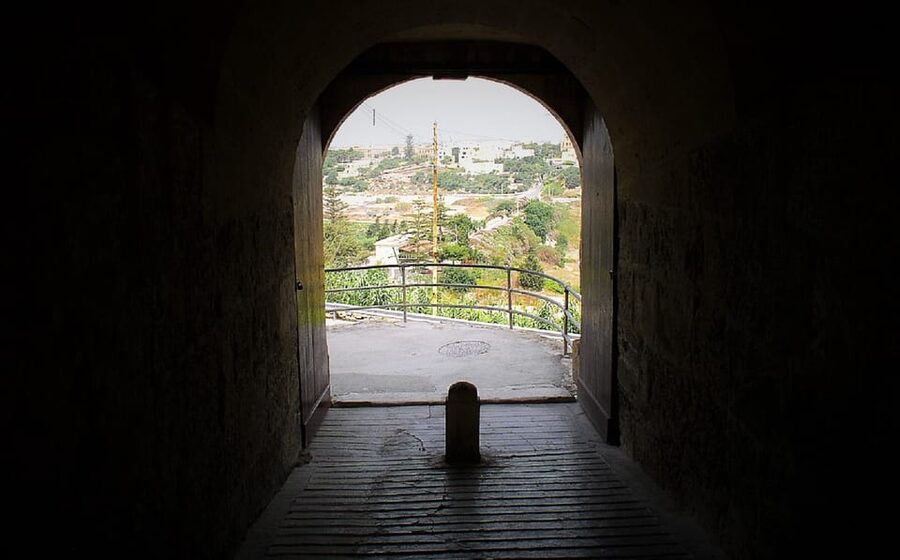
The tour is listed as 2.5 hours, and plenty of feedback points to around 3 hours in practice, depending on questions and how long you spend inside. That’s a good sign for you if you like learning, because it suggests the guide time isn’t being skimmed.
Still, plan for a steady pace:
- You’ll walk Mdina and Rabat to hit major sights.
- You’ll spend time in museums and underground entrances.
- You’ll likely stop often for photos and explanations.
What to bring is very straightforward, but it’s worth taking seriously. Bring comfortable shoes, a sun hat, sunscreen, and water. The tour also advises you to bring food, which is a smart call if you’re pairing this with lunch later and don’t want to end up hunting for a snack under time pressure.
A small planning trick: start the day earlier when you can. One review notes that at night Mdina can feel deserted, which can change the mood and your photo experience. Morning or early afternoon often feels calmer and easier for walking.
Price and Value: Why $29 Works Here
At $29 per person, this tour is priced like a true value play because it’s not just a guide. The entrance fees are included for WWII Shelters, catacombs, and St. Paul’s Grotto.
That inclusion changes the math. If you were to plan these attractions on your own, you’d likely pay separate ticket costs and spend time figuring out how everything connects. Here, you get guided transitions between stops, which matters because the underground pieces land better when you’ve got context.
The guide quality looks like it’s a key part of the value. Reviews mention guides like Mario (sometimes called the history teacher), Carmel, and Matthew, with people praising strong storytelling, a humorous tone, and the willingness to answer questions. Even though no two guides are identical, the consistent theme is clear: you should come away feeling informed, not just entertained.
What you don’t get: hotel pickup and drop-off, plus food and drinks. For value, that’s normal on walking tours, but it means you should plan your day like a local—bring water, wear good shoes, and eat before or after.
Who This Tour Fits Best (and Who Might Want to Skip It)
This is a great choice if you want a focused, history-heavy Malta day without turning it into a long haul. It works especially well for:
- First-time visitors who want Mdina and Rabat as one connected story
- People who like guided walking tours with stops that have meaning
- Anyone who wants a mix of medieval sights above ground and twentieth-century history underground
It may be less ideal if you:
- Have mobility issues, since it’s described as not suitable for wheelchair users and includes underground entrances
- Dislike enclosed spaces, since catacombs and shelters are airless/tight by nature
- Are traveling with very young kids who need shorter patience cycles (this day is structured and stop-and-listen heavy)
Should You Book This Mdina and Rabat Walking Tour With Catacombs?
If your Malta time is limited and you want one ticketed outing that covers Mdina, Rabat, and the underground history that most casual walks miss, I’d book it. The best part is the balance: you start with iconic buildings and views, then you move into Rabat to see Malta’s darker and more complex chapters, with entrances included so you’re not juggling costs.
Book it if you like your sightseeing with context, and if you’re comfortable on your feet for a couple of hours plus some underground time. Skip or double-check if mobility is a concern for you or if tight spaces are a hard no. Otherwise, this is one of those tours where the time feels purposeful, not rushed—and you leave with a city that finally makes sense.
FAQ
What’s the duration of the Mdina and Rabat walking tour?
The tour lasts 2.5 hours.
Where do you meet the guide?
Meet your guide outside Mdina Gate, next to the playing field.
What’s included in the ticket price?
You get a professional licensed guide and entrance fees to the catacombs, WW2 Shelters, and St. Paul’s Grotto.
What isn’t included?
Hotel pickup and drop-off aren’t included, and the tour doesn’t include food or drinks.
Is the tour guided in English?
Yes, the live tour guide is English.
Do I need comfortable shoes?
Yes. The tour is a walking experience, so comfortable shoes are strongly recommended.
Is the tour suitable for wheelchair users?
The information is contradictory: it’s listed as wheelchair accessible, but it also states it is not suitable for wheelchair users and people with mobility impairments. If this applies to you, confirm with the operator before booking.
Can I cancel for a refund?
Yes. Free cancellation is available up to 24 hours in advance for a full refund.