REVIEW · MALAGA
Málaga: Cathedral, Alcazaba, Roman Theater Walking Tour
Book on GetYourGuide →Operated by ALLinMALAGA Experiences · Bookable on GetYourGuide
A good route turns a long city into a short win. This Málaga walking tour strings together the Cathedral, Alcazaba, Roman Theater, and Picasso-area streets into one smart 3-hour loop, with a guide who explains how the city layers its stories. I like the skip-the-line tickets and I also love the panoramic payoff from the Alcazaba. One thing to plan for: it is not ideal if you have mobility limits, and you’ll do plenty of walking and steps.
You get more than a checklist of stops. Guides such as Anna, Carmen, Rachel, and Eduardo are repeatedly praised for making the sites feel like they connect, not like separate museums. Still, the tour pace is built for coverage, so if you want to linger a lot inside the Alcazaba or at the Roman Theater, you might feel the urge to come back later.
In This Review
- Key things that make this tour worth your time
- A 3-Hour Loop That Actually Gets You Oriented
- Starting Point: Plaza de La Marina (And the Meeting Door Detail)
- Entering Three Big Sites with Skip-the-Line Tickets
- Renaissance Cathedral of Malaga: What to Look For (Even When Interiors Change)
- Alcazaba on Gibralfaro Mountain: Views Worth the Climb
- Roman Theater: The Ancient Stage Inside a Modern City
- Picasso Streets: Where the Tour Turns Fun and Specific
- The Malaga Context Your Guide Brings Along
- Pace and Comfort: What to Expect from a Walking Tour
- Price and Value: Why $53 Can Be a Smart Deal
- Who This Tour Fits Best
- Possible Drawbacks to Know Before You Go
- Should You Book This Málaga Highlights Tour?
- FAQ
- How long is the Málaga Cathedral, Alcazaba, and Roman Theater walking tour?
- Where does the tour start, and where do I meet the guide?
- What attractions are included in the tour?
- Are skip-the-line tickets included?
- What’s included in the price?
- Are food and drinks included?
- What languages are the tours offered in?
- Is the tour suitable for people with mobility impairments?
- What should I wear or bring?
Key things that make this tour worth your time
- Skip-the-line access to the Cathedral, Alcazaba, and Roman Theater so you lose less daylight to queues
- Alcazaba views from the highest point on Gibralfaro Mountain, reached via elevator
- Narrated context that connects Málaga’s big eras, not just dates and names
- Picasso-area walking stops including the statue of Picasso, Plaza de la Merced, Plaza del Obispo, and Calle Larios
- Outdoor explanations on mass days when the Cathedral interior isn’t the focus
A 3-Hour Loop That Actually Gets You Oriented
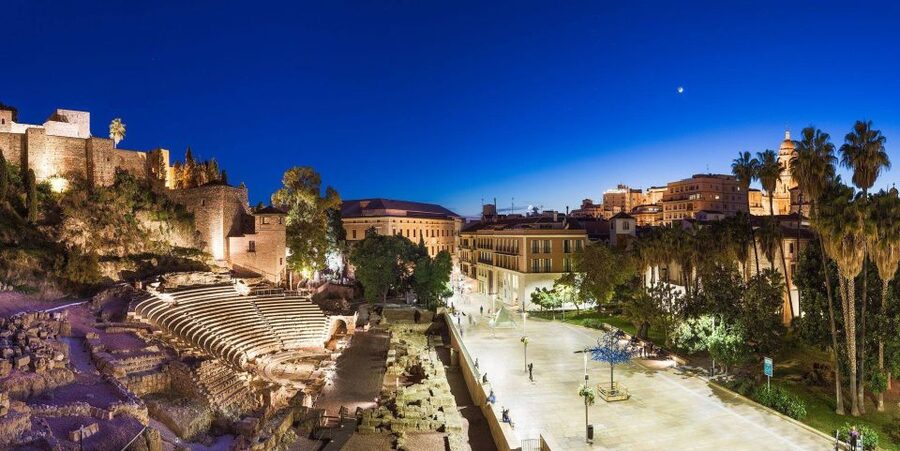
This is the kind of tour that helps you get your bearings fast. You start at Plaza de La Marina and move through central Málaga in a way that makes sense: religious Málaga at the Cathedral, military Málaga up on Gibralfaro at the Alcazaba, then classical Málaga at the Roman Theater, followed by modern creative Málaga around Picasso’s haunts.
At just 3 hours, the route works well as an early visit. Afterward, you’re not just holding photos. You know where the viewpoints are, what you’re looking at, and why the city grew in these particular places.
You can also read our reviews of more walking tours in Malaga

Starting Point: Plaza de La Marina (And the Meeting Door Detail)
The meeting point is by the door of the Tourist Information Office. That matters because the area around Plaza de La Marina has multiple entrances and streets that look similar when you’re figuring it out on foot.
If you’re arriving from a hotel, give yourself a few extra minutes to find that specific door. Then you can start walking with the group right away, instead of spending the first ten minutes playing city navigation.
Entering Three Big Sites with Skip-the-Line Tickets

The headline value here is simple: you get official tickets for the Alcazaba, Roman Theatre, and Cathedral, plus skip-the-line access. In practical terms, this means less standing still and more time watching how your guide turns architecture into a story.
For a first-time visitor, three major sites is a lot to pack into one day. Skip-the-line access is what keeps this from turning into a queue marathon. It also helps you keep the timing of the walking portion, so you actually reach each stop without a late scramble.
Renaissance Cathedral of Malaga: What to Look For (Even When Interiors Change)

Your first major site is the Renaissance Cathedral of Malaga. Your guide points out details as you approach, then adds context to help you read the building instead of just pass by it.
There’s one timing reality to know: on days of mass, the explanations take place outside the Cathedral building. The important part is that you still get the narrative, just not the same interior access as you might expect on other days. If you go inside, great; if you don’t, you can still understand what you’re seeing from the outside.
Tip for your visit: look at transitions in style and the ways different parts of the Cathedral signal changes over time. With a guide talking through those cues, you’ll start noticing what makes a Renaissance structure feel different from what comes before or after.
Alcazaba on Gibralfaro Mountain: Views Worth the Climb
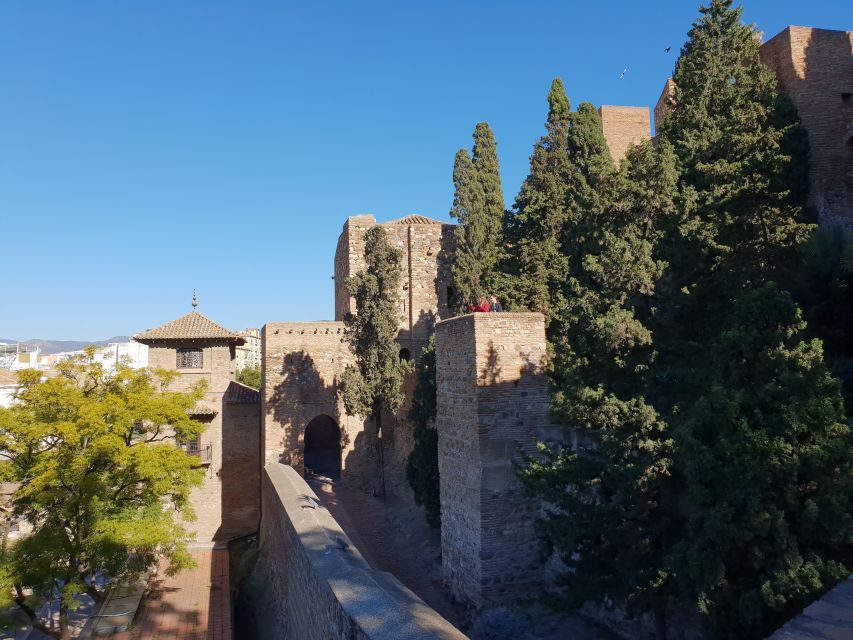
Then you head to the Alcazaba, built into the sides of Gibralfaro Mountain. This is one of Málaga’s best “why this city chose this spot” examples. Defensive walls are never random. They’re about control, sightlines, and survival.
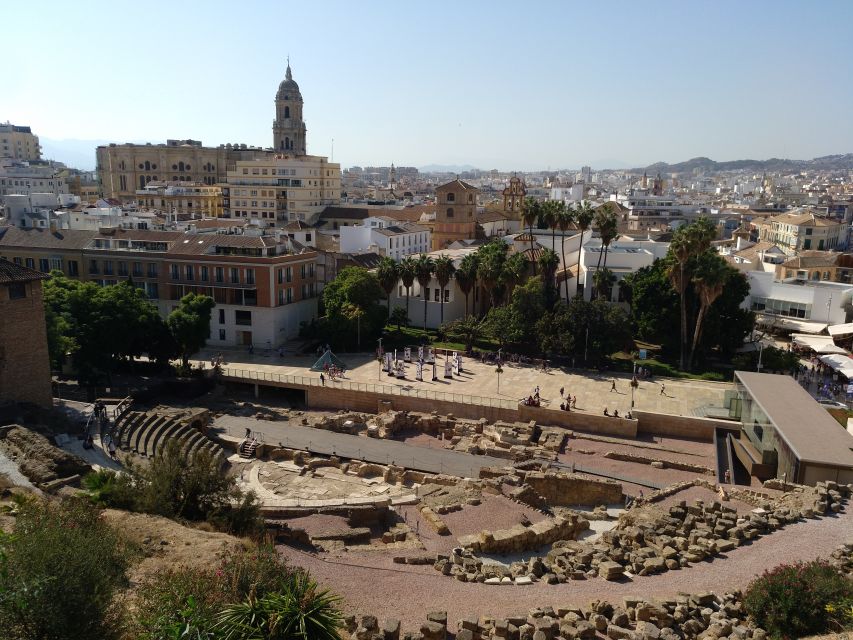
One of the smartest features is that you take an elevator to the highest point. That keeps the tour realistic for a group while still delivering the big panoramic payoff. From there, you can admire Málaga from above and understand how the city relates to the coastline and harbor area in a way photos just don’t capture.
What I like about this stop is that it’s not only about looking outward. Your guide helps you connect the view to the structure’s purpose: how a fortress thinks, not just how it looks. Guides like Carmen and Antonio get extra credit here for making defensive architecture feel human—where you’d stand, what you could see, and why the layout mattered.
Roman Theater: The Ancient Stage Inside a Modern City
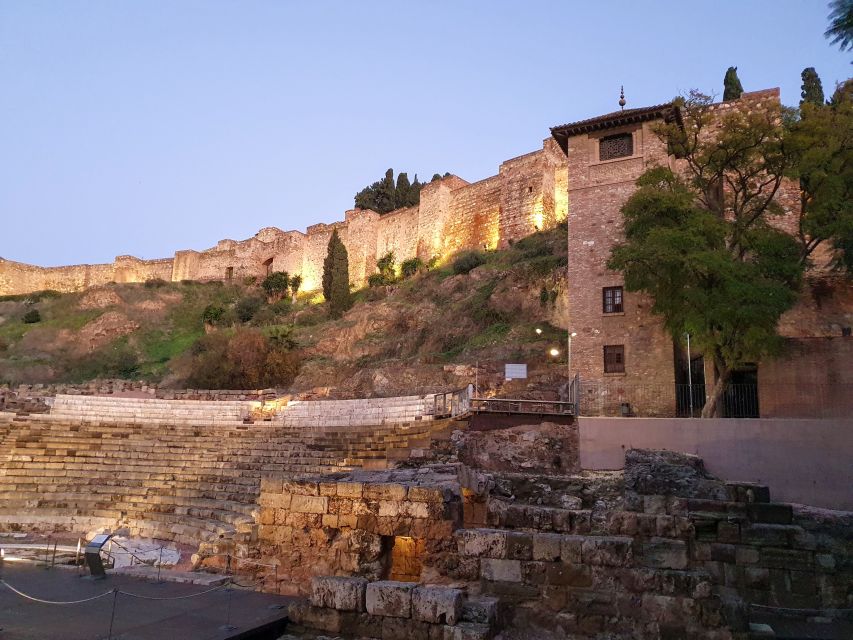
After the Alcazaba, you walk to the ancient Roman Theater. This stop is all about scale and contrast. You’re in a living city, but the Theater once shaped how people gathered, performed, and watched stories the same way audiences still do today.
The tour’s value is that you’re not left to guess. Your guide gives you the context to understand what the space was for, what parts you’d focus on, and how the setting fits with the city’s growth. It turns the Theater from an old wall into a functioning piece of civic life.
If you’re the type who likes standing still to take in details, you’ll probably want a little extra time here. The tour is designed to move, so you’ll get the highlights, not an all-day slow walk. Still, the way the stop is timed after the Alcazaba makes it hit harder: you go from fortress views to classical performance space, and your brain clicks into a new mode.
Picasso Streets: Where the Tour Turns Fun and Specific
After Roman Málaga, the tour shifts gears and heads to the streets where Picasso lived. You’ll see a statue of Picasso and walk through a handful of recognizable central squares and streets, including Plaza de la Merced, Plaza del Obispo, and Calle Larios.
This is where the tour becomes more than monuments. You start noticing the everyday street pattern: where people pass, where they linger, and how city squares act like living rooms. Calle Larios is especially useful for orientation afterward, because it gives you a clear axis back toward the more tourist-friendly center.
If you’re interested in modern art, you’ll like that the guide doesn’t treat Picasso as trivia. Instead, you get help tying the person to the street life around him. Guides like Rachel and Luís are praised for bringing that mix of art and place into the walk.
The Malaga Context Your Guide Brings Along

The Cathedral and Alcazaba are easy to describe on a brochure. What makes this tour feel like value is the extra city context your guide brings between the sites.
One example: Carmen and other guides have shared fascinating city-logic details, including how Málaga’s port area was infilled to create a better space around the harbor. That kind of explanation changes how you see the city after the tour. You start asking smarter questions like where the coastline used to be and how major changes shaped the present-day layout.
Another big theme in strong guide performances (think Eduardo, Raquel, and Anna) is narration that stays organized. You’ll get a coherent story instead of a scattered series of facts. It keeps the walk from feeling like homework.
Pace and Comfort: What to Expect from a Walking Tour
This is a walking tour, so comfortable clothes matter. You’ll be moving between stops and spending time looking around at elevated points, including the Alcazaba area.
Also note that the tour is listed as not suitable for people with mobility impairments. Even with an elevator involved, the overall route includes walking segments and uneven historic terrain. If mobility is an issue, it’s better to plan a different format.
If you’re traveling with kids or someone who gets tired easily, consider splitting your sightseeing. Do this tour early for orientation, then return later to the single stop you care about most.
Price and Value: Why $53 Can Be a Smart Deal
$53 per person for a 3-hour guided walk with skip-the-line tickets is not just a price tag. It’s a trade: you pay to buy time and clarity.
Here’s what you’re paying for:
- A live guide who explains what you’re seeing as you go
- Tickets included for three major attractions
- Skip-the-line entry that reduces wasted waiting
- A guided route that stitches together multiple eras of Málaga
If you tried to do these sites on your own, you’d still pay for tickets. The savings usually come from reducing queue time and avoiding the trial-and-error of figuring out the best order. In a compact 3-hour window, that matters more than you might think.
Who This Tour Fits Best
This tour is ideal if you:
- Want a first-date with Málaga’s core sights without planning every detail
- Like history that connects to place, not history that reads like a textbook
- Enjoy guided explanations while you walk, especially around viewpoint spots and older ruins
- Want Picasso-related context without turning your day into an art scavenger hunt
It’s also a good match if you like humor and personality in guides. Many guides in this format (from Anna to Antonio to Eduardo) are praised for humor and keeping things engaging even when the subject matter is serious.
Possible Drawbacks to Know Before You Go
The biggest consideration is pacing. You’ll cover the highlights in 3 hours, which means you may not get long, slow time at every stop.
A second consideration is Cathedral-day timing. If mass is happening, explanations shift outside. That’s not a problem, but it does change how much you might experience the interior atmosphere.
Finally, this isn’t built for mobility needs. The route is very much a walk-and-wait-lightly format, with historic terrain and viewpoints.
Should You Book This Málaga Highlights Tour?
If you want an efficient, well-structured introduction to Málaga, I’d book it. This is the kind of tour that helps you understand the city rather than just see it, and the skip-the-line tickets make the schedule feel realistic.
Book it early in your trip so you can return on your own to the one or two places you loved most—especially if you’re the type who wants extra time at the Alcazaba or the Roman Theater. If you’re short on time, this is a strong way to spend it.
FAQ
How long is the Málaga Cathedral, Alcazaba, and Roman Theater walking tour?
The tour lasts 3 hours.
Where does the tour start, and where do I meet the guide?
You start at Plaza de La Marina and meet by the door of the Tourist Information Office.
What attractions are included in the tour?
The tour includes the Cathedral, Alcazaba, Roman Theater, and walking through Picasso-related streets.
Are skip-the-line tickets included?
Yes. Skip-the-line access is included for the Alcazaba, Roman Theatre, and the Cathedral.
What’s included in the price?
A live official guide is included, along with tickets for the Alcazaba, Roman Theatre, and Cathedral.
Are food and drinks included?
No. Food and drinks are not included.
What languages are the tours offered in?
The tour is available in Spanish and English.
Is the tour suitable for people with mobility impairments?
No. It is not suitable for people with mobility impairments.
What should I wear or bring?
Bring comfortable clothes, since this is a walking tour.