REVIEW · LECCE
Lecce: Walking Tour
Book on GetYourGuide →Operated by TURISTI IN PUGLIA INCOMING · Bookable on GetYourGuide
Lecce turns a walk into art history. This tour takes you through southern Italy’s Baroque showpiece city, where churches and antique facades feel like they were carved for your eyes. You’ll also get up close to papier-mâché work, a very specific Lecce tradition.
Two things I really liked: the way the guide connects stone ornament to ideas you can actually understand, and the hands-on moment watching artisans make papier-mâché pieces. For me, that mix of big-picture art and real craft is the sweet spot. You’ll also hear stories that make sense of places like the Roman Amphitheater near Sant’Oronzo square.
One possible drawback: the price can feel steep for a short walk, so you’ll want to choose it because you care about art and craft, not just because you want photos.
In This Review
- Key things to notice before you go
- Why Lecce Baroque Works So Well on a Walking Tour
- Starting at Sant’Oronzo Square and the Roman Amphitheater You Can Actually See
- Baroque Streets: How Churches and Antique Facades Tell One Story
- Watching Papier-mâché Artisans at Work (This Is the Tour’s Real Bonus)
- Guide Style That Makes the Difference: Antonella, Gigi Leante, Luigi Leante
- Duration, Pace, and What You Should Bring
- Price and Value: How to Judge Whether It’s Worth It
- Who This Walking Tour Fits Best
- Should You Book Lecce: Walking Tour?
- FAQ
- Where does the Lecce walking tour start?
- How long is the tour?
- What landmarks are included?
- Is papier-mâché part of the experience?
- Which languages are offered?
- Is the tour suitable for children?
- How many people are needed for the tour to run?
- Can I book a private group?
- What is the cancellation policy?
- Can I reserve without paying right away?
- Will I get a refund if I miss the tour?
Key things to notice before you go
- Sant’Oronzo square sets the tone fast, with the Roman Amphitheater right nearby.
- Baroque architecture becomes understandable when your guide explains what to look for.
- Papier-mâché isn’t a gimmick here. It has a practical origin story from the 17th century.
- You’ll see the craft in action, not just hear about it.
- Guide quality matters, and names like Antonella, Gigi Leante, and Luigi Leante pop up in excellent feedback.
Why Lecce Baroque Works So Well on a Walking Tour
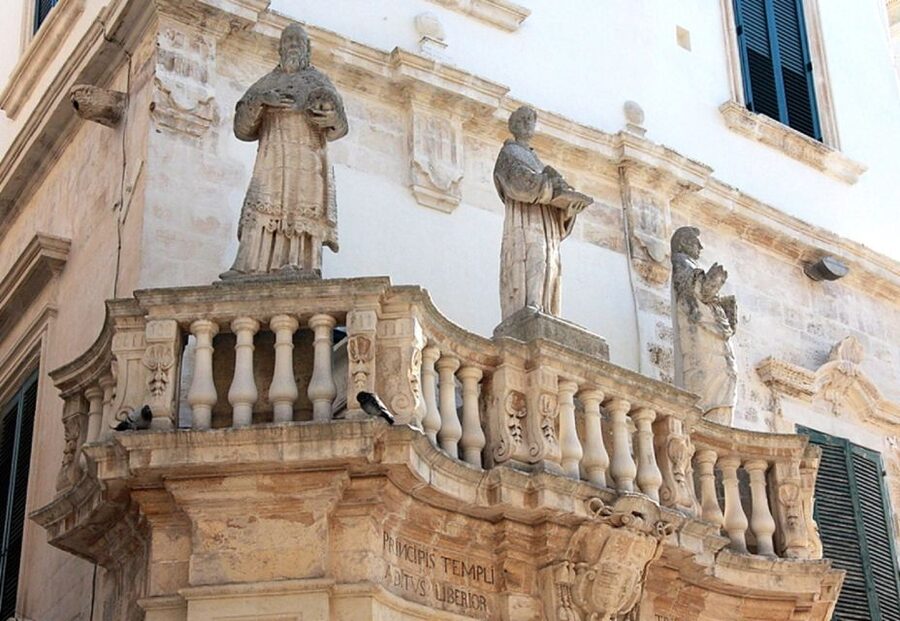
Lecce is one of those places where architecture feels personal. Up close, the Baroque details stop being “ornate” and start being specific: flourishes, layers of decoration, and stone that almost looks like it was meant for theater costumes. Walking lets you notice the small stuff—especially when you’re moving from square to street to church instead of viewing everything from one stop.
This tour is built for that pace. It lasts about 1.5 to 2 hours, which is long enough to get your bearings and short enough that you won’t feel trapped in a long march. You’ll start in the center and work through the historic core, where churches and older buildings carry that unmistakable Lecce style.
The best part is that it’s not just a list of pretty places. The guide frames what you’re looking at—how Baroque art developed, what shaped its evolution, and why religion and community life mattered so much for what got built and decorated.
You can also read our reviews of more walking tours in Lecce
Starting at Sant’Oronzo Square and the Roman Amphitheater You Can Actually See
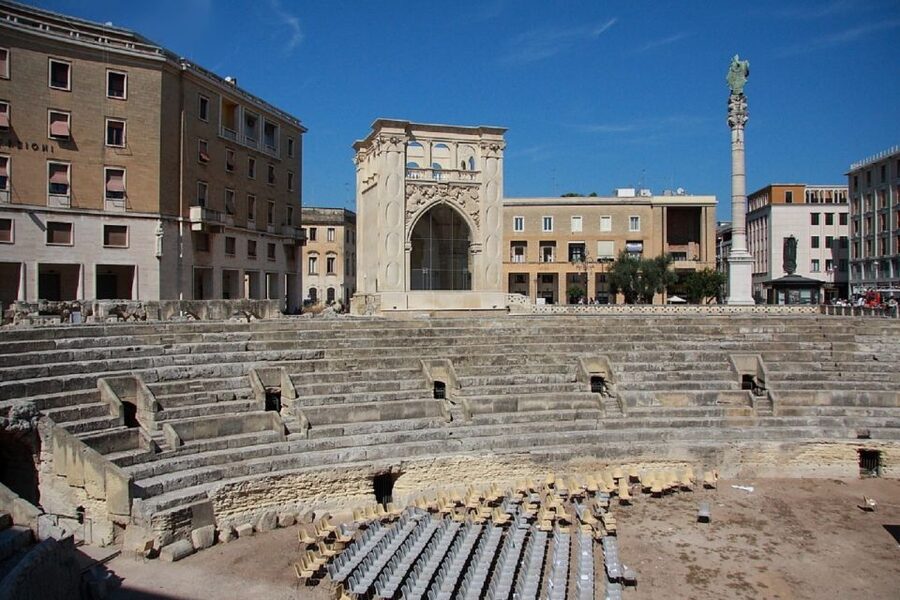
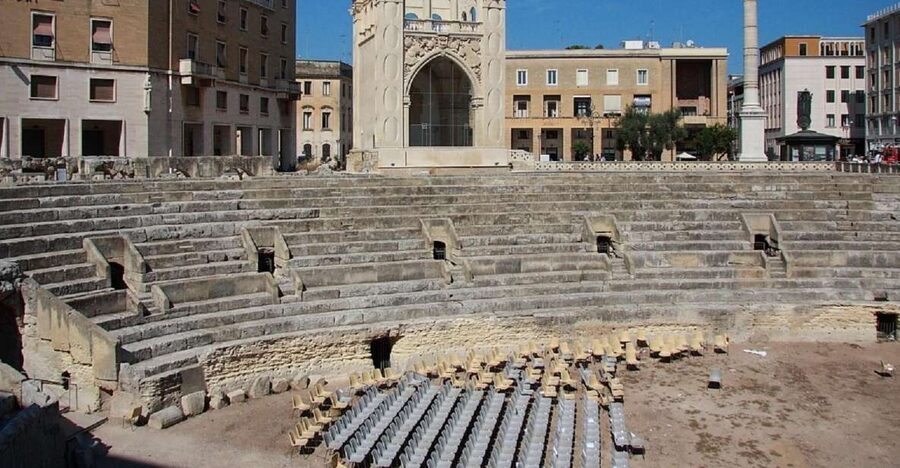
Your tour begins at Sant’Oronzo square, a smart starting point because it’s central and easy to orient yourself. From there, you’ll visit the Roman Amphitheater, which was first discovered at the beginning of the 20th century. That’s a cool detail to keep in mind: you’re looking at a Roman footprint inside a city that later became the main Baroque city of southern Italy.
What makes this stop worth your time isn’t only the ruins. It’s the contrast. Lecce’s story isn’t one era—it’s layers. Standing here helps you understand how a modern walking tour can still touch Roman roots, then move forward into Baroque religious life and the art that filled the city.
If you’re the kind of person who likes to connect the dots, this early stop helps. If you’re purely in photo mode, it still gives you a strong anchor so your Baroque walk feels less random.
Baroque Streets: How Churches and Antique Facades Tell One Story
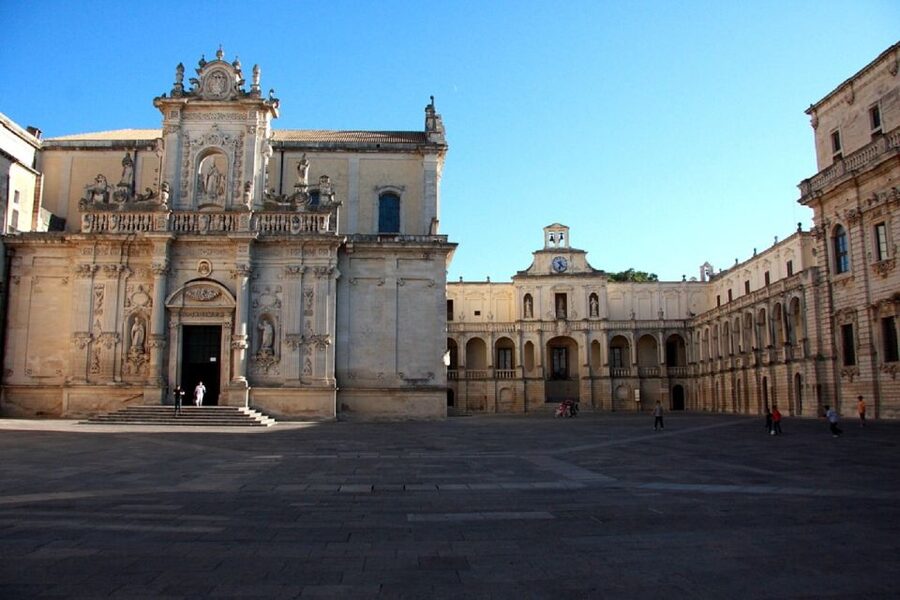
After the square, the route moves into Lecce’s historic center, where you’ll see churches and older buildings decorated with Baroque art. This is the heart of the tour, and it’s where you’ll benefit most from a live guide.
Here’s what I’d watch for while you walk:
- Repetition with variation: Baroque decoration isn’t just one design. It changes across facades and niches.
- Religion as a design engine: churches weren’t decorated for decoration’s sake. In Lecce, the look of religious architecture ties directly to meaning and community influence.
- Craft plus architecture: stone work and later decorative techniques work together, and your guide helps you connect them.
The tour also includes city highlights, and the way it’s paced matters. You’re not sprinting from stop to stop, and the timing allows for real attention to details. One review even mentioned the guide’s compassion for shade and the need for rest—useful in warm weather when you’d rather not white-knuckle your way through every corner.
Watching Papier-mâché Artisans at Work (This Is the Tour’s Real Bonus)
If you only treat this as a Baroque architecture tour, you might miss the point. The papier-mâché portion is what makes Lecce special, and the tour gives you a chance to see artisans at work.
Why papier-mâché in Lecce? The key idea is practical. This art form took shape in the 17th century as a way to decorate churches when paper was the only available material. Over time, it didn’t disappear—it became a signature style. You’ll learn how today’s craftsmanship continues the tradition, with both old masters and younger people carrying it forward.
This is where the tour becomes more than sightseeing. Watching artisans makes the craft feel tangible. Instead of imagining decorative pieces, you see the process and understand why the technique became part of Lecce’s visual identity.
Also, it’s just fun. There’s something satisfying about seeing a material you’d usually associate with school projects turned into serious religious art. It’s a reminder that “traditional” doesn’t mean “stuck in the past.” It means refined.
Guide Style That Makes the Difference: Antonella, Gigi Leante, Luigi Leante
This is a guided experience with a live tour guide available in multiple languages: Italian, English, French, German, and Spanish. That matters because Baroque art is detail-heavy. If your guide can explain what you’re seeing in a way that sticks, the walk feels like an education you actually enjoy.
What stood out in the best feedback I saw:
- Antonella is praised for excellent French and for sharing a wide variety of information, including how religion influenced church architecture, plus details about the papier-mâché technique and local life.
- Gigi Leante (in one group experience) was noted for being extremely complete and for weaving city history into a way that made Lecce feel alive, along with useful local tips for the Salento region.
- Luigi Leante was highlighted for professionalism, patience, and answering curiosity without making anyone feel rushed.
One more small but important detail: good guides help you pace mentally. If you’ve ever left a tour feeling like you only heard names and dates, you’ll appreciate a guide who slows down when you need a breather. The shade/rest note is a practical reminder that this walk is meant to be enjoyed, not endured.

Duration, Pace, and What You Should Bring
The tour runs about 1.5 to 2 hours, which is ideal for a morning or early afternoon slot when your feet are awake but you still want a full day of exploring. Lecce’s center is walk-friendly, but you should still wear comfortable shoes. Baroque streets often mean uneven surfaces and lots of turning corners to face new facades.
Plan to walk at a conversation pace. You’re covering enough ground to feel like you got value, but not so much that you’ll be out of breath for every stop.
If you tend to get hot easily, consider timing and clothing. One of the strongest review signals was that the guide accounted for shade and breaks. You’ll enjoy it more if you come prepared to pause rather than trying to “power through” every segment.
Price and Value: How to Judge Whether It’s Worth It
No exact price is provided here, but one thing is clear: the price can feel high if you expect a quick stroll with no deeper context. So use this as your value test.
Ask yourself:
- Do I want to understand why Lecce’s Baroque looks the way it does?
- Am I interested in papier-mâché craft, not just the existence of it?
- Will I benefit from a guide who can connect architecture, religion, and local life?
If your answers are yes, this tour often feels like good value because it combines:
1) a strong starting landmark at Sant’Oronzo square,
2) recognizable highlights like the amphitheater area and key squares, and
3) a rare add-on—seeing papier-mâché artisans working.
In other words: you’re not only buying access to places. You’re buying a guided lens that makes those places easier to read.
If you’re mainly chasing photos and already know your Baroque basics, you might prefer a self-guided route. But if you want your walk to teach you something, this is set up to do that.
Who This Walking Tour Fits Best
This tour is a great match if:
- You like art and architecture and enjoy hearing what to notice.
- You’re curious about local craft traditions, especially papier-mâché.
- You want a guided route through the historic center without dragging your day into a half-day commitment.
It’s also a good choice for small groups and families (more on that in the FAQ). In one experience, the group included multiple dogs and the tour proceeded smoothly, which suggests the guide can handle real-life situations with flexibility.
If you hate walking, this might not be your best plan. If you’re okay with a steady pace for a couple of hours, you’ll get a lot out of it.
Should You Book Lecce: Walking Tour?
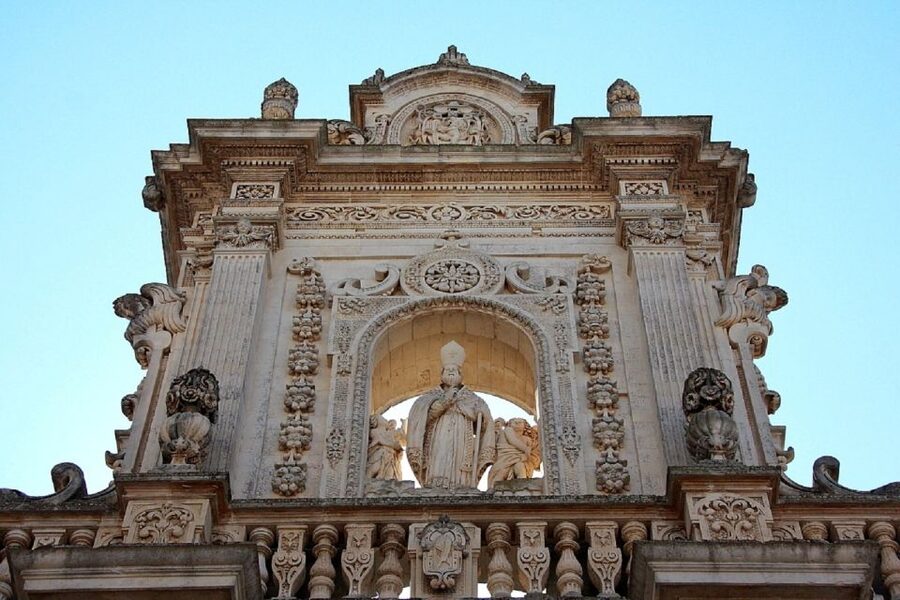
If you’re in Lecce for a short time, book it. The Sant’Oronzo square start, the Roman amphitheater context, the Baroque-focused church and facade walk, and the chance to watch papier-mâché artisans are a strong mix for the time.
Book it especially if you want help seeing details you’d otherwise miss. And if the price makes you pause, treat it like this: you’re paying for interpretation plus a hands-on craft element. That’s the formula that makes this walk worth your time.
FAQ
Where does the Lecce walking tour start?
The tour begins at Sant’Oronzo square. The exact meeting point may vary depending on the option you book, but the tour route is centered around that square.
How long is the tour?
It lasts 1.5 to 2 hours.
What landmarks are included?
You’ll visit Sant’Oronzo square and the nearby Roman Amphitheater, and you’ll also stroll through Lecce’s historic center to see churches and antique buildings decorated with Baroque art.
Is papier-mâché part of the experience?
Yes. During the tour, you may watch papier-mâché artisans at work, and you’ll learn why papier-mâché developed and how it’s connected to Lecce.
Which languages are offered?
The live tour guide is available in Italian, English, French, German, and Spanish.
Is the tour suitable for children?
The tour is free for children under 14 years old.
How many people are needed for the tour to run?
The tour requires a minimum of 3 persons. If that minimum isn’t reached, you’ll be offered a refund or a supplement to guarantee the tour.
Can I book a private group?
Yes, private group options are available.
What is the cancellation policy?
You can cancel up to 24 hours in advance for a full refund.
Can I reserve without paying right away?
Yes. The option Reserve now & pay later is offered so you can book your spot and pay nothing today.
Will I get a refund if I miss the tour?
Refunds are not given for no-shows.