
REVIEW · DELPHI
Delphi Guided Walking Tour and Admission Ticket
Book on GetYourGuide →Operated by Delphi Guided Tours · Bookable on GetYourGuide
Delphi has a way of making ancient Greece feel current. This guided walking tour puts you in front of the most important ruins—then gives you the context so you can recognize what you’re seeing, from the Temple of Apollo area to the ancient theater. I especially like that you get a licensed guide on-site (many guide names come up often, like Georgia, Sotiris, Eleni, and Giorgia), and you also get included admission to both the archaeological site and the museum. One possible drawback: you still have a chunk of time on your own afterward, so you’ll want to be ready to pace yourself and explore without a guide at the stadium and museum.
Delphi sits on the southern foothills of Mount Parnassus, and the views and the stories are tied together—Oracle myths, the Sanctuary of Apollo, and the Pythian Games. This works best if you’re traveling independently to Delphi, want a smart explanation while you walk, and don’t mind doing parts solo afterward.
In This Review
- Key highlights to plan around
- Delphi’s pull: why the ruins feel more than ruins
- The 1.5-hour guided walk: what the guide actually does for you
- Getting oriented at the archaeological site (and why it matters)
- Temple of Apollo area: the sacred center you’ll recognize afterward
- Treasuries and the ancient theater: where politics meets religion
- After the guide: the stadium and Delphi Museum on your own
- Admission value: what you’re actually paying for
- Price and Logistics: keep the key moving parts straight
- What to pack and how to pace yourself at Delphi
- Who this tour suits best
- Should you book the Delphi Guided Walking Tour and Admission Ticket?
- FAQ
- How long is the Delphi Guided Walking Tour?
- What does the guided part include?
- Is admission included?
- Can I skip the ticket line?
- What languages are available for the guide?
- Is transportation from Athens included?
- Can I cancel for a refund?
Key highlights to plan around
- A licensed guide for the ruins portion so you know what matters as you walk
- Skip-the-line style entry with admission to the archaeological site and the Delphi Museum included
- Temple of Apollo area, treasuries, and ancient theater covered with on-site storytelling
- Ancient stadium + Delphi Museum are self-guided after the walk
- Multi-language live guide options, including English, French, Greek, Italian, and Japanese
- Private group available, which can make the pace feel more comfortable on-site
Delphi’s pull: why the ruins feel more than ruins
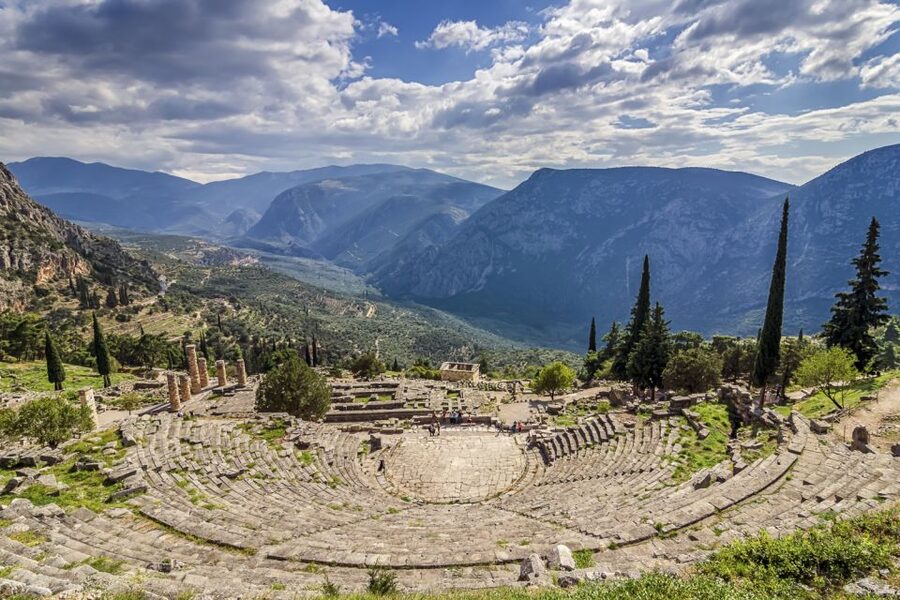
Delphi is often described as the navel of the earth in ancient Greek thinking, and standing there, you can see why. It’s not just a random collection of stone. The site was shaped around belief, prophecy, public games, and big-city power—so the ruins connect to real human stakes: who was chosen, who gained prestige, and how people explained the unknown.
The best part of this tour format is the timing. You start with a guide while you’re walking through the core sacred zone, where details can be easy to miss if you’re doing it cold. Then you continue with the stadium and Delphi Museum at your own speed, which is perfect because some people want to linger with objects, photos, and explanations, while others want more time looking outward over the valley.
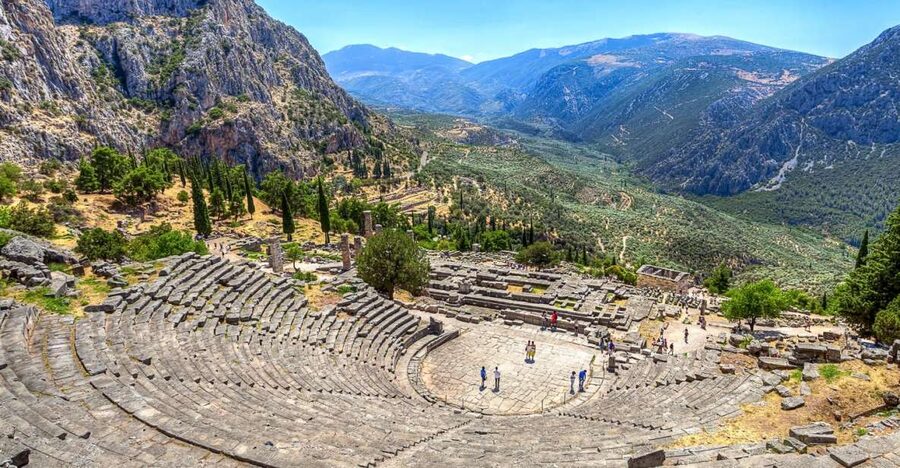
Also, Delphi is visually dramatic. You’re walking through an amphitheater-like setting, and it helps to have someone point out why the site is positioned the way it is—what it meant for ceremony and crowds long ago.
The 1.5-hour guided walk: what the guide actually does for you
This is a 1.5-hour experience built around one simple idea: context while you’re moving. Your licensed guide leads you through the important sections of the archaeological site, covering the most recognizable ruins and the big stories behind them.
In practice, that means you’ll get help turning what looks like architecture into something like a timeline. Guides often focus on how Delphi functioned: the Sanctuary of Apollo, the Oracle traditions, and why the Pythian Games drew attention. You’ll also get direction on what to notice—like how the ruins fit together spatially, and how the theater and nearby structures relate to gatherings.
Many visitors praise guides for being clear and question-friendly. Names that come up again and again include Sotiris, Georgia, Eleni, and Vicky (among others), and the pattern is consistent: guides explain without dumping facts at you. That matters because Delphi rewards attention. If someone can answer your questions on the spot—history, meaning of symbols, how events might have played out—you’ll walk away with more than photos.
Getting oriented at the archaeological site (and why it matters)
Delphi is spread out. Even though this tour is short, it’s not a flat stroll where everything sits in one view. Without guidance, you can end up wandering past key remains and only later realizing what you missed.
With a guide, you get orientation fast. You learn what the site was used for, where you are in relation to major structures, and what to look at as you pass. That’s especially useful around the Temple of Apollo area, because it’s easy to see fragments and assume they’re just left-behind pieces. A good guide helps you understand what the sanctuary represented and why visitors traveled there.
And because you get admission included (so you’re not scrambling for tickets on arrival), you can spend more energy on the experience itself.
Temple of Apollo area: the sacred center you’ll recognize afterward
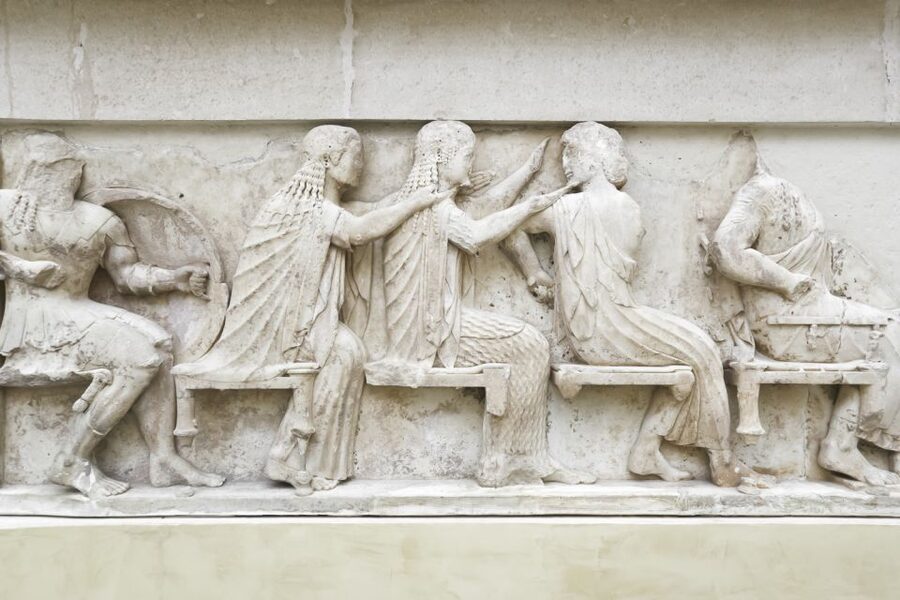
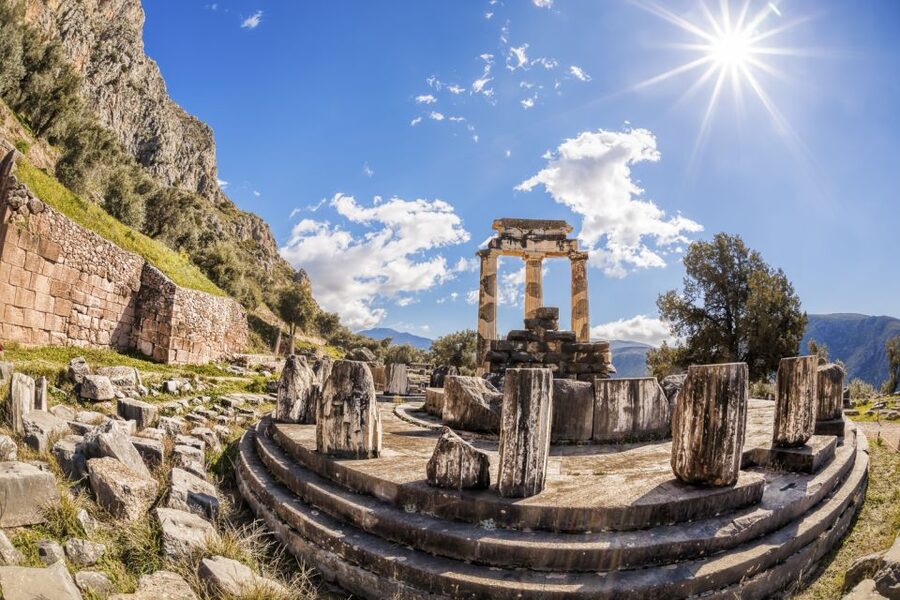
The Temple of Apollo area is the emotional anchor of Delphi. The ruins here are famously linked to the Oracle, and the stories survive because the site was more than a temple. It was a stage where people came seeking guidance, status, and divine approval.
On this tour, you’ll see the ruins connected to Apollo’s sanctuary, plus neighboring structures that help explain the bigger picture. The guide also helps you connect the myths to the physical space—how the sanctuary’s layout would have shaped movement, ceremony, and the feeling of approaching a holy place.
One thing I like about this portion: the guide’s job isn’t only to list what you’re looking at. It’s to make you able to read the site yourself. After the guided portion, you’ll notice details more readily—shapes, positions, and the way certain spots feel meant for gathering.
Treasuries and the ancient theater: where politics meets religion
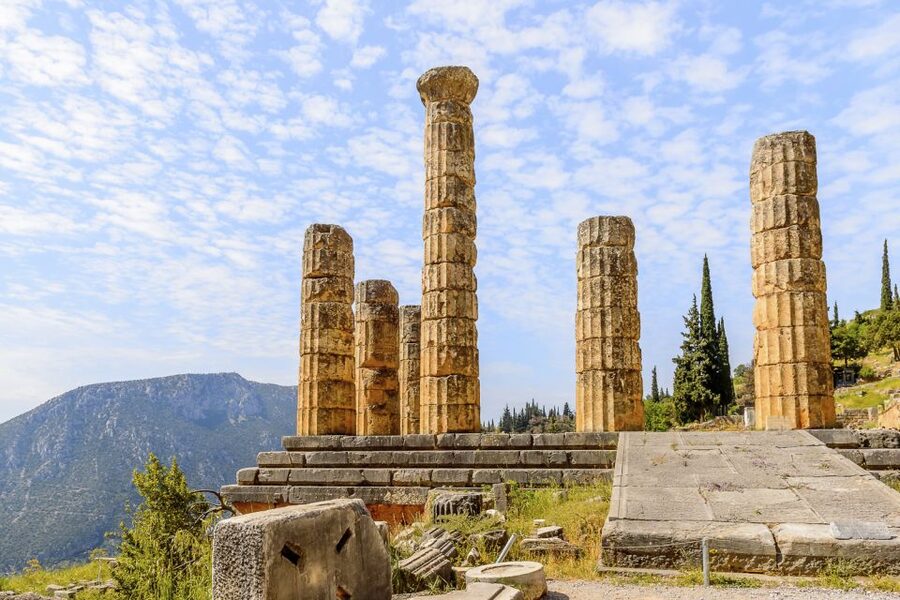
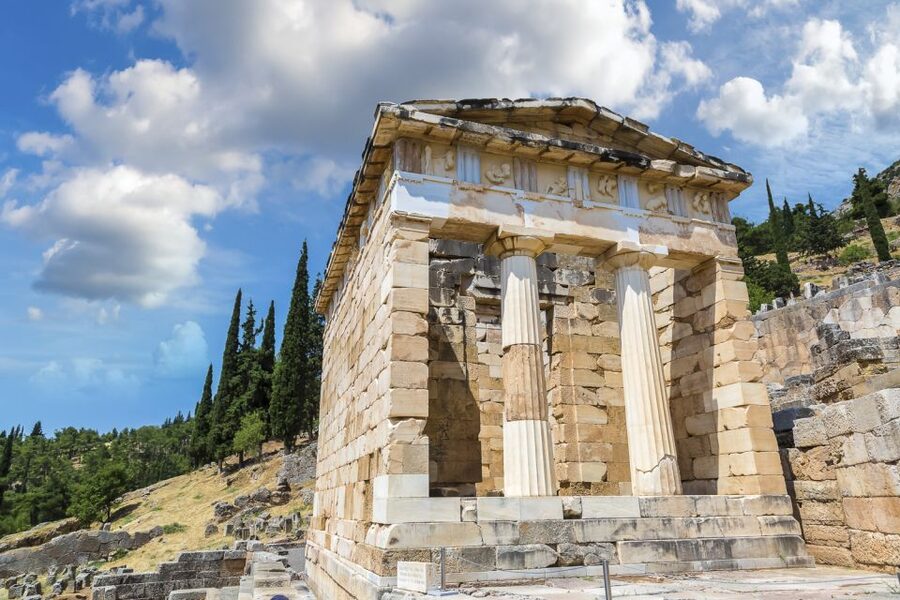
Delphi wasn’t just spiritual. It was also competitive. Visitors came from powerful Greek city-states, and their presence mattered. That’s where the treasuries come in—structures tied to the idea of display, offering, and reputation.
Seeing the treasuries with explanation changes how you view them. Instead of treating them as background ruins, you start to understand them as statements. Who built them, what they signaled, and why the sanctuary mattered to communities that wanted recognition beyond their own borders.
Then there’s the ancient theater area. This is where the day’s story shifts from sacred to public. The theater connects to how Delphi hosted major events and how crowds would have experienced performances and announcements. Even in ruined form, you can sense the purpose: it’s about visibility, sound, and gathering.
If you’re the kind of traveler who likes to learn what people did here—not just what buildings used to exist—this is one of the strongest sections of the tour.
After the guide: the stadium and Delphi Museum on your own
Here’s the structure shift you’ll want to plan for: the guided portion focuses on the archaeological site ruins, and it does not cover the ancient stadium or the Delphi Museum. Those are yours to explore afterward.
That can be a good thing. A self-guided visit gives you freedom to choose your pace. The museum is especially well-suited to an independent rhythm because you can linger on objects, read what you want, and move on when your eyes start glazing over. (You’ll decide what “enough” looks like.)
The ancient stadium also benefits from a solo approach. Once you’ve been oriented by the guide, you can connect the idea of the Pythian Games to what you’re seeing on the ground. You’ll likely enjoy it more if you’ve already heard how Delphi drew visitors for major competitions and celebrations.
Practical tip: bring a little energy for this second phase. The guide portion sets the stage. If you’re running low afterward, the stadium and museum can turn into a checklist instead of a story.
Admission value: what you’re actually paying for
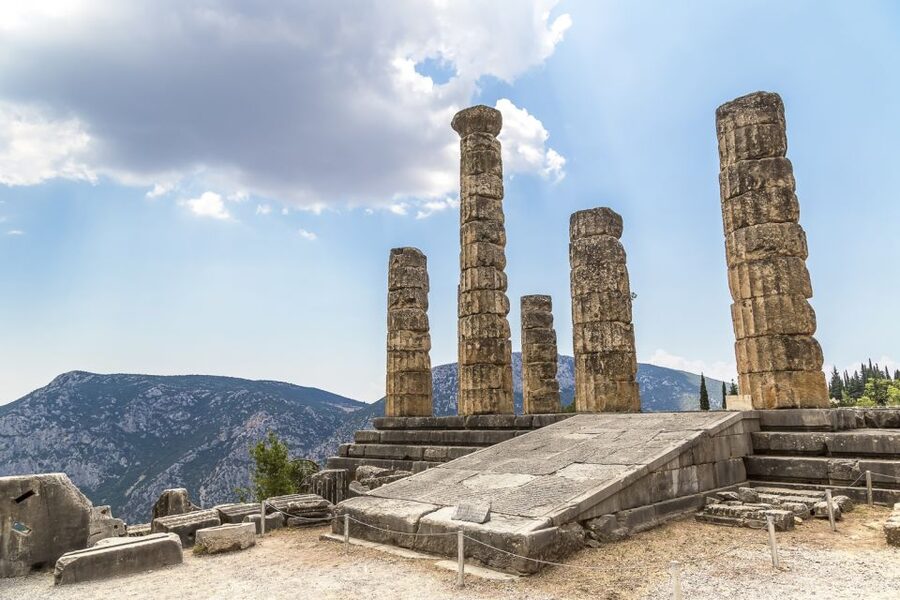
At $223 per group (up to 1) for a private setup, this isn’t a bargain-basement experience. You’re paying for three things that add up:
- Licensed guide time during the highest-density ruin zone
- Admission to the archaeological site
- Admission to the Delphi Museum
For some travelers, that’s exactly the value equation: you’re not just buying entry; you’re buying interpretation. Delphi’s ruins are complex enough that having a guide for a short window can save you from time-wasting confusion and missed context.
If you’re comfortable wandering and already know a lot of Greek history, you might feel the cost more sharply. If you want a guided explanation to make the site click quickly, the price starts to feel more reasonable.
If you’re deciding whether this is worth it, ask yourself one question: do you want your first visit to Delphi to come with instant context? If yes, you’ll likely feel good about the spend.
Price and Logistics: keep the key moving parts straight
This is designed for people traveling to Delphi on their own. It doesn’t include hotel transfers or transportation from Athens. So you’ll want to already have your arrival sorted and be ready to walk once you’re at the meeting point.
Also, the meeting point can vary by option, and scheduling details come by email after you choose your preferred time of day. If you don’t see the email right away, check your spam folder before you assume something is wrong.
Skip-the-line style entry is a real benefit here. Delphi can get busy, and cutting friction helps you use your limited time better—especially if you’re only doing a single pass through the site.
Finally, this is a walking tour. Comfortable shoes matter more than usual because ruins sites tend to mix uneven ground with slopes.
What to pack and how to pace yourself at Delphi
Delphi rewards good planning more than fancy gear.
- Comfortable shoes: the site is on uneven archaeological ground and you’ll walk between key areas.
- Sun/heat readiness: many visitors note the heat, so think water and protection.
- A question mindset: if you like asking why something is placed a certain way or how Delphi worked, bring those questions. Guides tend to do well when you’re curious.
- Time for the museum: since the museum is self-guided, don’t assume you can do it in 10 minutes unless you’re truly speed-running.
If you want the best day flow, consider this rhythm: guided ruins first (so you know what you’re seeing), then museum and stadium second (so you control how long you linger).
Who this tour suits best
This tour is a strong fit if you:
- want one-on-one interpretation style pacing (private group available)
- appreciate a guide who helps you connect myths, religious purpose, and public events
- plan a first visit to Delphi and don’t want to spend your time figuring out what’s important
- are okay with a portion being self-guided afterward
It may feel less ideal if you:
- want a fully guided experience through the museum and stadium as well
- hate walking and prefer a bus/vehicle-based tour structure
- already feel confident reading Delphi on your own without interpretation
Should you book the Delphi Guided Walking Tour and Admission Ticket?
If you’re aiming to get real understanding quickly, I’d book it. The biggest win is the guide portion during the densest, most meaningful ruin zone. That short guided window helps you turn scattered stones into a coherent story—Temple of Apollo connections, treasuries as political signals, and the theater tied to public life.
Choose it especially if you like the idea of seeing the sacred core with a live guide like Sotiris, Georgia, Eleni, or Giorgia (names that show up frequently), then shifting gears to explore the museum and stadium in your own time.
One final sanity check before you decide: because the stadium and Delphi Museum are self-guided, you should be comfortable reading, looking, and moving at your pace for that part of the day.
If that sounds good, this tour is a practical way to make Delphi feel like more than a photo stop.
FAQ
How long is the Delphi Guided Walking Tour?
The tour duration is 1.5 hours.
What does the guided part include?
The guide covers the archaeological site ruins, including major areas such as the Temple of Apollo zone, treasuries, and the ancient theater. The ancient stadium and Delphi Museum are not included in the guided portion.
Is admission included?
Yes. Admission to the archaeological site and admission to the Delphi Museum are included.
Can I skip the ticket line?
Yes, this experience includes skip-the-ticket-line entry.
What languages are available for the guide?
Live guides are available in English, French, Greek, Italian, and Japanese.
Is transportation from Athens included?
No. Hotel transfers and transportation from Athens are not included. This is for travelers who are already getting themselves to Delphi.
Can I cancel for a refund?
Yes. Free cancellation is available up to 24 hours in advance for a full refund.