REVIEW · BRNO
Brno: Historic Downtown Walking Tour
Book on GetYourGuide →Operated by Gray Line Brno · Bookable on GetYourGuide
Brno rewards looking up. This guided Historic Downtown Walking Tour strings together medieval squares, the Capuchin Monastery, and city legends in about two hours. It is an easy way to turn a walk through Brno’s Old Town into a story you can actually remember.
I love the way the route hits the big sights without dragging—Cathedral of Saints Peter and Paul and the Old Town center landmarks all matter. I also love the guide-led storytelling, from legends like the dragon and the wheel to quirky look-up moments at St. James (Jakuba) Church that guides like Lukas and Luca seem to enjoy explaining.
One possible drawback: the walking rhythm and language clarity can vary by guide. When you get a strong English speaker like Lukas, the whole thing flows well, but I’ve seen notes about slower pace and one instance where English was harder to follow—so plan for a comfortable pace and not a sprint.
In This Review
- Key things that make this Brno tour worth your time
- Why Brno’s Old Town works best with a guide
- Meeting at Grandhotel Brno and what the 2-hour pace feels like
- Liberty Square and Capuchin Square: where the tour starts telling the story
- Capuchin Monastery crypt: mummies, Moravian power, and a real dose of wow
- Cathedral of Saints Peter and Paul plus St. James Church: the look-up game
- Vegetable Market above underground corridors, Parnassus Fountain, and Reduta Theatre
- Old Town Hall legends, New Town Hall, Leipa, and the Joseph Street return
- Price and group size: is $34 good value?
- Festive Brno: Christmas and Easter markets along the route
- Should you book this Brno Historic Downtown Walking Tour?
- FAQ
- Where does the tour start and end?
- How long is the Brno Historic Downtown Walking Tour?
- How many people are in the group?
- What languages are the guides?
- What’s included in the price?
- Is hotel pickup and drop-off included?
- What should I bring?
- Can I cancel for a refund or pay later?
Key things that make this Brno tour worth your time
- Small group (max 10) so you can ask questions and keep the flow
- Capuchin Monastery crypt stop with mummified remains of noblemen
- Legends at the Old Town Hall including the dragon and the wheel
- Vegetable Market above underground corridors tied to storage, beer brewing, and wine maturation
- Look-up storytelling at churches and façades, with details you’ll miss without a guide
Why Brno’s Old Town works best with a guide
Brno can feel like a stopover on the way to Prague, but it has its own identity—especially in the historic center. This tour is designed to help you read the city like a map, not just a set of photos.
In a couple hours, you’ll connect key places to the bigger story of Moravia’s capital. The guide turns architecture into clues: what was important, what people feared, what they celebrated, and how Brno earned its reputation over time.
Most of the fun is in the links: a square that used to be a market becomes a reference point for later legends; a church detail becomes a pointer to another landmark; a theatre façade becomes a connection to Mozart. If you like cities where the streets have memory, you’ll enjoy this format.
You can also read our reviews of more walking tours in Brno
Meeting at Grandhotel Brno and what the 2-hour pace feels like
You start at the reception of the Grandhotel Brno, Benešova 18-20 (and you return there at the end). No hotel pickup is included, so you’ll want to arrive a few minutes early and be ready to walk right away.
The tour runs about two hours and stays in the Old Town area. That time limit matters. It means you get focus—fewer stops, more explanation per stop—rather than a long slog where details fade out.
Because it is a small group (limited to 10), you’re usually not stuck behind a crowd. Still, pacing can differ by guide. If you have tight knees or you walk slowly, wear comfortable shoes and expect a moderate pace rather than a fast city march.
Liberty Square and Capuchin Square: where the tour starts telling the story
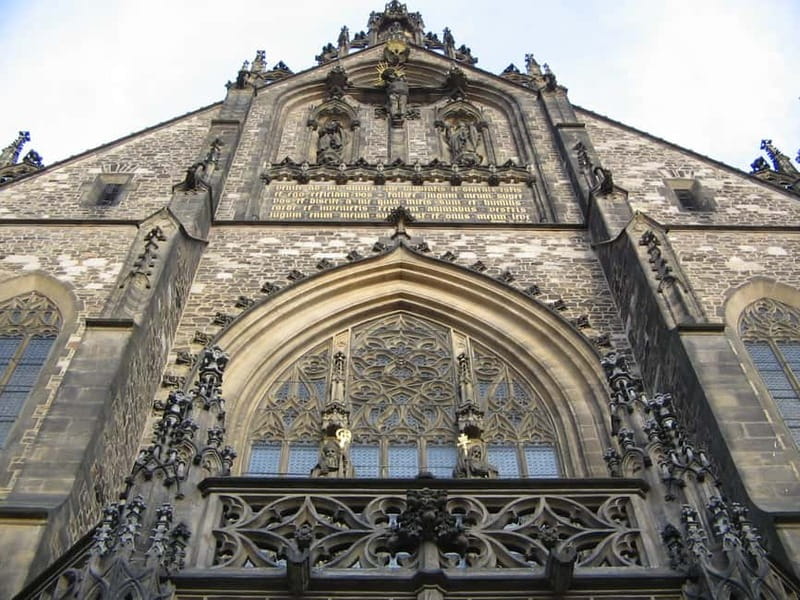
The tour centers on Brno’s most recognizable historic spaces, and two names come up early: Liberty Square (Liberty Square) and Capuchin Square (Kapucínské náměstí).
Liberty Square is described as the main market square from the Middle Ages. Even if you’ve seen market squares elsewhere in Central Europe, this one hits differently because the guide frames it as the stage for daily life—trade, social power, and the civic identity of Moravia’s capital.
Then you move toward Capuchin Square, where the tone shifts from marketplace bustle to something more human and unsettling. This is where Brno stops being only charming and becomes memorable—because the city’s past isn’t sanitized.
If you like stories with a moral or a twist, this part sets you up well. It is not just dates and names. It is legends, monuments, and the kind of local detail that makes a second walk through the neighborhood more meaningful.
Capuchin Monastery crypt: mummies, Moravian power, and a real dose of wow
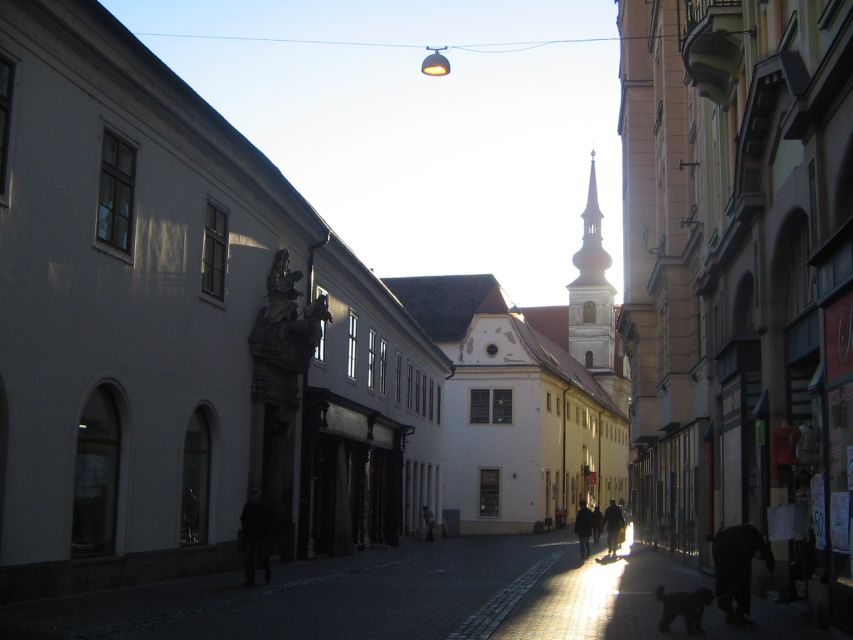
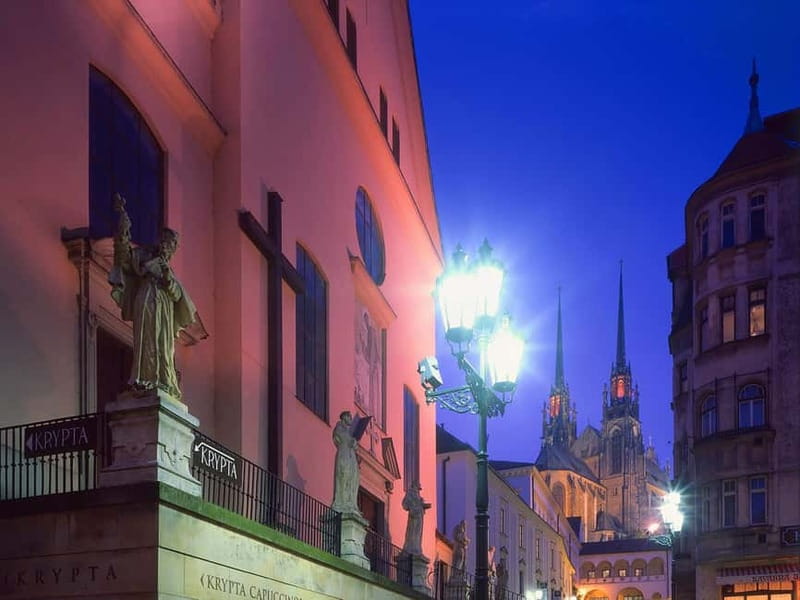
The Capuchin Monastery stop is a headline moment for this tour. You visit Capuchin Monastery and specifically the crypt linked to the monastery.
Here’s the key detail you’ll want to understand before you go: the crypt holds mummified remains of city noblemen. That single fact changes the whole vibe of the square. It’s part of how religious practice, status, and mortality played out in the region.
For many people, this stop is the “I didn’t expect that” highlight. Even if you’ve read about crypts before, the guide helps you connect what you’re seeing to why it exists and how Brno used sacred spaces to hold onto authority and memory.
Practical tip: this is the kind of stop where you’ll want your attention. If you’re rushing, you’ll miss the point. Slow down, listen, and let the guide’s framing do its job.
Cathedral of Saints Peter and Paul plus St. James Church: the look-up game
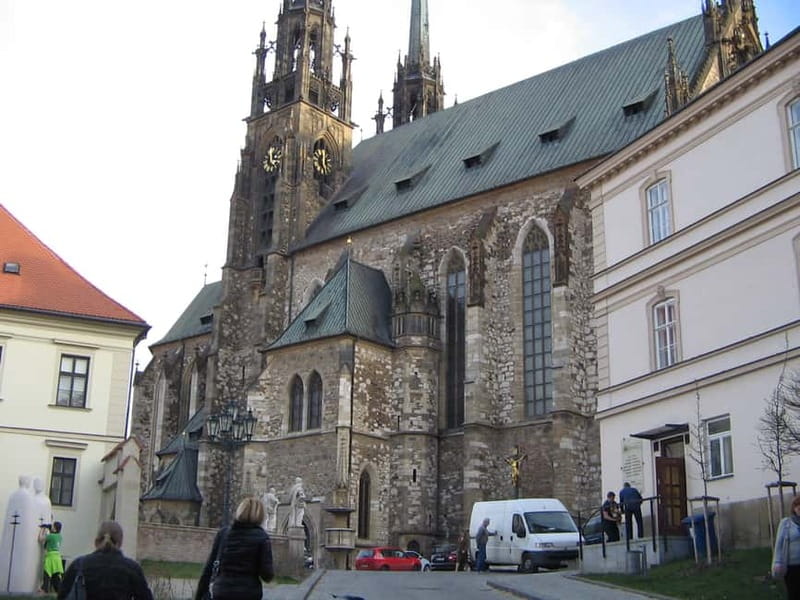
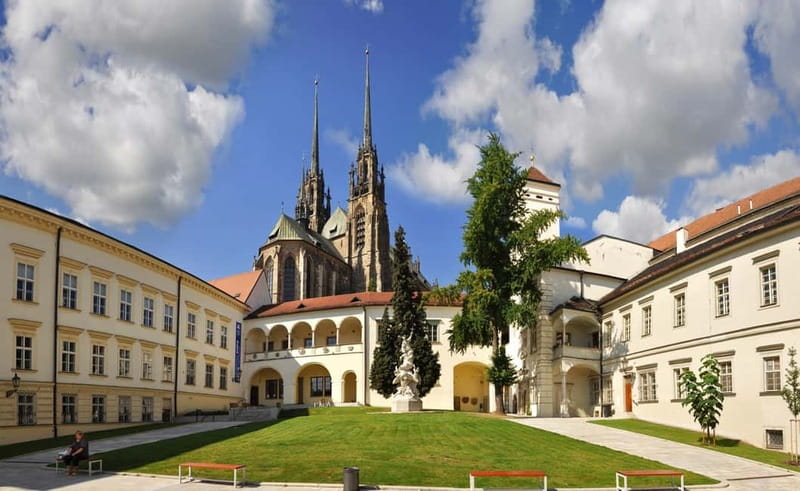
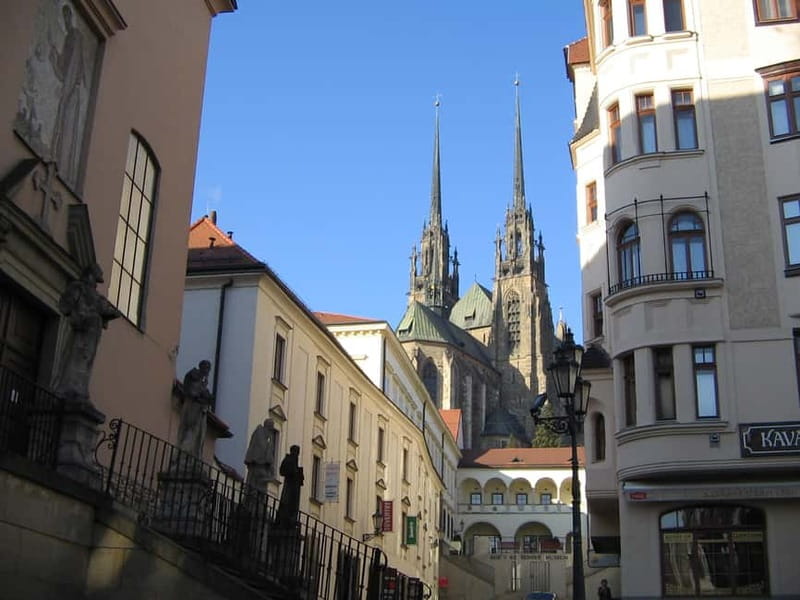
Brno’s landmark church energy is real here, and the Cathedral of Saints Peter and Paul is one of the main anchors of the tour.
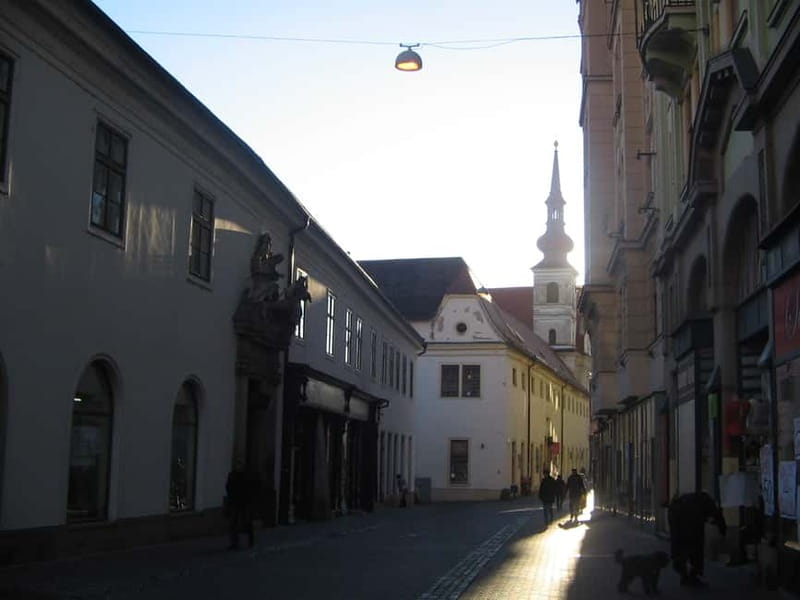
After that, you’ll reach Church of St. James (Jakuba)—and this is where the tour gets fun in a very specific way. One of the best bits you may hear from guides on this route is an instruction to look up. At St. James, there’s a sculpture of a naked child, with its backside facing toward the direction of the St. Peter and Paul cathedral.
The guide explains why that odd detail is there—so don’t just glance and move on. If you enjoy puzzles, ask the question the moment you see it. This is the kind of thing you’ll remember later when you’re scanning church façades on your own.
Why this works: this tour doesn’t treat architecture like background. It turns it into a conversation. Look up once with the guide, and then you start doing it everywhere—corners, ceilings, façades, and the weird little symbolism that gives cities personality.
Vegetable Market above underground corridors, Parnassus Fountain, and Reduta Theatre
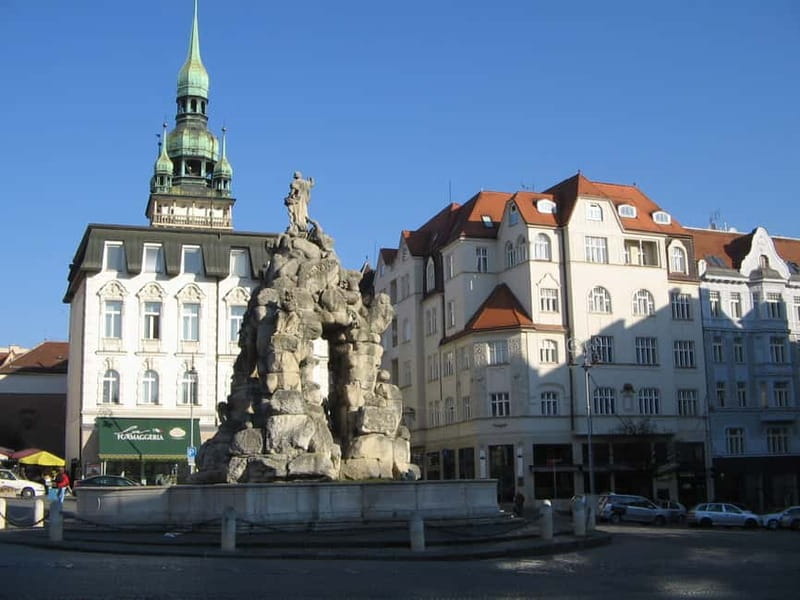
Next up is one of the most interesting practical-history contrasts in the route: the Vegetable Market built over a labyrinth of underground corridors.
Those corridors were used for storage, beer brewing, and wine maturation. Think about what that means. This was not just a pretty market with vendors selling fresh produce. It was a whole food-and-drink system, supported by underground space that kept goods stable through the seasons and helped the city run.
Then you’ll likely pass by or stop around the Parnassus Fountain, known for its allegorical carvings. The guide’s job here is to make you look past the surface and into the symbolism—mythic ideas and local interpretation—so the fountain becomes more than a photo spot.
Finally, there’s the Reduta Theatre façade, which the tour ties to Mozart. You’ll see the Renaissance façade and hear that Mozart once played there. Even if you’re not a die-hard classical music fan, this kind of connection helps you anchor the theatre into real cultural history.
This section is where the tour earns its value. It takes places you’d otherwise treat as scenery and shows you the city’s everyday mechanics and cultural life underneath.
Old Town Hall legends, New Town Hall, Leipa, and the Joseph Street return
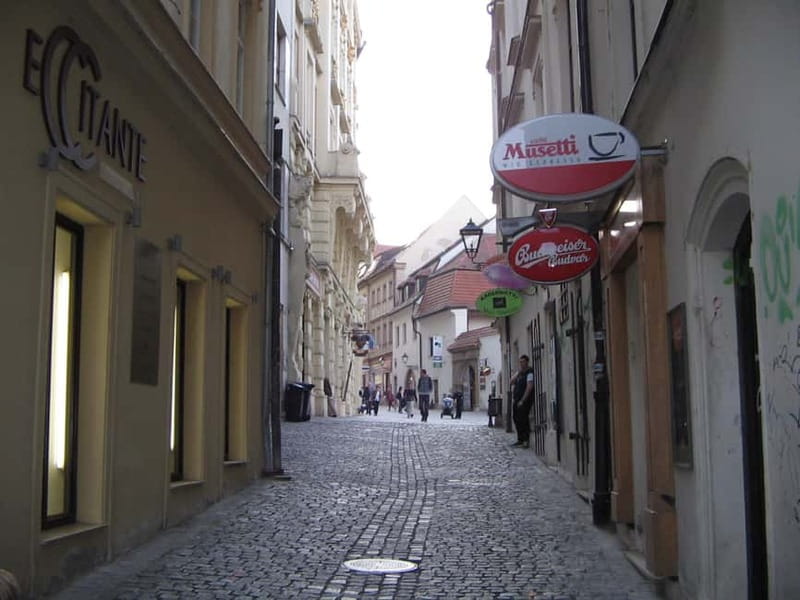
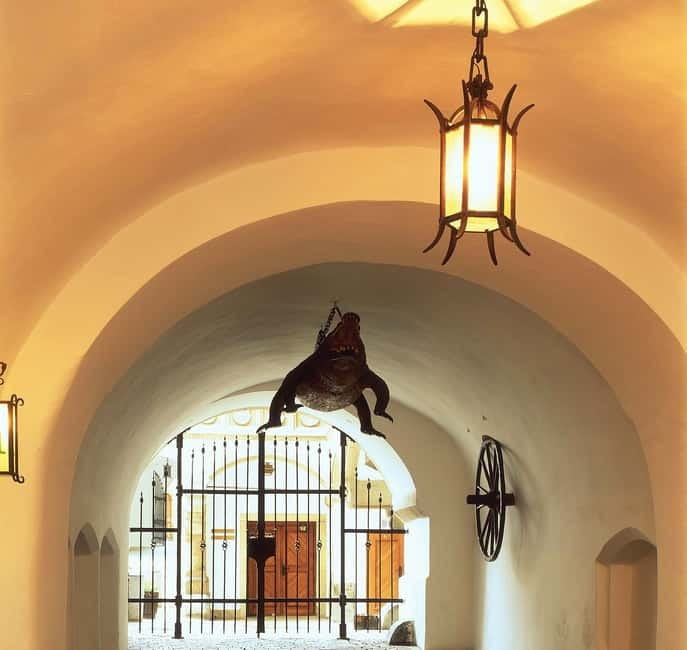
The walk keeps moving through civic landmarks and the stories attached to them. At the Old Town Hall, you’ll hear a legend involving a dragon and the wheel. It’s the sort of tale that makes you look at a building and think about what people feared, hoped, or explained away through myth.
From there, the tour continues with other key landmarks, including:
- New Town Hall
- House of the Noblemen of Leipa
- Church of St. James (already highlighted for its look-up detail)
As you head back, the route follows Joseph Street (Josefska) to return to the meeting point. That street segment matters, too. It gives you time to process what you saw while still under guide guidance, rather than dumping you at the last stop and hoping the city clicks on its own.
If you like structure, you’ll appreciate this flow: squares, crypt, cathedral, market mechanics, theatre and fountains, civic legend, then a clean return route.
Price and group size: is $34 good value?
At $34 per person for a roughly 2-hour guided walk, the value depends on how you like to travel.
This isn’t a long bus trip or a one-stop ticket to one monument. You’re paying for:
- a guided route through multiple major landmarks,
- a story-first approach (legends, symbolism, and connections between sites),
- and a small group size capped at 10.
That small group cap is part of the economics. When you’re not packed shoulder-to-shoulder, your guide can answer questions instead of rushing through the script. People also give strong praise for specific guides—Lukas, Luca, Robert, and Eliska are named in experiences—usually highlighting friendly delivery, humor, and clear English (at least with some guides).
So the best fit for the price is simple: you enjoy learning as you walk and you want help making sense of symbolism and local lore. If you prefer self-guided exploring with a map and don’t care about legends, you might feel the cost more than the value.
Also keep in mind that walking speed can change with the guide’s physical ability. If you’re planning this as a tight-connection activity, build in buffer time.
Festive Brno: Christmas and Easter markets along the route
Brno has a tradition of seasonal markets, especially during Christmas and Easter. On festive holidays, this walk can include those market stops as part of the experience, giving you a chance to see Czech traditions and customs in a real street setting.
This is worth calling out because it changes the feeling of the tour. During holiday periods, you’re not just studying stone and symbolism. You’re also seeing modern-day culture layered onto the same squares and streets.
If you’re visiting around those dates, this tour can be a good way to connect the past to what’s happening now.
Should you book this Brno Historic Downtown Walking Tour?
Book it if you want to:
- understand Brno’s Old Town beyond surface sightseeing,
- hear city legends and symbolism tied to real landmarks,
- and get a compact, high-impact introduction to the Moravian capital.
Skip it if:
- you hate walking or your timing is too tight for a two-hour stroll,
- you prefer a strict self-guided pace with no guide interaction,
- or you’re very sensitive to language clarity and you know you need absolutely perfect narration.
If you do book, I’d go in with one mindset: look up, ask one question when something odd catches your eye, and use the guide’s stories as a shortcut for remembering what matters in Brno.
FAQ
Where does the tour start and end?
The tour starts at the reception of the Grandhotel Brno, Benešova 18-20, Brno 602 00. It ends back at the same meeting point.
How long is the Brno Historic Downtown Walking Tour?
The duration is 2 hours.
How many people are in the group?
It’s a small group limited to 10 participants.
What languages are the guides?
The live tour guide is available in English and German.
What’s included in the price?
The included item is a guided walking tour.
Is hotel pickup and drop-off included?
No. Hotel pickup and drop-off are not included.
What should I bring?
Wear comfortable shoes.
Can I cancel for a refund or pay later?
You can cancel up to 24 hours in advance for a full refund. You can also reserve now and pay later.