REVIEW · SEMINYAK
Bali Private Food Walking Tour With Locals: The 10 Tastings
Book on Viator →Operated by Withlocals · Bookable on Viator
10 tastings. No tourist shortcuts.
This private food walking tour in Denpasar is built around real local eating, starting at Badung Market and then weaving through the lanes with a local foodie host. You’ll also get quick looks at cultural landmarks along the way, like the four-faced Catur Muka statue, plus a classic-roast-pig style of stop that helps you understand what Bali cooks at home.
Two things I love: first, the market start makes everything feel grounded and immediate, not staged. Second, the tour is set up for a private pace—and when guides like Reza or Budi are hosting, you tend to get more “here’s why we eat this” moments, not just a checklist. The one drawback to consider is that the experience can vary by guide and day, and while most people hit close to the full time, a small slice report a shorter run and fewer explanations—so go with a hungry, flexible mindset and don’t be shy about asking questions.
In This Review
- Key things to know before you go
- Denpasar street food with a private local host
- Price vs. what you’re actually buying
- Badung Market: your tasting “wake-up call” in 60 minutes
- Catur Muka and a palace compound: culture breaks between bites
- Catur Muka Statue: four faces, four directions
- Kuta Puri Bungalows Spa / Royal Palace view
- The real “why Bali tastes like Bali” part: classic bites
- What you’ll feel by the time you reach the classics
- How the guide changes everything (and why names matter)
- Dietary needs: the tour offers alternatives
- Timing and pace: what 3 hours feels like in real life
- What to eat (and what to ask) so you get your money’s worth
- Getting around: meeting point and how to show up ready
- Who should book this Denpasar private food walk
- Should you book this tour?
- FAQ
- Where does the tour start?
- How long is the Denpasar private food walking tour?
- Is this tour private?
- What does the 10 tastings include?
- Can the tour be adapted for dietary requirements?
- What sights do you see besides food?
- Are entrance fees included for the sights?
- Is the meeting point near public transportation?
- How much does it cost?
- What is the cancellation policy?
Key things to know before you go
- Badung Market starts it all: You begin with produce and local food energy, then move outward street by street.
- Private means your pace: Only you and your guide, so you can slow down for food details or keep moving.
- 10 tastings total: Expect food and drinks across stalls, shops, and eateries, not just one big meal.
- Dietary alternatives are part of the plan: The tour offers adjustments if you need them.
- Short cultural stops: You’ll see a statue and palace-like grounds from the outside, with stories threaded between bites.
- You’ll walk: Even though it’s only around 3 hours, it’s still a city stroll through market lanes.
Denpasar street food with a private local host
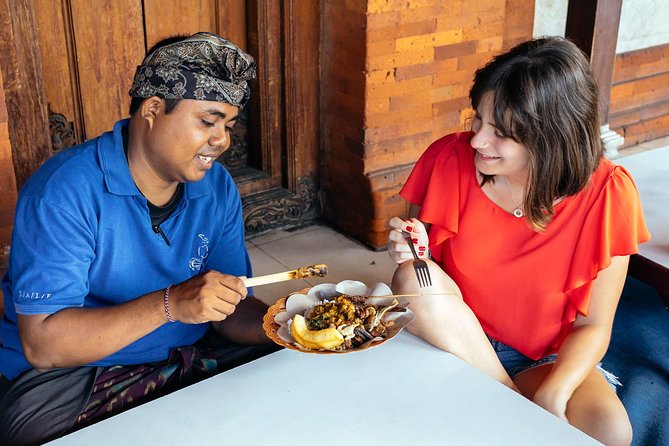
Denpasar isn’t the Bali people picture from postcards, and that’s exactly why this tour works. You’re in the capital’s everyday world: markets, small counters, busy lunch rhythms, and the kinds of dishes you’ll later recognize if you order them yourself.
The structure is simple and useful. You get 10 tastings of local specialties while also picking up “how to order” and “why this tastes the way it does” info you can use later. Because it’s private, you aren’t stuck matching someone else’s eating speed or tolerating awkward pauses while a group decides what to do next.
Price vs. what you’re actually buying
At $56.78 per person for about 3 hours, you’re paying for three things at once: access to food you might not find on your own, a guide who can steer your choices, and the convenience of a tight route. If you’re coming to Bali for a short trip, this is one of the better ways to get meaningful food learning without spending half a day figuring out where locals shop.
Badung Market: your tasting “wake-up call” in 60 minutes
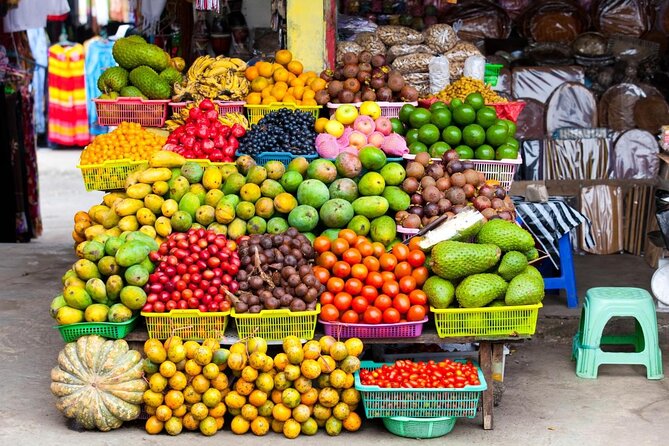
The tour kicks off at Badung Market. This is the island’s produce hub vibe, and you can feel it immediately. Levels of food and ingredients, vendors working fast, and that market smell that mixes fruit, spice, and smoke from the stalls.
The best part is how the market start reframes the rest of the tour. Instead of learning food only from a plate, you’re learning the supply chain—what looks fresh, what gets turned into snacks, and how vendors build flavor with simple ingredients. It also sets you up to understand Bali cooking as practical, not fancy: tasty food made for real daily eating.
You’ll also find that the first tastings build momentum. You’re not waiting until later to start sampling. And because the market can be a visual overload, having a host guide you through what’s normal helps a lot.
What to watch for: market lanes can feel crowded and energetic. If you’re even slightly unsure about street-food hygiene habits, this is where your guide’s choices matter most. The tour is designed around local vendor stops, and you’ll be seeing food prepared up close as you go.
Catur Muka and a palace compound: culture breaks between bites
Between the eating, you’ll get a short hit of context with quick sightseeing stops—light enough that it doesn’t slow the food flow, but meaningful enough that you’re not only eating your way through a city.
Catur Muka Statue: four faces, four directions
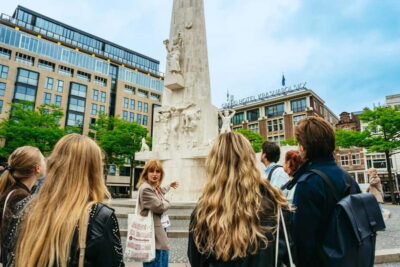
One stop is the Catur Muka statue, a carving designed by a sculptor based in Ubud. It was built in 1973 and has four faces looking toward North, South, East, and West. You’ll view it from the outside while you transition between tastings.
Even if you don’t know the symbolism yet, this kind of stop helps you notice that the food tour is happening in a lived cultural setting. It gives you a mental map of what you’re walking through, not just where you’re eating.
Kuta Puri Bungalows Spa / Royal Palace view
Another quick cultural moment is at Kuta Puri Bungalows Spa, tied to a royal palace site. The Royal Palace was built in 1820 by descendants of the Klungkung royal family, and it’s used for traditional ceremonies. You visit it from the outside, and your host shares local stories.
Two practical notes here:
- This is an outside viewing stop, so you don’t need to plan “museum time.”
- The tour indicates that admission for this stop is not included, so you’ll want to be fine with the idea that only some stops are ticket-free.
The real “why Bali tastes like Bali” part: classic bites
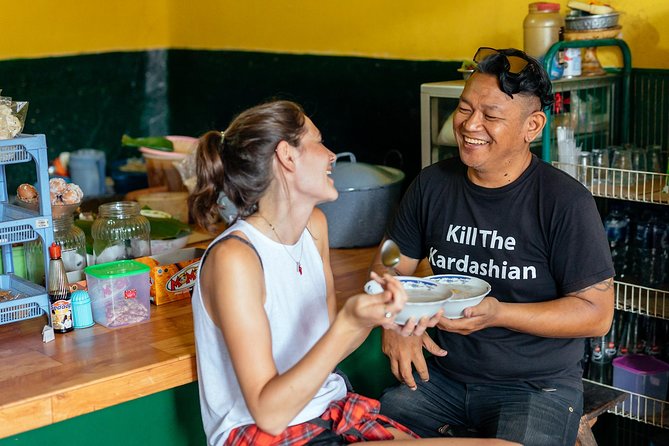
After the market and cultural pauses, you land on the core of the experience: classic Balinese flavors served in local style. This is where many people feel the tour hit its stride.
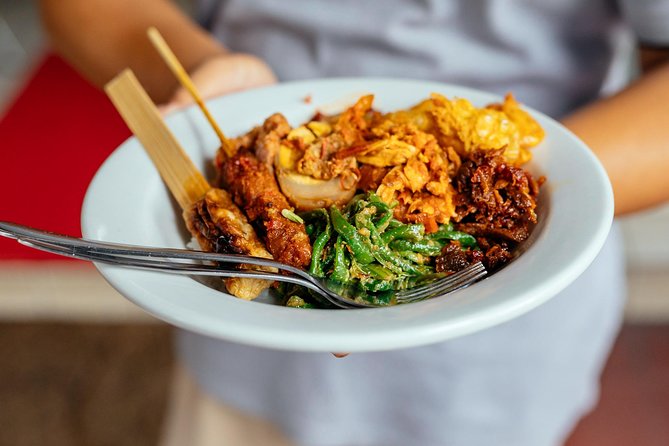
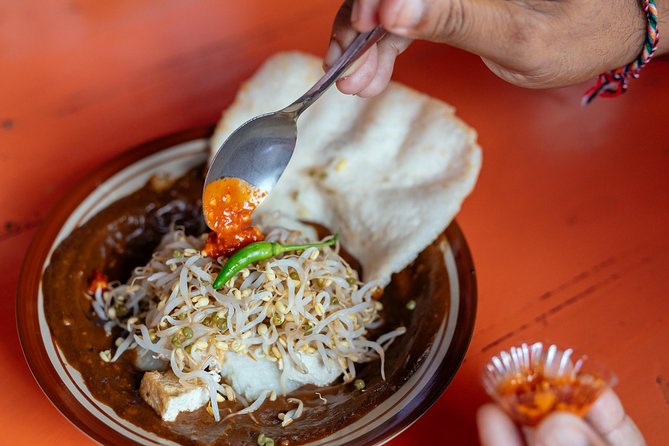
The tour includes tastings of typical favorites such as babi guling (spit-roast pig) and sate plecing arjuna. Those two alone are enough to give you a strong flavor map—because they represent a style: savory roast meat plus spicy, tangy sauces and a Balinese balance of bold taste without wasting time on theatrics.
What you’ll feel by the time you reach the classics
By the time you’re eating the well-known items, you’ve already seen the earlier building blocks: market ingredients, vendor rhythms, and how street snacks turn into full meals. That’s why this section isn’t just “try the famous dish.” You’re tasting within context.
Also, the tour is set up for 10 total tastings of food and drink across the route, so you’re not stuck with only one heavy course. That variety is part of why it can feel like more than a snack: it turns into an entire meal’s worth of learning without having to hunt for it yourself.
Possible drawback to keep in mind: the mix can lean savory. One person’s experience described a set of tastings that felt lighter on fruit and sweets. You can’t control the exact day’s menu, but you can reduce the risk by telling your host about what you want to taste (especially if you care about tropical fruit or dessert-style snacks).
How the guide changes everything (and why names matter)
This tour lives or dies on the host. And the good news: when the guiding clicks, it really clicks.
Guides named in past tours include Reza and Budi, plus other hosts like Merta Putra, Putu Merta, Kadek, and June. The common thread in the strong experiences is that the guide doesn’t treat the tour as “walk and point.” They help you understand ingredients, explain what makes a dish Balinese, and keep you moving at a comfortable pace.
That’s also where the private format helps. If something doesn’t land for you—too spicy, not your preferred texture, or you just want more info—you can adjust in real time.
Dietary needs: the tour offers alternatives
The tour specifically notes that you can tweak the tasting itinerary based on dietary requirements, with alternatives offered. That matters because street-food tours can fail quietly when someone has restrictions. Here, the structure is designed to avoid that.
If you’re gluten-free, vegetarian, or avoiding certain foods, tell the host clearly ahead of time so the substitutions are planned rather than guessed.
Timing and pace: what 3 hours feels like in real life
The tour is listed as around 3 hours, and most people get that rhythm. But one important consideration: not everyone reports the same timing. A minority mention a shorter overall duration.
So how should you plan?
- Treat it as a serious meal plan, not a quick snack.
- Build in a little buffer afterward, since you’ll likely end full and satisfied (and a bit slow to move).
- Wear comfortable shoes. Even with breaks, you’ll be walking through market lanes and between stops.
The tour is also described as having a moderate physical fitness level. Translation: it’s not a hardcore hike, but it isn’t a casual “sit on a bus and eat” tour either.
What to eat (and what to ask) so you get your money’s worth
You’ll try 10 tastings total, but your “value” comes from how you experience them. Here are a few smart moves that work on any street-food tour in Bali:
- Ask how the sauce is made or what flavors define it. For example, once you try sate plecing arjuna, you’ll want to know what makes it different from other satays.
- Ask what’s seasonal at the market. If fruit is part of your ideal day, this is where you can learn what’s worth watching for next.
- Ask what locals eat for breakfast vs. lunch. A good host can explain why a dish shows up where it does.
- If you don’t know the dish names, ask how to order it safely later. You want repeatability once you’re back wandering alone.
Some guides go heavy on story and culture; others are more food-first. Either way, asking questions gets you a better tour outcome.
Getting around: meeting point and how to show up ready
The meeting point is at Pura Desa lan Puseh Desa Pekraman Denpasar, on Jl. Gajah Mada, Dauh Puri Kangin, Kec. Denpasar Bar., Kota Denpasar, Bali 80231, Indonesia. It also notes that it’s near public transportation and that the activity ends back at the meeting point.
A small practical tip: arrive a few minutes early so you’re not flustered when you’re about to step into market energy. Markets have their own clock.
Also, the tour includes a mobile ticket, so keep your confirmation ready on your phone.
Who should book this Denpasar private food walk
This tour is a strong match if you:
- Want 10 tastings without doing the planning yourself
- Prefer a private pace over group tours
- Like street food but want a local host to steer you
- Want quick cultural context without turning the day into a sightseeing marathon
- Have dietary needs and want the itinerary adjusted rather than skipped
It may be less ideal if you:
- Expect a highly scheduled, museum-style tour with constant explanations at every step
- Don’t want to walk through market lanes and busy streets
- Are only interested in food variety that includes lots of fruit and sweets every time (the exact mix can vary)
Should you book this tour?
If you want a real taste of Denpasar, I think it’s an easy yes—especially for your first trip to Bali when you want your food instincts trained fast. The combo of Badung Market + classic tastings like babi guling and satay-style dishes gives you a practical flavor education you can use the rest of the trip.
Book it if you’ll enjoy street-level eating, you’re hungry, and you want a local guide like Reza or Budi to turn meals into learning. Just go in knowing the biggest variable is the host style on the day and the exact tasting mix. If you show up ready to ask questions and you share dietary needs early, you’re set up for one of the better value food experiences in the Denpasar area.
FAQ
Where does the tour start?
It starts at Pura Desa lan Puseh Desa Pekraman Denpasar, located on Jl. Gajah Mada, Dauh Puri Kangin, Kec. Denpasar Bar., Kota Denpasar, Bali 80231, Indonesia.
How long is the Denpasar private food walking tour?
The duration is listed as about 3 hours.
Is this tour private?
Yes. It’s a private tour/activity, meaning only you and your local guide.
What does the 10 tastings include?
You’ll get a total of 10 food and drink tastings at stalls, shops, and eateries. The tour also highlights classics like babi guling and sate plecing arjuna.
Can the tour be adapted for dietary requirements?
Yes. The tour offers alternatives for those with dietary restrictions, and you can tweak your tasting itinerary based on your needs.
What sights do you see besides food?
Along with the food stops, you’ll see highlights between tastings, including the Catur Muka Statue and the Royal Palace area at Kuta Puri Bungalows Spa (viewed from the outside).
Are entrance fees included for the sights?
For the listed stops, Badung Market and the Catur Muka Statue are ticket-free, while the Royal Palace stop at Kuta Puri Bungalows Spa is listed as admission not included.
Is the meeting point near public transportation?
Yes, the meeting point is described as near public transportation.
How much does it cost?
The price is $56.78 per person.
What is the cancellation policy?
Free cancellation is available up to 24 hours in advance for a full refund. If you cancel less than 24 hours before the start time, the amount paid is not refunded.