REVIEW · VANCOUVER
Ancient Trees of Vancouver Walking Tour
Book on Viator →Operated by Ancient Trees of Vancouver · Bookable on Viator
Ancient trees stop you cold. On this 3-hour Stanley Park walk, I like how the guide turns big old trunks into clear stories using archival maps and postcards. With a max group size of 10, you get time to ask questions and actually look at what makes these trees special.
I also love the mix of tree spotting and local history: you’ll learn how the Coast Salish lived here long before the park, and why old-growth forests matter when today’s threats are real.
One possible drawback: there’s no pickup, so you’ll need to make it to the meeting point at Ferguson Point on your own and be ready for a steady walk.
If you want something more meaningful than another photo stop, this is one of the best ways to see the “grown-up” side of Vancouver’s nature.
In This Review
- Key takeaways before you go
- Walking among ancient giants in Stanley Park
- Who Colin Spratt is and why the tour flows
- Price and value: what you’re paying for
- Getting to Ferguson Point: simple logistics that matter
- The main event: Stop at Stanley Park and its old-growth icons
- Old-growth you can actually see
- The biggest clues come from names and forms
- History lessons that connect to the trees
- Why old-growth is under pressure (and why that matters)
- What the walk feels like in real time
- When to choose the morning vs. afternoon tour
- What to bring for the best experience
- Who this tour suits best
- Should you book Ancient Trees of Vancouver?
- FAQ
- How long is the Ancient Trees of Vancouver walking tour?
- Where does the tour start?
- Is there pickup or drop-off?
- What group size should I expect?
- What’s included in the tour price?
- Is the tour offered in English?
- Is admission included?
- Can I bring a service animal?
- Can I cancel for a full refund?
Key takeaways before you go
- Small group (max 10) keeps the pace human and the questions flowing
- Colin Spratt (BC Big Tree Committee member) guides you to some of the park’s most famous ancient specimens
- Old maps, 120-year postcards, and photos help you connect today’s trees to what was there before
- Old-growth ecology is the point, not just tree trivia
- Morning and afternoon tour options help you fit it into a busy Vancouver plan
Walking among ancient giants in Stanley Park
Stanley Park can feel like a classic city attraction—bike rentals, sea views, crowds at peak times. This tour changes the feel fast. Instead of rushing past scenery, you slow down and focus on the living structure of the forest: tree form, age clues, and the way different species share space over centuries.
The heart of the experience is the guide-led walking route through park trails where the main characters are old-growth western red cedar and Douglas fir. You’re not just told numbers. You’re shown what those ages mean for the ecosystem and for what’s at risk when old-growth is gone. That’s why the tour works so well for first-timers and repeat visitors alike.
It’s also a “how to look” lesson. By the end, you start noticing details you would normally miss—like how hollow older trees can still support life, or how forests regenerate over time instead of all at once. For me, that shift is the real souvenir.
You can also read our reviews of more walking tours in Vancouver

Who Colin Spratt is and why the tour flows
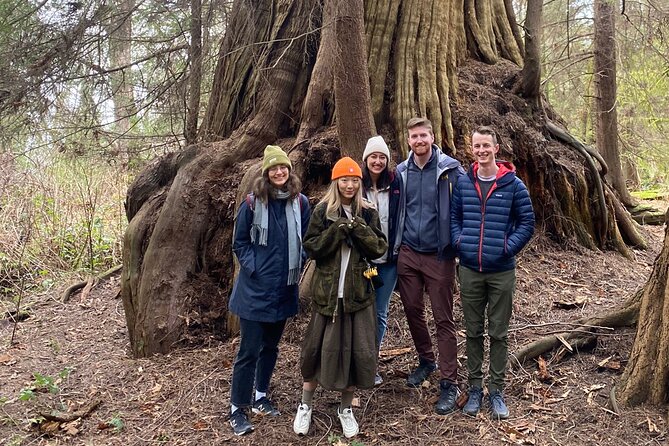
This tour is led by Colin Spratt, a big tree seeker and a member of the BC Big Tree Committee. He’s there to guide you through ancient specimens, but his role goes wider than identification. He links the trees to the wider human story in the area—especially Indigenous presence and long-term relationships with cedar.
The small group size matters here. With a maximum of 10 participants, you’re not swallowed by a crowd. It’s easier to stay close to the guide, see what he’s pointing at, and hear the explanation when you’re standing in the shade of one of those giants.
From what the tour description emphasizes—education with archive visuals—this isn’t a “20-minute facts and move on” style walk. It’s more like a guided field lesson that uses tools you can actually see and hold your attention with.
Price and value: what you’re paying for
At $56.33 per person for about 3 hours, this isn’t a cheap impulse buy. But it’s also not trying to be a big-ticket show with buses and big production.
You’re paying for three main things:
- A guide who focuses specifically on large, old trees (not a general park guide)
- A route and pacing designed around slow viewing, not a quick sweep
- Educational materials included in the walk: old maps, 120-year postcards, and photographs that connect past and present
The fact that the admission ticket is free (as listed) helps the math too. You’re not adding a separate park entry cost just to get on the trail.
If you’re the type of traveler who likes hands-on context—history plus ecology—this tends to feel like good value. If you want a long list of landmark photo spots or a casual scenic stroll with minimal talking, you might want to compare it to a more general Stanley Park walking tour.
Getting to Ferguson Point: simple logistics that matter
The tour starts and ends back at the same place: Ferguson Point, 7501 Stanley Park Dr, Vancouver. That’s an easy detail, but it matters because there’s no pickup and drop-off.
Plan to arrive a few minutes early so you’re not rushing at meeting time. Also, bring shoes that can handle park paths without drama. The route is described as walking trails, and you’ll be outside for the full session, so weather matters. Vancouver can shift quickly—fog or wind can make the walk feel longer than you expected.
A practical tip: since you’re going to spend a good chunk of time looking up and scanning the forest floor, keep your bag light. You’ll enjoy the tour more when your hands are free for photos and when you can stay balanced while stopping frequently.
The main event: Stop at Stanley Park and its old-growth icons
The itinerary is straightforward: you spend the full session in Stanley Park, on guided trails designed to bring you near the park’s most impressive ancient trees.
Here’s what makes the Stanley Park focus special in this tour format.
Old-growth you can actually see
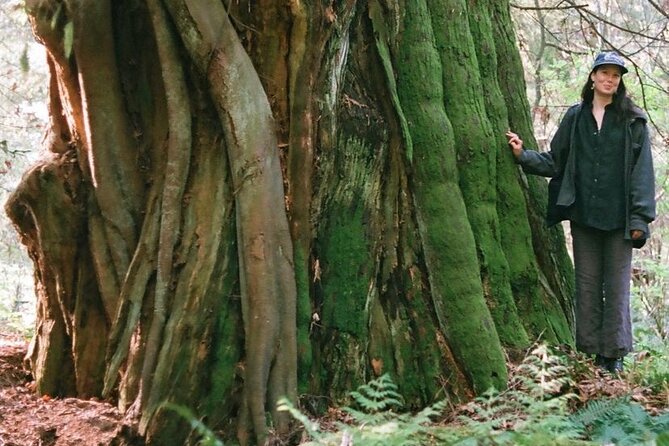
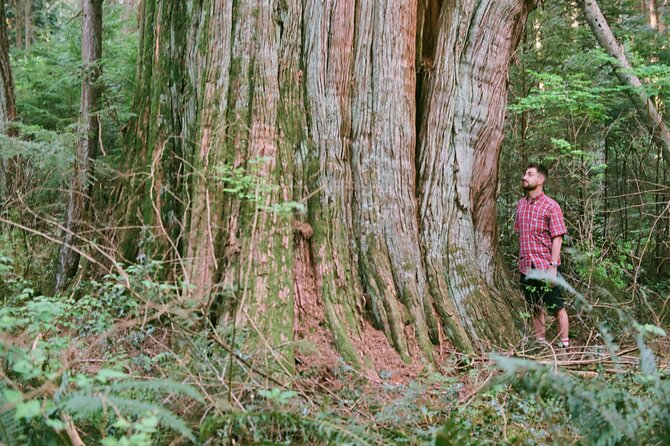
You’re guided to trees described with impressive time spans—Douglas firs around 600–800 years old, and western red cedars that can be around 1,000 years old. Those ages aren’t just trivia. They help you understand why old-growth forests behave differently than second-growth stands.
Older trees shape everything:
- Their larger canopies create layered shade
- Their trunks and branches support long-term habitat
- Their slow decay feeds new life over time instead of everything changing overnight
That’s why the tour spends time on ecological importance, not just the wow factor.
The biggest clues come from names and forms
The tour highlights include the largest known maple tree in all of Canada and “tall, wide, and wondrous” specimens that make it obvious you’re looking at the remnants of an older forest history. When your guide knows what to point at, you see the pattern.
You also learn that forest history isn’t always linear. Some trees have cavities or unusual structures, and older cedars can have hollows that become homes for wildlife. Even when you only learn about those features in passing, they change how you see the forest—less like a static scene, more like a living building with different rooms.
History lessons that connect to the trees
This is where the tour gets more than just “tree talk.”
You learn about Stanley Park’s past and the original Coast Salish inhabitants who called this area home long before it became an urban park. That framing matters because it puts the forest back into the human timeline. The trees aren’t only objects to view; they’re part of how people lived, traveled, and made tools.
The tour also uses old maps, 120-year postcards, and photographs to show how things have changed. It’s one of the most useful ways to understand a park like Stanley Park: comparing what you’re standing in today with what came before.
Why old-growth is under pressure (and why that matters)
The guide discusses threats to old-growth forests today. You’re not left with vague worry. The tour’s structure—seeing ancient specimens and then learning what endangers them—helps you connect emotion to cause.
This is one of those experiences that can change your trip style after the fact. You may start noticing where older forests exist elsewhere, and you may pay more attention to conservation language you previously skimmed.
What the walk feels like in real time
The tour is roughly 3 hours, which is long enough to slow down but short enough to fit into a busy itinerary.
The walking portion is guided along park trails, and many visitors describe it as a walk where the details stay easy to follow. The experience is designed so you’re not just marching from tree to tree. You stop often, look closely, and listen.
Because group size is capped at 10, you’re less likely to feel like you’re squeezed into someone else’s tour pace. It’s more like a small class outdoors.
If you’re traveling with kids, the tour’s history-plus-nature style tends to work well. The guide’s way of explaining trees can keep younger attention from drifting, and the pace allows for questions. (That said, any outdoor tour still depends on weather and the child’s comfort with being outside for the full session.)
When to choose the morning vs. afternoon tour
The tour offers both morning and afternoon times. Pick based on what you want from your Vancouver day.
- If you like a fresh start and want the rest of the day for views around the park, morning can be a good anchor.
- If you prefer a slower schedule and you’re already warmed up to walking, afternoon may fit better.
Since the tour is focused on outdoor forest viewing, light and temperature can affect how comfortable you feel while standing still looking at tree trunks. Either option can work—you’re still walking trails for the same basic educational route.
What to bring for the best experience
The tour description doesn’t list gear needs, so I’ll keep this practical and minimal:
- Comfortable walking shoes for Stanley Park trails
- Weather protection (a light layer plus rain protection if the forecast looks iffy)
- A smartphone or camera (you’ll likely want photos, especially when you spot the standout specimens)
- Water, because 3 hours outside adds up
Also, come with a curious mindset. This is a tour where listening is part of the activity. If you treat it like a self-guided checklist, you’ll get less out of it.
Who this tour suits best
This walking tour is a great fit if you:
- Love nature that has a clear story behind it
- Want local history tied to the place you’re standing
- Appreciate small-group guiding (not crowded, not rushed)
- Prefer learning outdoors over museum-style lecturing
It’s also a nice option if you want a break from typical city attractions. Stanley Park is famous, but this experience makes it feel like more than a postcard stop.
If you’re mainly after big views and photo moments, you might find the slow focus on trees less exciting than a viewpoint-heavy itinerary. Still, even that kind of traveler often ends up happy once the guide starts connecting the dots between age, habitat, and human history.
Should you book Ancient Trees of Vancouver?
I’d book this tour if you want a meaningful way to experience Stanley Park that’s grounded in real forest life. The combination of old-growth tree spotting, Colin Spratt’s focused expertise, and visual history aids makes it feel like you’re learning how to see the forest rather than just passing through it.
Skip it only if you dislike walking outdoors, hate guided explanations, or can’t get yourself to Ferguson Point on time. There’s no pickup, so you’ll want to be ready to meet the group where the tour starts.
If you can fit one special guided experience into your Vancouver plan, this is the one that helps the park stick in your mind long after you’ve left the trees behind.
FAQ
How long is the Ancient Trees of Vancouver walking tour?
The tour is about 3 hours.
Where does the tour start?
It starts at Ferguson Point, 7501 Stanley Park Dr, Vancouver, BC V6G 3E2, Canada.
Is there pickup or drop-off?
No. The tour does not include pickup or drop-off at other locations.
What group size should I expect?
The tour has a maximum of 10 travelers.
What’s included in the tour price?
The experience includes an expert guide-led walking tour, and it uses old maps, 120-year old postcards, and photographs. It also focuses on ancient trees such as giant western red cedar and older Douglas fir trees, as described in the tour details.
Is the tour offered in English?
Yes, the tour is offered in English.
Is admission included?
The activity lists admission ticket as free.
Can I bring a service animal?
Yes, service animals are allowed.
Can I cancel for a full refund?
Yes. You can cancel up to 24 hours in advance for a full refund. If you cancel less than 24 hours before the start time, the amount you paid will not be refunded.