REVIEW · AREQUIPA
Walking tour in the Historic Center of Arequipa
Book on GetYourGuide →Operated by AREQUIPA EXPLORER Y ACTIVIDADES TURISTICAS · Bookable on GetYourGuide
Two hours later, you’ll know Arequipa fast. This walking tour strings together Plaza de Armas history, cloistered architecture, and real volcano views, all on foot with a guide you can ask questions of as you go. I like that it starts so close to the main square that you don’t waste your first minutes figuring things out.
What I liked most was the guide work: clear storytelling with humor, plus a knack for explaining what you’re seeing and why it matters (guides like Edgar, Johan, Beatrice, Francisco, and Jorge Echeandia come up again and again for that). The other big win is the stop at Mundo Alpaca, where you get a hands-on moment with camelids like llamas and alpacas.
One thing to consider is time. At only about 2 hours total, some photo pauses can feel quick, so come prepared to take pictures fast and enjoy the rest by looking up. Also, it’s a low reservation price, but you should plan for a voluntary tip at the end.
In This Review
- Key highlights you’ll actually feel on this walk
- Finding Santa Catalina 204 and getting oriented fast
- Plaza de Armas: arches, portals, and the story behind the center
- Cloisters of the Company: a beautiful pause with meaning
- Old mansions, gardens, and a city-center walk with curves
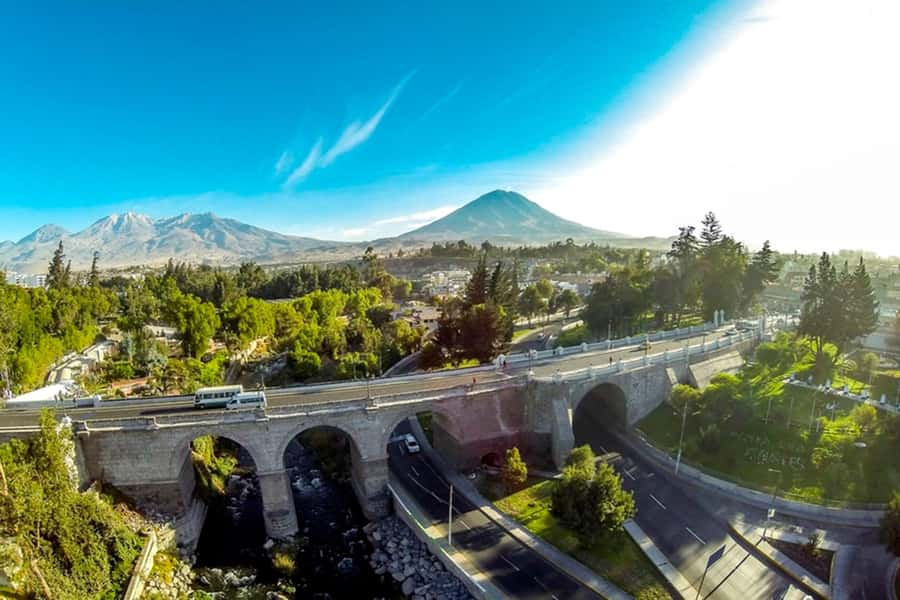
- El Puente Grau volcano views: Misti, Chachani, and Pichu Pichu
- Mundo Alpaca: meeting llamas, alpacas, Suri, and vicuñas
- San Lázaro neighborhood and the early roots of the White City
- Optional museum time: Santa Catalina Convent and Juanita mummy
- Price and value: $10 reservation plus the tip that keeps places maintained
- Who this 2-hour Arequipa walk is best for
- Should you book this Historic Center of Arequipa walking tour?
- FAQ
- Where does the tour start?
- How long is the walking tour?
- What language will the guide speak?
- Is the tour entirely on foot?
- What are the main stops on the route?
- Are entrances included?
- Do I need to pay more at the end?
- What is the cancellation policy?
- Can I reserve now and pay later?
- Will I see volcanoes during the tour?
Key highlights you’ll actually feel on this walk
- Easy meet-up near Plaza de Armas: Santa Catalina Street #204, with the guide holding an umbrella so you can spot them quickly.
- Plaza de Armas storytelling: traditional arches and portals get put in context, not just pointed at.
- Cloisters of the Company: a standout architectural stop that makes the center feel deeper than a typical city loop.
- Volcano views at El Puente Grau: keep an eye out for Misti, Chachani, and Pichu Pichu on clear moments.
- Mundo Alpaca mini zoo + fibers: meet llamas, alpacas, Suri, and vicuñas, and you may be able to shop alpaca-fiber fabrics.
- San Lázaro neighborhood history: a look at the place tied to the early days of the White City.
Finding Santa Catalina 204 and getting oriented fast
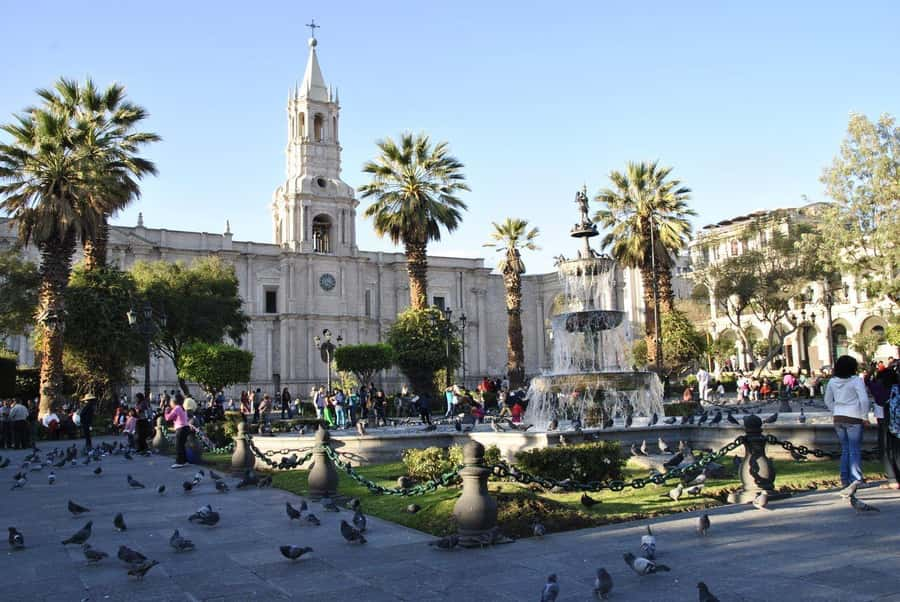
You start at Santa Catalina Street #204, just one block from Arequipa’s Plaza de Armas. The guide is easy to recognize because they’ll be holding an umbrella, which matters if you arrive a few minutes early and don’t want to wander.
This is a walking tour, so you’re not waiting around for vans or schedules. I like that it’s designed for “first day in town” energy: you get local context and a mental map in a short time. Even if you’re only in Arequipa briefly, you can still leave with a sense of where the center sits and how the neighborhoods connect.
Plan on staying present. The route moves through busy, central streets, courtyards, and viewpoints, and the experience works best when you’re looking at details—doorways, arches, and small corners—rather than treating it like a checklist.
Plaza de Armas: arches, portals, and the story behind the center
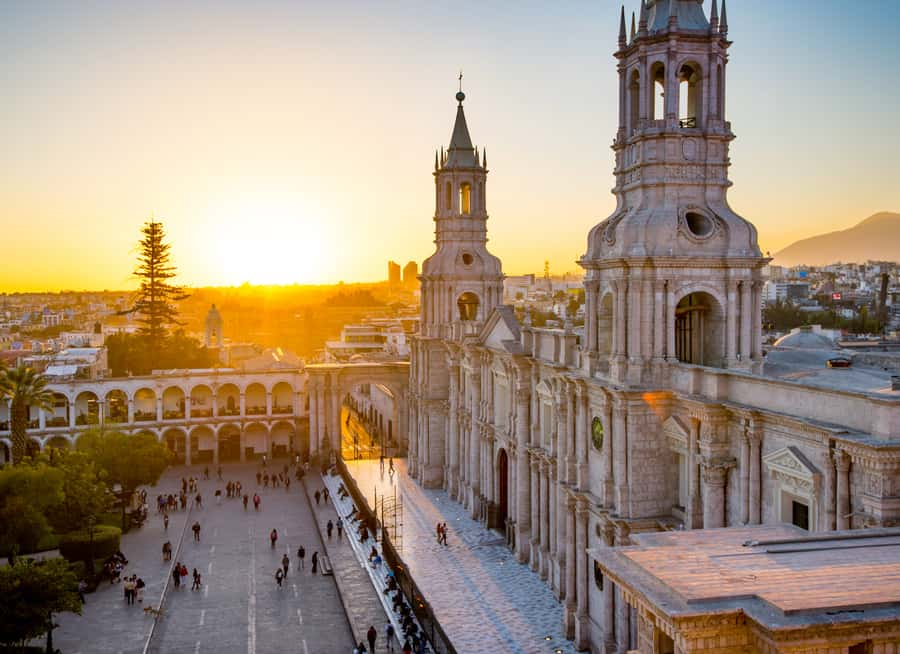
Your walk kicks off with the main Plaza de Armas area. This is where the tour focuses on history in a practical way: you’ll learn what makes the square’s traditional arches and surrounding portals so important to Arequipa’s identity.
I like how the guide’s job isn’t just to name buildings. You’re encouraged to connect architecture to the city’s past. When you understand how and why these features show up around the square, you start noticing them everywhere later—inside other courtyards, along side streets, and in religious areas nearby.
Because you begin here, you also get orientation. If you’re the type who hates feeling lost, this start helps you build confidence fast. You’ll know what to look for when you return to the Plaza on your own later.
A small caution: in this kind of central walking loop, you may have moments where the group has to keep moving. If you want lots of perfect-square photos, hold your camera ready and catch your best angles quickly, then get back to listening.
Cloisters of the Company: a beautiful pause with meaning
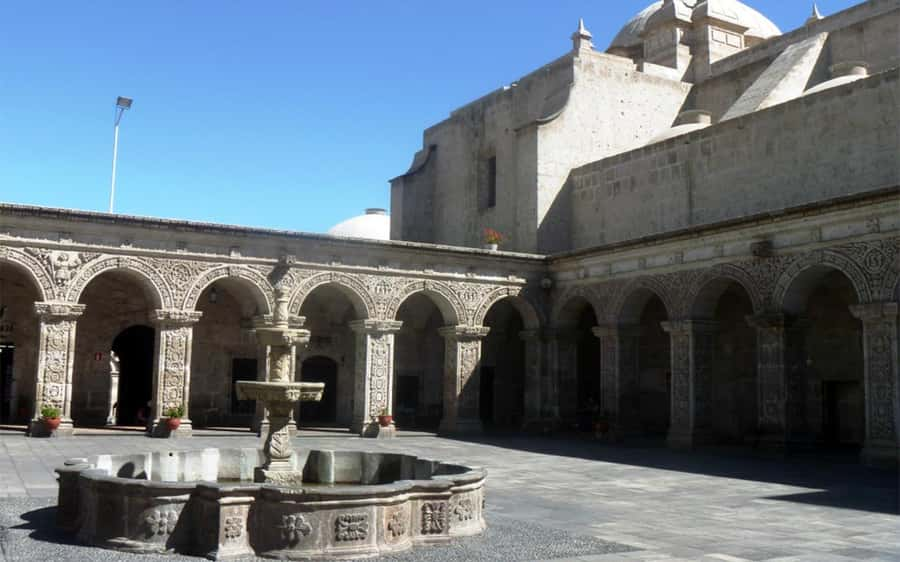
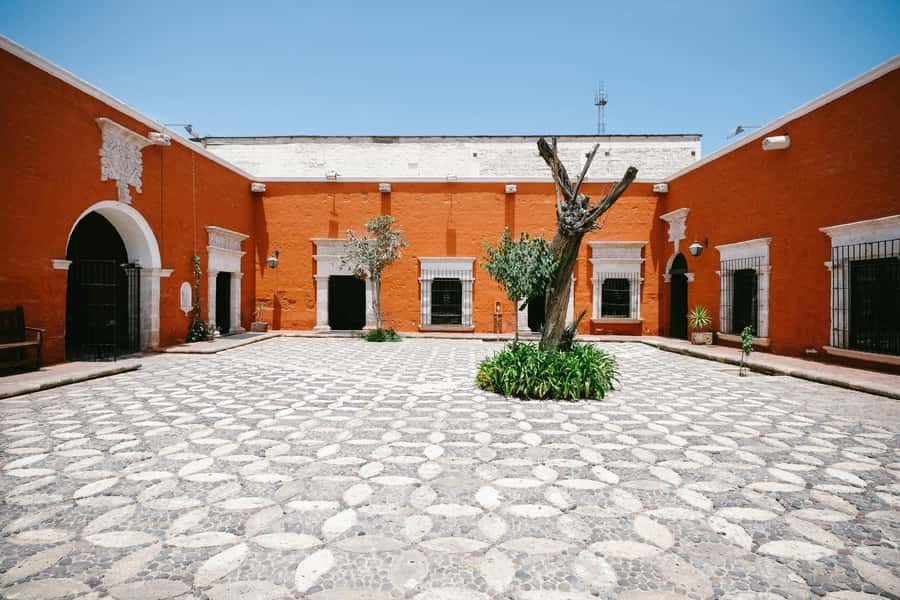
After the Plaza area, you head to the cloisters of the Company. This stop is one of the most architectural in the route, and it’s where the tour tends to slow down just enough to let you appreciate what’s around you.
Cloisters have a certain “breathing space” feel, and that matters in Arequipa’s center where street life can be constant. I like that this is a shift from open square energy to quiet interior spaces, where you can focus on stonework, layout, and the overall rhythm of the buildings.
You’ll also likely get interpretation from the guide—especially around religious architecture and how art and design communicate ideas. One guide example from past guests, Beatrice, is specifically praised for explaining the meaning behind religious architecture and art. You can take that as a clue: ask questions if something catches your eye, like a doorway shape, a carved detail, or a pattern in the interior spaces.
If you’re traveling with someone who just wants to “see the sights,” this stop can still win them over. It’s visual, it’s calm, and it helps you understand why Arequipa’s center feels layered, not flat.
Old mansions, gardens, and a city-center walk with curves
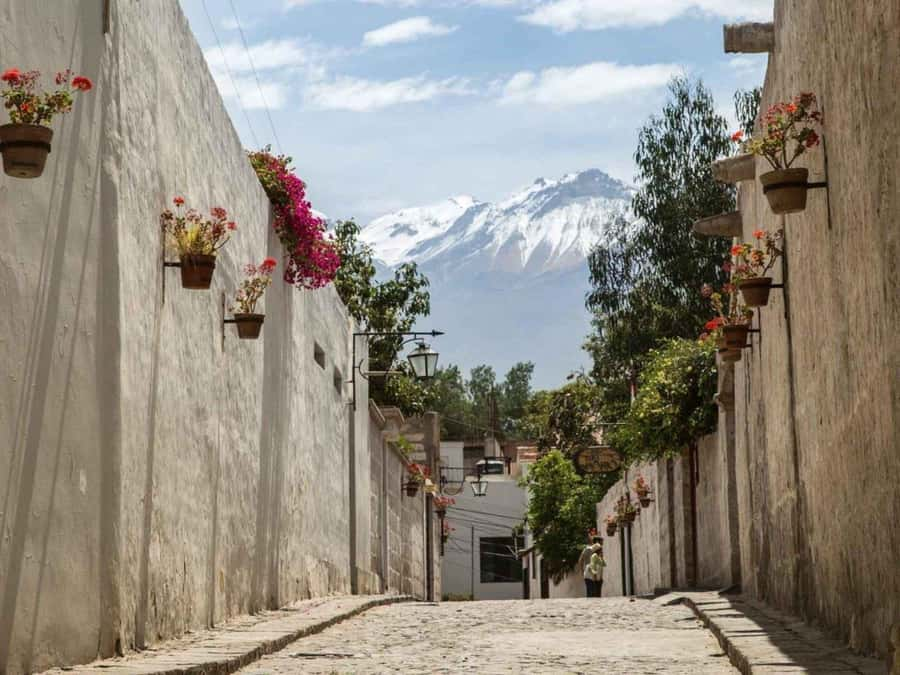
Between the major anchors, you’ll move through charming areas near the city center. Expect older mansions, city gardens, and side streets that feel less like a straight line and more like a maze you’ll be glad you learned.
This part is great because it gives the walk texture. You’re not only stopping at big-name places; you’re also seeing how people shape daily life around old structures. I find that this is where you start recognizing Arequipa’s style on your own.
There may be a small food or culture moment too. In past experiences, guides have spent time talking about food and Peruvian culture tied to what’s around the center. You might also get a taste-style stop—one guest notes cocktails and cheese helada during the tour—so keep an open mind if your guide suggests a quick try.
Photo lovers: keep an eye out for courtyards and small openings. Some reviews mention limited photo time in general, so treat pictures as “grab and go.” You’ll enjoy it more if you also slow down mentally and watch what’s happening around you.
El Puente Grau volcano views: Misti, Chachani, and Pichu Pichu
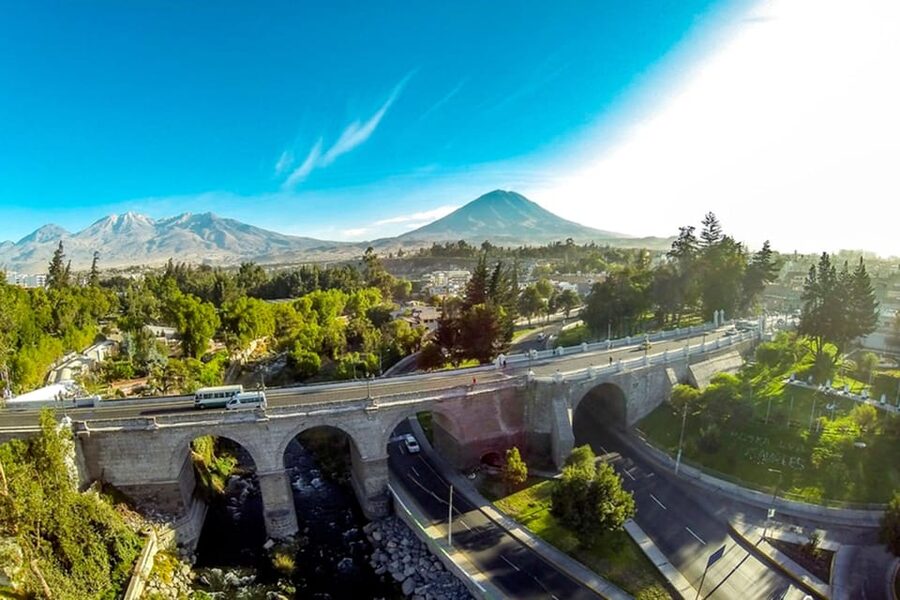
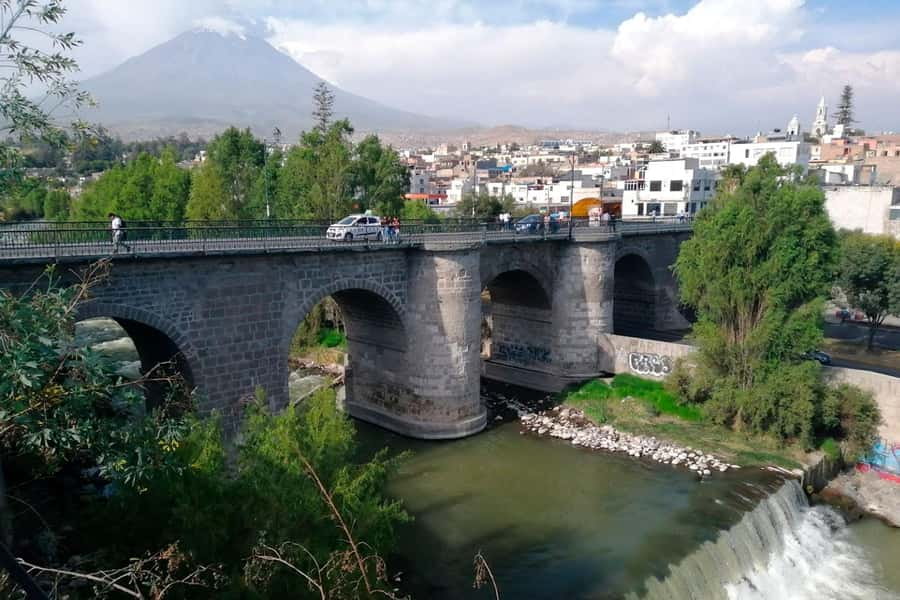
Then comes one of the most exciting moments in the whole route: a strategic point at El Puente Grau to observe volcanoes. The tour specifically calls out the view of Misti, Chachani, and Pichu Pichu.
This is the kind of stop that changes your whole understanding of Arequipa. You’re standing inside a city with a backdrop that feels powerful, and you see how geography shapes the mood of the place. If you’ve only ever seen photos of these peaks, watching them in context is a real eye-opener.
Practical tip: wear something comfortable for quick waiting. Visibility can change, and even short pauses matter. If the view is clear, you’ll want your camera ready. If it’s not, still look up—at least you’ll know where to return later if you want better skies.
I also like that this viewpoint comes mid-walk. It breaks up the cultural stops and resets your attention, so you don’t feel stuck in museums or stone corridors.
Mundo Alpaca: meeting llamas, alpacas, Suri, and vicuñas
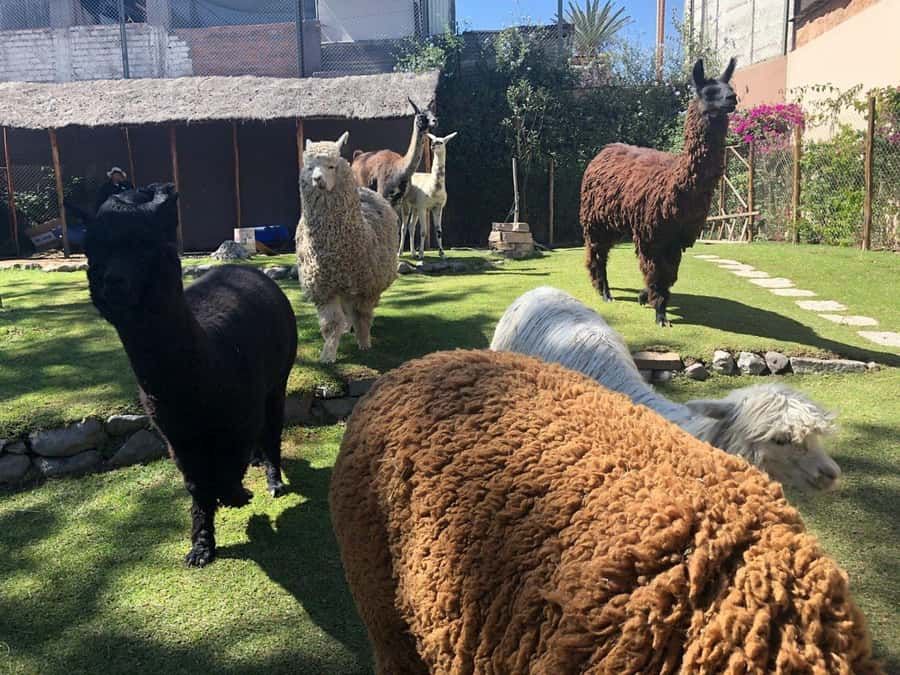
Next you visit Mundo Alpaca, described as an old breeding farm for camelids. This is where the tour becomes playful in a good way: you’ll see animals like llamas and alpacas, and the experience also references Suri and vicuñas.
One of the most praised moments is the chance to feed camelids. Past guests highlight feeding llamas and alpacas as a high point, which makes sense: this isn’t a distant viewing. It’s closer, hands-on, and it’s a fun contrast to the stone-and-arch focus of the historic center.
You may also be able to buy fabrics made from alpaca fiber. The tour notes the option to buy fabrics here, so if you want a souvenir that’s tied to the region and not just generic trinkets, this is the logical place to look. I’d treat it as “browse with a purpose”: compare what you’re buying, ask what type of fiber it is if your guide can help, and don’t feel pressured to buy just because the animals are adorable.
One consideration: animal visits can take a bit of time, and that can affect how long you have for other stops. Still, in a short 2-hour tour, it’s one of the best ways to get variety—history in the morning, animal world by midday-ish, and a volcano view in between.
San Lázaro neighborhood and the early roots of the White City
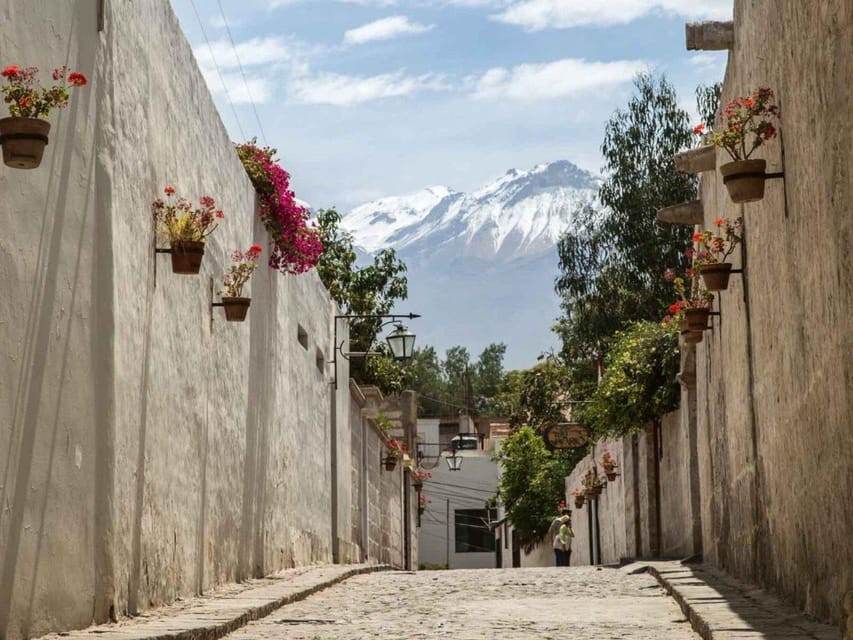
After Mundo Alpaca, you’ll walk to the San Lázaro neighborhood. The tour frames it as the first town where the White City was founded. That gives the neighborhood stop more weight than just a scenic detour.
I like how this portion closes the loop. You started at the Plaza de Armas, moved through major architectural points, checked volcano views, then ended by grounding what you saw in the city’s early development. It’s a simple narrative arc: center → culture and architecture → geography → neighborhood origins.
Depending on the guide and timing, you may pass through calmer lanes than the busiest square streets. This is where you can feel the human scale of Arequipa, and it helps the tour feel like more than “just another walking circuit.”
The tour finishes back near the Plaza de Armas area, close to where you started. That ending location is a practical gift: once you’re done, you’re already near good options for food, shopping, and planning the rest of your day.
Optional museum time: Santa Catalina Convent and Juanita mummy
One of the nice parts of this tour is flexibility. Your walk ends near the center, and depending on prior coordination, you may be able to enter with an extra cost.
Two specific optional add-ons mentioned are the Santa Catalina Convent and the Juanita mummy. If you choose these, you’ll pay separately and hire internal guides.
My advice: if you’re curious about these sites, check what fits your time and energy. The main walk already gives you a fast history-and-views overview. Adding a museum can be great if you want deeper context, but don’t do it if you’re planning to cram too much the same day.
Also, don’t assume the optional entries are automatically included. The tour is built around the walking route, and museum entry usually comes with its own fee and internal guidance.
Price and value: $10 reservation plus the tip that keeps places maintained
The price is low at $10 per person, and the tour explains that you’re mainly paying for reservations. At the end, you give a voluntary tip to the guide, which helps cover operating expenses and maintenance for the places visited.
This structure can feel confusing at first, especially if you’re used to one fixed price for everything. But here’s the practical reality: even with a reservation fee plus a tip, you should still end up paying a minimum amount for a tour that packs multiple major sights into about two hours.
One past guest notes an expected tip range of 30–50 soles per person. That’s not a universal rule stated in the base info, but it’s a useful budgeting hint. If you like ethical, guide-led experiences where the stops actually stay in good shape, plan to tip generously enough that your guide’s work is properly rewarded.
If you’re doing this tour as an introduction to Arequipa, I think it’s a solid deal. You’re paying for direction, interpretation, and time efficiency—not just walking from point A to point B.
Who this 2-hour Arequipa walk is best for
This tour makes sense if you want a fast start with context. It’s ideal when you’re:
- visiting Arequipa for a short time and want the historic center story quickly
- interested in both architecture and geography (Plaza and volcano views)
- open to an animal stop in the middle of a city tour
- traveling in English or Spanish and want a live guide
It also works well on a first day, because you’ll end near the Plaza again with a mental map you can use the next day.
The main downside for some people is pacing. At only about 2 hours, you won’t have endless time at every point. If you hate group timing or want long photo sessions, you might need to plan extra solo time afterward.
Should you book this Historic Center of Arequipa walking tour?
I’d book it if you want a compact, high-value introduction to Arequipa’s center: Plaza de Armas history, cloisters, a real volcano viewpoint at El Puente Grau, and hands-on camelid time at Mundo Alpaca. It’s the kind of route that helps you understand the city quickly, not just photograph it.
Skip it or add extra time if you’re the type who needs long stays at each stop. The tour is short, and the best experience comes from listening while you walk, then returning on your own later if you want to linger.
If you’re traveling with someone who likes animals or you personally enjoy animal encounters, the Mundo Alpaca stop is a major reason to choose this tour. It’s not what you’d expect from a historic center walk—and that mix is exactly why it works.
FAQ
Where does the tour start?
It meets at Santa Catalina Street #204, very close to the main Plaza de Armas area (about one block). The guide will be holding an umbrella.
How long is the walking tour?
The duration is about 2 hours total.
What language will the guide speak?
The live guide offers English and Spanish.
Is the tour entirely on foot?
Yes. The tour is done on foot throughout.
What are the main stops on the route?
You’ll see the Plaza de Armas area, the cloisters of the Company, viewpoints around El Puente Grau for volcanoes, Mundo Alpaca (with a small zoo of camelids), and the San Lázaro neighborhood.
Are entrances included?
The tour includes entrance to places of visit. There are also optional entries (Santa Catalina Convent and the Juanita mummy) that require extra cost and internal guides.
Do I need to pay more at the end?
You pay for reservations as part of the low tour price, and at the end you should provide a voluntary tip to the guide.
What is the cancellation policy?
Free cancellation is available up to 24 hours in advance for a full refund.
Can I reserve now and pay later?
Yes. You can reserve now and pay later.
Will I see volcanoes during the tour?
Yes. The route includes a viewpoint at El Puente Grau where you can observe volcanoes such as Misti, Chachani, and Pichu Pichu.