REVIEW · POZNAN
Poznań Experience 2-Hours Guided Walking Tour
Book on Viator →Operated by Raccoon Tours Poznań · Bookable on Viator
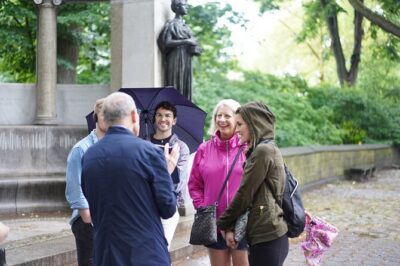
Poznań makes sense fast on this walk. You get a guided sweep through the Old Town and the imperial quarter, stopping at major squares, churches, libraries, and monuments, all paced for questions and photos. The group stays small (up to 15), so it feels like a real conversation, not a cattle line.
What I like most is the way the guide connects history to specific places you can point at. I also like the practical, human touches, like helpful city pointers, plus little moments that keep the walk from turning into a lecture. With Viktor leading the route, the tone stays relaxed and easy to follow.
One thing to consider: a number of stops focus on facades from the outside, and at several sites the ticket for entry is not included. If you want museum interiors every time, you may need to plan extra time and tickets on your own.
In This Review
- Key highlights you can plan around
- Walking Poznań the easy way: Old Town plus the imperial quarter
- Price and time: what $39.60 buys you (and what it doesn’t)
- Your guide: Viktor’s pacing, humor, and answer-first approach
- Stop-by-stop: Liberty Square to the Royal Castle
- The big theme: protests, June 1956, and how the city remembers
- Architecture and photos: why facades matter here
- Practical tips so you don’t waste time
- Should you book this Poznań walking tour?
- FAQ
- Where does the tour start?
- How long is the guided walking tour?
- Is the tour offered in English?
- How many people are on the tour?
- Are admission tickets included for the stops?
- Is the tour weather dependent?
Key highlights you can plan around
- Small group (max 15) for easier questions and a calmer pace
- English-language guide with story-driven commentary from place to place
- Photo-friendly stops across squares, baroque-looking facades, and major landmarks
- 20th-century context including the June 1956 memory marker
- A mix of free viewing and optional paid entries depending on the stop
- Mobile ticket so you can show your confirmation on your phone
Walking Poznań the easy way: Old Town plus the imperial quarter
This is the kind of tour that helps you stop feeling like you’re just passing buildings. You start in the city center and move through a route that layers time periods on top of each other, from 19th-century civic spaces to monuments tied to Poland’s modern political story.
You’ll also be walking a logical loop on foot, with enough pauses built in to actually absorb what you’re seeing. The schedule is tight on paper (around 2 to 2.5 hours), but the guide’s job is to keep it moving without racing past the details.
If you like “I get the place now” tours, this one fits. It’s especially useful when you’re only in Poznań for a short stay and you want a grounded orientation before you start wandering on your own.
Price and time: what $39.60 buys you (and what it doesn’t)
At $39.60 per person for about 2 to 2.5 hours, you’re paying for three things: a live guide, a structured route, and the value of not having to research every stop yourself.
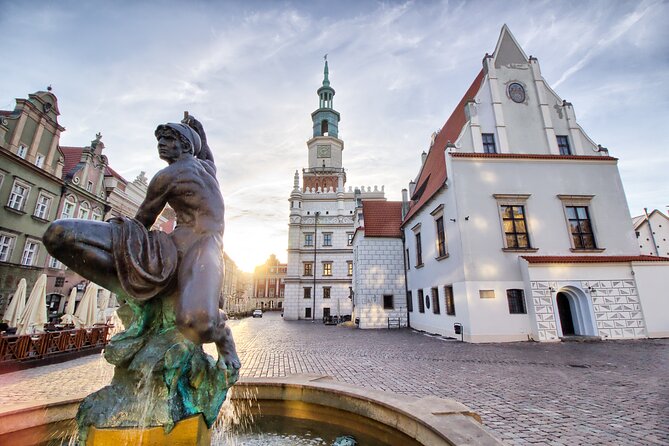
Most stops are free in the sense that you’re not buying tickets just to see the exterior viewpoint. For example, the tour includes free access for places like Liberty Square, Raczyński Library, Bazar Poznański, Kosciol Najświętszego Zbawiciela, the June 1956 Events Monument, Zamek Cultural Center, Old Market Square, and the Parish Church of St. Stanislaus (Fara Church).
A few stops list admission as not included (you generally view the facade and hear the story outside). That includes the National Museum in Poznań, Theatre of Poland, Okrąglak, Collegium Maius, Teatr Wielki im. Stanisława Moniuszki, Collegium Minus, Church of St. Martin, Ratusz Poznański, and the Royal Castle. Practically, that means you shouldn’t budget on the tour to carry you into every interior.
So, is it good value? For a first-timer who wants context fast, yes. The biggest cost is your expectations: treat it as an architectural and historical walk, not a ticketed museum crawl.
Your guide: Viktor’s pacing, humor, and answer-first approach
The standout here is the guide’s style. Viktor (spelled Wiktor in some confirmations) keeps the tour lively without turning it into a comedy act. He’s the kind of host who stays focused on the “what does this mean?” part, and he’s comfortable handling questions along the way.
You’ll feel that pacing in the way each stop gets a clear theme and then moves forward. There are also small engagement moments—quick quizzes and prompts show up occasionally. And if you want extra help after the walking portion, you may leave with practical pointers on places to return to, including food suggestions.
One more detail that matters: the pace tends to be gentle enough for photos. That’s not automatic on tours. Here, the stop lengths are built to give you a real chance to frame shots and ask one more question before you move on.
Stop-by-stop: Liberty Square to the Royal Castle
Here’s what you’ll experience as you move through Poznań. Think of this as a set of anchor points—once you recognize them, the city becomes easier to navigate on your own.
Liberty Square (Plac Wolności)
You’ll start at Fontanna Wolności, then head straight to a 19th-century square built around big civic statements. The guide’s commentary helps you read the architecture instead of just admiring it. It’s a strong opener because you’re given a quick historical map before the rest of the walk starts stacking up.
Raczyński Library
This stop is short, but it’s packed with facts. You’ll see the library and learn why it matters in Poland, including that it’s among the oldest and biggest libraries in the country. It’s one of those places where a brief explanation changes how you look at the facade.
Bazar Poznański
Another exterior stop that earns attention. The guide focuses on the building’s story and why it fits into the city’s changing economy and identity. If you like “this building has a job in history,” this is that moment.
National Museum in Poznań (facade view)
You’ll get the museum’s frontage and a sense of what it represents. Admission is not included, so plan on appreciating the exterior viewpoint and the context the guide gives you, not expecting an indoor visit through the tour ticket.
Theatre of Poland (facade view)
The emphasis is on architecture and the building’s role in public culture. Again, the tour is structured around the exterior, so you’re here for the story, not a guided ticketed entry.
Okrąglak (facade view)
This is a short stop, but it adds variety. The guide ties it into the city’s broader evolution, so you can see how different architectural eras sit in the same walking route.
Church of the Most Holy Savior (Kosciol Najświętszego Zbawiciela)
You’ll see the church and hear its background. Because this one is listed as free, it’s a good place to slow down slightly for photos without worrying about entry rules. Even if you don’t go inside, the facade is worth the stop.
Collegium Maius (facade view)
This is another “read the building” moment. You’ll see the exterior and get the story behind the institution tied to it. It works well as a bridge between the civic spaces and the religious landmarks later.
Teatr Wielki im. Stanisława Moniuszki (facade view)
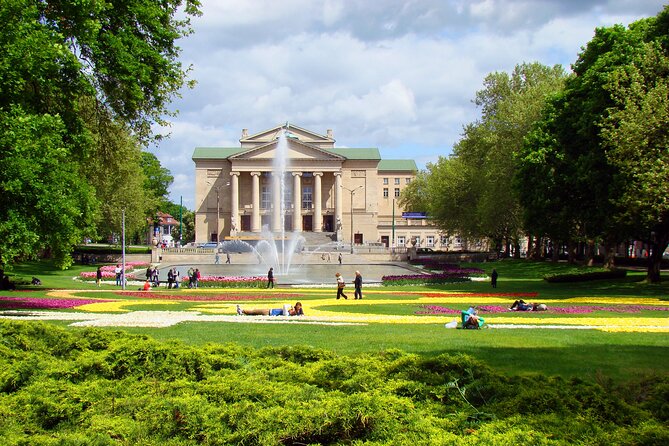
The tour highlights the facade and what makes this theater important. It’s especially useful if you care about how cities express identity through performance spaces.
June 1956 Events Monument
This is one of the most emotionally charged stops. The guide connects the marker to the period’s protest energy, including anti-Communist unrest that shaped how Poznań remembered its place in Poland. Even if you don’t know the dates yet, you’ll leave with a clearer sense of why this monument exists and what it signifies.
Collegium Minus (facade view)
A quick, focused add-on to the university/academic story. The guide gives you the theme and the meaning, and you keep moving.
Zamek Cultural Center (Cultural Center of the Castle area)
You’ll see the castle-related complex and hear why it’s significant today. This stop is free on the tour, and it tends to feel like a natural pivot—moving from older structures into the city’s ongoing cultural life.
Church of St. Martin (facade view)
You’ll view the exterior and get the background story. Even as a short stop, it adds another layer to the religious architecture you’re already seeing.
Parish Church of St. Stanislaus (Fara Church)
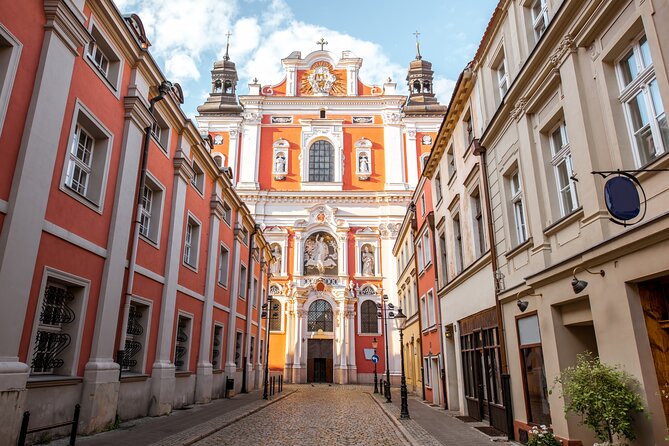
This is a key landmark. The guide talks through the church’s significance and, if possible, you may be able to enter. Since it’s listed as free, it’s one of the easiest places to add a closer look if timing allows.
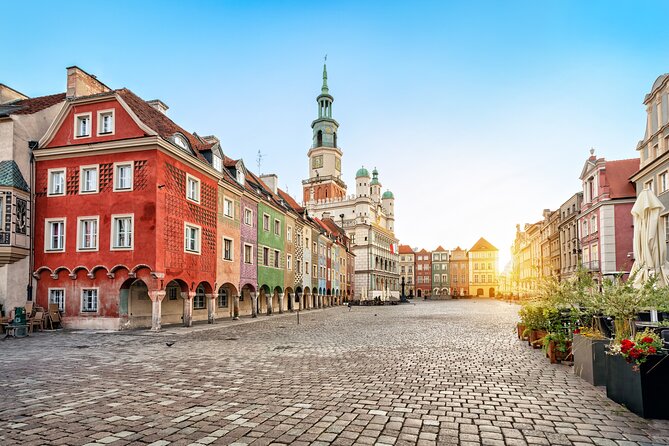
Old Market Square
You’ll spend a longer moment here, which is smart. The Old Market Square is where you can feel the city’s daily life across centuries, and the guide helps you understand the symbolism behind the layout and surrounding buildings.
Ratusz Poznański (city hall, facade view)
You’ll see the facade and learn the story behind it. It’s a useful stop for architecture nerds, but it also helps normal visitors because it gives the civic “why” behind the building.
Royal Castle (facade view)
You end with the castle’s exterior viewpoint and context. If you want to go deeper later, this is a good final stop because it sets up what you’d want to explore on your own afterward.
The big theme: protests, June 1956, and how the city remembers
What makes this tour more than a pretty-building walk is the political thread. You’ll hear about Poznań’s role in major anti-Communist protests, and you’ll get that through real, specific location cues rather than abstract history.
The June 1956 Events Monument is the clearest example. This is where the guide turns memory into something you can stand in front of. It also helps you understand why modern Poznań carries visible reminders in public space, not just in books.
If you’re the kind of person who likes to connect today’s city with what people fought for, you’ll probably appreciate this angle more than you expect.
Architecture and photos: why facades matter here
Yes, you’ll see gorgeous architecture. But the more useful part is how you see it.
The tour repeatedly pairs exterior viewpoints with quick explanations of what you’re looking at—so you know what era, function, or story is being represented. That matters because many visitors take photos that look nice but don’t feel anchored to understanding.
You’ll get multiple chances to photograph:
- civic squares and grand buildings near the start
- churches and institutions in the middle
- the market square and historic civic structures near the end
If weather turns damp, you can still do the walk. Short stops help, and you’re not reliant on long indoor museum visits to make the tour worthwhile.
Practical tips so you don’t waste time
- Wear solid walking shoes. You’re on foot across multiple stops, and the route is long enough that comfort matters.
- Bring your phone. You’ll use a mobile ticket, so it’s best to have it ready before you meet.
- Expect to pause for photos and questions. The tour is designed around short segments that still leave time to ask.
- If you care about interior access, know that some stops list entry tickets as not included. You might still see plenty outside, but don’t assume you’ll walk into every venue.
- Plan around weather. This experience requires good weather, so if conditions are poor, expect rescheduling or a refund option offered by the operator.
Should you book this Poznań walking tour?
Book it if you want:
- a fast, organized introduction to Old Town and the imperial quarter
- a route where architecture and history connect instead of feeling random
- a small-group walk led by Viktor that stays relaxed and question-friendly
- help planning what to do next, including where to eat and what to revisit
Skip it or adjust expectations if:
- you mainly want museum interiors and don’t care about facades or public architecture
- you’re expecting all ticketed sites to be handled for you inside the tour
For most first-time visitors, this feels like a smart buy. You get orientation, context, and enough standout landmarks to make independent wandering later much easier.
FAQ
Where does the tour start?
It starts at Fontanna Wolności, plac Wolności 18, 61-738 Poznań, Poland, and ends back at the meeting point.
How long is the guided walking tour?
The tour runs about 2 hours to 2 hours 30 minutes.
Is the tour offered in English?
Yes, it’s offered in English.
How many people are on the tour?
The tour has a maximum of 15 travelers.
Are admission tickets included for the stops?
Some stops are listed as free, while others are listed as not included. For example, the National Museum, Theatre of Poland, Okrąglak, and several other venues are not included, while places like Liberty Square, Raczynski Library, Bazar Poznanski, and Old Market Square are listed as free.
Is the tour weather dependent?
Yes. The experience requires good weather, and if it’s canceled due to poor weather, you’ll be offered a different date or a full refund.