REVIEW · TORRE ANNUNZIATA
Pompeii: Guided Walking Tour with Entrance Ticket
Book on GetYourGuide →Operated by Project Napoli Service · Bookable on GetYourGuide
Pompeii is loud with history, even in silence. This guided walking tour is interesting because you get into the Pompeii Archaeological area faster, then follow a guide through the city’s key ruins—Forum, thermal baths, and more. You’ll also hear the story clearly thanks to headsets and a live multi-language guide, with languages like English, French, Spanish, and Italian.
I like two things a lot. First, the tour is built to save time: the entrance ticket is included and you’re set up for skip-the-ticket-line entry. Second, the guide experience can be a real highlight, with past groups led by people like Elisa and Salvatore who bring daily life in Pompeii into focus with humor and strong explanations.
One possible drawback: the start can feel a bit stressful if you show up right at the edge of time. The meeting spot is very specific (and signage can be easy to miss), and a late start reduces your already-tight 2-hour window.
In This Review
- Key things to know before you go
- Skip-the-Line Entry: the biggest practical win
- A realistic 2-hour plan (not the whole city)
- Entering Pompeii from the guide’s perspective
- The Forum: politics, religion, and street-level power
- Thermal Baths: what Romans did after work
- Lupanare: a harder topic, handled by context
- Streets with shops: signs of everyday life
- Guides and headsets: hearing the story without fighting crowds
- Heat, footwear, and weather: dress for the ground truth
- Meeting point and start time: the one logistical piece to nail
- Price and value: is $50 reasonable?
- Who this Pompeii tour fits best (and who should reconsider)
- Should you book this Pompeii guided walking tour?
- FAQ
- What time does the tour meet in Pompeii?
- Where is the meeting point?
- How long is the guided tour?
- Is the Pompeii entrance ticket included?
- Are headsets provided to hear the guide?
- What languages are available for the live guide?
- Is this tour suitable for wheelchair users or people with mobility impairments?
- What ID do I need for a child booking?
- What should I bring?
- FAQ
- Does the tour operate in all weather?
- What if the tour cannot operate due to low participation?
- Can I get a refund if I cancel?
- How does the tour handle language if only one participant speaks a certain language?
Key things to know before you go
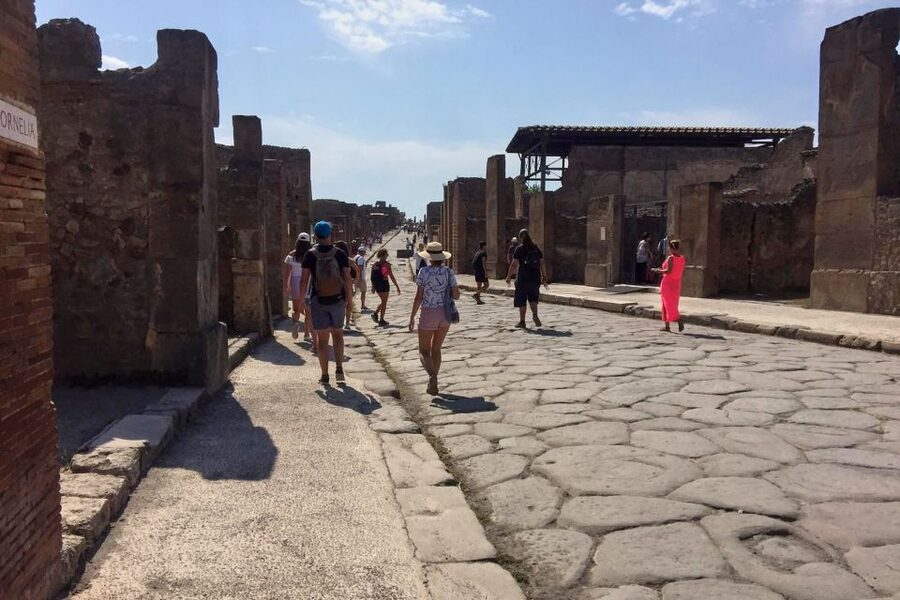
- Skip-the-line entry saves real time at a crowded gate
- Forum, baths, and the Lupanare loop gives you a smart sampler of Pompeii
- Entrance ticket included (€20 value) means less hassle at the site
- Headsets help you hear the guide clearly on the move
- All-weather operation means you should dress for sun or rain
Skip-the-Line Entry: the biggest practical win
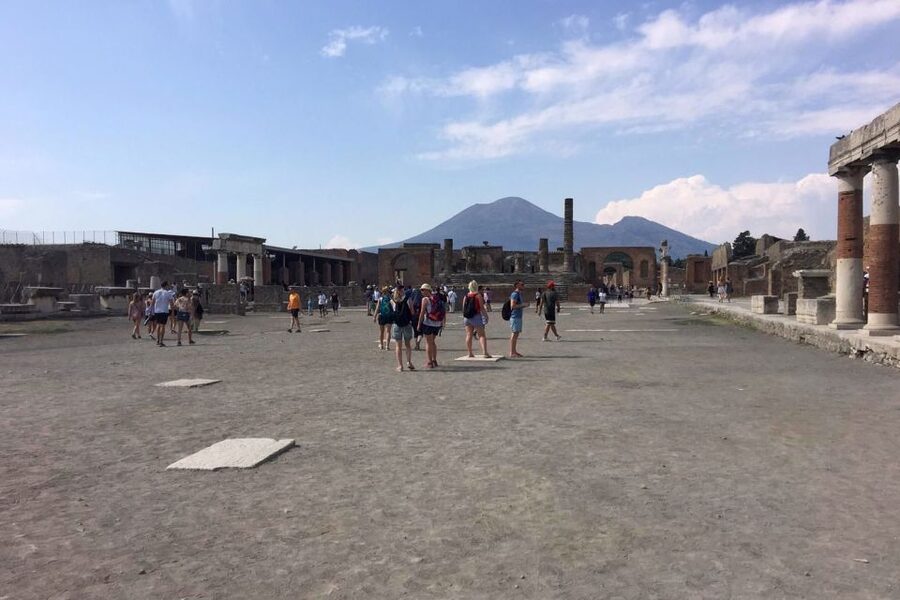
Pompeii is famous, which also means it’s popular with large crowds. The simple value here is time. If you’re paying for a guided tour, you want the plan to start moving quickly, not waiting in queue lines that eat your visit.
This tour includes your entrance ticket to the Pompeii Archaeological Site (listed value: €20) and is designed for guaranteed skip-the-ticket-line entry. In practice, that matters because Pompeii is huge, and a 2-hour tour doesn’t try to cover everything. You want that time spent walking through ruins you can actually make sense of.
A realistic 2-hour plan (not the whole city)
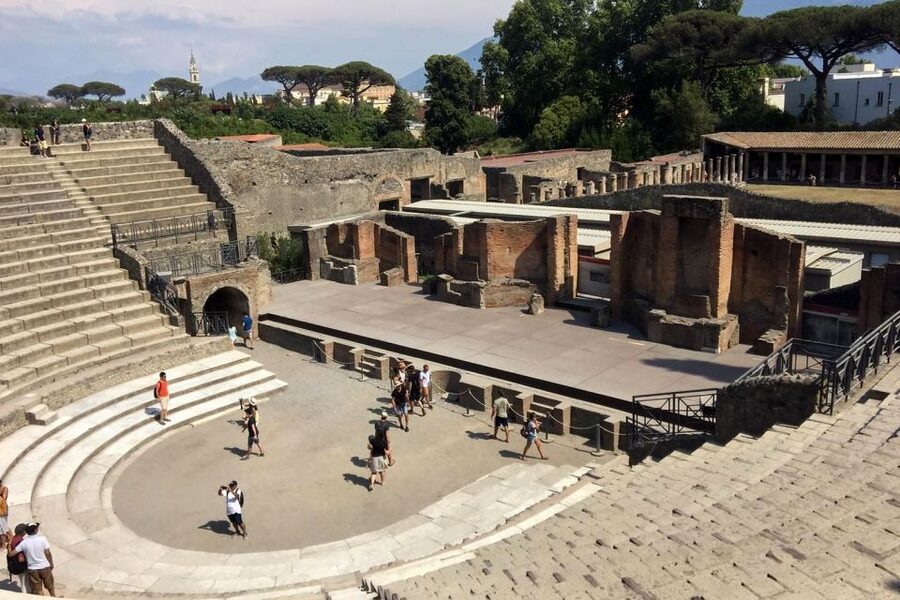
I love that this tour doesn’t pretend you’ll see Pompeii end to end. Instead, you get a tight loop of high-impact areas—enough to understand how Pompeii worked day to day and enough to appreciate what’s still preserved.
Over the roughly two hours, you’ll move through major sites including the Forum and the Thermal Baths, plus other standouts like the Lupanare. You’ll also pass streets that show how businesses presented food and products, including signs connected to produce and wine.
Keep your expectations simple: you’re touring a concentrated section. If you later want more, you’ll have a much better sense of where to go next because you already learned the city’s layout and priorities.
Entering Pompeii from the guide’s perspective
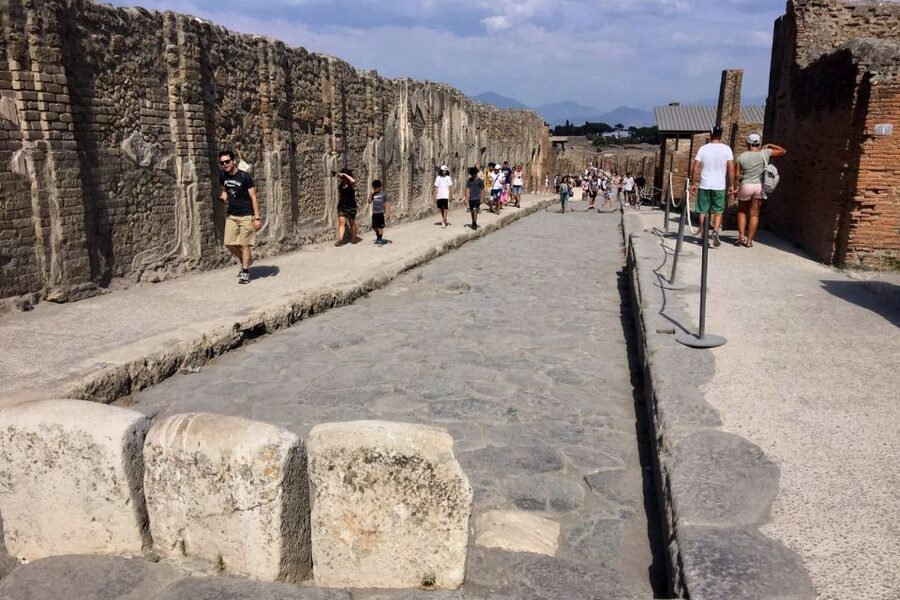
This tour runs with a live guide and headsets (so you’re not stuck guessing what you missed while you’re walking). You’ll hear the story in English, French, Spanish, or Italian, depending on the group.
A key benefit: the guide’s job is to connect what you see to what it meant. Pompeii isn’t just walls and columns. When someone explains how spaces were used—public life in one area, daily routine in another—you start recognizing patterns instead of just collecting photos.
And yes, timing matters. Some groups reported that getting held up at the very start can shrink the experience. So aim to arrive early and be ready to spot the guide right away.
The Forum: politics, religion, and street-level power
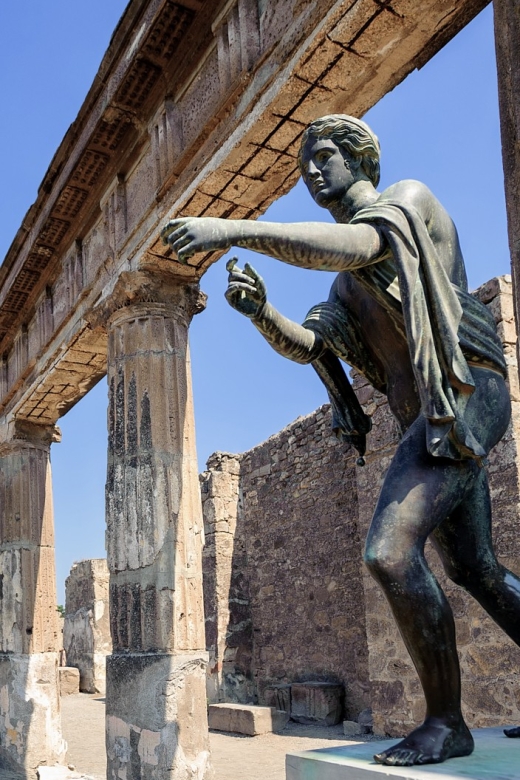
The Forum is one of the first places in Pompeii that makes you feel the city as a living system. It’s where public life concentrated—civic space, commerce-adjacent activity, and the kind of daily visibility that made a town feel like it had a center.
In a guided walking format, the Forum becomes more than an open area. You learn what people likely did there, why this kind of space mattered socially, and how Roman urban life organized authority and routine in one place.
Practical tip: the Forum area can involve moving through busy paths and viewpoints. When the guide stops, take the pause. That’s where explanations land and where your eyes learn what to look for next.
Thermal Baths: what Romans did after work
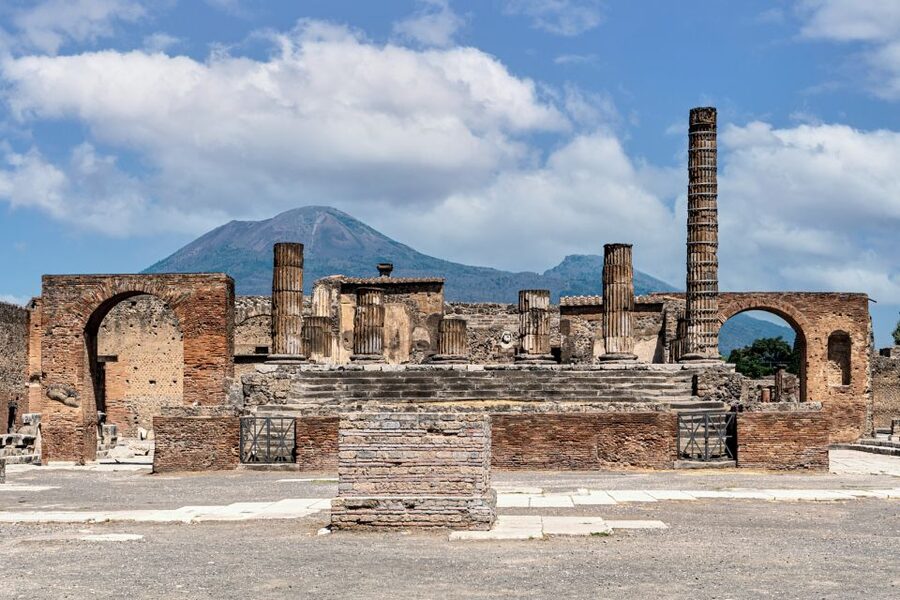
The Thermal Baths are a highlight for a reason. These were not just places to wash. They were built for routine, social time, and a kind of city leisure that feels surprisingly familiar.
On this tour, the baths area helps you understand daily rhythm. You’ll connect architecture with behavior: where people would gather, how movement through the space likely worked, and why a bathing complex was a central feature of Roman life.
You’ll also start noticing details that are easy to miss when you wander alone. A guide helps you interpret layout and function so the ruins stop feeling random and start feeling intentional.
Lupanare: a harder topic, handled by context
The Lupanare (often discussed in Pompeii tours) isn’t just a shock stop. With a good guide, it becomes a window into how private transactions and everyday economies operated in the city.
In the context of a walking tour like this, the Lupanare helps you broaden the story beyond official public buildings. You see that Pompeii’s life included business, leisure, and adult spaces that existed alongside temples, baths, and markets.
A note for your comfort: if you’d rather keep your Pompeii focus strictly on civic and religious ruins, consider whether the Lupanare fits your interests. The tour does list it as a core highlight, so it’s part of the standard loop.
Streets with shops: signs of everyday life
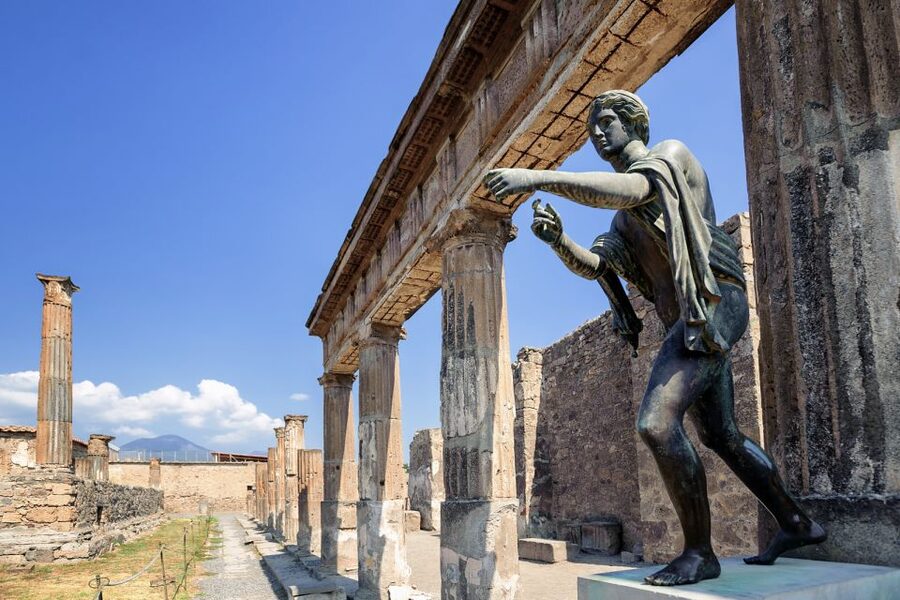
One of the most memorable parts of Pompeii is how “normal” parts of the city can feel when you’re looking at buildings and shop fronts. This tour includes viewing streets where storefront signs were used to market products, including items like produce and wine.
That’s powerful because it changes how you think about the eruption. You’re not only looking at monuments. You’re seeing ordinary places where people bought, sold, ate, and lived—spaces that were preserved long enough for you to recognize patterns of daily life.
Try to slow down for these stretches. In two hours, you’ll move fast enough to cover highlights, but these street moments are where Pompeii starts feeling like a real town rather than an open-air museum.
Guides and headsets: hearing the story without fighting crowds

Most groups appreciate the structure of having headsets to hear the guide clearly while walking. That’s a big deal at Pompeii, where you can’t always hear well in outdoor areas with lots of foot traffic.
The languages offered are a strong selling point: English, French, Spanish, and Italian. If you’re traveling with mixed language needs, you’ll likely be grouped accordingly.
One thing I’d keep in mind: the tour can vary a bit depending on who’s leading and how the group forms. Some people found the audio gear less comfortable, while others loved the clarity. If comfort matters to you, be ready for long earphone time in warm weather.
Heat, footwear, and weather: dress for the ground truth
Pompeii is outdoors and made of uneven, ancient surfaces. The tour asks for comfortable shoes, and I agree—no fancy sandals if you want to keep your pace.
The tour operates in all weather conditions. That means you should expect rain plans or sun exposure. If it’s hot, the walking portions inside the site can feel longer than they look on a map. Plan water and shade breaks with your guide’s stops in mind.
If you’re prone to getting overheated, this is exactly the kind of tour where you’ll want smart pacing. The guide usually sets a steady rhythm, but your body still sets the limits.
Meeting point and start time: the one logistical piece to nail
The meeting point is in Pompeii at 10:50am, in the garden of Hotel Vittoria, right outside the coral shop called CELLINI on Via Mare, 80045 Pompei. The guide will be there holding a sign with customers’ names.
This is the detail that can make or break your morning. If you’re late or unsure where you are, don’t wait inside your head. Ask someone nearby where the hotel garden area is, then check for the name sign.
Also, bring basic ID for kids. The tour notes that those booking child fare must show valid ID or passport at the Ticket Office, or they may be asked to pay full adult fare.
Price and value: is $50 reasonable?
At $50 per person, you’re not just paying for a walk—you’re paying for (1) a professional guide, (2) headsets, and (3) an included entrance ticket valued at €20. That ticket inclusion alone shifts the value math toward the tour versus buying everything separately.
You also pay for the time-saver. Skip-the-ticket-line entry is one of those things you don’t fully appreciate until you’ve watched other people stuck waiting while your group is already moving.
Where the value gets a little less tidy is if you lose time at the start. If the meeting point is confusing and your start slips, you lose the most valuable thing you have: walking minutes inside the ruins. If you show up early and stay flexible, the price feels fair for what you get.
Who this Pompeii tour fits best (and who should reconsider)
This tour is ideal if you want a guided highlight run without building a whole day around logistics. It’s also a good fit for first-timers who want to understand Pompeii’s layout fast—Forum to baths to everyday streets—so you can explore independently later.
It’s not suitable for wheelchair users or people with mobility impairments, since the site involves walking on uneven ground. If you fall into that category, you’ll want a different format.
If you love quiet archaeological wandering, this might feel a bit structured. But if you like explanations, clear stops, and a focused route in a short window, you’ll likely appreciate the format.
Should you book this Pompeii guided walking tour?
Yes, I’d book it if your goal is to get meaning fast. The included entrance ticket, skip-the-line setup, and the headsets make it a practical choice when you’re working with a limited time window.
I’d be cautious if you tend to hate tight schedules or if you’re worried about finding the exact meeting spot. Arrive early, confirm the name sign, and you’ll protect your two hours for the ruins—where the whole point actually is.
If you’re ready to learn how Pompeii functioned as a town, this tour gives you a strong, efficient start.
FAQ
What time does the tour meet in Pompeii?
The meeting time is 10:50am.
Where is the meeting point?
Meet in the garden of Hotel Vittoria, right outside the coral shop called CELLINI on Via Mare, 80045 Pompei. The guide will have a sign with customers’ names.
How long is the guided tour?
The tour duration is 2 hours.
Is the Pompeii entrance ticket included?
Yes. The entrance ticket to the Pompeii Archaeological Site is included (listed value: €20).
Are headsets provided to hear the guide?
Headsets are included so you can hear the guide clearly.
What languages are available for the live guide?
The tour offers live guides in English, French, Spanish, and Italian.
Is this tour suitable for wheelchair users or people with mobility impairments?
No. It is not suitable for people with mobility impairments or wheelchair users.
What ID do I need for a child booking?
All those booking the child fare must show a valid ID or passport at the Ticket Office.
What should I bring?
Wear comfortable shoes and dress for the weather. The tour also notes bringing an ID for children.
FAQ
Does the tour operate in all weather?
The tour operates in all weather conditions, and you should dress appropriately.
What if the tour cannot operate due to low participation?
The tour requires a minimum of 2 participants every day to operate. There is a possibility of cancellation after confirmation if that minimum is not met.
Can I get a refund if I cancel?
Free cancellation is available up to 24 hours in advance for a full refund.
How does the tour handle language if only one participant speaks a certain language?
The language required is not guaranteed if there is only one participant speaking that language. You’ll be offered an alternative or a full refund.