REVIEW · NAMBA
Osaka 6hr Private Walking Tour with Government Licensed Guide
Book on Viator →Operated by Japan Guide Agency · Bookable on Viator
Neon streets meet ancient shrines in six hours. This private, licensed English-guided day turns Osaka into a story you can follow, with guides like Yama using clear explanations and even humor while keeping things respectful at places like Sumiyoshi Taisha. My other real-world takeaway is that the day can feel fast-paced, so comfortable shoes matter and you may need to budget for extra tickets at paid stops.
What I like most is the way your guide builds a custom itinerary from the Osaka highlights, usually picking 3–4 sites so you’re not sprinting between everything on the map. If you’re picky about seafood, though, note that Kuromon Market is a star stop and it can be hard to tailor if you want to skip most fish.
In This Review
- Key Highlights That Make This Tour Worth Your Time
- The Osaka Pattern: Food Streets, Sacred Places, and City Views
- Private Means You Control the Stops (Not the Crowd)
- How the Meeting and Moving Around Works
- Stop 1: Dotonbori District for Takoyaki and Osaka Theater
- Stop 2 and Stop 3: Doguyasuji and Shinsaibashi-Suji Shopping Streets
- Stop 4: Kuromon Market for Seafood Culture (and Fugu Season Logic)
- Stop 5: Sumiyoshi Taisha Shrine for Old Shinto Roots
- Stop 6: Shitennoji Temple for Early Buddhism History
- Stop 7: Umeda Sky Building for Osaka From Above
- Stop 8: Osaka Castle for the Big Landmark Moment
- Stop 9: National Museum of Art, Osaka for a Calm Break
- Stop 10: Shinsekai for Tsutenkaku, Kushikatsu, and Billiken
- Stop 11: Keitakuen Garden for a Quick Reset in Tennoji Park
- Price and Value: What $155.26 Really Buys You
- Who This Tour Suits Best (and Who Should Think Twice)
- My Booking Advice: Should You Book This Osaka Private Walking Tour?
- FAQ
- How long is the Osaka private walking tour?
- Is this tour private?
- Does the tour include hotel pickup?
- Are entrance fees included?
- What sites can we choose from?
- Do we walk the whole time?
- What do we need to pay for ourselves?
- Can I get a refund if I cancel?
Key Highlights That Make This Tour Worth Your Time
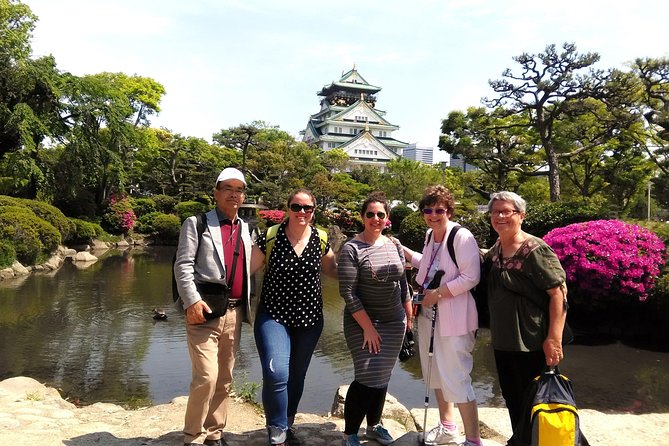
- Government-licensed style local guide with strong English and history context at each stop
- Customize 3–4 stops from a menu that mixes food streets, markets, shrines, temples, and big viewpoints
- Hotel-area meet-up on foot, plus easy use of nearby public transit when needed
- Dotonbori to Kuromon gives you Osaka food culture fast, including takoyaki, okonomiyaki, and common seafood specialties
- Sumiyoshi Taisha + Shitennoji adds depth with old Shinto and early Buddhist history
- Option to include Osaka Castle and Umeda Sky Building for a clear “old + modern” Osaka mix
The Osaka Pattern: Food Streets, Sacred Places, and City Views
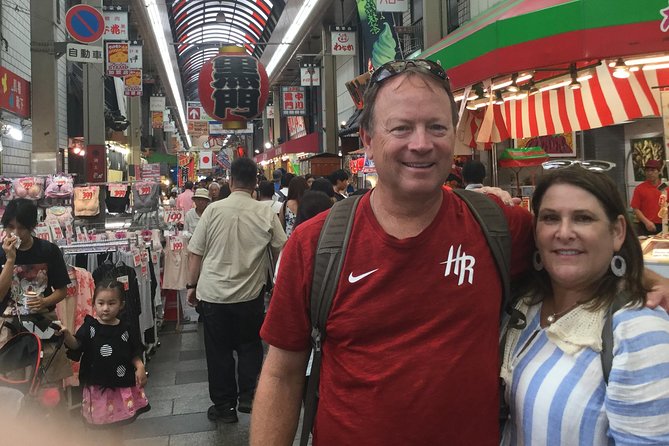
Osaka is famous for two things that don’t normally share the same itinerary: intense street food energy and old religious sites that still shape daily life. This tour threads both together, so you go from neon signs and grill smoke to shrine rituals and temple history without it feeling like two different cities.
Your guide’s job is to connect the dots. They’ll point out what you’re seeing, why it matters, and what to watch for—like how the Sumiyoshi Taisha ceremony details are worth observing from the right distance, not just snapping photos.
You can also read our reviews of more walking tours in Namba
Private Means You Control the Stops (Not the Crowd)
This is a private walking tour, so it’s built for your group only. That matters because Osaka has a lot of foot traffic, and a one-size-fits-all tour can push you into the same crowd funnels. With a private guide, you can nudge the day toward your interests—food, shopping, temples, or viewpoints.
You’ll typically choose 3–4 sites from the options, which keeps the day doable. Reviews often highlight how guides adjusted when kids got tired, or when a family wanted to avoid the most worn paths and still hit the “must-know” context.
How the Meeting and Moving Around Works
Even though it’s a walking tour, you’re not locked into only walking every single step. The format is designed around meeting within a designated Osaka area, with pickup described as on foot, and then moving between neighborhoods in a practical way. Some guides also used short train or subway segments to connect areas efficiently.
Important practical point: transportation fees aren’t included, so if the route uses public trains or buses, you’ll pay those yourself. That said, having a guide help you decode stations and transfers can save real time—especially if you’re visiting for the first time.
Pace is the one variable you should plan for. Most guides manage it well, but at least one experience flagged that a guide walked very quickly and waited in a way that didn’t work for every group. If your legs are fragile, tell your guide early and be direct about your walking speed.
Stop 1: Dotonbori District for Takoyaki and Osaka Theater
Dotonbori is the kind of place you feel before you fully understand it—lights, billboards, crowds, and the constant pull of food stalls. In this stop, the tour focuses on the walking experience along Dotonbori street: where the big signs are, where people line up, and what the city’s food culture looks like up close.
If you want a quick Osaka food hit, this is the right entry point. You’ll see why takoyaki and okonomiyaki are more than snacks here—they’re part of the neighborhood rhythm.
What to watch for: it’s easy to overeat early. If you want to enjoy Kuromon later without feeling stuffed, pace your first food tasting and keep water handy.
Stop 2 and Stop 3: Doguyasuji and Shinsaibashi-Suji Shopping Streets
Osaka shopping isn’t just about big department stores. It’s also about long arcades and specialist streets where the shop mix tells you what the city does well.
Sennichimae Doguyasuji is a short but focused shopping street lined with cooking utensil and kitchen-item stores. You get a feel for the Osaka home-cook mindset: appliances, tableware, and kitchen accessories. Even if you’re not buying, it’s fun to browse because the variety is the whole point.
Then Shinsaibashi-suji stretches out as a major shopping arcade with cosmetics, apparel, and restaurants. Together, these two stops give you a “what daily life likes” Osaka view: cooking tools on one side, mainstream shopping and people-watching on the other.
Time reality check: these are usually quick stops (around 30 minutes each). If you want longer browsing time, tell your guide so they can shift the day.
Stop 4: Kuromon Market for Seafood Culture (and Fugu Season Logic)
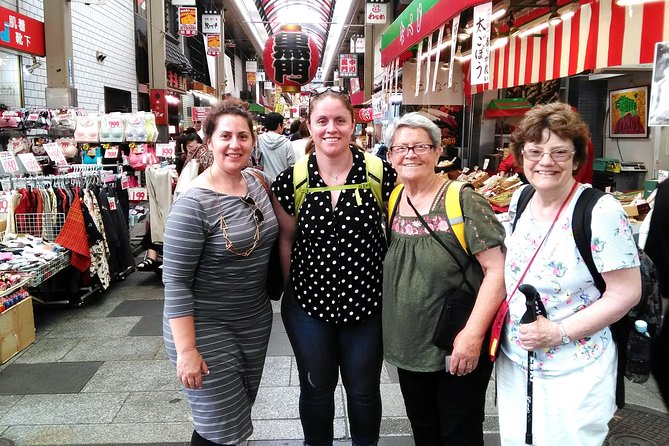
Kuromon Market is one of Osaka’s best-known food markets, and the tour makes it a highlight for a reason. You’ll see the style of seafood shopping—high energy, lots of stalls under a roof, and plenty of choices in a tight area.
The market is especially known for seafood specialties that change with the seasons. The tour information points out conger pike in summer and fugu in winter, and it notes that many stalls specialize in fugu and hamo. That season logic helps you understand why the market feels different at different times of year.
A practical drawback: if seafood doesn’t fit your diet, Kuromon can be tough to enjoy. One family wasn’t interested in the fish market and felt the day would have been better elsewhere. If you’re vegetarian, gluten-sensitive, or trying to avoid seafood-heavy experiences, plan your alternatives with the guide early.
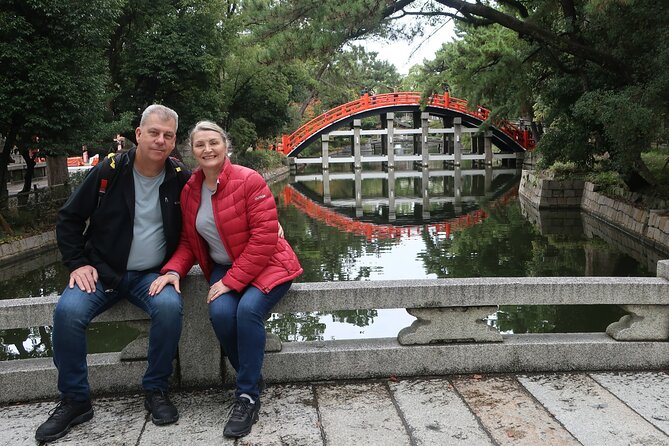
Stop 5: Sumiyoshi Taisha Shrine for Old Shinto Roots
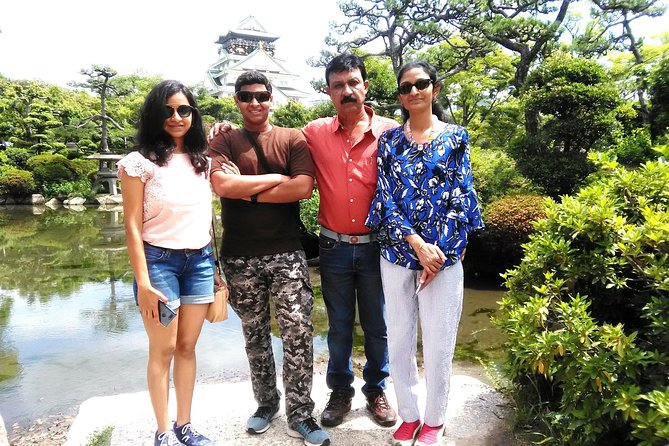
Sumiyoshi Taisha is one of Osaka’s oldest shrines, and the tour treats it with the right kind of attention. You’re in a place founded centuries before Buddhism reached Japan, so it gives you a clear sense of Shinto’s older continuity.
What makes this stop work on a guided private tour is respectful context. Guides often explain what you’re seeing and what the rituals mean, including practical advice on how to observe without disrupting. It’s also the kind of place where a guide can spot details you might otherwise miss.
There’s another bonus: this shrine stop sometimes lines up with people in traditional dress taking photos. It’s not guaranteed, but it can create a memorable moment that feels unmistakably Japanese.
Stop 6: Shitennoji Temple for Early Buddhism History
Shitennoji is among Japan’s oldest temples, and it’s described here as the first state-built temple. Founded in 593 by Prince Shotoku, it’s the kind of historic anchor that helps you make sense of how Buddhism took hold in Japan.
Because this is a paid entry stop on this itinerary, you’ll want to plan for ticket time and cost. Still, if you care about early Japanese history, this is the best “why this place matters” stop on the route.
Stop 7: Umeda Sky Building for Osaka From Above
If you want modern Osaka in your photo set, Umeda Sky Building fits the role. It’s a 173-meter tall building in the Kita district, and it’s also known as the New Umeda City.
This stop is shorter (about 30 minutes), so it works best as a quick viewpoint reset. You’re not trying to spend all day here—you’re adding height and orientation to the rest of the walk.
Practical note: the tour lists admission as not included here, so budget for the ticket if you choose this option.
Stop 8: Osaka Castle for the Big Landmark Moment
Osaka Castle is the obvious headline stop for many first-timers, and the itinerary gives it a full hour. It’s a five-story castle with history stretching back nearly 450 years.
Here’s what helps: you don’t just look at the structure. A good guide makes the castle’s survival and story feel real. One guide response highlighted how the main tower remained standing through World War II, and that kind of detail turns a photo stop into history you can actually remember.
Potential drawback: the castle can be a lot of walking even after you arrive. If your group has mobility limitations, choose this stop only if you’re comfortable with museum-like areas and castle grounds.
Stop 9: National Museum of Art, Osaka for a Calm Break
Not every Osaka day needs more crowds. The National Museum of Art, Osaka (NMAO) is an underground museum on Nakanoshima island, and it offers a major art collection in a different kind of space.
This stop is about 30 minutes and can work like a breather between louder neighborhoods and busier food streets. If your group includes art lovers, it’s a smart swap-in.
Admission isn’t included, so again, plan for tickets if you choose it.
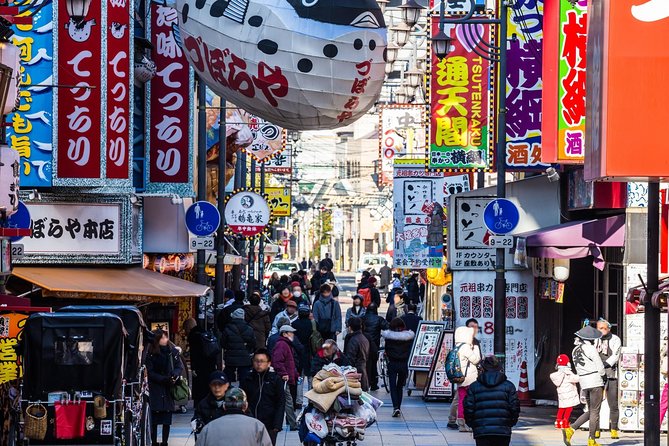
Stop 10: Shinsekai for Tsutenkaku, Kushikatsu, and Billiken
Shinsekai is Osaka’s New World, and the itinerary spotlights Tsutenkaku (often called the Osaka Eiffel tower), plus Kushikatsu and Billiken, the god of wealth and money.
This is where the tour shifts tone from historic to playful. You’ll see the character of Shinsekai—old-school signs, street-food culture, and that fun Osaka “let’s go out tonight” feel.
If you’re hungry, this is also one of the best places to ask your guide for what to try. One of the experiences praised how a guide pointed out authentic takoyaki stands and helped decode food choices, which is the right kind of help in areas like this.
Stop 11: Keitakuen Garden for a Quick Reset in Tennoji Park
If you want one calmer stop to balance the day, Keitakuen Garden is designed for that. It’s a traditional garden located within Tennoji Park, with a central pond and carefully arranged rocks, designed in the early 20th century.
This one is short (around five minutes on the itinerary), so it’s not meant to replace a full garden visit. Think of it as a small pause where your brain can slow down.
Not included admission here, so check ticket expectations if you choose it.
Price and Value: What $155.26 Really Buys You
At about $155.26 per person for a roughly six-hour private tour, the value comes from three things:
1) One guide for your group
You’re paying for attention and routing, not just a checklist of stops.
2) Licensed local English guidance
The difference shows up when you want context—like how a guide explains shrine processes carefully, or when they help you understand public transport logic.
3) Customization with only 3–4 stops
This avoids the most common “half-time tour” problem where you’re just getting moved along. Short stops are still informative when a guide sets you up to notice the right details.
The costs to watch: entrance fees for paid stops (like Osaka Castle, Shitennoji, Umeda Sky Building, and the museum options) and transportation fees if you use trains or buses. Lunch is also not included.
If you want a no-surprises budget, treat it like: paid sights + subway rides + whatever food tastings you choose.
Who This Tour Suits Best (and Who Should Think Twice)
This tour fits you best if you want a first-timer Osaka day that covers both sides of the city: food districts and historic sites. It also works well for families with teenagers when the guide can adjust pacing, and for visitors who prefer a clear plan instead of wandering without direction.
It might be less ideal if your group mainly wants one theme, like all shopping or all art, or if your diet excludes fish-heavy market areas. The Kuromon stop is part of the Osaka core here, so if that’s not your thing, you’ll want to steer your stop selection carefully.
My Booking Advice: Should You Book This Osaka Private Walking Tour?
Book it if:
- you want a private guide who can explain what you’re seeing, not just escort you
- you like mixing street food culture (Dotonbori, Kuromon, Shinsekai) with shrines and temples
- you’re willing to pay separate entry tickets for the paid stops you choose
Skip or adjust it if:
- your group can’t handle faster walking days
- your food preferences make seafood markets a no-go
- you’d rather spend more time in only one neighborhood instead of combining several
If you do book, send your guide a clear wish list before you go. The best outcomes come from guides preparing an itinerary that matches your group’s pace and interests—something many guides proved they can do with real flexibility.
FAQ
How long is the Osaka private walking tour?
The tour runs for about 6 hours.
Is this tour private?
Yes. It’s a private experience, and only your group will participate.
Does the tour include hotel pickup?
Pickup is listed as offered in the Osaka area, and the tour is described as a walking tour with pickup on foot. You’ll meet your guide within a designated Osaka area.
Are entrance fees included?
No. Entrance fees are not included. Some stops are marked as free, while others (like Osaka Castle and Shitennoji) are not.
What sites can we choose from?
You can customize the day using stops such as Dotonbori, Doguyasuji shopping street, Shinsaibashi-suji, Kuromon Market, Sumiyoshi Taisha Shrine, Shitennoji, Umeda Sky Building, Osaka Castle, the National Museum of Art Osaka, Shinsekai, and Keitakuen Garden.
Do we walk the whole time?
It’s a walking tour. You’ll also be near public transportation, and your guide can help you move around efficiently, but transportation fees are not included.
What do we need to pay for ourselves?
Transportation fees, entrance fees, lunch, and other personal expenses are not included.
Can I get a refund if I cancel?
Yes. Free cancellation is available up to 24 hours in advance for a full refund.