REVIEW · KOTOR
Kotor Old Town Walking Tour
Book on Viator →Operated by Montenegro Adventures DMC · Bookable on Viator
Kotor’s Old Town walls can feel like a maze.
This 1-hour walking tour is a tidy way to get your bearings fast, moving from the Sea Gate through the key squares, palaces, and churches that explain why Kotor mattered for centuries.
I especially love the way the guide turns buildings into stories. You’ll get a guided path through the Square of Arms and the Clock Tower area, plus context on events and rulers who traded power here. I also like the pacing: it’s short enough that you still have time for your own wander afterward, instead of getting trapped in a half-day tour.
One consideration: you’re on cobblestones. It’s an easy walking tour, but if your feet are picky, plan for uneven stone and take it slow on corners and steps.
In This Review
- Key highlights worth centering your visit on
- Starting at the Sea Gate: the quickest route to making sense of Kotor
- Square of Arms, Clock Tower, and the Pillar of Shame: the story beats that stick
- Beskuca Palace and Pima Palace: learning how old households worked
- St. Tryphon Cathedral: what you gain from a short guided visit
- Maritime Bay Square to Karampana Well: everyday life, not just monuments
- St. Luke, St. Nikola, Blazena Ozana, and the Northern Gate: a tight church-and-city ending
- Price and what it really buys you: $30.25 for a focused hour
- Timing tips: book the hour that matches your day
- Footwear, weather, and the basics that keep it pleasant
- How the guide can change the whole experience
- Should you book the Kotor Old Town Walking Tour?
- FAQ
- What does the Kotor Old Town Walking Tour cost and how long is it?
- Where do you meet, and where does the tour end?
- Is the tour in English?
- What’s included in the price?
- Are cathedral or museum entrance fees included?
- Is the walking part difficult?
- How big are the groups, and does it run in bad weather?
Key highlights worth centering your visit on
- Sea Gate orientation so you understand where you are the moment you start
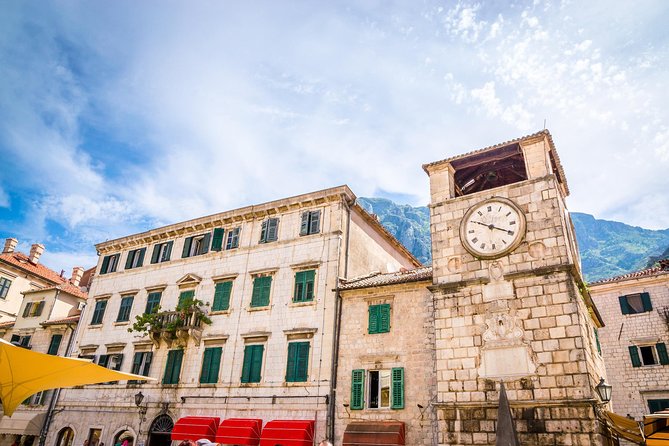
- Square of Arms + Clock Tower stories with quick, memorable local details
- Beskuca and Pima Palaces to see power, wealth, and daily life in old Kotor
- St. Tryphon Cathedral guided stop (entrance not included, but you get the context)
- Karampana Well and church cluster tying together everyday life and symbolism
- A small, well-paced hour that works great when cruise crowds or heat hit
Starting at the Sea Gate: the quickest route to making sense of Kotor

Kotor’s Old Town sits in a dramatic pocket of the Bay of Kotor. From the outside, it can look like a postcard. Inside the walls, it can feel like you’re moving through different centuries at once—some streets are narrow, some open up suddenly, and the stonework keeps pulling your eyes upward.
That’s why this tour’s start matters. You meet at the main tourism info point near Trg od Oružja and then you head to the Old Town’s main entrance, the Sea Gate (Morska vrata). It’s not just a dramatic doorway. It’s the right place to begin, because it gives you an anchor point for everything that follows.
You’ll walk with a guide who connects Kotor to bigger regional events—Illyrian roots, medieval commerce and the arts, and the long list of powers that fought over the city. The guide doesn’t leave you with dates floating in midair. Instead, you get a sense of how control shifted over time and why the city’s walls and institutions mattered.
If you’ve never been in Kotor before, you’ll love how quickly the tour helps you read the town. You’ll know what’s important and why, so your later self-guided strolls feel less like aimless wandering and more like discovery.
Square of Arms, Clock Tower, and the Pillar of Shame: the story beats that stick
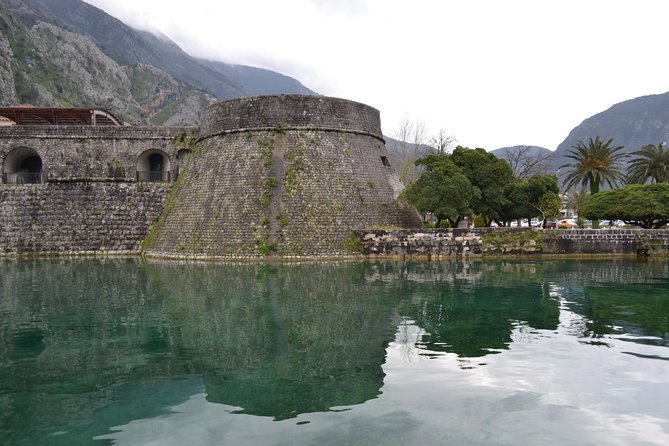
Right after the Sea Gate, you reach the Square of Arms. This is where the tour turns from general orientation into a set of real highlights you can remember later.
You’ll spend a short stretch here and hear the story behind the Clock Tower, along with the legend of the Pillar of Shame. Even if you don’t love history lectures, this part works because it’s place-based. You’re standing in the exact spot where people would have known announcements, routines, and social rules. The guide’s job is to make that feel human rather than dusty.
This is also the best moment to slow down and look around. Notice the scale of the square compared with the tight streets nearby. It helps you understand how Kotor’s design supported community life—meeting, news, ceremony, and governance in a space that could hold people.
One practical plus: this stop is short. You get the key context without losing your whole morning or afternoon. For me, that’s a big part of why an hour like this works so well.
Beskuca Palace and Pima Palace: learning how old households worked
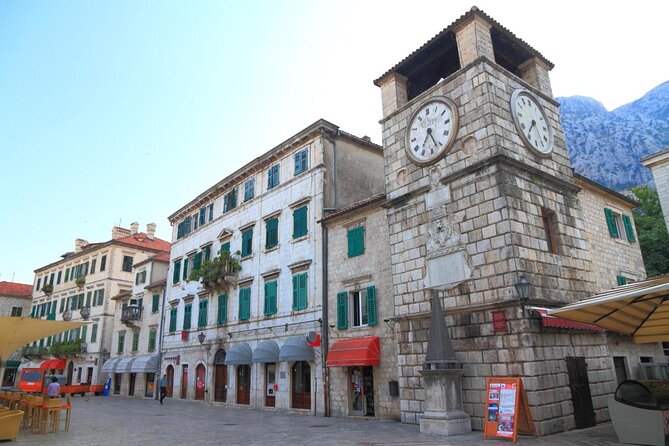
After the Square of Arms, the tour moves through the lanes to two palace stops: Beskuca’s Palace and Pima Palace.
What I like about these stops is that they’re not only about dramatic architecture. They help you picture the inside of life in the old town—who lived where, how households functioned, and what kind of comfort or status came with different buildings. You’ll hear about the life in households of Kotor centuries ago, which turns the exterior walls into something more meaningful.
And you don’t just hear vague descriptions. The guide ties details to what you can actually see around you: the layout of streets, the way buildings face the public spaces, and how the walled city’s layout shaped daily routines.
If you enjoy walking tours where you can leave with a mental map, this section delivers. You’ll start noticing patterns: what tends to sit near prominent squares versus what belongs to tighter lanes.
St. Tryphon Cathedral: what you gain from a short guided visit
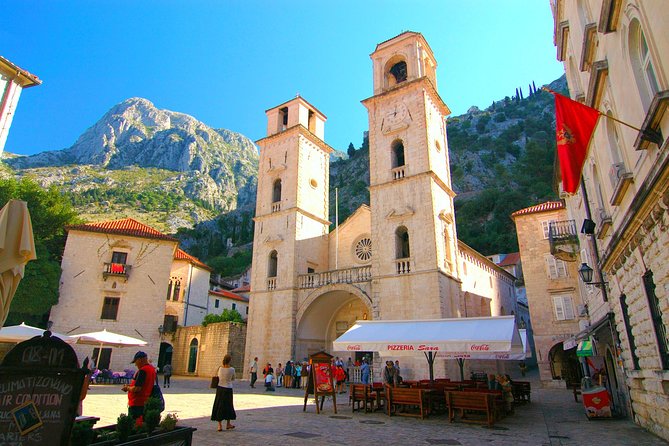
Then comes one of Kotor’s iconic sights: St. Tryphon Cathedral.
You’ll get a short guided tour of the cathedral, but keep in mind the entrance fee for the cathedral is not included. That means you should be ready to pay at the site if you want to go inside. The good news is that you’re not walking in blind. The guide’s explanation gives you context before you see the building up close.
Cathedrals like this can be either overwhelming or flat—depending on whether you understand what you’re looking at. With a guided introduction, you’ll likely appreciate the cathedral more, because you’ll connect the building to the religious and cultural role it played in a city where different powers and traditions overlapped.
Even if you decide not to pay and enter, you’ll still walk away with better clarity about the area around it. But if you’re choosing between skipping and seeing, I’d lean toward going in. A short guided stop plus the real space usually equals better recall later.
Maritime Bay Square to Karampana Well: everyday life, not just monuments
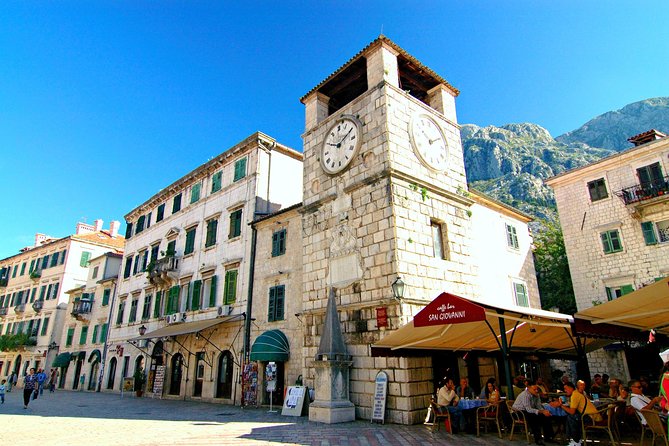
From the cathedral area, the tour leads toward the Bokelian Navy Square with Karampana well.
This part is useful because it broadens the story beyond religion and government. You’ll learn about Kotor’s connection to maritime life, and you’ll also see the Karampana Well, which connects the town to practical survival needs: water in a walled city.
The tour doesn’t treat these stops like random photo breaks. It frames them as part of how Kotor functioned day to day. Even the small time spent here helps you understand why the Old Town looks the way it does: dense, defensive, and built to support a community living inside stone boundaries.
If you love architecture, you might enjoy just watching how the streets funnel toward these points. If you love stories, the maritime framing helps make sense of why Kotor mattered to larger powers.
St. Luke, St. Nikola, Blazena Ozana, and the Northern Gate: a tight church-and-city ending

As the walk continues, you’ll arrive at the St Luke Square, where St Luke and St Nikola churches sit close together. You’ll then move toward Blazena Ozana Church and the Northern Gate.
This is a nice way to end the tour because it shows Kotor’s identity on multiple levels:
- faith in the city’s social fabric
- gates and boundaries as part of the living defensive system
- the way religious sites and major city points sit within the same walking rhythm
You’ll do quick looks at places rather than long stays, and that fits the hour format. The guide keeps things moving, and you get just enough to understand what you’re seeing before you go off on your own.
At the Northern Gate, you’ll also get a quick view connected to the area near the Skurda River. Then you wrap back toward the Square of Arms, where the tour ends near the main gate.
For me, that finish is a smart loop. It brings you back to a central square, so it’s easy to continue exploring without feeling stranded halfway through the walls.
Price and what it really buys you: $30.25 for a focused hour
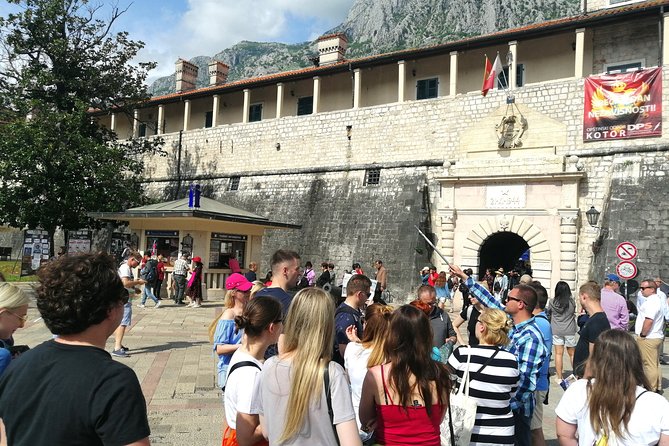
This tour costs $30.25 per person and runs about an hour.
To judge the value, I look at what’s included versus what’s optional:
- Included: guiding service, Kotor city tax, and a map of the Old Town
- Not included: food and drinks, and entrance fees for the Naval Museum or City Wall, plus the cathedral visit and the maritime museum stop where admissions are listed as not included
So, yes, you may still spend extra on entrance fees if you choose to go inside certain sites. But the guide-led component is the core value. You’re paying for time that turns a walk through old stone into an ordered story you can actually remember.
What makes it feel like good value is the pacing and the payoff. Many visitors spend a lot of time wandering in Kotor without a “thread” tying everything together. Here, you get the thread fast.
Also, the tour has a maximum of 30 travelers, and many groups end up smaller than that. In the reviews, I saw repeat praise for guides like Jelena and Ana Marija for clear English and storytelling that makes the sites feel alive. If you’re hoping to hear solid English narration rather than muddled basics, you’re in the right place.
Timing tips: book the hour that matches your day
Kotor Old Town can get crowded, especially when cruise ships are in. This tour’s short length makes it flexible. You can pair it with a longer self-guided stroll, lunch, or a later look at the walls.
I’d also book ahead. On average, this tour is booked about 46 days in advance, which tells you it isn’t a long-shot availability plan. If you want a specific time slot, earlier is better.
One more timing thought: since entrance fees are not included for some stops, check your energy level. If you’ll likely pay to enter sites, this guided context pays off more. If you want to keep things free-form, the walk still gives you meaningful orientation.
Footwear, weather, and the basics that keep it pleasant
This is described as an easy city walking tour, but the streets are cobblestoned. Comfortable footwear is a must, especially if you’ll be walking more in the Old Town afterward. Plan for small steps, uneven stones, and frequent turns.
The tour operates in all weather conditions, so dress for rain and sun. That matters because Kotor’s weather can change quickly. You’ll be outside for the whole hour.
If you’re traveling with kids, there’s a child rate when sharing with one paying adult, and children must be accompanied by an adult. And if you rely on service animals, the tour allows them.
How the guide can change the whole experience
For walking tours, the guide is everything. This one stands out because the explanations tend to be clear and tied to what you’re seeing.
In the feedback you shared here, guides such as Jelena, Ana Marija, and Petra earned strong praise for:
- conversational, easy-to-follow English
- passion for Kotor and Montenegro
- answering questions
- adding local recommendations
Even when groups were small or personal, people highlighted how well the guide paced the tour and kept it fun, not just factual.
If you’re the type of traveler who enjoys asking a question and getting a real answer—about churches, palaces, or how the town worked—this tour is a good match.
Should you book the Kotor Old Town Walking Tour?
Book it if you want a quick, organized way to understand Kotor. It’s a smart first stop inside the walls because it gives you a story thread for landmarks like the Sea Gate, Square of Arms, Clock Tower, St. Tryphon Cathedral, and the Karampana Well area.
Skip or consider carefully if you hate walking on cobblestones or you’re trying to avoid any extra costs from entrances you might choose to pay for on the spot. Also, if you’re running on cruise-ship clock stress, note that no refunds are issued if you miss the tour due to late arrival tied to cruise schedules.
If your goal is to leave Kotor’s Old Town with more than photos—if you want the place to make sense—this 1-hour format is hard to beat.
FAQ
What does the Kotor Old Town Walking Tour cost and how long is it?
It costs $30.25 per person and lasts about 1 hour.
Where do you meet, and where does the tour end?
You meet at the Main Info Point of the Tourism Organisation of Kotor at Trg od Oružja, and the tour ends at the Square of Arms near the main gate of the Old Town.
Is the tour in English?
Yes, the tour is offered in English.
What’s included in the price?
Included are the guiding service, Kotor city tax, and a map of the Old Town of Kotor.
Are cathedral or museum entrance fees included?
Entrance fees for the St. Tryphon Cathedral, the Maritime Museum, and the Naval Museum/City Wall are listed as not included, so you should expect to pay separately if you enter.
Is the walking part difficult?
It’s an easy city walking tour, but the streets are cobblestoned, so comfortable footwear is recommended.
How big are the groups, and does it run in bad weather?
The tour has a maximum of 30 travelers. It operates in all weather conditions, so you should dress appropriately.