REVIEW · CHENNAI
Georgetown heritage walking tour in Chennai about the founding of Chennai
Book on Viator →Operated by 5 Senses Walks Chennai · Bookable on Viator
Colonial Chennai starts at the port. This George Town heritage walking tour threads 17th-century English settlement, East India Company trade, and big 20th-century moments through real streets you can still stand on today. I especially like how the tour opens at Fort St. George with the museum included, so you start with the why, not just the what.
I also like the way the walk uses major landmarks—especially Madras High Court—to tell a story with cause and effect, including the 1914 World War I attack. One possible drawback: the Fort museum stop can feel like a bit much if you already spent the afternoon in another museum.
In This Review
- Key Highlights Worth Your Steps
- George Town’s English Beginnings Still Matter
- Price, Timing, and How the 3-Hour Format Works
- Fort St. George: The East India Company Start Point
- St. Mary’s Church: A Short Stop With Specific Meaning
- George Town: Old Lighthouses and Trade Living in Plain Sight
- Dare House #234 and Parrys: The Merchant Story in Art Deco
- Madras High Court: Queen Victoria to 1914 Tension
- Armenian Church: Trade Routes Measured in Silk, Spices, and Gems
- Small-Group Energy: What You Gain With a Max of 15
- What to Bring and How to Enjoy the Walk More
- Should You Book This George Town Heritage Walk?
- FAQ
- How long is the Georgetown heritage walking tour?
- Where does the tour start and end?
- Is pickup offered?
- How big is the group?
- What’s included in the tour price?
- Do I need to worry about the weather?
- What is the cancellation policy?
Key Highlights Worth Your Steps
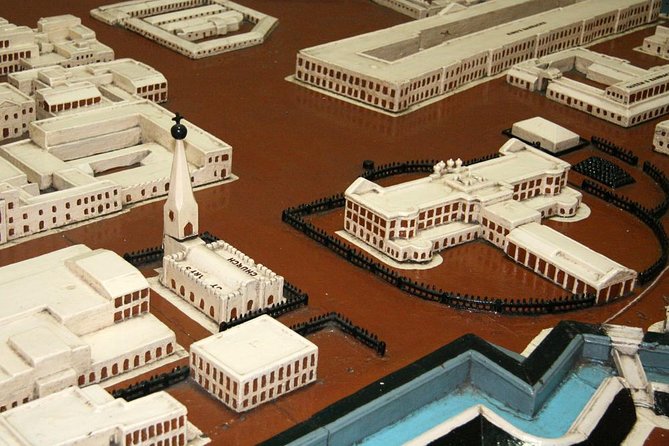
- Fort St. George (built in 1644) sets the tone right from the start, with the museum ticket included
- Small group up to 15 people keeps the pace human and makes it easier to ask questions
- Madras High Court (est. 1862 by Queen Victoria) connects colonial-era power to later events in 1914
- Armenian Church stop ties today’s architecture to trade routes for silk, spices, and gems from centuries ago
- St. Mary’s Church is a quick but meaningful stop for anyone who wants the oldest Anglican church context
George Town’s English Beginnings Still Matter
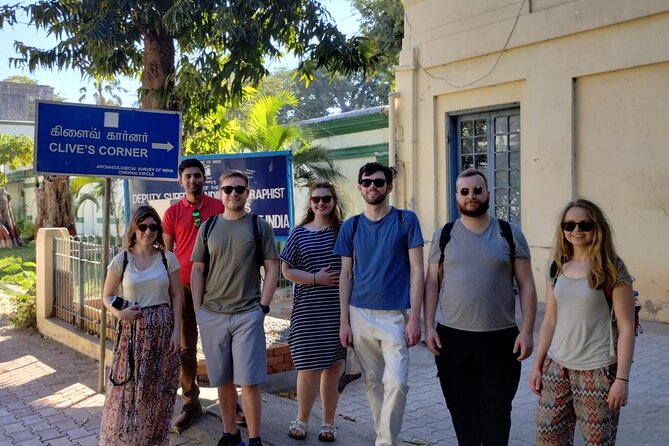
George Town in Chennai is one of those places where the street plan feels like an old map that never got fully erased. You’re walking through a former port neighborhood with connections to the East India Company, when Chennai was establishing itself as an English foothold in the 17th century.
What makes this tour click for me is the balance: you get major institutions and you also get the smaller trade-world details. It’s not just monuments for photos—it’s context you can carry into the rest of your Chennai day.
You can also read our reviews of more walking tours in Chennai
Price, Timing, and How the 3-Hour Format Works

This walk costs $50 per person, and it typically takes about 3 hours. For that price, you’re paying for more than a route—you’re getting interpretation across multiple key sites, plus admission is included at select stops (so you’re not constantly calculating what costs extra).
A few practical points help you plan well:
- It’s a small group (max 15), which usually means the guide can keep an eye on pacing and attention.
- Pickup is offered, and the end point is in George Town, so you won’t be marching back to your starting spot.
- It uses a mobile ticket, which is convenient on a day you’ll probably be handling maps and cameras.
One scheduling note: it’s commonly booked about 10 days in advance, so if you know you want this on a specific date, don’t wait until the last minute. And because it requires good weather, always have a Plan B mindset for Chennai days that get humid or rainy.
Fort St. George: The East India Company Start Point
You begin near Chennai Port (Chennai Port Trust), and the walk launches at Fort St. George, described as the first English fortress built in 1644 by the East India Company. This is a strong opener because it frames everything else. You can’t really understand George Town’s European presence without starting here.
Inside the fort, you’ll spend about 30 minutes with the museum, and admission is included. The museum focus is on how the British came to dominate India, which gives you the big-picture political context behind the buildings you’ll see as you walk.
Now, the drawback I hinted at earlier matters here. If you’re already running on museum fatigue, don’t expect the Fort visit to feel like a quick photo stop. It’s structured time, and one of the best pieces of advice is simple: if you’re doing multiple museums in one day, consider pairing this walk with lighter sightseeing later.
St. Mary’s Church: A Short Stop With Specific Meaning
Next up is St Mary’s Church, also called the oldest Anglican Church of India. You’ll spend around 15 minutes here, with entry listed as free.
The tour’s framing for this stop is clear: you’ll appreciate the setting of the Last Supper. That’s the kind of detail that turns a quick church visit into something more than architecture-sampling. In a short stop, you get a cultural and religious anchor that helps you understand why these European-style institutions took root in this port city.
If you’re trying to get your head around the word English settlement—how it translated into real buildings—this is one of those clean, easy-to-follow checkpoints.
George Town: Old Lighthouses and Trade Living in Plain Sight
After the churches, the tour moves into George Town itself and points out the site of old lighthouses that were functional during East India Company times.
This part is brief—about 15 minutes—and that’s exactly the point. You’re learning how the port world worked: when ships needed guidance, when commerce needed infrastructure, and when navigational support became part of the city’s identity.
Lighthouses can sound like a background detail, but here they connect to the tour’s central theme: this neighborhood wasn’t only “where Europeans lived,” it was where international trade moved through. When you notice that connection, the rest of the walk starts to feel more cohesive.
Dare House #234 and Parrys: The Merchant Story in Art Deco
You’ll then stop at Dare House #234, an iconic art deco building tied to commercial power. This is where the tour shifts from institutions of rule (fort, courts) to businesses that helped shape Chennai’s economy.
The stop explains that Dare House was the headquarters of the Parrys company, named after Thomas Parry, described as a Welsh figure and one of the first free merchants of Chennai. Even if you don’t memorize the names, the takeaway is practical: trade didn’t just happen on docks—it organized itself into companies, addresses, and leadership.
The quick visit (about 15 minutes) works well here because the building’s role is the story. You don’t need an hour to connect the dots once the guide gives you the framework.
Madras High Court: Queen Victoria to 1914 Tension
One of the most dramatic stops is Madras High Court. You’ll spend about 30 minutes, and admission is included.
The setting matters: the court was established in 1862 by a decree from Queen Victoria, and it still serves the state of Tamil Nadu today. That continuity is worth your attention, because it reminds you that colonial-era structures can persist as functional public institutions.
Then comes the World War I angle. The tour narrates the events in 1914 that led to an attack on the building by Germans. It’s a sharp reminder that global conflicts didn’t stay “overseas.” In a port city with international links, distant wars could show up in local life and local buildings.
If you like history that explains why places were targeted, this is a highlight. It’s not just dates; it’s consequences you can picture while standing there.
Armenian Church: Trade Routes Measured in Silk, Spices, and Gems

The final stop is Armenian Church, with about 30 minutes on site and admission included.
Before you even reach the church, the walk passes a street connected to Armenian refugees who set up trade for silk, spices, and gems about 300 years ago. That detail is a strong payoff: you see how different communities used the same port geography in different ways.
The Armenian Church visit is the closer because it turns economic survival into a lived cultural presence. Even though the stop is time-limited, it has the kind of specificity that makes the neighborhood’s diversity feel real rather than generic.
Small-Group Energy: What You Gain With a Max of 15
A tour with up to 15 people is exactly the kind of group size where you can get a more conversational experience. It tends to reduce the sense of being rushed or herded, and it makes questions easier mid-walk.
You’ll also appreciate that this walk is set up with good pacing: the stops are mostly 15 to 30 minutes. That creates a rhythm—walk, landmark, context—without turning the experience into a long lecture.
One name you might hear as part of the guiding team is Kannan, who has been noted for excellent English and for guiding Fort St. George with a clear, enjoyable pace. If you care about delivery style as much as content, that’s a real plus.
What to Bring and How to Enjoy the Walk More
This is a street-based heritage walk, so you’ll enjoy it most if you plan for comfort.
Bring:
- Comfortable walking shoes (George Town involves pavement and continuous walking)
- Water, especially in humid weather
- Your camera, but also take a moment to look up—many details only make sense when you notice the building styles and street context
Timing tip: because it depends on good weather, pick a day when you’re not already stuck running around in the rain. And plan to keep the rest of your day flexible; this kind of walk benefits from staying present rather than rushing to the next stop the moment it ends.
Should You Book This George Town Heritage Walk?
Book it if you want a 3-hour, high-context introduction to Chennai’s George Town—especially if you like connecting buildings to trade, politics, and global events. The value is strongest when you appreciate guided interpretation, and when you’re happy spending real time at key sites like Fort St. George and Madras High Court.
Skip or reconsider if you’re museum-satiated for the day. The Fort museum component is included and can feel like a lot when you’ve already done other museum time.
If you want an easy way to get oriented in George Town without losing the story, this one is a solid choice.
FAQ
How long is the Georgetown heritage walking tour?
It lasts about 3 hours (approx.).
Where does the tour start and end?
It starts at CHENNAI PORT (Chennai Port Trust) and ends in George Town, Chennai.
Is pickup offered?
Yes, pickup is offered.
How big is the group?
The tour has a maximum of 15 travelers.
What’s included in the tour price?
The tour costs $50 per person and includes admission tickets at certain stops (Fort St. George and Madras High Court, and the Armenian Church). Other stops are listed as free entry.
Do I need to worry about the weather?
Yes. The experience requires good weather, and if it’s canceled due to poor weather, you’ll be offered a different date or a full refund.
What is the cancellation policy?
You can cancel for a full refund up to 24 hours in advance of the experience’s start time. Cancellation less than 24 hours before start time is not refunded.