REVIEW · SAMARKAND
Samarkand: Historical City Highlights Guided Walking Tour
Book on GetYourGuide →Operated by Tourmania Uz · Bookable on GetYourGuide
Samarkand is history you can walk into. This 4-hour guided walking tour strings together the city’s biggest hitters—Gur-e-Amir, Registan Square, Bibi Khanym Mosque, Hazrat Khizr Mosque, and Shah-i-Zinda—so you don’t just see buildings, you understand why they matter. I especially like the way the local guide connects the dots between architecture and the people who built it.
My second favorite part is the order of stops. You start with the scale and symbolism of Amir Temur’s legacy at Gur-e-Amir, then move through the Timurid-era set pieces at Registan and Bibi Khanym, and finish at Shah-i-Zinda where the tilework and tomb corridors feel almost theatrical. It’s an efficient route that still leaves room to look closely and take photos.
One thing to consider: it’s a proper walking tour. You’ll be on your feet for a good chunk of the half day, so plan for sun, cold, or wind and wear shoes you actually trust.
In This Review
- Key Highlights Worth Your Time
- Start With Gur-e-Amir: Amir Temur’s Mausoleum
- Registan Square: How the Madrasahs Turn a Plaza Into a Lesson
- Bibi Khanym Mosque: Big Arches, Big Legend, Partial Ruins
- Hazrat Khizr Mosque: A Calmer Pause With an Old Spiritual Core
- Shah-i-Zinda Complex: The Street of the Dead in Full Color
- How the 4-Hour Flow Actually Feels on Your Feet
- Price and Value: What $18 Covers (and What It Doesn’t)
- Your Guide Makes or Breaks It: What to Look For
- Should You Book This Samarkand Walking Tour?
- FAQ
- How long is the Samarkand historical city highlights walking tour?
- What sites are included on the tour?
- Is admission included in the price?
- What languages are the live guides?
- Is this tour suitable if I prefer a smaller group?
- Is it mostly walking?
- What should I bring for the day?
- How does cancellation work?
Key Highlights Worth Your Time
- Gur-e-Amir Mausoleum: start with the power center of Amir Temur’s story
- Registan Square viewpoint moments: see how three madrasahs shape a plaza
- Bibi Khanym Mosque scale: huge arches and a love-and-ambition legend
- Hazrat Khizr Mosque: an older, calmer spiritual pause with big atmosphere
- Shah-i-Zinda Complex: the Street of the Dead and its living tile artistry
- Small groups: you’ll usually get more back-and-forth with your guide
Start With Gur-e-Amir: Amir Temur’s Mausoleum
The tour begins at Amir Temur Mausoleum (Gur-e-Amir), the final resting place of the great conqueror. Even if you only know the name Tamerlane, this stop gives you the emotional setting: this is where ambition turns into stonework, and symbolism is part of the design.
What I like here is the guided context. You’ll get a clear explanation of what you’re looking at—especially the soaring dome and the intricate mosaic details—so the site doesn’t feel like just another impressive building. It’s also one of the best places in Samarkand to understand why local architecture leans so hard into meaning, not just decoration.
The visit includes time for a guided walkthrough, not just a quick photo moment. If you like asking questions, this is a good place to start early while your guide’s energy is fresh.
You can also read our reviews of more walking tours in Samarkand
Registan Square: How the Madrasahs Turn a Plaza Into a Lesson
Next comes Registan Square, often described as the cultural and intellectual heart of medieval Samarkand—and your feet will feel why. It’s surrounded by three madrasahs: Ulugh Beg, Sher-Dor, and Tilya-Kori, and the whole space works like an architectural textbook.
Your guide helps you read the square instead of only staring at it. You’ll learn how the Timurid-era builders used blue tilework and Islamic design language to create a sense of grandeur and order. That matters because Registan is popular, and it’s easy to miss the structure if you don’t know what to look for.
You’ll also get a photo stop with enough breathing room to frame the madrasahs and not just snap and run. This is the part of the tour that rewards slow looking—especially if you enjoy repeating patterns, inscriptions, and the way light plays across tile.
Bibi Khanym Mosque: Big Arches, Big Legend, Partial Ruins
A short walk brings you to the Bibi Khanym Mosque, built by Tamerlane to honor his wife. It’s partially in ruins, but that doesn’t weaken the impact—it changes the feeling. The grand scale still comes through, and the towering arches make you understand why people talk about it with a little awe and a little myth.
Your guide will share the story behind it, including the legends tied to love and ambition. I like that this stop gives you a more human angle after the monumentality of Gur-e-Amir. You’re still in the Timurid world, but now you’re also in the realm of relationships, power, and reputation.
One practical note: since it’s a religious site, keep the tone respectful and follow local customs while you photograph. The setting makes it tempting to treat it like a backdrop, but it’s better to treat it like a sacred landmark.
Hazrat Khizr Mosque: A Calmer Pause With an Old Spiritual Core
Then you shift gears to Hazrat Khizr Mosque, one of Samarkand’s older and revered spiritual sites. Compared with Registan and Bibi Khanym, this stop feels more peaceful, and that contrast is useful. It gives your brain a breather and lets the day breathe too.
Your guide’s role here is smaller in scale but bigger in meaning. The explanations help you notice what stays consistent in spiritual architecture—how space, calm, and reverence shape the experience. Even if you’re not the type to read every detail, you’ll feel the difference between a huge public square and a more rooted, long-loved place of worship.
If you’re traveling with anyone who gets monument-fatigue, Hazrat Khizr is often the relief stop that keeps the tour enjoyable.
Shah-i-Zinda Complex: The Street of the Dead in Full Color
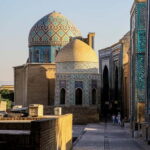
The finale is Shah-i-Zinda, a necropolis of royal tombs and religious figures, known as the Street of the Dead. This is the part of Samarkand where the walking makes sense as a storytelling device. As you progress, the corridor of mausoleums and the tile artistry start to feel less like sightseeing and more like moving through devotion.
Your guide connects the dots between tile patterns, tomb significance, and the spiritual side of the complex. You’ll hear how the site functions like a living museum—history and faith braided together rather than separated.
The practical advantage: you’ll usually get enough time to take photos without the tour turning into a sprint. That matters here because Shah-i-Zinda is visually dense, and trying to rush it usually means you miss the best close-up details.
If you’re sensitive to crowds or want quieter moments, ask your guide where to pause for the best views while the group is still moving. In many cases, a good guide will adjust pacing so you get your shots without constantly holding up others.
How the 4-Hour Flow Actually Feels on Your Feet
The tour runs about 4 hours, and it’s structured around guided visits with short walking segments between sites. It’s not a marathon, but it is active—especially because you’ll be going between different clusters of monuments and standing for explanations.
Here’s the reality check: the itinerary includes multiple sites in a single half day. That’s great for first-time Samarkand visitors, but it means you won’t have hours of free roaming inside each complex. If you want ultra-deep time in just one place, you may prefer a slower, single-site-focused visit too.
Since weather can change fast in Central Asia, prepare for it. Bring a hat and sunscreen, wear comfortable walking shoes, and keep a light layer handy. Even on a cool day, you’ll warm up from moving, then chill when you stop for photos.
Also plan for in-and-out timing at religious sites. Photography is allowed, but be mindful of local customs, especially around prayer areas and people moving through the complex.
Price and Value: What $18 Covers (and What It Doesn’t)
At $18 per person, this is very competitive for a 4-hour guided walk through some of Samarkand’s most famous architecture. The price includes a professional guide and taxes, which is the big win: you’re paying for interpretation, not just access.
The main thing not included is admission tickets. That means your total cost depends on what entry fees apply at each complex on the day you go. Still, even with tickets added, you’re usually getting strong value because you’re not trying to figure out Timurid context and architectural symbolism on your own.
One more value factor: language options. Tours are available with a live guide in English or Chinese, which helps a lot if you’re not comfortable translating on the fly.
If you’re comparing options, I’d judge this one by the quality of your guide’s explanations. The consistent theme from the experience is that guides manage pace well, answer questions patiently, and keep the tour moving without feeling rushed.
Your Guide Makes or Breaks It: What to Look For
A big reason this tour earns such strong word-of-mouth is how guides handle the day. Guides like Abdulaziz, Sarvinoz, Charos, Ozoda, Obidova, and Bekhruz are repeatedly described as patient, friendly, and able to explain each monument without drowning you in details.
You’ll feel that in the way explanations land at each stop. For example, Sarvinoz is described as giving detailed history while keeping it understandable, and Charos is noted for making the walk enjoyable with clear historical context. Other guides are praised for pacing the group, giving enough time to admire and photograph, and answering questions without getting irritated.
That’s what you should aim for: not memorizing dates, but learning the story behind each shape, mosaic choice, and mosque scale. When the guide does that well, the whole day clicks.
If you want to shop while you’re out, you’re not stuck with zero flexibility. Some groups report their guide was patient when shopping happened mid-tour, which tells me there’s room for small detours when they don’t derail timing.
Should You Book This Samarkand Walking Tour?
Book it if you want a smart first pass at Samarkand that connects the major monuments into one clear story. This tour is especially good for history lovers, architecture fans, photographers, and anyone who’s short on time but wants the big-name sites done properly.
Skip it or consider a different style if you hate walking, or if you know you want long, slow time inside just one complex. Also, if you’d rather not pay multiple admission fees, plan ahead for that extra cost since tickets aren’t included.
If you do book, I’d recommend two things. First, wear shoes you can stand in for hours, and bring hat/sunscreen. Second, show up ready to ask questions—this tour works best when you use your guide as your shortcut to meaning, not just as a human signpost.
FAQ
How long is the Samarkand historical city highlights walking tour?
The tour duration is about 4 hours.
What sites are included on the tour?
You’ll visit Amir Temur Mausoleum (Gur-e-Amir), Registan Square, Bibi Khanym Mosque, Hazrat Khizr Mosque, and the Shah-i-Zinda Complex.
Is admission included in the price?
No. Admission tickets are not included.
What languages are the live guides?
The live tour guide is available in English and Chinese.
Is this tour suitable if I prefer a smaller group?
Yes. Private or small groups are available.
Is it mostly walking?
It’s a guided walking tour with walking segments between the main sites. Comfortable walking shoes are recommended.
What should I bring for the day?
Wear comfortable walking shoes, bring a hat and sunscreen, and carry some local currency for personal expenses.
How does cancellation work?
Free cancellation is available up to 24 hours in advance for a full refund.