REVIEW · FEZ
Private Guided Walking Tour in Fez Medina
Book on Viator →Operated by Special Morocco Tour · Bookable on Viator
A Fez medina walk is all about guidance. A private tour with hotel pickup turns the maze of Fes el-Bali into something you can actually enjoy, even if it’s your first time—especially with guides like Yassine, Adil, or Moundire.
I really like two things about this experience. First, the guide focus is practical: you learn what you’re seeing as you go, and you can ask questions without feeling rushed. Second, it’s built for real medina time—3 to 4 hours on foot, with stops at the big-name sights plus the crafts you’ll miss if you wander alone.
One thing to watch: several major places require paid entrance fees (often 20 DH per person), and some religious sites are not open to non-Muslims. Also, expect a couple of shop visits as part of the medina experience, so decide up front how much shopping you want.
In This Review
- Key Things I’d Plan Around in This Fez Tour
- Fez Medina, One Walk, Zero Guesswork
- Start at Bab Boujloud: Ceramics, Mellah, and Royal Corners
- Bou Inania Medersa: A Marinid Masterclass (Fees Apply)
- Museo Nejjarine: A Riads-Only Museum Break
- The Medina of Fez: Souks, Spices, Wooden Doors, and Leather Trades
- Zaouia of Moulay Idriss II and Kairaouine Mosque: Know What You Can Enter
- Chouara Tannery: The Oldest-Style Leather Industry Show
- Al-Attarine Madrasa and Sidi Ahmed Al-Tijani Zawiya: Quiet Stops With Meaning
- Tea Breaks, Time for Questions, and the Human Side of Fez
- Price Reality: What You Pay, What You Should Budget
- Shopping Stops: How to Enjoy the Workshops Without Getting Pressure
- Who This Fez Medina Tour Fits Best
- Should You Book This Private Guided Walking Tour?
- FAQ
- FAQ
- Is this tour really private?
- How long does the walking tour take?
- What’s included in the price?
- Are entrance fees included?
- Which paid sites should I expect on the route?
- Can non-Muslims enter the mosques and shrines?
- Does the tour include transfers from hotels/riads?
- What about shopping and workshops?
- Is there free cancellation?
Key Things I’d Plan Around in This Fez Tour
- Hotel/riad transfers help you skip the taxi negotiations and start walking fast.
- Guides with real local reach can help you navigate stalls, courtyards, and historic corners without stress.
- Madrasas and museums cost extra (commonly 20 DH each), so budget ahead.
- Mosques and shrines have entry limits for non-Muslims, but the guide still explains the sites.
- Tanneries and souks are part of the story, not just photos—plan for strong smells.
- Shop stops can feel salesy if you aren’t careful; you can keep it casual and just browse.
Fez Medina, One Walk, Zero Guesswork
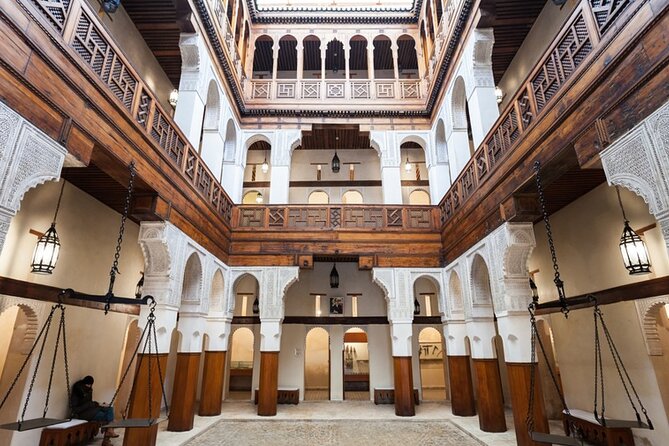
Fez medina is UNESCO-listed for a reason: the old city is dense, layered, and not laid out for modern tourists. This tour helps you move through Fes el-Bali in a way that feels less like wandering and more like following a map drawn by someone who lives here.
You get a local professional guide, and the whole thing is private, so it’s just your group. That matters in Fez because the pace and route can be adjusted on the fly—shade breaks, slower turns, and time for questions. It also helps with logistics: pickup and drop-off from most Fez hotels and riads means you don’t burn half your time figuring out how to get to the medina entrance.
Expect a half-day walking format of about 3 to 4 hours. That’s long enough to see the key highlights and the everyday textures of the medina, but short enough that you can still enjoy dinner afterward.
You can also read our reviews of more walking tours in Fez

Start at Bab Boujloud: Ceramics, Mellah, and Royal Corners
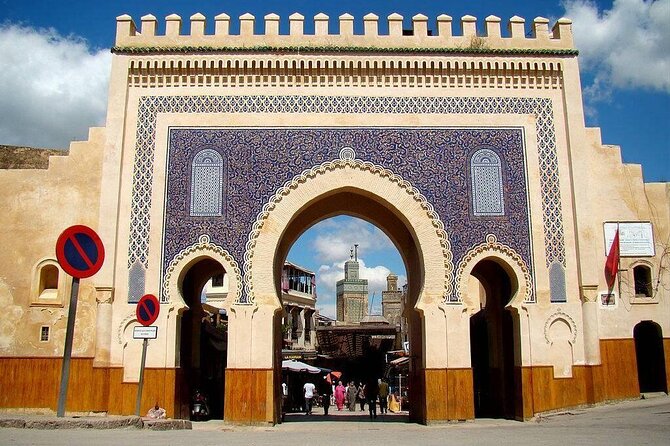
The walk typically begins at Bab Boujloud, one of the most recognizable entrances in Fez. This is a great starting point because it sets the visual tone right away—green and blue ceramic work is the theme, and you’ll get a clearer sense of where you are as you head deeper into the old city.
From here, your guide can point you toward the area’s major layers: the Mellah (the Jewish quarter), the 17th-century Ibn Danan synagogue area, and nearby references tied to the Kings Palace and the Merinid era (including views connected to North and South Borjs). You may also be shown a ceramic factory, which is useful because it explains how Fez craftsmanship is more than souvenirs—it’s an industry with routines and materials.
Practical note: this first segment is relatively short (about 10 minutes), so take a moment to look slowly. If you rush this part, you’ll miss the small details that make Fez feel like it’s not just a backdrop.
Bou Inania Medersa: A Marinid Masterclass (Fees Apply)
Next is the Bou Inania Medersa, a major stop if you’re into architecture and history you can see with your own eyes. It was founded between 1350 and 1356 by Abu Inan Faris, and the whole place is considered a standout example of Marinid and Moroccan design.
This stop is valuable because it shifts you from street-level sights to a controlled interior world—courtyards, craftsmanship, and proportions that are hard to appreciate from the busy flow of the medina.
But plan for the entrance fee. Bou Inania requires payment at the site (20 DH per person, not included). If you want the best value from this tour, budget for these paid entries rather than treating them as surprise costs.
Museo Nejjarine: A Riads-Only Museum Break
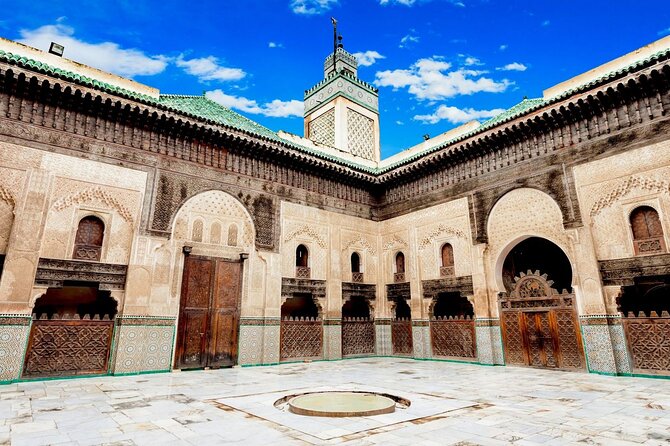
After the medersa, the tour moves to the Museo Nejjarine, housed in Funduq al-Najjarin. This is one of those stops where the name matters less than the setting: you get to step into riad-like architecture while exploring a museum inside.
This stop is a smart pacing tool. After narrow streets and crowds, it gives you a calmer space to look around and reset your senses. If you’re traveling with kids, it can be a welcome break in a tour that otherwise leans heavily into outdoors and street textures.
Like the medersa, there’s a paid entrance fee (20 DH per person, not included). If you’re weighing whether to go inside, I’d treat this as a “yes” unless you’re trying to keep costs very tight.
The Medina of Fez: Souks, Spices, Wooden Doors, and Leather Trades
The longest stretch is the core experience: wandering the Medina of Fez with your guide. This is where the tour becomes more than sightseeing. You’ll see carved wooden doors, mosaic details, and the everyday rhythm of the souks.
Your guide will connect visual details to meaning—how materials are used, why certain workshops are clustered where they are, and what you’re looking at when stalls move from textiles to ceramics to leather goods. The route also includes leatherworking areas, which ties into later stops.
Plan for the real medina sensory part. Spices and shop scents are part of the atmosphere, and the tannery is next—so if strong smells bother you, wear shoes you can stand in for a while and be ready to breathe through it.
This segment also highlights why a guided tour is worth it here. Fez can look similar street to street; with a guide, the turns start to make sense.
You can also read our reviews of more guided tours in Fez
Zaouia of Moulay Idriss II and Kairaouine Mosque: Know What You Can Enter
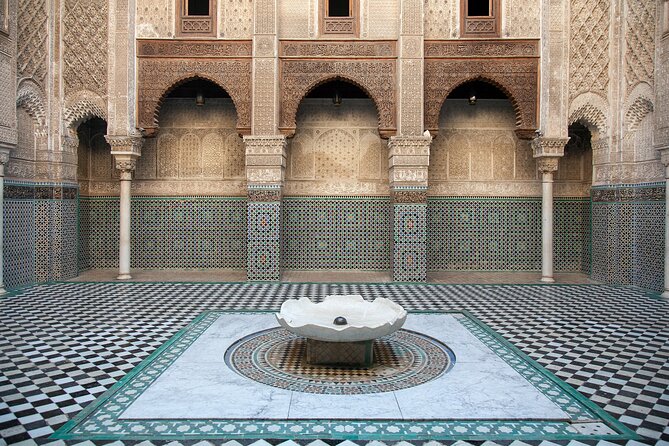
Two stops in the religious category help explain Fez’s spiritual gravity: the Zaouia of Moulay Idriss II and the Kairaouine Mosque area (including references to the Quaraouiyine Mosque and the Andalusian Mosque).
Here’s the key practical truth for non-Muslim visitors: entry is limited. The Zaouia of Moulay Idriss II is described as not accessible for non-Muslims, and the mosque section also notes that entry is not permitted to non-Muslims. That can sound like a letdown, but the tour still has value because your guide explains why these places matter and what you should notice from outside.
Why I think this section is still worth including:
- Even from outside, religious architecture shows craftsmanship patterns you won’t catch from the street.
- You understand the city’s history instead of just checking off buildings.
- It helps you avoid the awkward moment of arriving at a door and realizing you can’t go in.
If you’re traveling with people who really want interior access, keep your expectations realistic and focus on learning what you can see.
Chouara Tannery: The Oldest-Style Leather Industry Show
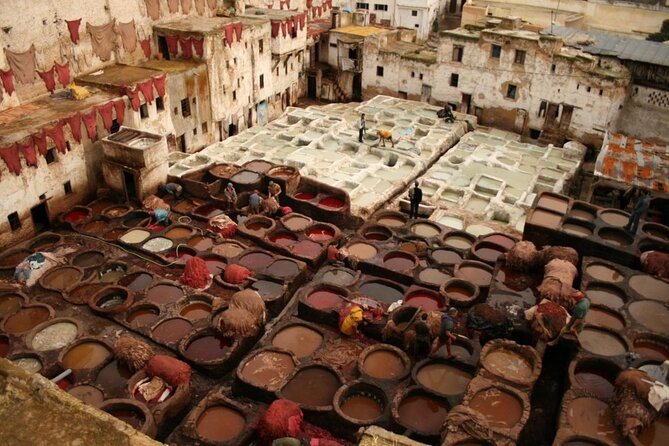
Then comes Chouara Tannery, one of the most iconic Fez stops. This is where you see the ancient tanning industry in action as a living tradition—still attracting visitors because it retains traditional methods.
This stop works best if you treat it like a demonstration, not like a perfect postcard. The smell can be intense, and the viewing areas can feel crowded depending on timing. The payoff is understanding how the medina’s crafts connect to the larger economy of Fez.
If you’re sensitive to odors, you’ll still be able to participate, but you might want to keep your time at the viewing point tighter and move on quickly.
Al-Attarine Madrasa and Sidi Ahmed Al-Tijani Zawiya: Quiet Stops With Meaning
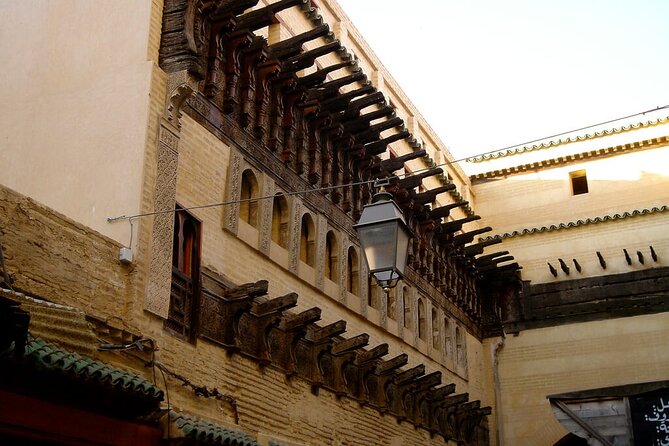
The tour also includes Al-Attarine Madrasa and Sidi Ahmed Al-Tijani Zawiya—both excellent for shifting gears from trade and noise to space and symbolism.
Al-Attarine Madrasa was completed in 1325 and is connected to its location by the souk of perfumers and spices. It’s also described as a religious high school for all-male students, with many going on to study at Kairaouine University. Entrance costs 20 DH per person (not included).
This stop helps you connect dots: Fez wasn’t only commerce and crafts. It also ran on education and religious study. If you like context, this is a good place to slow down.
Sidi Ahmed Al-Tijani Zawiya focuses on Sufi tradition. Entry may be restricted for non-Muslims, but your guide’s role here is to explain why the shrine draws pilgrims and what the architecture and atmosphere communicate. Even outside, it’s described as having a calm devotion you can feel.
Tea Breaks, Time for Questions, and the Human Side of Fez
A tour can be full of landmarks and still feel mechanical. This one includes coffee and/or tea, and the guide approach tends to be the difference. In real feedback, guides like Yassine and Adil are praised for being friendly, patient, and willing to answer questions without steamrolling the group.
Some guides also seem comfortable with small pivots—extra time to hit two locations you care about, or support for practical needs like a stroller and a small child. That sort of flexibility can matter a lot in a place where sidewalks are uneven and sightlines are unpredictable.
If you’re the type who likes to ask why something exists, not just what it is, this is the format that rewards you.
Price Reality: What You Pay, What You Should Budget
At $30 per person for a private half-day walking tour, the value is solid—especially because transfers from most hotels and riads are included. Those taxi costs and the hassle of finding the right entrance can add up fast in Fez.
What you should budget for:
- Entrance fees for specific sights. The tour notes paid entry around 20 DH per person for places like Bou Inania Medersa, Museo Nejjarine, and Al-Attarine Madrasa.
- Lunch is not included.
So the “cheap part” is the guide and route. The “real cost” comes from the paid sites. If you plan to enter every paywalled stop, set aside extra cash so you aren’t stuck deciding mid-tour.
Also note: the tour says entrance fees are at your expense. That’s normal in medina sightseeing, but it’s worth treating as part of your planning.
Shopping Stops: How to Enjoy the Workshops Without Getting Pressure
Fez medina has shops. That’s not optional—it’s the economic engine of the old city. This tour includes visits to crafts and places where products are shown, including ceramics and other workshop-linked stops.
The good side: many guides keep it low-pressure, with time to ask questions and only buying if you show interest. The less-good side: in some cases, shop visits can lean into high-pressure selling disguised as educational cooperative stories.
Here’s my practical advice so you stay in control:
- Decide your shopping budget before you go.
- If you’re not buying, say so early and keep moving.
- Treat every shop stop like a viewing opportunity, not a commitment.
- If the pace starts to feel coercive, tell your guide you want to continue walking.
A good guide will help you maintain the tour focus.
Who This Fez Medina Tour Fits Best
This is ideal if you:
- Want a structured walk through Fes el-Bali without getting lost.
- Prefer learning from someone who can explain what you’re seeing.
- Like a mix of major monuments and working craft areas (souks, leather, ceramics).
- Appreciate a private format where the pace can match your group.
It’s less ideal if you:
- Want to do zero paid entrances and zero indoor stops. You’ll spend time outside, but some of the biggest sites cost extra.
- Have a strong aversion to the tannery smell or to crowds at viewing points.
If you’re visiting Fez for the first time, this is a smart “orientation + highlights” move.
Should You Book This Private Guided Walking Tour?
Yes, if you want an easier, more meaningful first Fez medina day. The big win is the combo of private guiding plus pickup/drop-off, paired with a route that covers the real bones of the city: Bab Boujloud, key madrasas and museum architecture, the souks, and Chouara Tannery.
I’d especially book it if you’re trying to avoid the classic first-day trap: wandering for hours, taking photos, and then realizing you didn’t understand what you saw. With a guide, the medina clicks.
Book it with realistic budgeting for entrance fees, and plan your shopping boundaries so the craft stops feel fun instead of forced.
FAQ
FAQ
Is this tour really private?
Yes. It’s listed as a private tour/activity, meaning only your group participates.
How long does the walking tour take?
The duration is about 3 to 4 hours.
What’s included in the price?
The tour includes a professional local guide, pickup and drop-off from most Fez hotels and riads, and coffee and/or tea.
Are entrance fees included?
No. Entrance fees are not included, and several stops have paid entry fees at 20 DH per person.
Which paid sites should I expect on the route?
Bou Inania Medersa, Museo Nejjarine, and Al-Attarine Madrasa are each listed with an entrance fee of 20 DH per person (not included).
Can non-Muslims enter the mosques and shrines?
Some entry is limited. The Zaouia of Moulay Idriss II is noted as not possible for non-Muslims, and the mosque stops also state entry is not permitted for non-Muslims. Your guide will still explain significance.
Does the tour include transfers from hotels/riads?
Yes. Pickup and drop-off are offered from most Fez hotels and riads.
What about shopping and workshops?
The tour includes craft-related stops (like ceramics) and time in the medina where shops are part of the experience. Entry to some places is tied to paid attractions, and shop visits can happen as part of the route.
Is there free cancellation?
Yes. Free cancellation is offered, and you can cancel up to 24 hours in advance for a full refund.