
REVIEW · JERUSALEM
Jerusalem: Guided Walking Tour of the Old City
Book on GetYourGuide →Operated by Abraham Tlalim Tours LTD · Bookable on GetYourGuide
Jerusalem’s Old City hits you fast. Starting at Jaffa Gate, this guided walk connects what you’re seeing to what happened there, across Jewish, Muslim, and Christian landmarks. In practice, it’s the easiest way to turn a maze of stone streets into a readable story.
I especially like two things: first, the route covers the big hitters in 4 hours without turning it into a sprint. Second, the guide approach helps you understand why each site matters to people today, not just what it looked like on a map.
The main drawback is planning around access and clothing. Temple Mount closures can change what you’re able to enter, and the dress rules are real in Jerusalem’s holy sites—so pack smart.
In This Review
- Key highlights worth clocking
- Starting at Jaffa Gate: the walk that gives you bearings
- Western Wall and King David’s Tomb: why these stones feel personal
- Temple Mount access rules: Dome of the Rock and what happens on closed days
- Via Dolorosa to the Church of the Holy Sepulchre: seeing the story in order
- The guide’s real job: turning religious sites into context you can remember
- The Old City walking reality: pace, comfort, and staying oriented
- Price and value: $57 for a 4-hour guided orientation
- Practical prep: what to wear, bring, and how to get in smoothly
- Who this tour fits best (and who should choose another plan)
- Should you book the Jerusalem Old City guided walking tour?
- FAQ
- How long is the Jerusalem Old City guided walking tour?
- Where do I meet the guide?
- Which major sites are included?
- Can I enter the Temple Mount during the tour?
- What should I bring and wear?
- Is the tour suitable for people with mobility impairments?
Key highlights worth clocking
- Jaffa Gate start: a clear meetup and a fast orientation into the Old City
- Western Wall access: a chance to pause at a powerful focal point for Jewish prayer
- Temple Mount alternatives: when entry is blocked, you get a viewpoint instead of losing the area entirely
- Via Dolorosa in context: you follow the route and connect the scenes to the broader story
- Church of the Holy Sepulchre visit: going inside is a big part of making Christianity feel concrete here
Starting at Jaffa Gate: the walk that gives you bearings
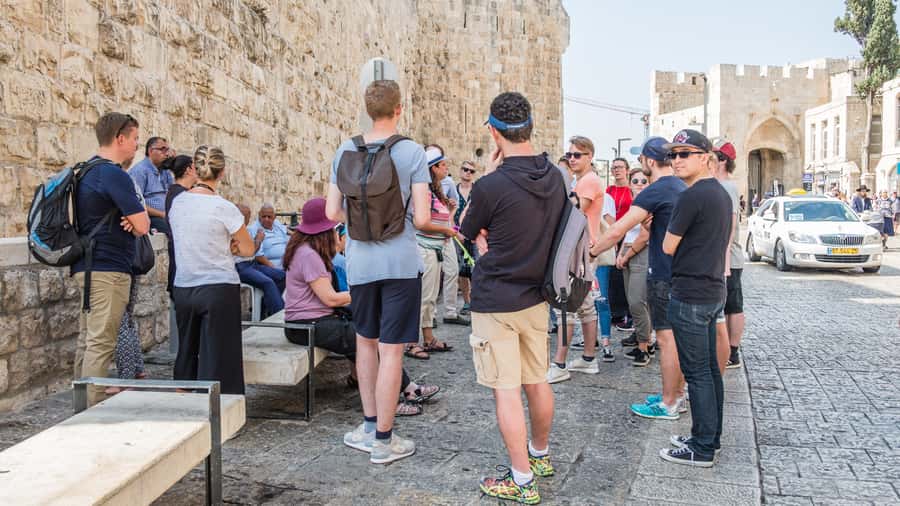
The tour begins just outside Jaffa Gate, at a stone bench where you can actually find the group before you get swallowed by the Old City. Look for a guide wearing a green shirt with the word Guide in yellow on the back.
From that first minute, I like the way the guide sets expectations: you’re walking through multiple quarters, and the goal is to help you recognize what’s around you. If you’ve visited old cities before, you know how easy it is to stare at impressive stonework and still leave with blank spots. This one is built to reduce that.
You’ll spend your time on foot, moving between key religious areas, lanes, and courtyards. Expect the pace to feel busy, because the Old City is busy. But it’s not chaotic. The better guides keep you moving while still giving you time to look up, listen, and ask questions.
Western Wall and King David’s Tomb: why these stones feel personal
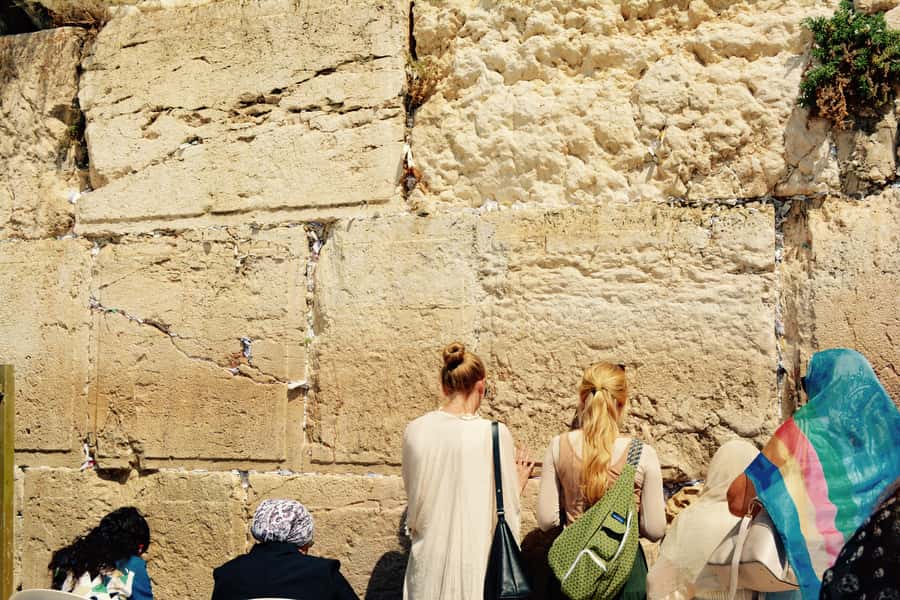
One of the tour’s strongest moments is the stop at the Western Wall, described as the last remains connected to the Jewish Temple that stood here thousands of years ago. Even if you’re not a religious person, you’ll probably notice the difference instantly. People come here for prayer, for reflection, for family history. The wall isn’t just a landmark—it’s a living place.
What I like is that the tour doesn’t treat it like a photo backdrop. The guide connects the site to major Jewish references, including King David’s Tomb as part of the broader Jewish story tied to Jerusalem. That matters, because without context, “important” can feel vague.
You also get a chance to stand where religious and cultural milestones are linked to real geography. In a city where so much has been layered, geography is the memory tool. This is where a guided walk helps: the guide points out the why, not just the what.
Practical note: you’ll still want to behave the way you would at a serious place of worship. Keep your voice down, give space, and keep your camera ready but not taking over the moment.
Temple Mount access rules: Dome of the Rock and what happens on closed days

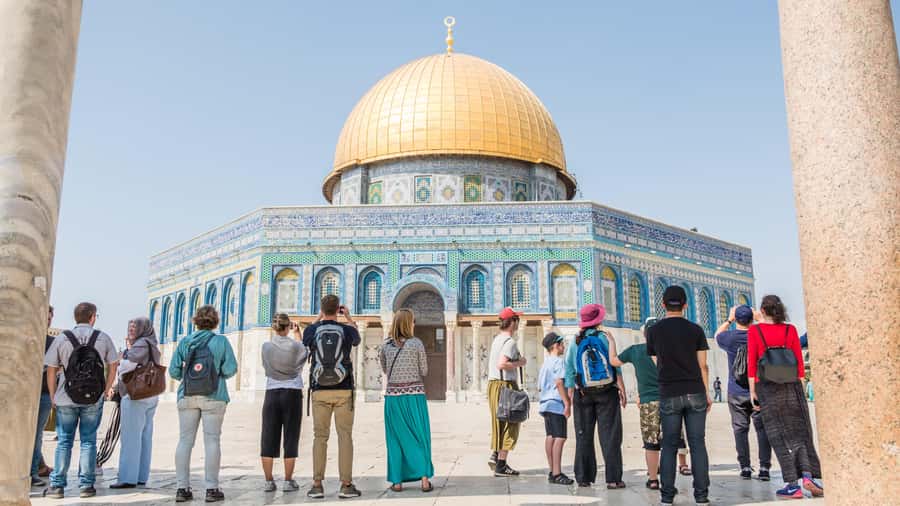
The Temple Mount area is central to the tour, and it includes stops associated with the Dome of the Rock and the Al Aqsa Mosque. But here’s the real-life part you should plan for: the area is closed to visitors every Friday and Saturday, and also during various Muslim and Jewish holidays.
When entry isn’t possible, the tour includes a viewpoint that overlooks the Temple Mount. I think that’s a smart compromise. You don’t lose the whole day’s focus, and you still get that visual anchor for understanding where so many stories reference.
For me, the best use of a Temple Mount moment is listening to what the guide explains while you’re looking. This area isn’t just architecture; it’s identity, belief, history, and modern-day significance all at once. A good guide helps you hold that complexity without turning it into an argument.
Dress and behavior matter more here than almost anywhere else. You’ll already be following the tour’s dress guidance (scarf, no shorts/sleeveless), but you’ll also want to be extra mindful of modesty and movement.
Via Dolorosa to the Church of the Holy Sepulchre: seeing the story in order
If you’ve ever studied the Christian story, the names sound familiar. The Old City turns that familiarity into something you can actually point at.
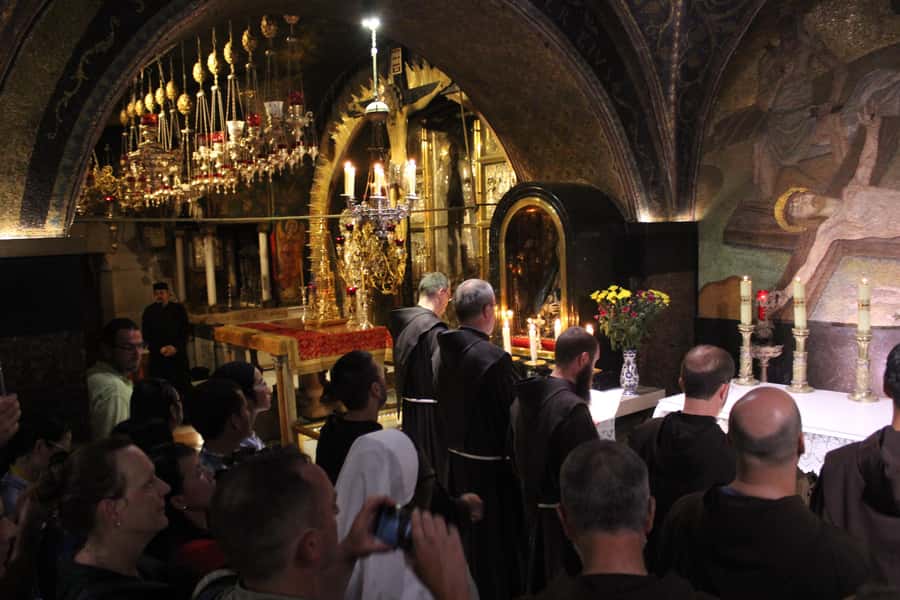
The route includes the Via Dolorosa, described as the path Christ walked with his cross toward crucifixion. The value of doing it as a guided sequence is that you don’t just walk a route—you understand why people stop where they stop, and how different parts of the story are tied to particular corners and spaces.
From there, you’ll visit the Church of the Holy Sepulchre, including going inside. This is one of the most important stops on the tour because interior visits make the difference between seeing and understanding. The church is where the physical details start to feel real.
The tour also mentions key Christian references such as the room of the last supper as part of the overall storyline, plus the discovery of the True Cross. I like that the guide uses these references to connect belief to place, rather than letting them stay as Bible chapter labels.
A small reality check: you’re walking through narrow areas, and you’ll share space with other groups. That’s normal. Keep your pace steady, watch your footing, and don’t rush the guide. When the church doors and corridors get crowded, you’ll be glad you have a guide who knows how to manage the group without yanking you away from what you came to see.
The guide’s real job: turning religious sites into context you can remember
The strongest praise in the reviews is consistent: people feel safe, the guide explains clearly, and the stories connect to the places in a way that sticks. You’ll hear this kind of feedback around guides like Shahar, Tanya, Nimrod, Yoni, Nirit, Nimrod/Shahar-type energy, plus others. The common thread is the human side: guides answer questions and keep the focus on history and religious meaning.
What I’d want you to take away is this: Jerusalem isn’t one story. It’s three interwoven ones, and the Old City keeps forcing you to see how those layers coexist in the same small streets.
On this tour, you’ll get context that includes major Jewish references like the Western (Wailing) Wall, Muslim references tied to places associated with the Prophet Mohammed’s ascent to heaven, and Christian references tied to the Via Dolorosa and the Church of the Holy Sepulchre. The guide also brings in broader points such as the five pillars of Islam and other commonly referenced themes (including the discovery of the True Cross).
Even if you already know the basics, it helps to have a guide put the pieces onto the correct spot on the map. That way, when you return later on your own, you’re not guessing. You’ll know where you are and what you’re looking at.
The Old City walking reality: pace, comfort, and staying oriented
This is a walking tour for a reason. The Old City doesn’t do wide roads and easy paths. You should plan for a steady amount of walking in close quarters.
At the same time, the tour is built to fit a lot into 4 hours. That means you don’t linger forever at one stop, even though some of the sites deserve it. The better guides handle this balance well: enough time to look around and ask questions, not so much time that you start feeling dragged.
Comfort matters, because discomfort makes it harder to listen. Wear comfortable shoes. Bring water. If you’re visiting in warm weather, a sun hat is worth packing even if you think you can tough it out. The tour also asks for a scarf, which can help with sun, modesty, and respect for the sites you’re entering.
One more practical factor: shorts and sleeveless shirts aren’t allowed. That’s not a suggestion. Plan your clothing ahead of time.
If you’re taking photos, do it thoughtfully. In crowded religious areas, constantly stopping for pictures can slow the group and add stress for everyone.
Price and value: $57 for a 4-hour guided orientation
At $57 per person for a 4-hour guided walking tour, I think the value is in what you’re buying: interpretation.
The Old City is hard to navigate. Even when you have a guidebook, you still end up with gaps—because the important details are often small, verbal, and tied to the exact corner you’re standing on. For $57, you’re paying to shorten the learning curve and get a guided path between major sites: Jaffa Gate area orientation, Western Wall, Temple Mount viewpoint (when needed), and the Church of the Holy Sepulchre.
Also, note what’s not included: food and drinks. That doesn’t make the price worse, but it means you should budget your meals separately and bring water during the walk.
If you’re on a tight schedule and want a first-day “read the city” experience, this price typically feels reasonable. If you love slow travel and would rather spend 3 hours in one church alone, you may find this pace too structured.
Practical prep: what to wear, bring, and how to get in smoothly
Here’s what I recommend you pack based on the tour rules.
Bring:
- Comfortable shoes
- Water
- Sun hat
- Scarf
- Passport (a copy is accepted)
Wear:
- Avoid shorts and sleeveless shirts
- Choose clothing that covers appropriately and stays comfortable for sitting in waiting areas and moving through crowds
Temple Mount access:
- Plan for possible closure days (Friday/Saturday and some holidays).
- When entry is closed, you’ll get a viewpoint overlooking the Temple Mount.
If you’re hoping to do this tour and also visit inside religious spaces on your own later, dressing correctly will save you time and stress. The tour’s rules reflect the city’s expectations, and it’s easier to get into the rhythm from the start.
Who this tour fits best (and who should choose another plan)
This tour works best for you if you want a structured overview that connects Jewish, Muslim, and Christian sites without turning the walk into a debate.
You’ll probably enjoy it if:
- You want to hit major Old City highlights in one afternoon
- You prefer a guide who answers questions and keeps the pace organized
- You’d like help understanding why each location matters
It’s not suitable for people with mobility impairments or wheelchair users, since it’s a walking route through old streets and areas not designed for accessibility.
If that describes you, look for an alternative format with accessible routes and fewer steps. The Old City is stunning, but not forgiving on accessibility.
Should you book the Jerusalem Old City guided walking tour?
I’d book this tour if you want a smart first introduction to Jerusalem’s Old City and you like walking with meaning. The biggest win is the combination of major sites—Western Wall, Temple Mount (or a viewpoint), Via Dolorosa, and the Church of the Holy Sepulchre—done in a way that helps you understand what you’re seeing while you’re still in the place.
I’d pass if you hate dress rules, dislike structured pacing, or you need step-free mobility support. Also, if you already know the Old City stories well and you prefer quiet time over guidance, this might feel too scheduled.
But for most people starting out, this is a strong value pick: clear start point at Jaffa Gate, a focused 4-hour route, and the kind of guide-led storytelling that makes Jerusalem click fast.
FAQ
How long is the Jerusalem Old City guided walking tour?
The tour lasts 4 hours.
Where do I meet the guide?
Meet at the stone bench just outside Jaffa Gate. Look for the tour guide wearing a green shirt with Guide written in yellow on the backside.
Which major sites are included?
The tour includes visits to the Western Wall, Temple Mount area viewpoints (including Dome of the Rock and Al Aqsa Mosque when possible), and the Church of the Holy Sepulchre, along with the Via Dolorosa route.
Can I enter the Temple Mount during the tour?
Temple Mount is closed to visitors every Friday, Saturday, and during various Muslim and Jewish holidays. When it is closed, the tour includes a viewpoint overlooking the Temple Mount instead.
What should I bring and wear?
Bring comfortable shoes, a sun hat, water, a scarf, and your passport (a copy is accepted). Shorts and sleeveless shirts are not allowed.
Is the tour suitable for people with mobility impairments?
No. It is not suitable for people with mobility impairments and wheelchair users.